🚀 A CloudSEK se torna a primeira empresa de segurança cibernética de origem indiana a receber investimentos da
Leia mais
.avif)

O monitoramento da superfície de ataque é a descoberta e observação contínuas de todos os ativos e pontos de entrada que um invasor poderia usar para acessar uma organização. Ele mapeia os sistemas, serviços, domínios e exposições voltados para o mundo externo e para o ambiente interno, monitorando-os em busca de alterações para que novas vulnerabilidades sejam identificadas antes que um invasor as encontre.
A necessidade é urgente porque as organizações perdem constantemente o controle do que expõem. De acordo com uma pesquisa do Enterprise Strategy Group, 76% das organizações sofreram um ataque cibernético que começou por meio de um ativo voltado para a internet desconhecido, não gerenciado ou mal gerenciado. O monitoramento da superfície de ataque existe para eliminar essa lacuna de visibilidade.
Este artigo explica o que é o monitoramento da superfície de ataque, como ele difere do gerenciamento da superfície de ataque, os tipos de superfícies que abrange, seus componentes principais, como funciona passo a passo, seus benefícios, desafios comuns, as práticas que garantem sua eficácia e como ele se integra a um programa mais amplo de gerenciamento de exposição.
Uma superfície de ataque é a soma de todos os pontos onde um invasor poderia tentar entrar em um sistema ou extrair dados. Ela cresce a cada dispositivo, aplicativo, conta e conexão que uma organização adiciona. As equipes de segurança a agrupam em três categorias amplas:
O monitoramento da superfície de ataque concentra-se na superfície de ataque digital, que muda mais rapidamente e apresenta a maior parte das exposições exploradas remotamente por invasores, embora um programa completo leve em consideração as três.
O monitoramento da superfície de ataque é a prática de observar uma organização da mesma forma que um invasor, de maneira contínua. A superfície de ataque é o conjunto completo de pontos onde um invasor poderia tentar uma entrada: servidores voltados para a internet, aplicações web, APIs, instâncias em nuvem, endpoints de funcionários, conexões de terceiros e muito mais. O monitoramento mantém um inventário atualizado desses pontos e rastreia como eles mudam. Como os invasores escaneiam a internet constantemente em busca de novas aberturas, o valor reside em detectar uma exposição no mesmo intervalo de tempo que eles.
A palavra-chave é contínuo. Uma auditoria tradicional captura a superfície de ataque em um único dia, mas recursos em nuvem, implantações de código e novas conexões de fornecedores alteram a superfície constantemente. O monitoramento substitui o instantâneo único por uma visibilidade contínua, de modo que um banco de dados recém-exposto ou um certificado expirado seja detectado assim que aparece, em vez de apenas na próxima revisão. O resultado é um mapa de defesa que acompanha a visão do invasor, em vez de ficar defasado. A visibilidade nessa escala de tempo é o que diferencia o monitoramento de uma auditoria periódica.
O monitoramento da superfície de ataque e o gerenciamento da superfície de ataque estão relacionados, mas são distintos. O monitoramento fornece visibilidade contínua; o gerenciamento age sobre o que essa visibilidade revela.
O monitoramento é um componente do gerenciamento da superfície de ataque. O gerenciamento depende do monitoramento para obter dados precisos e atuais, e o monitoramento sem gerenciamento produz uma visibilidade sobre a qual ninguém age.
A superfície de ataque continua a se expandir, e a maior parte desse crescimento ocorre onde as equipes de segurança têm menos visibilidade.
Avaliações pontuais não conseguem acompanhar esse ritmo de mudança. Um ativo que não existia na última auditoria pode estar ativo, exposto e ser explorado semanas depois. O monitoramento contínuo transforma uma imagem estática e desatualizada em uma atual, e a visibilidade atual é a base de qualquer outro controle, já que uma defesa só pode proteger os ativos que a equipe sabe que existem.
O monitoramento da superfície de ataque abrange várias superfícies distintas. Um programa completo cobre todas elas, já que os invasores sondam o que estiver mais fraco.
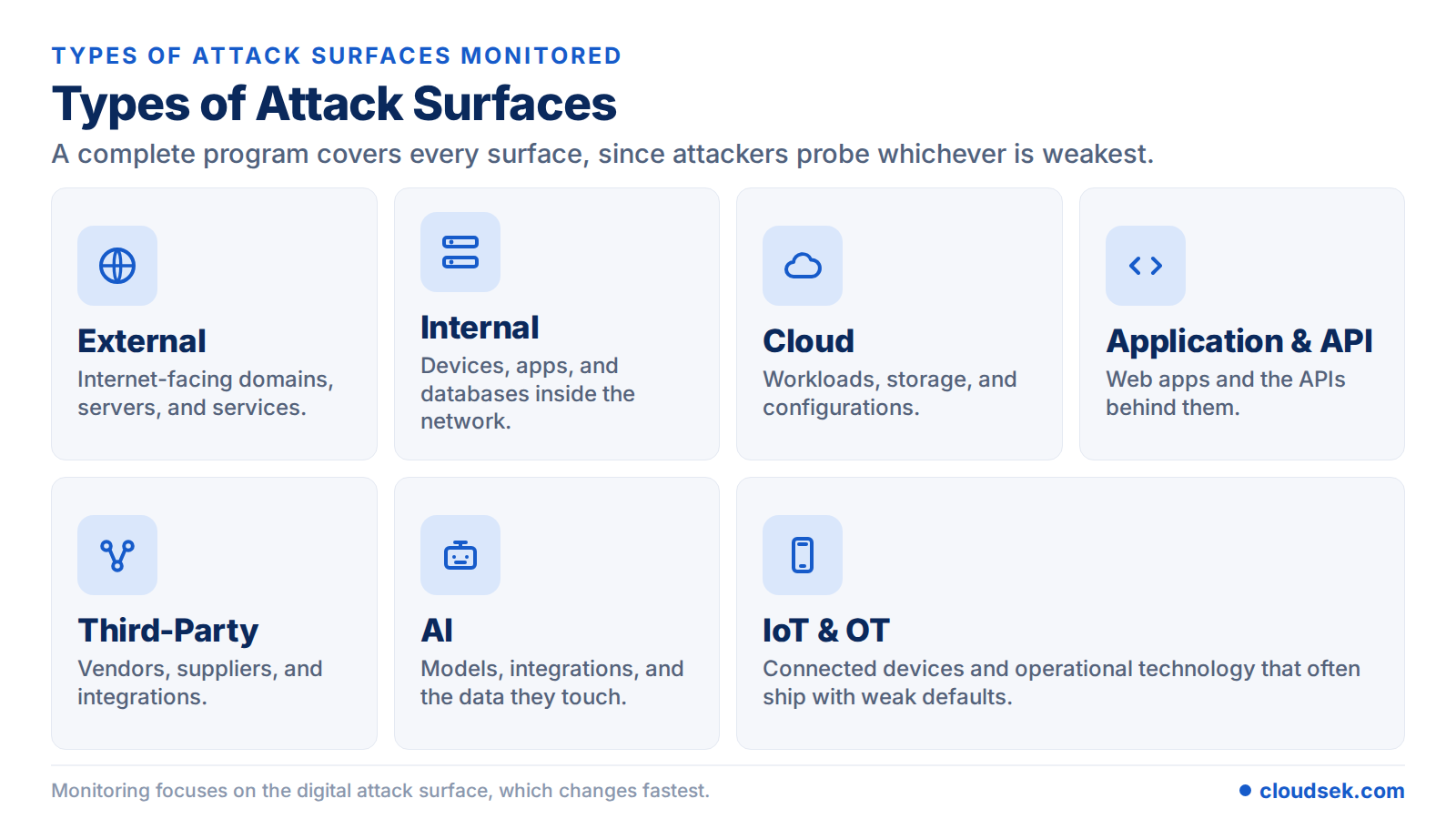
Os ativos voltados para a internet visíveis para qualquer pessoa online: domínios, subdomínios, servidores públicos e serviços expostos. É aqui que os invasores oportunistas procuram primeiro, e é por isso que a gestão da superfície de ataque externa é uma prioridade para a maioria dos programas. Subdomínios esquecidos e servidores de teste abandonados são descobertas comuns aqui.
Os ativos dentro da rede corporativa incluem dispositivos, aplicativos e bancos de dados. A gestão da superfície de ataque de ativos cibernéticos oferece visibilidade desse inventário interno e dos riscos que um invasor alcança após o perímetro, onde redes planas e contas com privilégios excessivos ampliam o raio de impacto.
Cargas de trabalho, armazenamento e configurações em nuvem. Armazenamento configurado incorretamente e acesso excessivamente permissivo são exposições frequentes nesta camada, sendo buckets públicos e consoles de gerenciamento expostos alguns dos exemplos típicos.
Aplicações web e as APIs por trás delas, onde códigos inseguros e endpoints sem autenticação criam pontos de entrada. APIs sombra que nunca passaram por revisão são uma preocupação crescente.
Os fornecedores, parceiros e integrações conectados à organização, qualquer um dos quais pode introduzir exposições que a organização não controla diretamente. Um único fornecedor comprometido pode expor todas as organizações que dependem dele.
Modelos, integrações de IA e os dados que eles acessam. Monitoramento da superfície de ataque de IA rastreia as exposições que acompanham a rápida adoção de IA, incluindo IA sombra implantada sem revisão.
Dispositivos conectados e tecnologia operacional frequentemente vêm de fábrica com configurações padrão fracas e capacidades de segurança limitadas. Câmeras, sensores e controladores industriais são pontos fracos frequentes.
O monitoramento eficaz da superfície de ataque combina vários componentes em um ciclo contínuo.
O monitoramento da superfície de ataque segue um ciclo contínuo, e não uma sequência única.
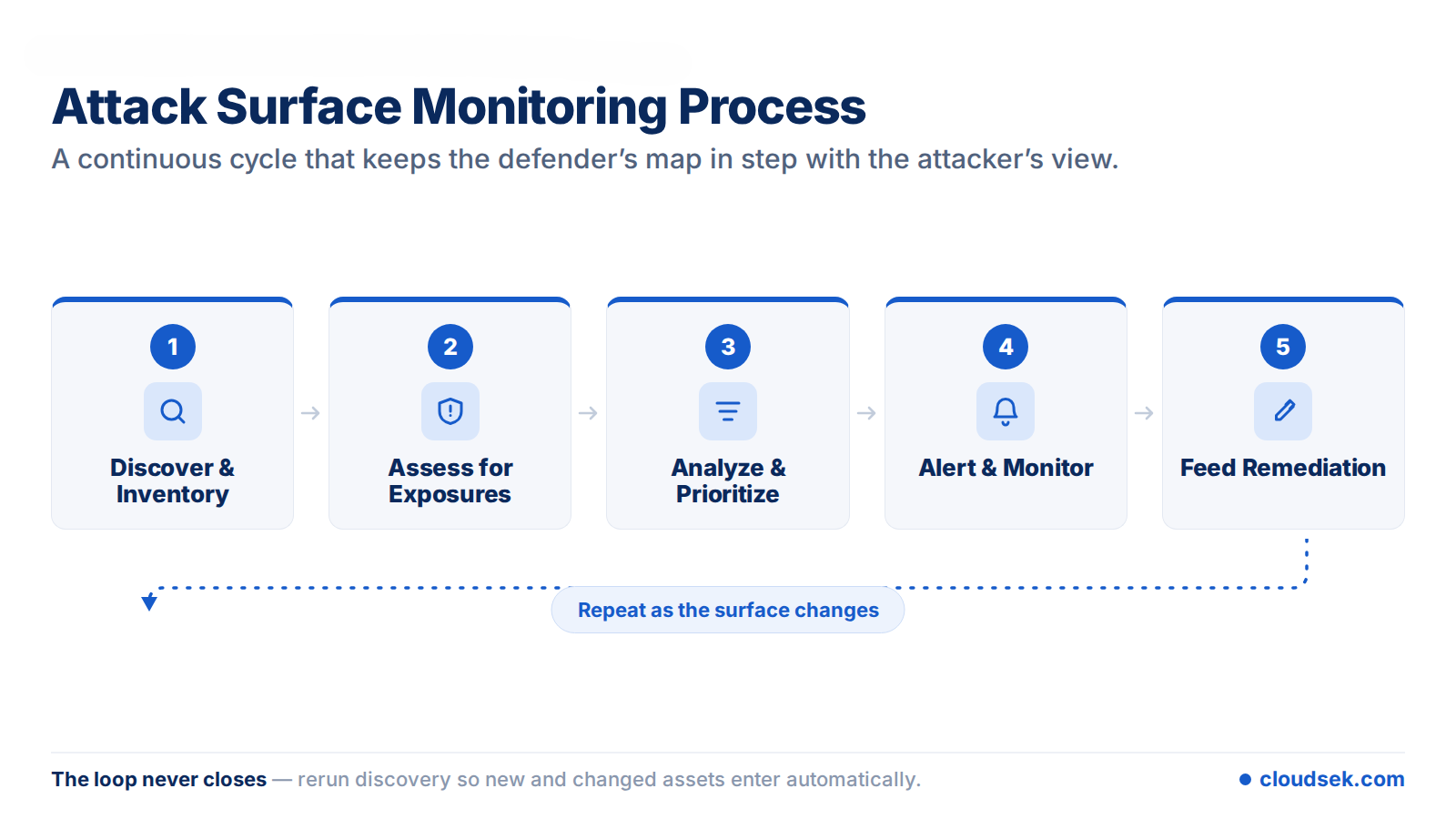
attack-surface-monitoring-process
O monitoramento da superfície de ataque raramente opera sozinho. Ele forma a camada de descoberta e visibilidade de um programa mais amplo de gestão de exposições, o modelo que o Gartner descreve como Gestão Contínua de Exposição a Ameaças (CTEM).
Nesse modelo, o monitoramento cuida das etapas de escopo e descoberta, criando e mantendo o inventário de ativos expostos. Outras funções então priorizam as exposições por risco, validam quais são genuinamente exploráveis e mobilizam equipes para remediá-las. O monitoramento fornece o panorama atual e preciso do qual o restante do programa depende; sem ele, a priorização e a validação trabalham com dados obsoletos. Isso torna o monitoramento o ponto de partida de todo o ciclo de gestão de exposições.
O monitoramento contínuo da superfície de ataque proporciona ganhos concretos de segurança.
O monitoramento da superfície de ataque oferece suporte a diversos cenários práticos em um programa de segurança.
Vários obstáculos podem limitar a eficácia do monitoramento da superfície de ataque.
Um conjunto focado de práticas mantém o monitoramento da superfície de ataque preciso e acionável.
À medida que a superfície cresce, o rastreamento manual torna-se impraticável e as organizações recorrem a ferramentas dedicadas. A ferramenta certa mapeia o que a organização expõe e mantém esse mapa atualizado sem esforço manual constante. Ao avaliar ferramentas de monitoramento da superfície de ataque, as organizações buscam um conjunto comum de recursos:
A superfície de ataque externa, composta pelos ativos voltados para a internet que os atacantes veem primeiro, é onde muitos programas se concentram. CloudSEK BeVigil descobre e monitora continuamente a superfície de ataque externa de uma organização, revelando ativos expostos, configurações incorretas e TI sombra assim que surgem, em vez de esperar pela próxima revisão. Para a superfície de ataque de IA, o AIVigil mapeia as exposições que acompanham a adoção de IA, e o SVigil cobre a superfície de terceiros e da cadeia de suprimentos. O BeVigil foca na superfície de ataque externa e complementa o monitoramento interno e de endpoints, em vez de substituí-lo.
O monitoramento da superfície de ataque descobre e observa todos os ativos que um atacante poderia visar, incluindo aqueles desconhecidos. A varredura de vulnerabilidades testa ativos que a organização já conhece em busca de falhas específicas. O monitoramento encontra os ativos, e a varredura os examina.
Não. O teste de penetração é uma tentativa manual e pontual de explorar fraquezas específicas, enquanto o monitoramento da superfície de ataque é executado de forma contínua e automática para rastrear exposições em toda a superfície. O teste de penetração valida as descobertas, e o monitoramento mantém o panorama atualizado.
Continuamente. A superfície de ataque muda diariamente à medida que ativos são adicionados, modificados e desativados; portanto, um programa eficaz monitora quase em tempo real, em vez de seguir um cronograma fixo. Verificações pontuais deixam lacunas entre as revisões.
A equipe de operações de segurança ou de segurança geralmente é responsável pelo monitoramento da superfície de ataque, muitas vezes dentro de uma função mais ampla de gerenciamento de exposição ou de vulnerabilidades. Em organizações menores, essa responsabilidade cabe ao TI. A responsabilidade final é da organização, não de qualquer ferramenta externa.
Não diretamente. Nenhuma ferramenta garante a prevenção de uma exploração desconhecida, mas o monitoramento da superfície de ataque reduz o risco ao diminuir a exposição e identificar os ativos vulneráveis voltados para a internet que são alvos de ataques de dia zero, o que acelera a detecção e a resposta.
A redução da superfície de ataque é a prática de diminuir o número de ativos expostos e pontos de entrada que um invasor pode alcançar, removendo serviços não utilizados, fechando portas desnecessárias e desativando ativos esquecidos. O monitoramento identifica o que precisa ser reduzido.
