🚀 A CloudSEK se torna a primeira empresa de segurança cibernética de origem indiana a receber investimentos da
Leia mais
.avif)

Um bot é uma aplicação de software que executa tarefas automatizadas pela internet, muitas vezes muito mais rápido do que uma pessoa conseguiria. Os bots variam desde ferramentas úteis, como rastreadores de motores de busca, até programas maliciosos que roubam contas e extraem dados.
Os bots dominam a web atualmente. Em 2024, o tráfego automatizado atingiu 51% de todo o tráfego da web, superando o humano pela primeira vez em uma década, e apenas os bots maliciosos representaram 37%, de acordo com o Bad Bot Report.
Um bot é um programa que segue um conjunto de instruções para realizar tarefas repetitivas por conta própria, sem que uma pessoa precise iniciá-lo a cada vez. A maioria dos bots imita o comportamento humano, como navegar em uma página ou enviar uma mensagem, em velocidade e escala de máquina.
Os bots existem para fazer em escala o que uma pessoa não consegue: repetir uma tarefa milhares de vezes sem se cansar. Essa eficiência serve às empresas por meio da automação e aos atacantes por meio de abusos automatizados, o que estabelece a divisão entre bons e maus abordada abaixo.
Um bot funciona executando um código que se conecta a uma rede e interage com sites, aplicativos ou APIs da mesma forma que um usuário faria, mas automaticamente. Ele envia solicitações, lê as respostas e age com base em sua programação.
Os bots são divididos em dois grupos de acordo com sua inteligência. Bots baseados em regras seguem scripts fixos e lidam com tarefas previsíveis, enquanto bots impulsionados por IA usam aprendizado de máquina para se adaptar, manter conversas e evitar a detecção. Todo bot conectado à internet possui um endereço IP que identifica seu tráfego.
Os bots impulsionados por IA são o grupo que mais cresce. A IA generativa permite que atacantes criem bots maliciosos mais evasivos e permite que rastreadores de IA coletem conteúdo da web em escala para dados de treinamento, um dos principais motivos pelos quais o tráfego automatizado superou o tráfego humano online.
Os bots se enquadram em várias categorias com base na tarefa que realizam.
A linha entre um bot bom e um bot mau se resume à permissão e à intenção, não à tecnologia. Bots bons seguem as regras estabelecidas por um site, como o arquivo robots.txt, e realizam tarefas permitidas pelo proprietário, como indexação de busca ou comparação de preços.
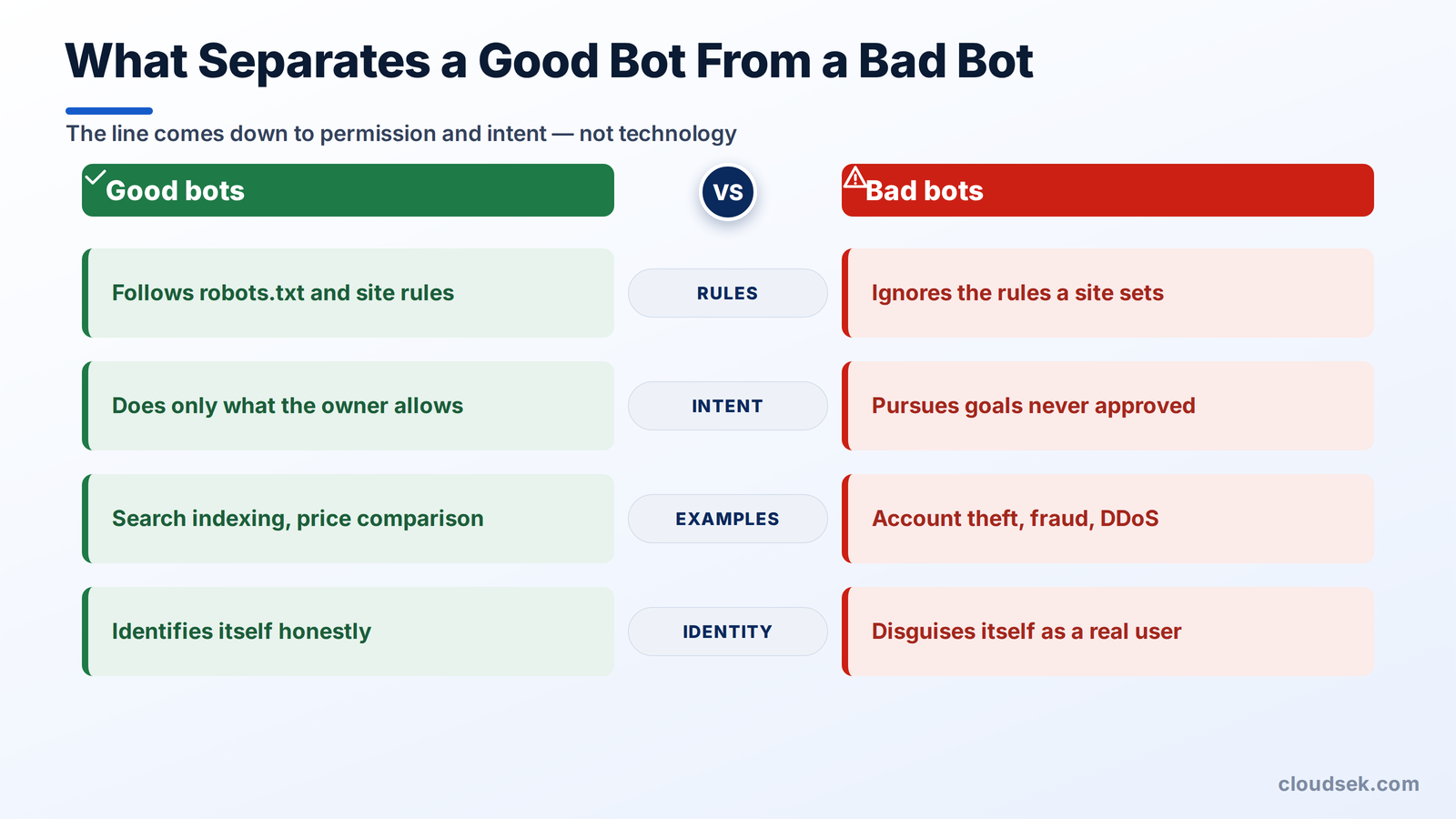
Bots maus ignoram essas regras e buscam objetivos que o proprietário nunca aprovou. Eles invadem contas, roubam conteúdo, cometem fraudes ou sobrecarregam servidores, e muitas vezes se disfarçam de usuários reais para evitar a detecção.
Bots maliciosos impulsionam alguns dos ataques mais comuns a sites e aplicativos. Sete padrões são responsáveis pela maior parte dos danos.
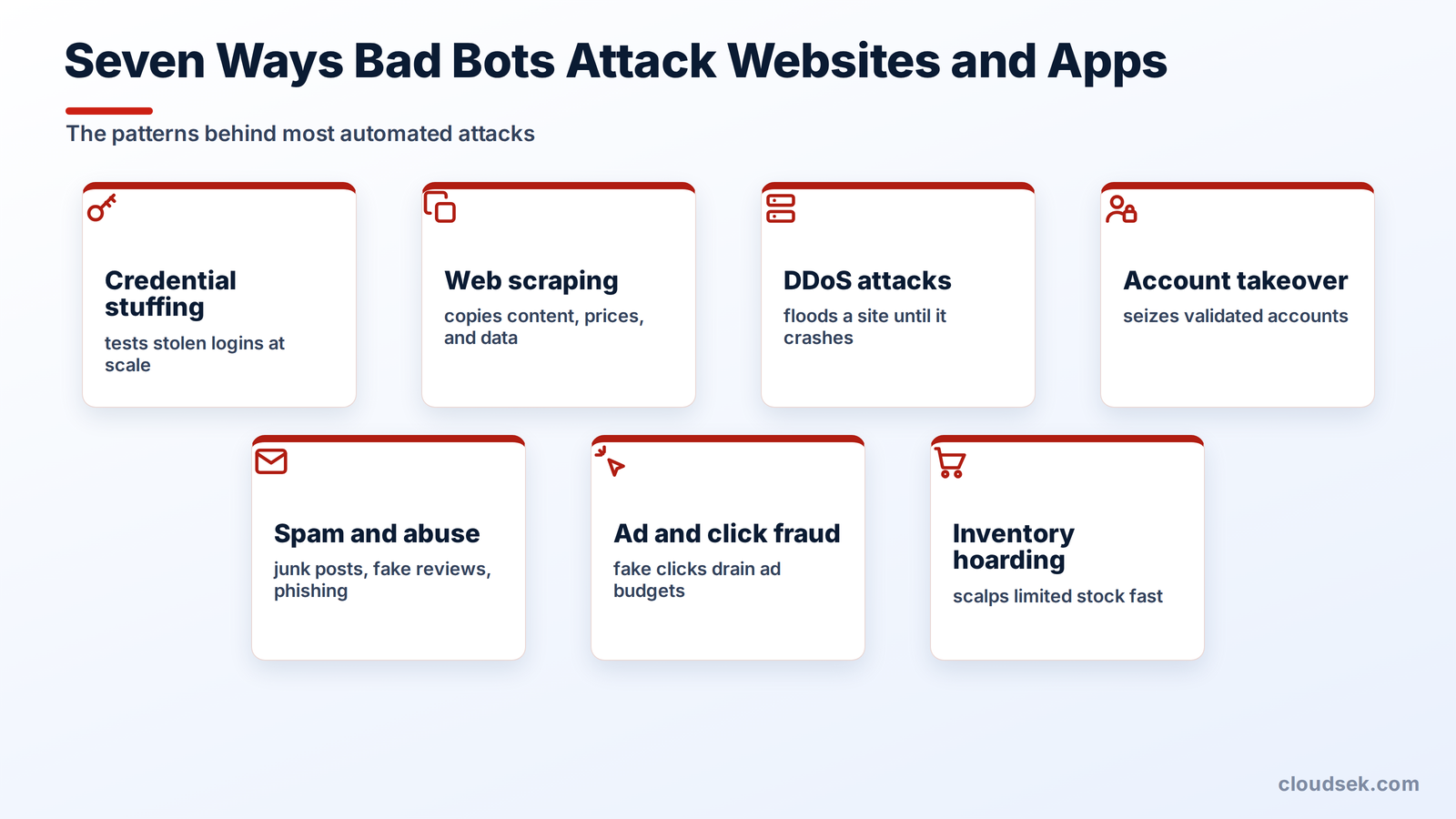
Bots testam pares de nome de usuário e senha roubados em páginas de login para sequestrar contas. Os pares vêm de violações anteriores, o que torna credenciais vazadas o combustível por trás desses ataques.
Bots de scraping copiam conteúdo, preços e dados em larga escala, prejudicando a concorrência ou roubando propriedade intelectual. O scraping agressivo sobrecarrega servidores e distorce análises.
Exércitos de bots inundam um site com tráfego até que ele fique lento ou saia do ar. Um ataque distribuído de negação de serviço utiliza várias máquinas simultaneamente para sobrecarregar o alvo.
Assim que um bot valida credenciais roubadas, os invasores assumem o controle da conta para drenar fundos, roubar dados ou cometer fraudes. A tomada de contas aumentou drasticamente à medida que bots automatizaram o processo.
Bots de spam publicam comentários inúteis, avaliações falsas e links de phishing em formulários e fóruns. Eles coletam endereços de e-mail e disseminam golpes em grande volume.
Bots geram cliques e impressões falsas para esgotar orçamentos de publicidade ou inflar receitas. Essa fraude custa bilhões de dólares aos anunciantes todos os anos.
Bots de cambistas compram ou reservam estoques limitados, desde ingressos para shows até tênis, mais rápido do que qualquer humano. Eles revendem os itens com ágio ou impedem o acesso de clientes reais.
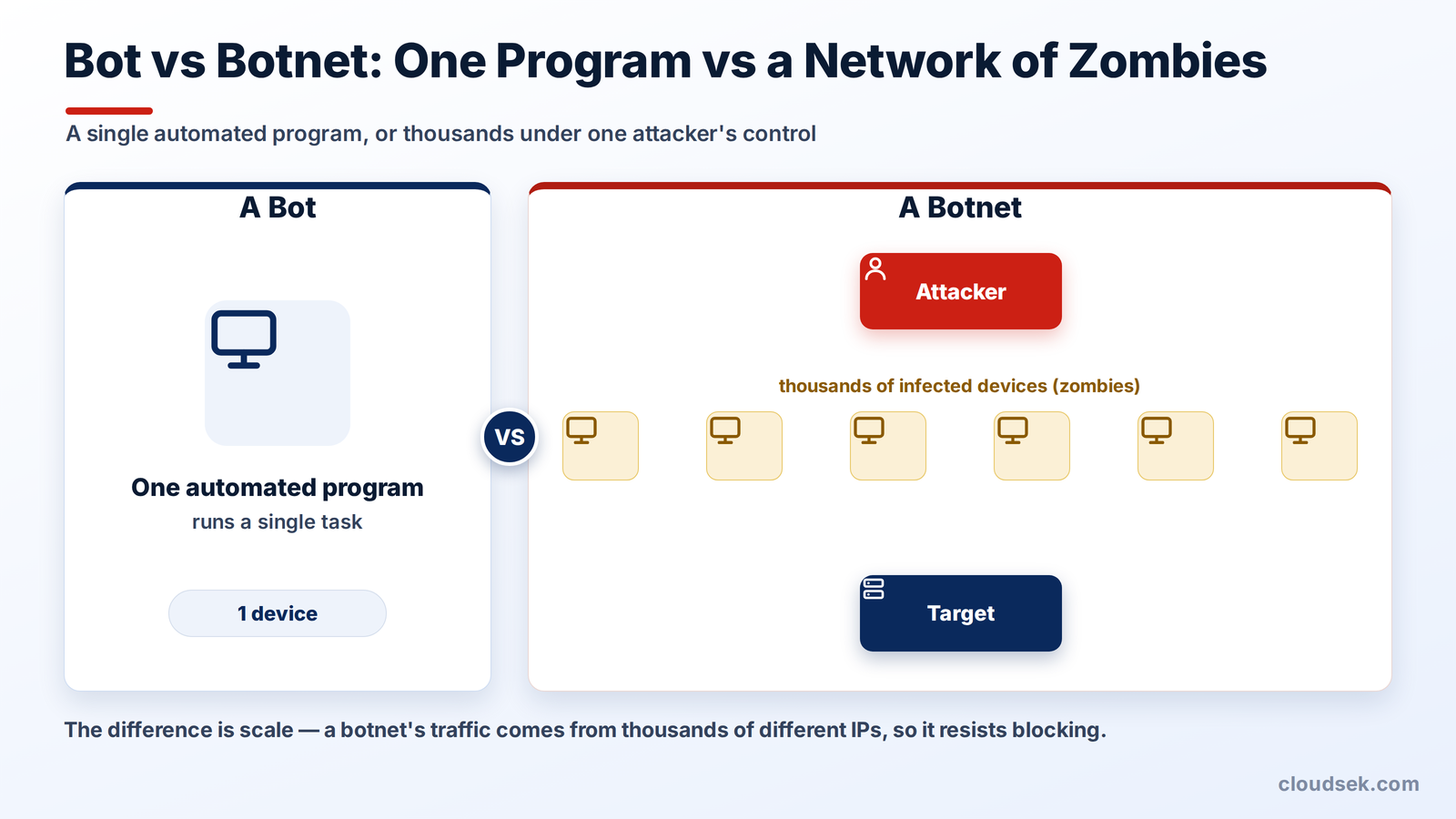
Um bot é um programa automatizado individual, enquanto uma botnet é uma rede de vários dispositivos infectados, cada um executando um bot sob o controle de um único invasor. A diferença fundamental é a escala: um bot realiza uma tarefa, e uma botnet coordena milhares deles ao mesmo tempo.
Essa escala torna as botnets perigosas. Como o tráfego de uma botnet vem de milhares de dispositivos e endereços IP diferentes, ela resiste a bloqueios, o que a torna o motor por trás de grandes ataques DDoS, campanhas de spam e ataques de credential stuffing. Os dispositivos infectados, frequentemente chamados de zumbis, executam os comandos do invasor sem o conhecimento do proprietário.
A botnet Mirai demonstra essa escala na prática. Em 2016, ela infectou centenas de milhares de dispositivos IoT por meio de senhas padrão e lançou um ataque DDoS que tirou o Twitter, a Netflix e o Reddit do ar ao sobrecarregar o provedor de DNS Dyn. A CISA aviso sobre a ameaça Mirai detalha como a botnet se espalhou por meio de dispositivos com segurança fraca.
Bloquear bots maliciosos exige diferenciá-los de usuários reais e bots legítimos, para então impedir a ação dos nocivos.
A detecção começa pelo comportamento. Ferramentas de segurança monitoram sinais que nenhum humano produz, como milhares de solicitações por minuto, trajetórias de mouse impossíveis ou logins de locais incompatíveis. Modelos de aprendizado de máquina classificam o tráfego para separar bots de pessoas.
Defesas comuns combinam vários controles. Um arquivo robots.txt orienta bots bem-intencionados, a limitação de taxa restringe solicitações por origem, CAPTCHAs bloqueiam automações simples e a autenticação multifator impede que bots de preenchimento de credenciais usem senhas roubadas. Soluções dedicadas de gerenciamento de bots e firewalls de aplicações web lidam com os casos mais sofisticados. O projeto Ameaças Automatizadas da OWASP cataloga toda a gama de ataques de bots e suas contramedidas.
A palavra “bot” é uma abreviação de “robô”. Refere-se a um software que executa tarefas automatizadas, não a uma máquina física.
Sim, bots são legais e a maioria serve a propósitos úteis, como indexação de busca e suporte ao cliente. Usar bots para fraudes, roubo de contas ou ataques é ilegal, embora a tecnologia em si não seja.
Um bot geralmente se revela por meio de respostas instantâneas, genéricas ou repetitivas que evitam perguntas específicas. Bots respondem mais rápido do que uma pessoa digita e têm dificuldade com o contexto de conversas contínuas.
Viagens, varejo e serviços financeiros enfrentam o maior volume de tráfego de bots maliciosos. Em 2024, bots maliciosos representaram 59% do tráfego no varejo e foram responsáveis por 27% de todos os ataques de bots contra sites de viagens.
Um bot automatiza tarefas e pode ser útil ou prejudicial, enquanto um vírus é um malware que se espalha infectando arquivos. Muitos bots são legítimos, ao passo que um vírus é sempre malicioso.
Bots maliciosos prejudicam o desempenho do site, distorcem análises, roubam conteúdo e aumentam os custos de hospedagem. O tráfego intenso de bots afasta usuários reais e infla as contas de infraestrutura.
