🚀 A CloudSEK se torna a primeira empresa de segurança cibernética de origem indiana a receber investimentos da
Leia mais
.avif)

As melhores práticas do Security Operations Center em 2026 se concentram no alinhamento da governança, na maturidade da automação, na arquitetura escalável e na melhoria mensurável do desempenho. As equipes modernas de SOC integram SIEM, SOAR, Zero Trust e detecção baseada em IA para reduzir o tempo de permanência e fortalecer a resposta a ameaças.
As crescentes campanhas de ransomware, a expansão da nuvem e as sofisticadas táticas adversárias exigem disciplina operacional estruturada entre pessoas, processos e tecnologia. O alinhamento com o NIST, o MITRE ATT&CK e os modelos de desempenho orientados por KPI garante uma cobertura de detecção consistente e uma contenção mais rápida de incidentes.
A implementação dessas 12 melhores práticas de SOC permite que as organizações passem do monitoramento reativo para operações de segurança proativas. A otimização estratégica entre ferramentas, estrutura de equipe e integração de inteligência de ameaças cria capacidades de defesa resilientes e prontas para o futuro.
Um Centro de Operações de Segurança (SOC) é uma função centralizada responsável por monitorar e defender a infraestrutura digital de uma organização contra ameaças cibernéticas. Ele reúne analistas de segurança, processos e tecnologia para detectar e responder a atividades maliciosas em tempo real.
As equipes do SOC supervisionam redes, endpoints, sistemas em nuvem e aplicativos para identificar comportamentos suspeitos. Quando uma ameaça é detectada, eles investigam o incidente e coordenam ações para contê-lo e corrigi-lo.
A visibilidade centralizada permite que as organizações gerenciem eventos de segurança a partir de um único hub operacional. Fluxos de trabalho estruturados e caminhos de escalonamento definidos garantem o tratamento consistente de incidentes de segurança em toda a empresa.
O desempenho efetivo do SOC em 2026 depende de governança disciplinada, arquitetura escalável, maturidade de automação e resultados operacionais mensuráveis.
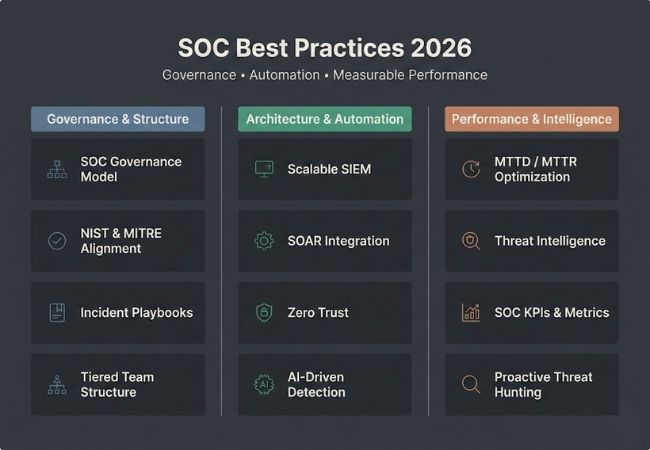
A governança definida fornece estrutura, responsabilidade e autoridade de decisão em todas as operações de segurança. Linhas claras de relatórios e estruturas de escalonamento reduzem a confusão durante incidentes de alta gravidade.
Alinhamento com a orientação da ISACA e os objetivos de controle da Organização Internacional de Padronização fortalecem a postura de conformidade e a disciplina operacional. A supervisão executiva garante que a estratégia de segurança esteja alinhada com o gerenciamento de riscos corporativos.
O alinhamento operacional com estruturas de cibersegurança reconhecidas fortalece a cobertura de detecção e a consistência da resposta. O mapeamento estruturado reduz os pontos cegos nas táticas e técnicas do adversário.
Adoção da Estrutura de Cibersegurança do Instituto Nacional de Padrões e Tecnologia, juntamente com MITRA ATT&CK melhora a classificação das ameaças e a precisão da engenharia de detecção. O alinhamento definido da estrutura melhora a maturidade do SOC a longo prazo.
A visibilidade centralizada exige uma ingestão de dados resiliente e um backbone de correlação. A arquitetura deve oferecer suporte ao aumento da telemetria de ambientes de nuvem, endpoint e rede.
Um devidamente projetado Plataforma de gerenciamento de eventos e informações de segurança (SIEM) agrega registros para análise em tempo real e geração de alertas. A integração com os recursos de detecção e resposta estendida (XDR) fortalece a visibilidade entre domínios e a profundidade investigativa.
A automação reduz o esforço investigativo repetitivo e acelera as decisões de contenção. A orquestração estruturada garante uma resposta consistente durante altos volumes de alerta.
Plataformas SOAR conecte fluxos de trabalho entre firewalls, proteção de terminais e sistemas de identidade. Os playbooks automatizados reduzem os ciclos de resposta e reduzem a fadiga dos analistas.
Os manuais documentados definem ações claras para cenários de ransomware, phishing, ameaças internas e comprometimento do sistema. A orientação de resposta estruturada minimiza a incerteza operacional durante incidentes ativos.
Os manuais alinhados às estruturas formais de Resposta a Incidentes (IR) garantem que as etapas de contenção, erradicação e recuperação sigam uma metodologia consistente. As atualizações regulares mantêm a relevância em relação aos padrões de ataque em evolução.
O Tempo Médio de Detecção (MTTD) e o Tempo Médio de Resposta (MTTR) medem a velocidade e a eficiência operacionais. Métricas mais baixas reduzem diretamente o tempo de permanência do atacante e os possíveis danos.
O ajuste de alertas, os gatilhos de automação e a otimização do fluxo de trabalho melhoram a velocidade da investigação. A avaliação contínua de métricas impulsiona a melhoria operacional sustentada.
O controle de acesso deve operar sob o pressuposto de que o comprometimento é possível a qualquer momento. A validação contínua reduz o movimento lateral e o risco de abuso de credenciais.
Implementação do Arquitetura Zero Trust (ZTA) impõe a verificação de identidade e o acesso com menos privilégios em infraestruturas híbridas. A integração com os sistemas de gerenciamento de identidade e acesso (IAM) aprimora a precisão do monitoramento.
Inteligência de ameaças fornece contexto sobre campanhas emergentes, indicadores de comprometimento e infraestrutura adversária. O enriquecimento em tempo real fortalece a priorização de alertas e a clareza investigativa.
A integração de feeds de inteligência externos no SIEM e nos fluxos de trabalho de detecção melhora a precisão e reduz os falsos positivos. A análise orientada por inteligência muda a postura do SOC da defesa reativa para a antecipatória.
As métricas de desempenho fornecem uma visão mensurável da eficácia do SOC. A transparência dos dados permite a visibilidade do nível executivo sobre a postura de risco.
O monitoramento do tempo de permanência, da fidelidade do alerta, das taxas de fechamento de incidentes e das taxas de falsos positivos apóia a tomada de decisões com base em evidências. Os benchmarks mensuráveis orientam os investimentos em pessoal e tecnologia.
Os analistas estruturados dividem as responsabilidades de monitoramento de nível 1, investigação de nível 2 e caça a ameaças de nível 3. A especialização aumenta a eficiência do fluxo de trabalho e a profundidade técnica.
Caminhos de escalonamento definidos evitam gargalos durante incidentes de alta complexidade. A segmentação clara das responsabilidades melhora a resiliência sob pressão operacional.
A caça de ameaças se concentra na identificação de adversários que escapam dos sistemas de detecção baseados em assinaturas. A análise baseada em hipóteses revela anomalias comportamentais sutis.
O uso de análises comportamentais e técnicas de emulação de adversários aumenta a visibilidade em todo o ciclo de vida do ataque. Os programas de caça contínua reduzem a exposição a longo prazo a ameaças persistentes.
A telemetria de alto volume em endpoints e cargas de trabalho na nuvem exige uma análise inteligente em grande escala. A triagem manual por si só não pode sustentar as demandas modernas de detecção.
Modelos de inteligência artificial (IA) e aprendizado de máquina (ML) aprimore a detecção de anomalias e a análise preditiva. A priorização baseada em IA reduz a fadiga dos alertas e melhora a eficiência geral do SOC.
A maturidade do SOC é medida avaliando a consistência operacional, a capacidade de detecção, a eficiência da resposta e o alinhamento estratégico.
A modernização do SOC exige simplificação arquitetônica, maturidade de automação e estratégia operacional alinhada ao risco.
Reduzir a sobreposição de plataformas de segurança elimina a duplicação de alertas e o atrito operacional, criando um ambiente de monitoramento mais unificado. Os ecossistemas consolidados melhoram a precisão da correlação e permitem que os analistas se concentrem em investigações de alta prioridade em vez de gerenciar ferramentas desconectadas.
A arquitetura SOC moderna deve suportar cargas de trabalho híbridas e multinuvem para manter uma visibilidade consistente em todos os sistemas distribuídos. O monitoramento escalável e alinhado à nuvem garante que a telemetria permaneça contínua à medida que a infraestrutura evolui além dos data centers tradicionais.
A automação expandida acelera as tarefas investigativas repetitivas e os fluxos de trabalho de contenção sem aumentar a pressão da equipe. A orquestração estruturada melhora a consistência da resposta e reduz os atrasos manuais durante incidentes de alta gravidade.
A ingestão abrangente de registros em endpoints, identidades, redes e aplicativos fortalece a profundidade de detecção e a clareza investigativa. Uma coleta mais ampla de telemetria reduz os pontos cegos e melhora a correlação entre os estágios de ataque.
O treinamento avançado de analistas aprimora as capacidades de engenharia de detecção, busca de ameaças e liderança em incidentes. O desenvolvimento contínuo de habilidades garante a eficácia operacional contra adversários cada vez mais sofisticados.
A alocação de recursos deve se alinhar com a exposição mensurável e os resultados de desempenho para garantir o investimento estratégico. As decisões orçamentárias baseadas em métricas operacionais fortalecem a resiliência e, ao mesmo tempo, mantêm a disciplina financeira.
Os Centros de Operações de Segurança em 2026 devem operar com estrutura, desempenho mensurável e tecnologias integradas para permanecerem eficazes contra ameaças em evolução. Forte governança, maturidade de automação e visibilidade contínua definem operações de segurança resilientes.
As organizações que implementam as melhores práticas disciplinadas entre pessoas, processos e plataformas criam ciclos de detecção mais rápidos e maior capacidade de contenção. A otimização sustentada garante que o SOC evolua do monitoramento reativo para uma função estratégica de redução de risco.
Um SOC monitora, detecta, investiga e responde às ameaças à segurança cibernética. Seu objetivo é reduzir o risco ao conter incidentes rapidamente e limitar o impacto.
A automação acelera investigações repetitivas e ações de resposta. Ele melhora a velocidade, a consistência e a eficiência operacional.
O Zero Trust impõe verificação contínua de identidade e acesso com menos privilégios. Ele reduz o movimento lateral e melhora a contenção de brechas.
As taxas de MTTD, MTTR, tempo de permanência e falsos positivos medem a eficácia. Esses indicadores refletem a velocidade de detecção e a eficiência da resposta.
Os processos devem ser revisados regularmente com base nas mudanças de ameaças e nas métricas de desempenho. A avaliação contínua apoia a maturidade operacional sustentada.
