🚀 A CloudSEK se torna a primeira empresa de segurança cibernética de origem indiana a receber investimentos da
Leia mais
.avif)

A inteligência contra ameaças à segurança converte dados brutos em insights acionáveis para detectar, prevenir e responder às ameaças cibernéticas. A correlação de registros com feeds externos revela comportamentos e técnicas do invasor que permanecem ocultos em alertas isolados.
A inteligência eficaz categoriza as ameaças em níveis estratégicos e operacionais para apoiar as equipes técnicas e os tomadores de decisões executivas. Essa abordagem estruturada melhora a priorização de ameaças e alinha as defesas com a pilha de tecnologia e o perfil de risco de uma organização.
A integração com a estrutura MITRE ATT&CK e as plataformas SIEM permite a busca proativa de ameaças e a correlação automatizada de eventos. Esses recursos combinados permitem que as equipes de segurança reconheçam os padrões de ataque precocemente e neutralizem ameaças complexas antes da escalada.
Os fluxos de trabalho de inteligência contra ameaças à segurança conectam saídas de inteligência a sistemas de detecção e resposta em tempo real em ambientes corporativos.
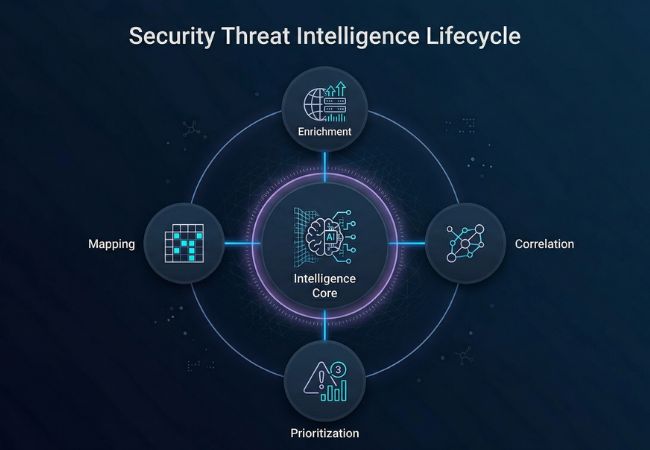
Diferentes tipos de inteligência se baseiam nesses fluxos de trabalho, apoiando decisões em vários níveis de operações de segurança.
A inteligência de ameaças é categorizada em tipos distintos com base em como ela apoia a tomada de decisões em diferentes níveis de operações de segurança.
Embora esses tipos definam como a inteligência é usada, os recursos preditivos levam isso ainda mais longe, permitindo a antecipação de ameaças voltada para o futuro.
A inteligência preditiva contra ameaças é uma abordagem avançada que antecipa futuras ameaças cibernéticas usando dados históricos, padrões comportamentais e sinais de ameaças em evolução. Modelos analíticos e técnicas de aprendizado de máquina identificam tendências que indicam como os ataques provavelmente se desenvolverão.
A análise do comportamento do atacante revela possíveis próximas etapas, como movimento lateral, aumento de privilégios ou exploração direcionada. A visibilidade desses padrões permite que as organizações preparem as defesas antes que as ameaças se materializem totalmente.
A integração de modelos preditivos com plataformas de inteligência de ameaças e operações de segurança melhora a tomada de decisões proativa. As equipes de segurança aplicam esses insights para fortalecer os controles, reduzir a exposição e limitar o impacto das ameaças emergentes.
A inteligência de ameaças à segurança depende do trabalho conjunto de vários sistemas, pois nenhuma fonte única fornece uma visão completa das ameaças. As lacunas entre fontes de dados, ferramentas e análises geralmente criam pontos cegos que os invasores exploram.
A visibilidade da ameaça começa com dados espalhados por registros, endpoints, tráfego de rede e feeds externos. A fragmentação entre essas fontes dificulta a visualização dos padrões de ataque, a menos que as informações sejam reunidas e analisadas coletivamente.
Os dados dispersos de ameaças rapidamente se tornam incontroláveis sem um sistema central para organizá-los. DICAS consolide e enriqueça a inteligência, conectando indicadores com campanhas conhecidas, atores de ameaças e atividades históricas.
Os eventos de segurança geram grandes volumes de alertas que não têm contexto quando visualizados individualmente. Plataformas SIEM correlacione esses eventos entre sistemas, transformando sinais desconectados em uma visão mais clara das ameaças contínuas.
Entender o comportamento do invasor exige mais do que dados brutos ou alertas. Os frameworks fornecem estrutura mapeando a atividade para técnicas conhecidas, ajudando as equipes a reconhecer como os ataques progridem.
Indicadores individuais como endereços IP ou hashes de arquivos, geralmente parecem insignificantes por si só. Quando rastreados e correlacionados ao longo do tempo, eles revelam padrões que confirmam se os sistemas foram atacados ou comprometidos.
A investigação manual retarda a resposta quando os volumes de alertas aumentam além do que as equipes conseguem lidar. A automação reduz essa pressão ao lidar com ações de enriquecimento, priorização e resposta em grande escala.
Os cenários de ameaças mudam rapidamente, tornando os dados estáticos desatualizados em curtos períodos. As atualizações contínuas de feeds externos garantem que a inteligência reflita as ameaças, vulnerabilidades e atividades de ataque atuais.
Os ambientes modernos geram grandes volumes de dados de segurança, mas a maioria deles carece de contexto quando visualizada isoladamente. Sem inteligência, as equipes lutam para distinguir ameaças reais de ruídos, o que leva a respostas atrasadas e riscos perdidos.
Os alertas de segurança geralmente aparecem sem indicadores claros de gravidade ou intenção. A inteligência adiciona contexto, permitindo que as equipes entendam quais ameaças exigem atenção imediata e quais podem ser despriorizadas.
Os alertas autônomos geralmente levam a falsos positivos que consomem tempo e recursos. A inteligência correlacionada reduz esse ruído vinculando sinais relacionados e destacando ameaças genuínas.
Atrasos na identificação e compreensão das ameaças aumentam o impacto potencial de um ataque. A visibilidade clara do comportamento do invasor permite uma contenção mais rápida e ações de resposta mais precisas.
Os dados técnicos por si só não suportam decisões estratégicas de segurança. A inteligência fornece uma visão mais ampla dos riscos, ajudando as organizações a alinhar as defesas às prioridades de negócios e à exposição a ameaças.
Modelos de segurança reativos permitem que as ameaças progridam antes que uma ação seja tomada. As abordagens baseadas em inteligência identificam os riscos mais cedo, permitindo que as equipes evitem incidentes em vez de apenas responder a eles.
O crescimento da infraestrutura aumenta o volume e a complexidade dos alertas. A inteligência e a automação ajudam a gerenciar essa escala reduzindo o esforço manual e melhorando a eficiência operacional.
A inteligência contra ameaças à segurança melhora a visibilidade, a tomada de decisões e a resposta em ambientes complexos, mas também apresenta desafios operacionais e técnicos que as organizações devem gerenciar de forma eficaz.
A implementação bem-sucedida depende de quão bem a inteligência se encaixa nos sistemas existentes e suporta as necessidades operacionais reais. O alinhamento deficiente geralmente leva a insights não utilizados, resposta atrasada e impacto limitado.
A clareza no início evita a coleta desnecessária de dados e esforços dispersos. O foco deve permanecer em ativos críticos, ameaças prováveis e áreas onde já existem lacunas de visibilidade.
A inteligência só se torna significativa quando é alimentada diretamente nos sistemas de detecção e resposta. As plataformas SIEM, as ferramentas de endpoint e o monitoramento de rede precisam trabalhar juntos para que os insights se traduzam em ação.
As interrupções no fluxo de dados geralmente criam pontos cegos dos quais os invasores se aproveitam. A ingestão consistente de sistemas internos e feeds externos garante que a análise reflita o que realmente está acontecendo em todos os ambientes.
Indicadores isolados raramente explicam o escopo completo de um ataque. Conectá-los a campanhas, comportamentos e agentes de ameaças fornece clareza durante a investigação e reduz as suposições.
O aumento dos volumes de alerta torna o manuseio manual impraticável ao longo do tempo. Fluxos de trabalho automatizados de priorização e resposta ajudam a manter a velocidade sem sobrecarregar as equipes.
Até mesmo sistemas bem integrados falham quando as equipes não têm clareza sobre como usá-los. Processos compartilhados e treinamentos regulares garantem que a inteligência leve a ações consistentes e eficazes.
A configuração inicial raramente fornece resultados ideais sem ajustes. A avaliação contínua da precisão da detecção, do tempo de resposta e das lacunas operacionais ajuda a melhorar a eficácia ao longo do tempo.
O CloudSEK fortalece a inteligência de ameaças à segurança por meio de insights preditivos orientados por IA e monitoramento contínuo na superfície, na deep web e na dark web. Plataformas como CloudSEK xVigil e BeVigil automatizam a coleta e a análise de dados de ameaças externas, permitindo a identificação precoce dos riscos antes que eles se transformem em incidentes ativos.
A cobertura de centenas de fontes externas, incluindo fóruns clandestinos, canais criptografados e plataformas sociais, fornece visibilidade sobre ameaças como vazamentos de credenciais, violações de dados e falsificação de identidade de marca. Os modelos de aprendizado de máquina correlacionam esses dados para gerar uma pontuação de risco contextual e resumos concisos de incidentes, reduzindo o ruído e melhorando a eficiência da análise.
O mapeamento da superfície de ataque externa de uma organização revela ativos expostos, como chaves de API, aplicativos vulneráveis e configurações incorretas na nuvem. A integração com os sistemas SIEM e SOAR permite ações de resposta automatizadas, permitindo que as equipes de segurança ajam rapidamente com base na inteligência e fortaleçam os fluxos de trabalho gerais de detecção e prevenção de ameaças.
