🚀 A CloudSEK se torna a primeira empresa de segurança cibernética de origem indiana a receber investimentos da
Leia mais



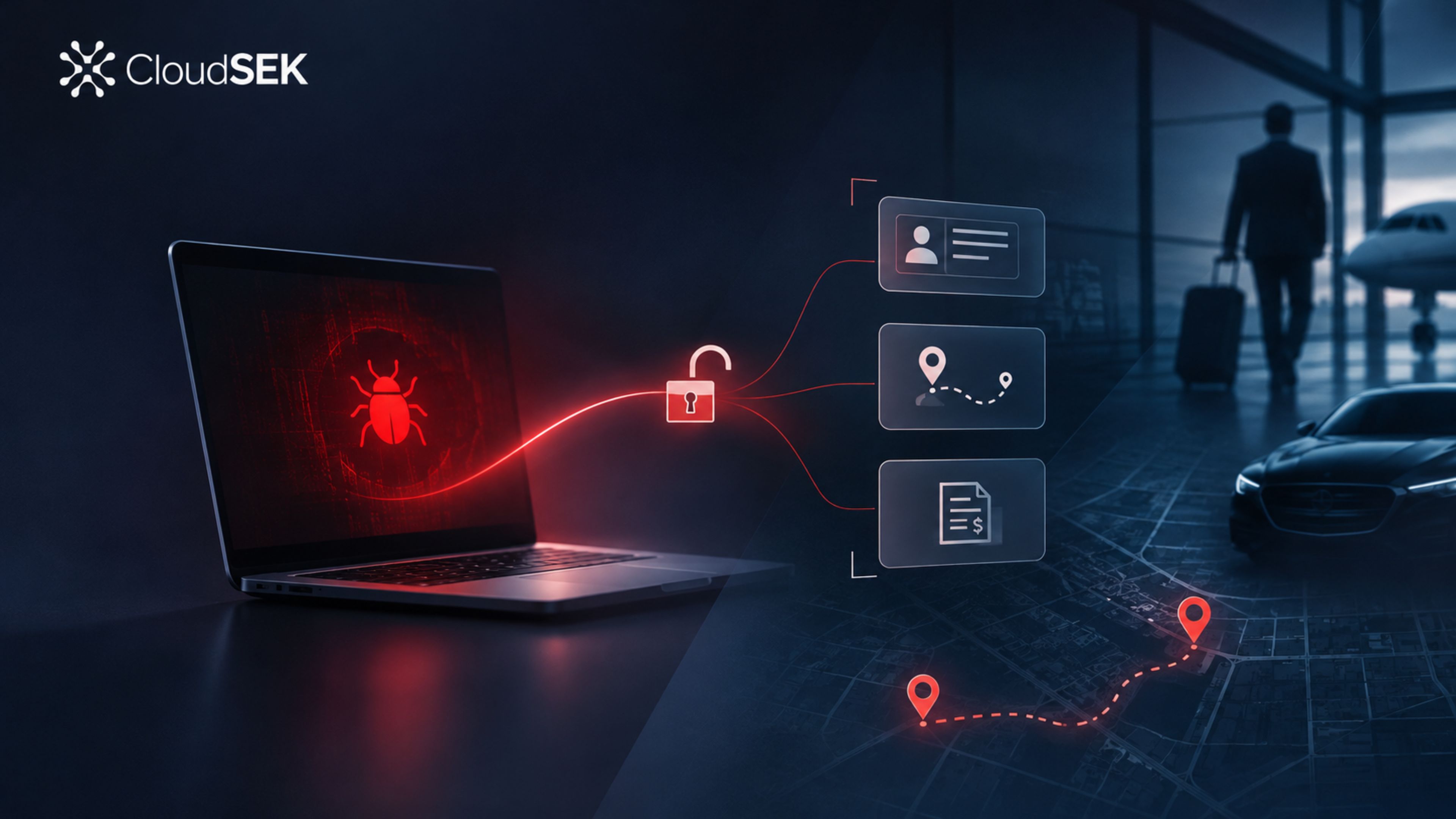


Imagine a single workstation belonging to an external vendor's employee gets infected with infostealer malware. You might think only that localized system or isolated vendor data would be exposed. In this case, apparently not! A single set of leaked portal credentials allowed an attacker to breach the vendor's administrative portal, escalate to Remote Code Execution (RCE) on the DB Admin Server, and gain full administrative control over 18 backend database instances.
Additionally, via another Broken Access Control (BAC) flaw paired with administrative account takeover and command execution, high-profile corporate accounts across multiple sectors were left exposed.
Third-party supply chain risk remains one of the most critical vulnerabilities confronting modern enterprises. A security investigation conducted by our research team revealed how an initial compromise of a single endpoint connected to an executive transportation and ground logistics provider cascaded into a complete breach of enterprise data.
[ Infostealer Infection ]
           │
           ▼
[ Leaked Vendor Credentials ]
           │
           ▼
[ Portal Administrative Takeover ]
           │
           ▼
[ Parameter POST SQL Injection ]
           │
           ▼
[ xp_cmdshell Escalation ] ──► [ System-Level RCE ]
           │
           ▼
[ Full Control: 18 Backend DB Instances ]
           │
           ├───────────────────────────┐
           ▼                           ▼
[ 2,400+ Plaintext Credentials ]   [ Live Executive Movement & GPS Telemetry ]
The breach unfolded across two distinct primary vectors: a credential-driven administrative intrusion leading to database command execution, and an unauthenticated web endpoint allowing mass automated data scraping.
An infostealer log surfaced on an underground dark web forum containing plain-text administrative credentials for an enterprise fleet management portal. The compromised credentials provided initial entry into the vendor's corporate portal.
Upon gaining access to the administrative management interface, request analysis identified a parameter handling user queries that failed to sanitize input before passing it to the backend Microsoft SQL Server database engine.
This sequence permitted direct Remote Code Execution (RCE) providing full administrative visibility over all 18 connected database instances housing corporate tenant data.
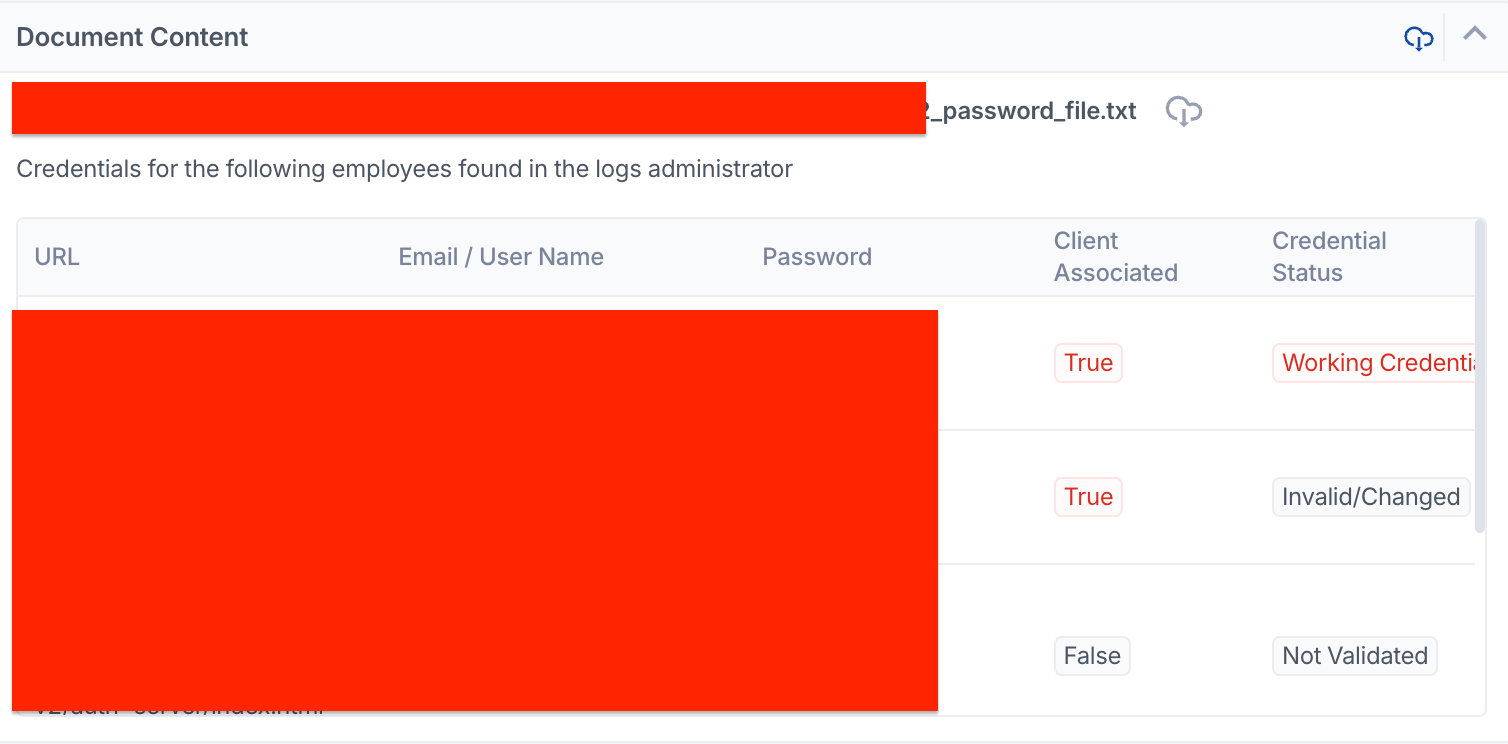
Image showcasing CloudSEK Platform detecting exposed credentials as valid and working (providing successful login to the dashboard) for the Vendor’s Web Application Portal via a compromised vendor employee’s workstation infected with an information stealer malware

Input Field on the Administrative Portal (Portal Accessible via leaked stealer log credentials) vulnerable to SQL Injection Attack and Payloads
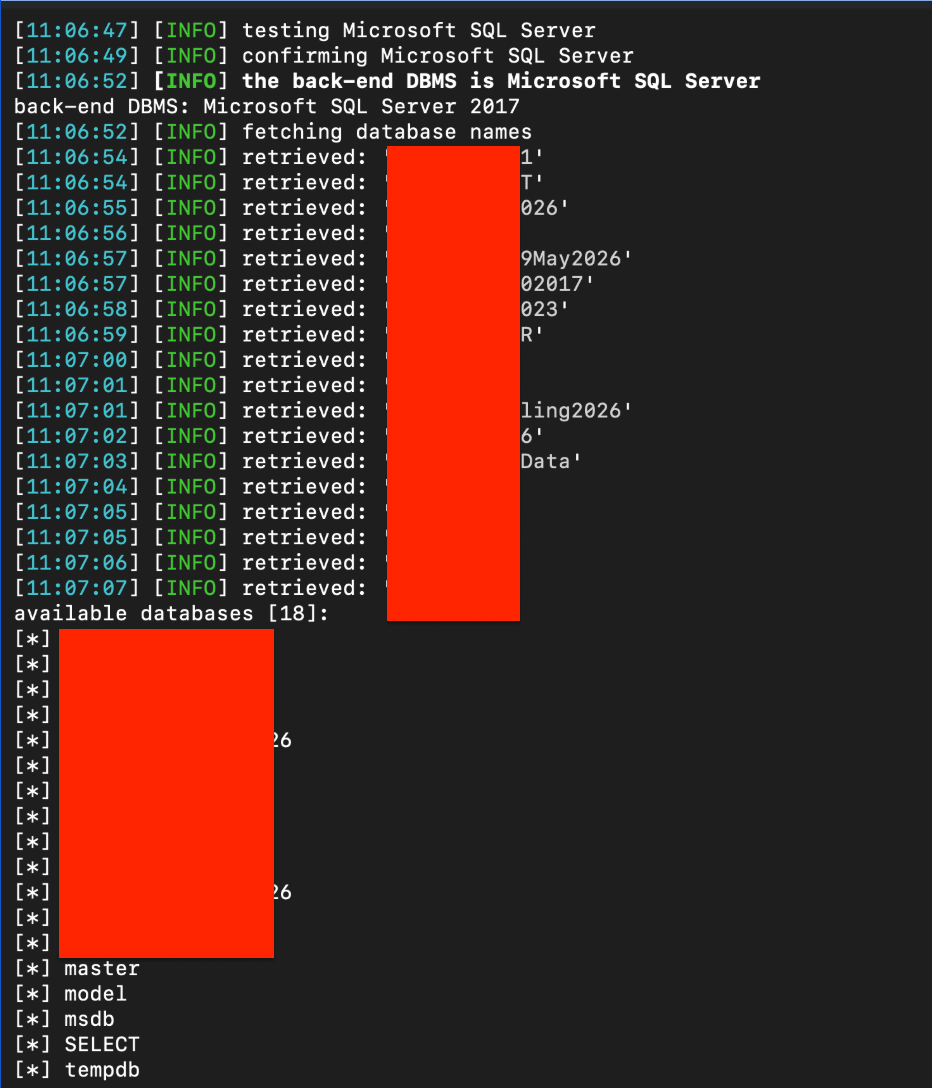
Image showcasing the exposure of various database instances present on the DB Server

Image showcasing the Tables retrievable from a single database instance all containing different exposure of data across customers using the vendor’s services
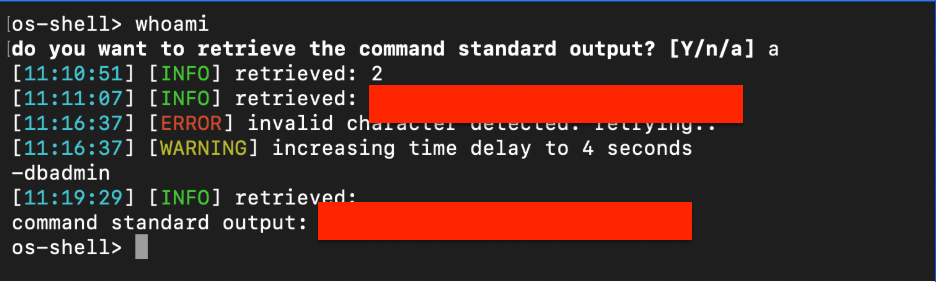
Image showcasing successful RCE on the Database server
Separately, the public-facing billing module contained an Insecure Direct Object Reference (IDOR) vulnerability on the PDF invoice generation endpoint.
The API failed to evaluate user session cookies or validate whether the requester owned the requested record. Furthermore, its input parameter accepted wildcard queries: sending short numeric strings (such as 2-digit or 3-digit prefixes) triggered broad SQL matching (`LIKE '%990%'`) rather than strict exact-string lookups.
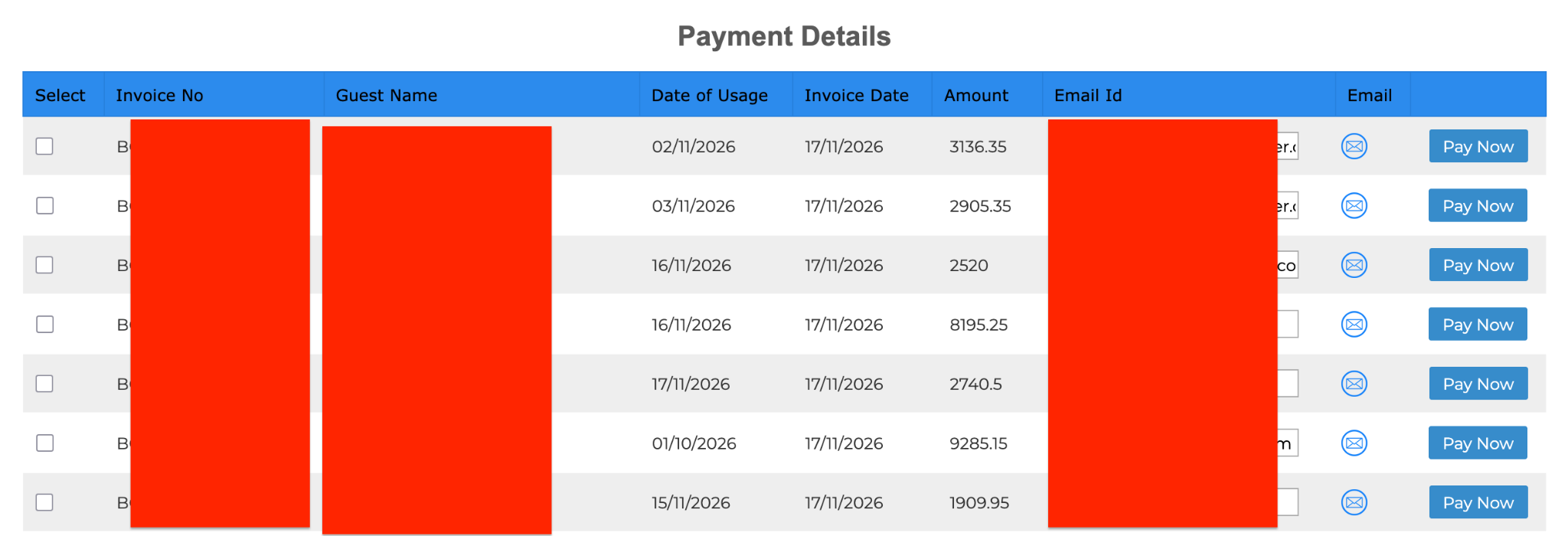
Image showcasing retrieval of bulk signed PDF transport invoices for different customer corporate entities and their employees through partial phone number inputs via Unauthenticated HTTP POST request to the Invoice API endpoint - Broken Access Control & IDOR
The primary database maintained administrative records, contact details, encrypted system fields, and plain-text passwords for enterprise portal access:
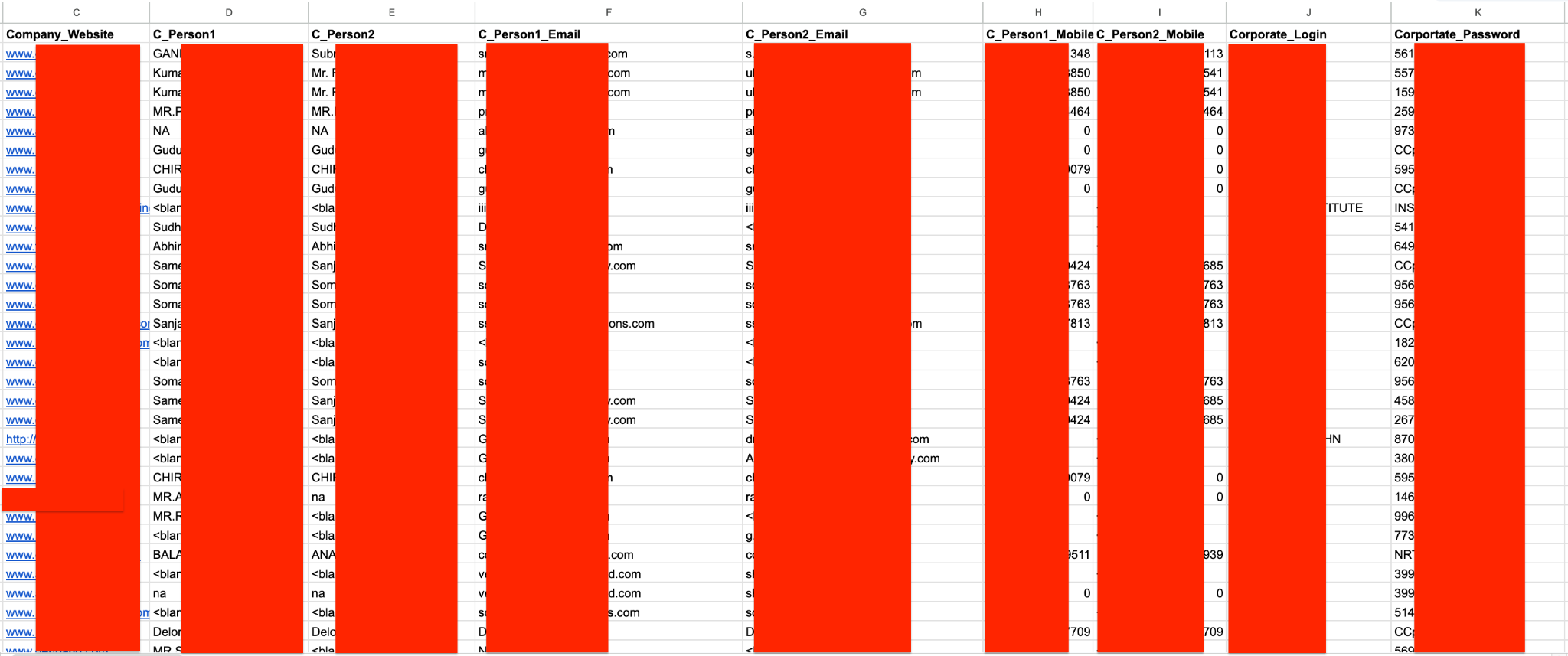
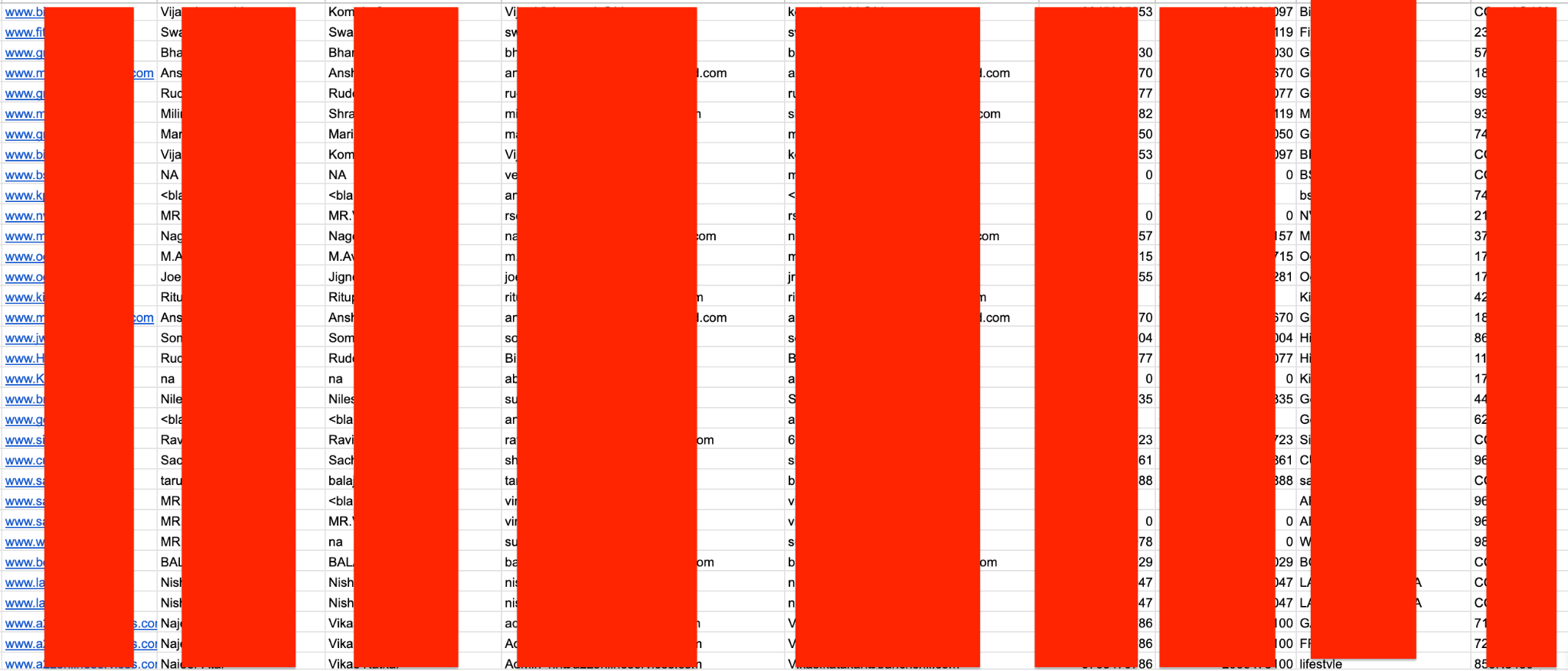
Image showcasing PII and Plaintext Credential Data exposed for different companies (based on different company’s website domains and corporate login credentials) utilizing the vendor’s services
The compromised databases contained extensive records of executive ground transportation. Each entry connected corporate travel rosters directly with flight schedules:
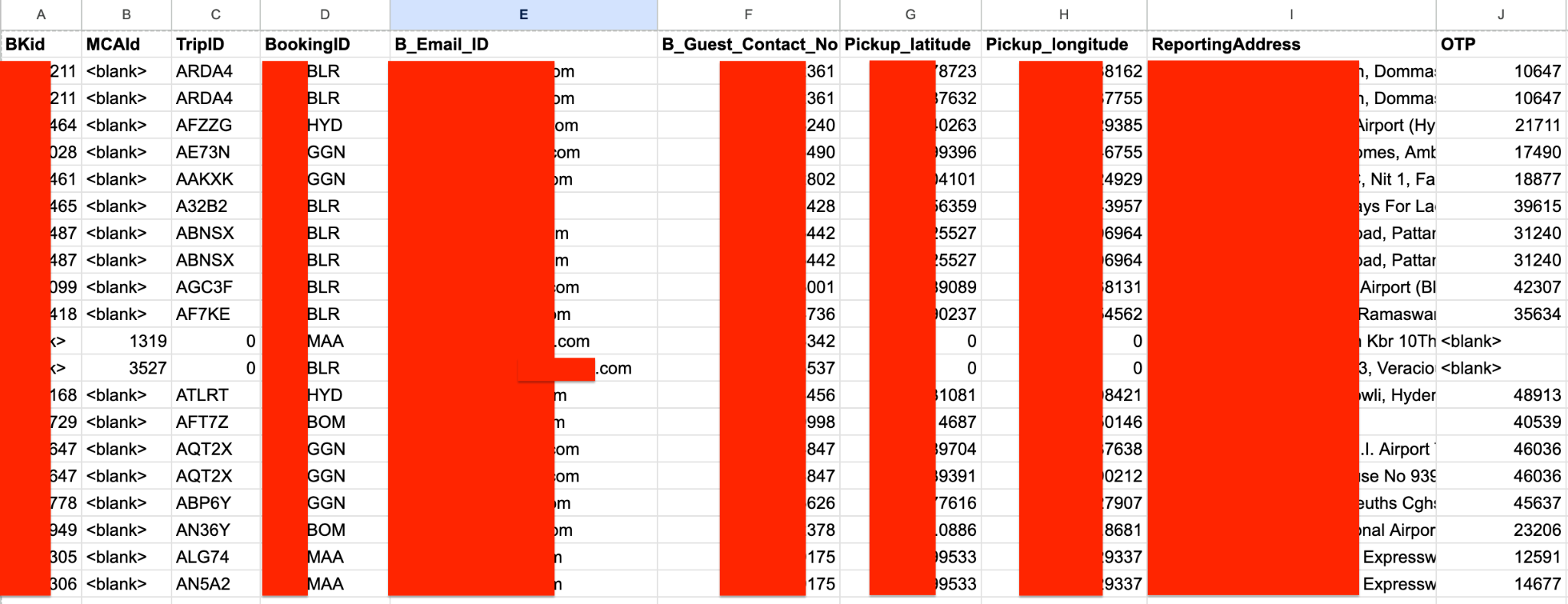
Image showcasing PII data and Movement & Flight telemetry for executives from different customer organizations (based on corporate email identifiers) utilizing vendor’s services
The IDOR vulnerability exposed digitally generated e-invoices, containing sensitive financial data:
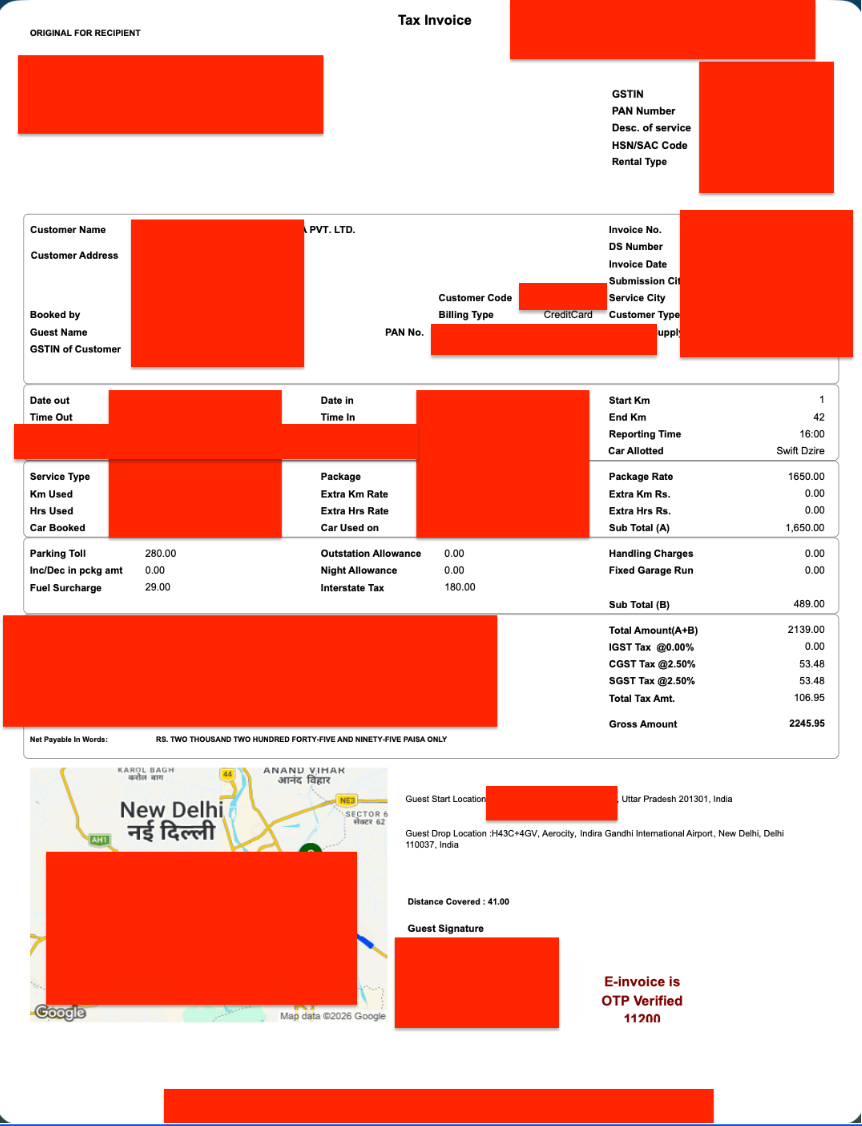
Image showcasing the customer invoice for the corporate organization utilizing the vendor’s service along with PII, signature and physical address, etc. of the employee (guest) of that corporate entity that booked the transport
The affected accounts span several major global economic sectors:
┌──► Spear-Phishing & Social Engineering
│
[ Vendor Data Compromise ] ───────┼──► Physical Executive Tracking & Surveillance
│
├──► Business Email Compromise (BEC) Fraud
│
└──► Supply Chain Lateral Intrusion
Attackers possessing exact travel itineraries, flight numbers, driver details, and destination hotels can launch highly convincing social engineering attacks. An executive receiving a text message claiming to be from their assigned driver or logistics coordinator is far more likely to click malicious links or divulge credentials.
Real-time GPS telemetry combined with flight arrival schedules creates physical security risks. Threat actors can track the exact movements of C-suite executives, high-ranking partners, and key personnel in transit.
Exposed GST profiles, internal cost-center codes, invoice formats, and corporate discount codes equip attackers to generate legitimate-looking fraudulent invoices. Posing as the logistics vendor, attackers could direct accounting departments to update payment routing details to fraudulent accounts.
With xp_cmdshell active on the vendor's primary database server, threat actors could establish persistent footholds, pivot laterally into internal corporate networks, deploy ransomware payloads, or extort the vendor by threatening to leak executive travel records.
Continuously monitor third-party vendors and partners for leaked administrative credentials, exposed databases, and unauthorized API endpoints.
Mandate that third-party vendors undergo periodic independent penetration testing, maintain SOC 2 Type II compliance, and adhere to strict data retention policies.
Avoid relying on vendor-managed local passwords. Require third-party portals to integrate with Enterprise Single Sign-On (SSO) backed by Multi-Factor Authentication (MFA) and conditional access policies.
CloudSEK's XVigil platform provides early warning capabilities against third-party supply chain risks:
In the modern threat landscape, your enterprise perimeter isn't defined by your firewall rules: it is defined by the security posture of every third-party service provider touching your operations.
This breach wasn't isolated. A single infostealer infection on an isolated vendor workstation exposed operational data, plaintext credentials, and real-time executive movement for over 40 global enterprise clients, including multiple Fortune 500 leaders across North America, Europe, and Asia-Pacific. From cloud giants and Big Four audit firms to industrial powerhouses and pharma leaders, it transformed a routine endpoint compromise into a critical supply-chain threat capable of fueling BEC, physical surveillance, and corporate account takeover.
Securing the enterprise requires looking beyond your own network. As you evaluate your attack surface today, ask yourself: If your most trusted vendor fell to a single infostealer log right now, how much of your enterprise would go down with them?