🚀 CloudSEK featured in the 2026 Frost Radar™!
Read more
.avif)

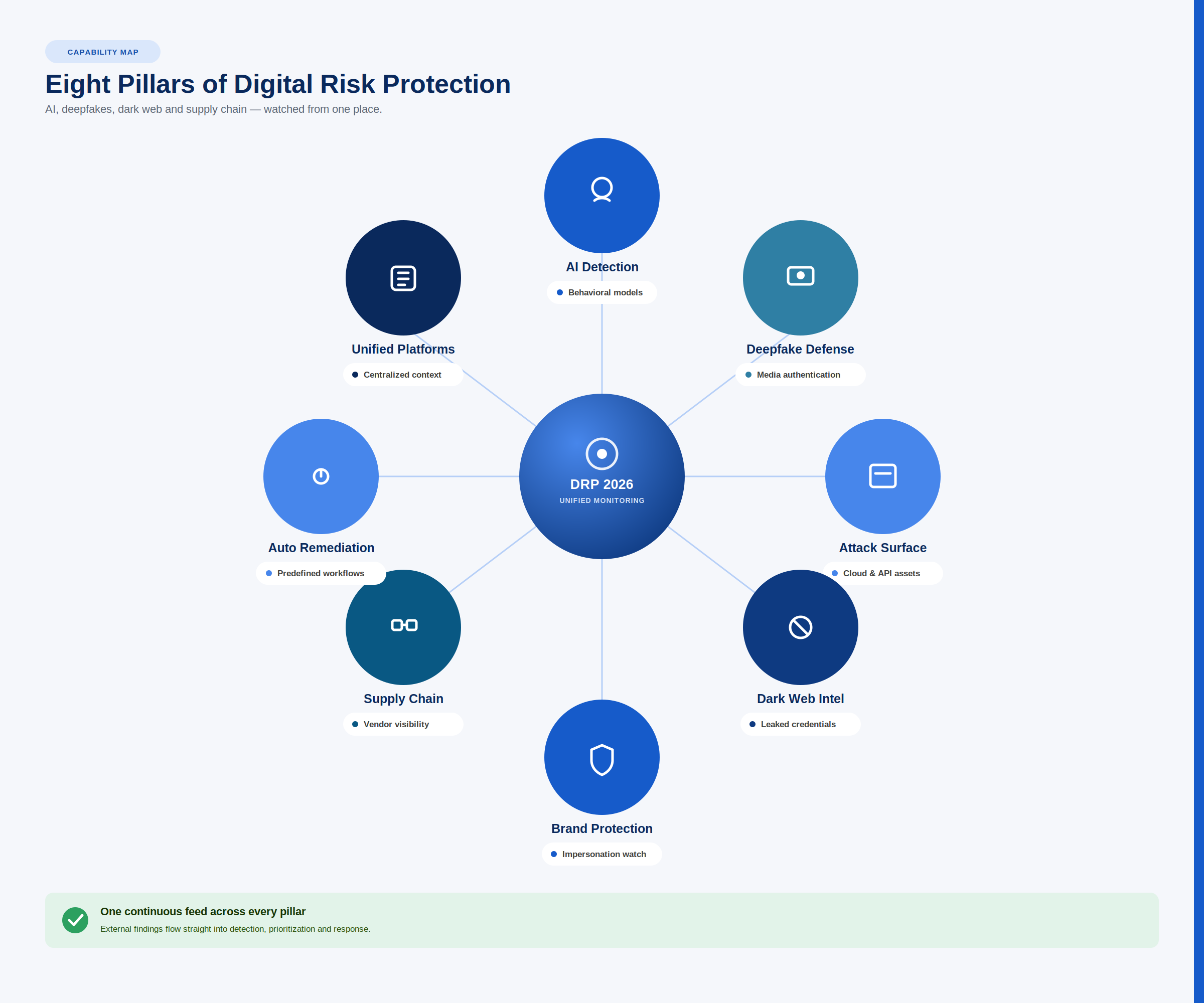
AI-powered detection, deepfake defense, attack surface management, dark web intelligence, supply chain visibility, automated remediation, brand protection, and unified security platforms are the top digital risk protection trends shaping 2026. Businesses are investing in these capabilities to strengthen cyber resilience and improve response effectiveness.
Expanding cloud adoption, connected applications, third-party dependencies, and online engagement have created new points of exposure. Broader oversight across external assets helps reduce operational disruption, financial losses, and reputational damage.
DRP enables enterprises to identify, assess, and mitigate cyber threats originating beyond traditional network boundaries. Advances in threat intelligence, automation, and external exposure analysis are reshaping modern cybersecurity strategies.
Digital Risk Protection priorities continue shifting as businesses manage a wider range of exposures across online platforms, cloud environments, third-party ecosystems, and internet-facing assets.
Manual investigation processes struggle to keep pace with the volume of phishing campaigns, credential leaks, account takeover attempts, and online fraud. Larger datasets, shorter response windows, and more complex attack patterns have increased reliance on automated analysis across Digital Risk Protection programs.
Artificial intelligence now supports behavioral modeling, anomaly identification, and threat correlation across multiple data sources. Greater context during risk assessment allows teams to prioritize meaningful exposures rather than sorting through thousands of low-value alerts.
Synthetic audio, video, and image content have altered how trust is established across digital interactions, making deepfake attacks a growing concern for enterprises. Executive impersonation, manipulated communications, and identity-based fraud continue affecting business operations across multiple industries.
Generative AI tools have lowered the barrier to creating convincing content capable of deceiving employees, customers, and business partners. Media authentication, biometric verification, and identity validation technologies therefore play a larger role in reducing deception-related risks.
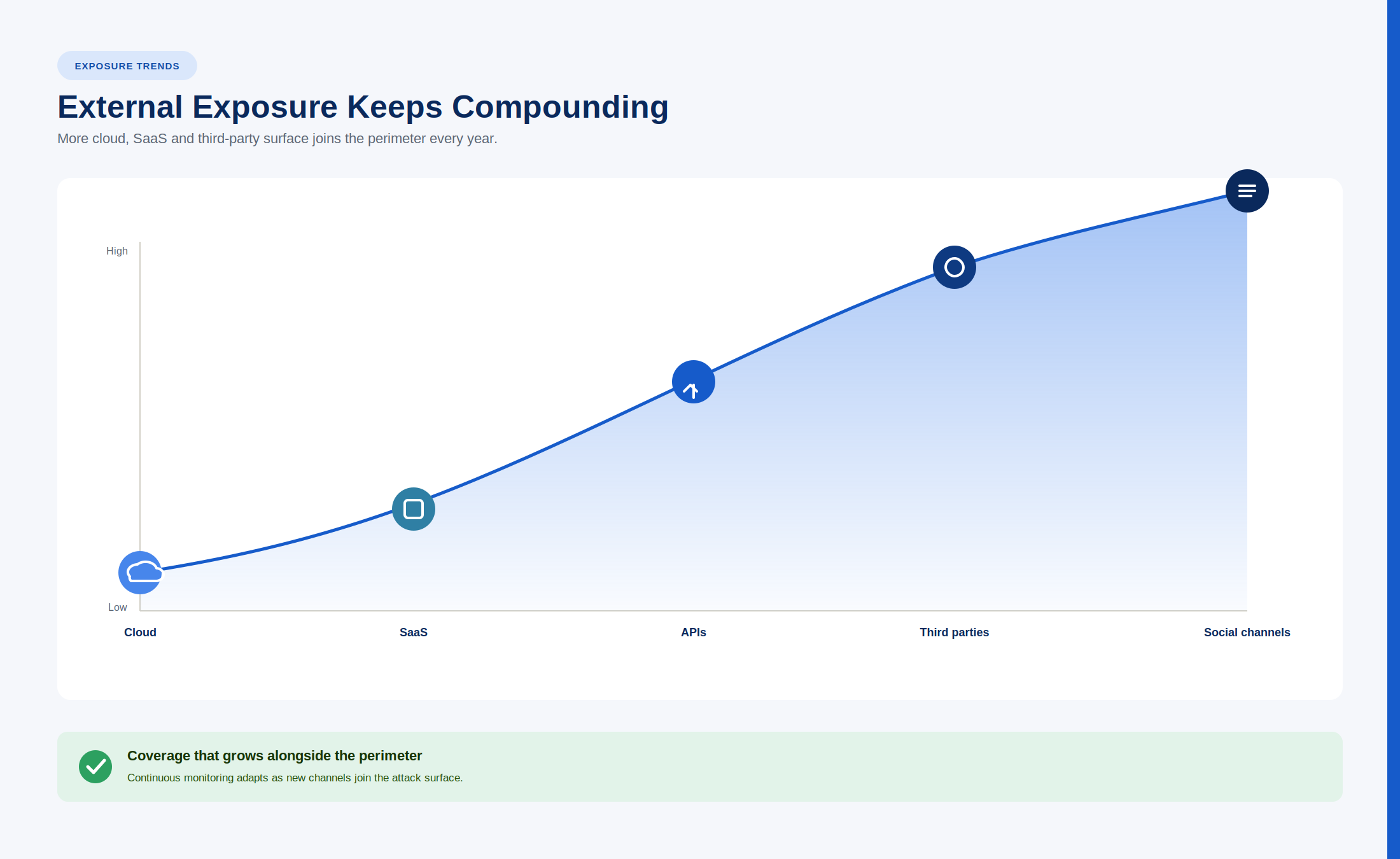
Cloud services, SaaS applications, APIs, and remote infrastructure continue expanding the number of internet-facing assets connected to daily operations. Traditional inventory processes often struggle to keep pace with these changes, creating blind spots across distributed environments.
Asset discovery now extends beyond known infrastructure into resources spread across multiple providers and platforms. External Attack Surface Management helps uncover overlooked services, exposed systems, and configuration weaknesses before they attract unwanted attention.
Leaked credentials, proprietary information, and compromised accounts frequently appear within underground marketplaces and cybercrime communities. Earlier awareness of these exposures has increased adoption of dark web intelligence across Digital Risk Protection programs.
Threat actor discussions and stolen datasets often provide valuable context during risk assessments and incident investigations. Access to this information supports more informed decisions around remediation priorities and exposure management.
Customer engagement now spans social platforms, marketplaces, messaging applications, websites, and mobile experiences. Fraudulent domains, counterfeit profiles, and impersonation campaigns frequently exploit these channels to misuse established identities and damage customer trust.
Online reputation influences customer confidence long before a transaction takes place. Brand protection strategies therefore extend beyond domain monitoring to include broader oversight of digital touchpoints and unauthorized activity.
Supply chain visibility has become a priority as vendors, contractors, software providers, and business partners influence larger portions of operational ecosystems. Risks originating within third-party environments often remain difficult to identify through internal monitoring alone.
Several high-profile incidents have demonstrated how weaknesses outside organizational boundaries can affect entire business networks. More comprehensive evaluation of external dependencies supports continuity planning, oversight initiatives, and risk management efforts.
Alert fatigue and investigation backlogs continue challenging digital risk programs across many industries. Manual processes often create delays between exposure discovery and corrective action, particularly when teams manage large volumes of alerts.
Workflow automation addresses this challenge by initiating predefined response actions without extensive human involvement. Automated remediation helps streamline operational processes and improve consistency across mitigation activities.
Unified security platforms continue gaining attention as organizations seek a more connected view of risks across multiple environments and technologies. Threat intelligence, brand monitoring, attack surface management, and remediation workflows increasingly operate within centralized ecosystems.
Disconnected tools often create fragmented insights that complicate investigations and decision-making. Consolidated environments provide broader context for prioritizing actions and managing digital exposures more efficiently.
DRP continues evolving alongside increasingly connected business environments, expanding digital footprints, and more sophisticated attack methods. Addressing external exposures now requires a broader approach that extends beyond traditional monitoring and reactive measures.
Technology alone cannot eliminate digital risks without clear visibility into assets, third-party relationships, online channels, and emerging attack vectors. Long-term success depends on combining intelligence, automation, and proactive risk management within a unified strategy.
Organizations that adapt to changing conditions and emerging challenges will be better prepared to reduce disruption, protect trust, and maintain operational continuity. Staying aligned with these developments can help create a more resilient foundation for managing digital risks in the years ahead.
CloudSEK’s XVigil platform stands out as a powerful solution with a comprehensive deep and dark web monitoring module. Our superpower lies in working with companies to understand their specific needs and providing them with actionable intelligence to combat current cyber threats and prepare for future ones.
Book a demo today to see how XVigil can help protect your organization.
Protect your organization from external threats like data leaks, brand threats, dark web originated threats and more. Schedule a demo today!
Schedule a Demo
.png)