🚀 CloudSEK featured in the 2026 Frost Radar™!
Read more
.avif)

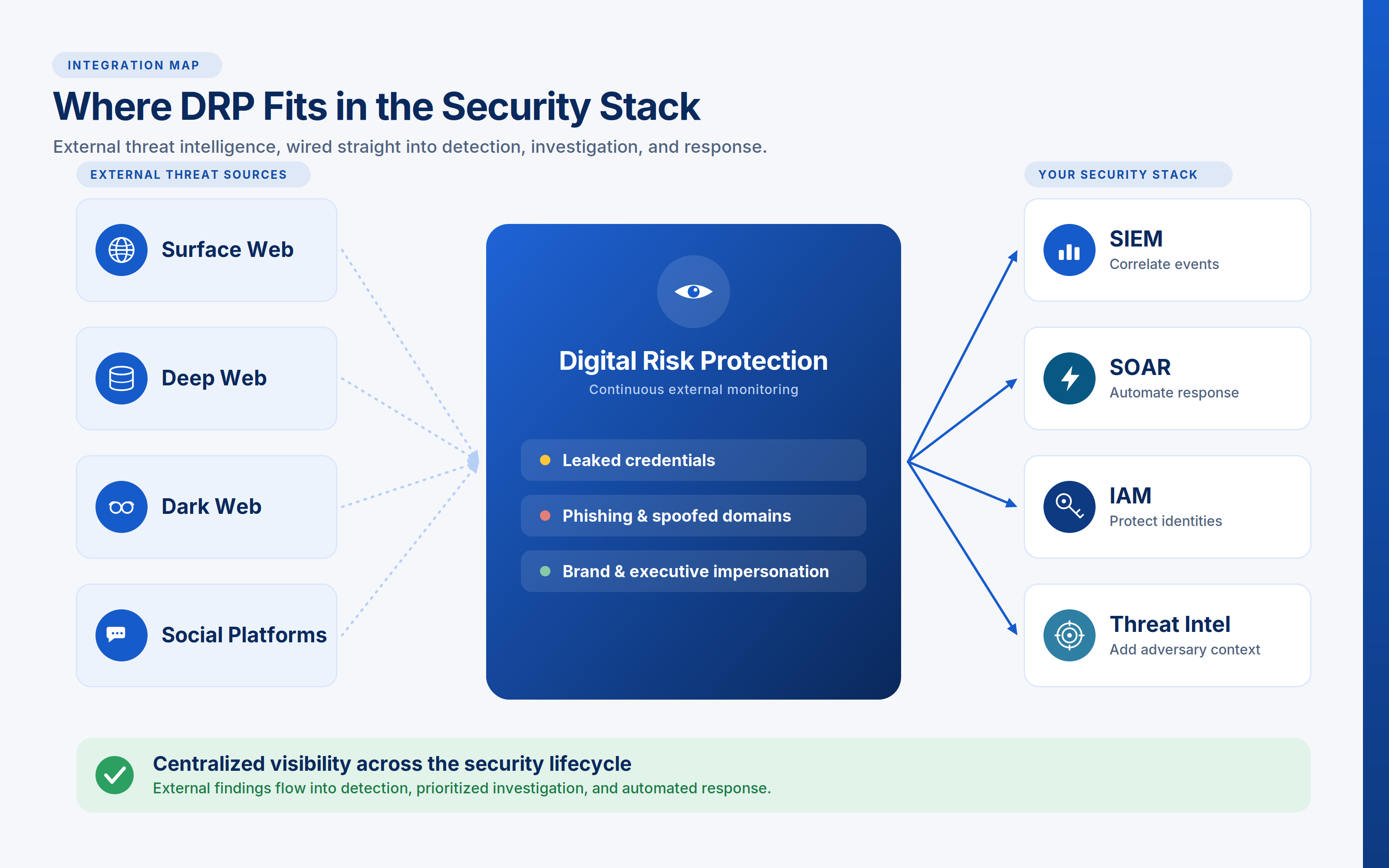
Digital Risk Protection integrates with existing tools by connecting external threat monitoring with SIEM platforms, SOAR workflows, identity systems, and threat intelligence sources. Centralized visibility helps organizations identify credential leaks, phishing campaigns, and brand impersonation activity before they disrupt operations.
Digital assets span domains, mobile applications, social media accounts, cloud environments, and executive identities. Threat actors frequently target these attack surfaces through exposed credentials, malicious infrastructure, and fraudulent online activity.
SIEM platforms aggregate events, SOAR solutions automate investigations, and threat intelligence feeds provide risk context. Linking Digital Risk Protection data with these capabilities improves alert correlation, incident prioritization, and remediation workflows across the broader cybersecurity ecosystem.
Connecting Digital Risk Protection with existing cybersecurity platforms allows external threat intelligence to become part of everyday detection, investigation, and response processes.
Cybersecurity programs often rely on multiple platforms for monitoring, incident management, identity governance, and threat analysis. Reviewing these systems reveals how information currently flows across teams and where external risk visibility may be limited.
Documentation gathered during this stage creates a foundation for future connections between Digital Risk Protection and operational platforms. Requirements related to alert routing, data sharing, and workflow orchestration become easier to define before implementation begins.
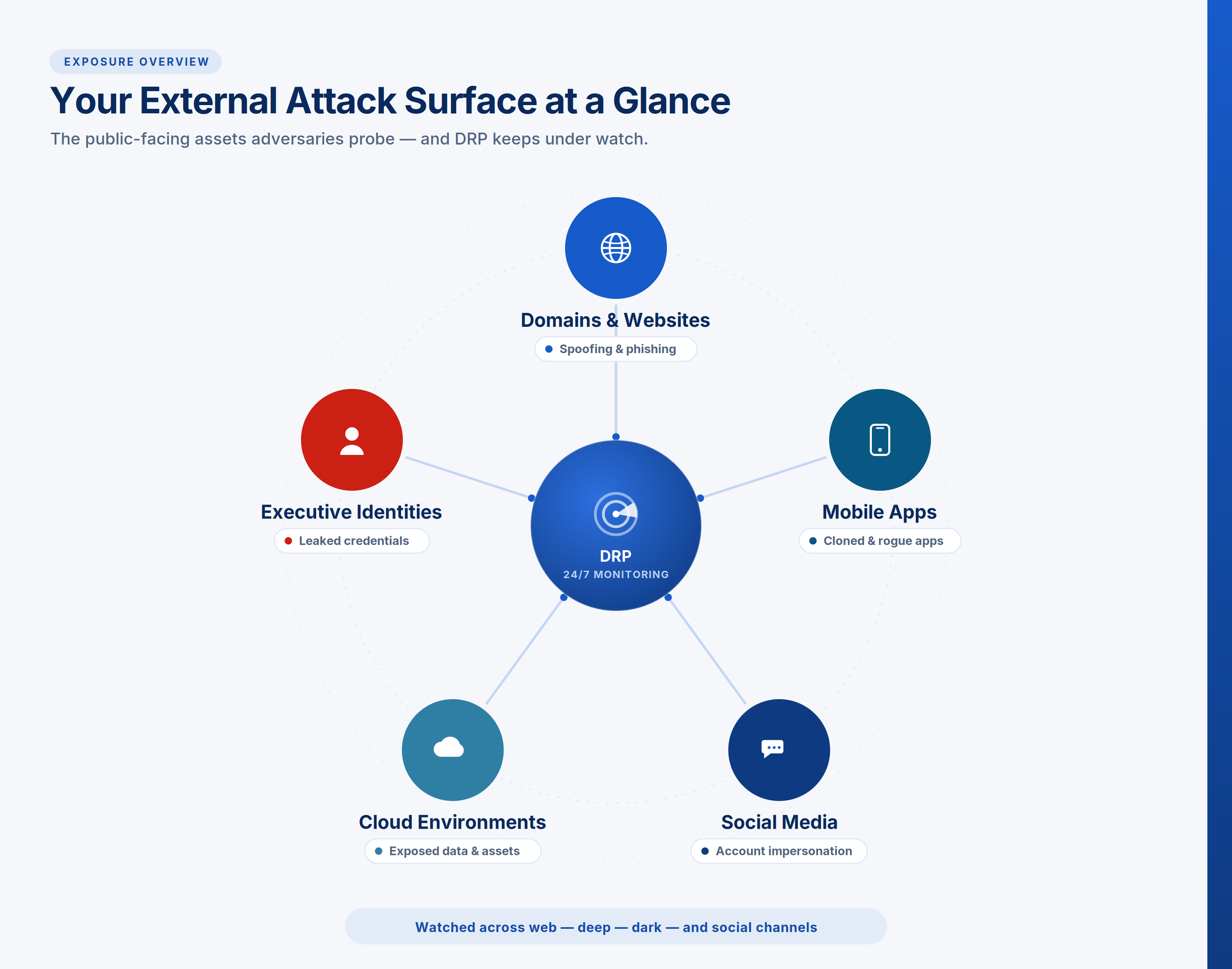
Digital exposure extends beyond corporate networks to include domains, mobile applications, social media profiles, cloud resources, and executive identities. Building a complete asset inventory helps establish monitoring priorities across publicly accessible environments.
Gaps in asset visibility frequently create opportunities for credential theft, impersonation attempts, and unauthorized brand usage. Ranking assets by business impact helps focus monitoring efforts on areas with the greatest potential risk.
Configuration begins by defining which assets, keywords, identities, and threat categories require observation. Monitoring policies should reflect organizational priorities, industry-specific risks, and known threat scenarios.
Coverage across the surface web, deep web, dark web, and social platforms expands awareness beyond traditional monitoring boundaries. Proper setup improves signal quality and reduces unnecessary alert volume.
Security Information and Event Management platforms collect logs, alerts, and activity records from multiple environments. Digital Risk Protection findings become more valuable when external indicators such as exposed credentials, phishing domains, and impersonation assets appear alongside internal events.
Correlation rules can reveal connections that would otherwise remain hidden across separate systems. A leaked employee account discovered on the dark web, for example, may explain unusual authentication activity already present within security logs.
Investigation procedures often require analysts to gather information from several sources before determining the severity of an incident. Security Orchestration, Automation, and Response platforms help coordinate these activities through predefined workflows.
External findings can automatically trigger enrichment tasks, stakeholder notifications, or case creation processes. Consistent execution reduces dependency on manual actions and helps standardize operational procedures across teams.
Compromised credentials frequently appear in breach collections, malware logs, and underground marketplaces long before account misuse becomes visible. Exposure affecting employees, contractors, or privileged users can create direct pathways into business systems.
Identity and Access Management platforms gain additional context when credential exposure data becomes part of account governance activities. Password resets, access reviews, and authentication controls can then be prioritized according to actual exposure events.
Individual indicators rarely provide enough information to determine business impact on their own. Domains, IP addresses, usernames, and leaked records become more meaningful when linked to adversary behavior and campaign activity.
Threat intelligence sources add context regarding infrastructure ownership, attack techniques, and known threat actors. Combined analysis allows analysts to distinguish isolated findings from activity associated with broader campaigns.
Response procedures often involve repetitive actions such as ticket creation, escalation, validation, and communication. Delays during these stages can increase exposure, particularly when incidents require immediate attention.
Workflow automation ensures predefined actions occur as soon as specific conditions are met. Account reviews, phishing investigations, and containment activities can begin without waiting for manual intervention.
Attack infrastructure evolves constantly as domains are registered, credentials are traded, and fraudulent content appears across digital channels. Point-in-time assessments rarely capture these changes for long.
Ongoing collection across public, restricted, and underground sources provides a steady stream of new intelligence. Emerging indicators can be identified as they appear rather than after operational disruption has already occurred.
Alert volumes, asset inventories, and operational priorities rarely remain static. Detection logic that performs well during deployment may require adjustments as business requirements evolve.
Periodic reviews help identify redundant alerts, outdated workflows, and uncovered exposure areas. Findings from these assessments support refinements that keep monitoring and response activities aligned with organizational objectives.
Digital Risk Protection integrates with existing tools by connecting external threat monitoring with SIEM platforms, SOAR workflows, Identity and Access Management systems, and threat intelligence sources. Bringing these capabilities together allows organizations to manage external risks within existing detection, investigation, and response processes.
Asset discovery, platform configuration, event correlation, workflow automation, and continuous monitoring are key stages in the integration process. Each stage helps connect digital exposure data with operational platforms that already support cybersecurity activities.
Credential leaks, phishing domains, impersonation campaigns, and exposed assets often exist outside traditional monitoring environments. Incorporating Digital Risk Protection into existing workflows enables these findings to move directly into analysis, prioritization, and incident management activities.
CloudSEK’s DRP solution XVigil is designed to integrate seamlessly with existing security infrastructures. XVigil offers real-time threat monitoring and intelligence, while BeVigil focuses on attack surface management and vulnerability assessment. Both platforms provide automated responses and detailed analytics, enhancing your organization's overall security posture.
CloudSEK’s XVigil platform stands out as a powerful solution with a comprehensive deep and dark web monitoring module. Our superpower lies in working with companies to understand their specific needs and providing them with actionable intelligence to combat current cyber threats and prepare for future ones.
Book a demo today to see how XVigil can help protect your organization.
Protect your organization from external threats like data leaks, brand threats, dark web originated threats and more. Schedule a demo today!
Schedule a Demo
.png)