🚀 CloudSEK featured in the 2026 Frost Radar™!
Read more
.avif)

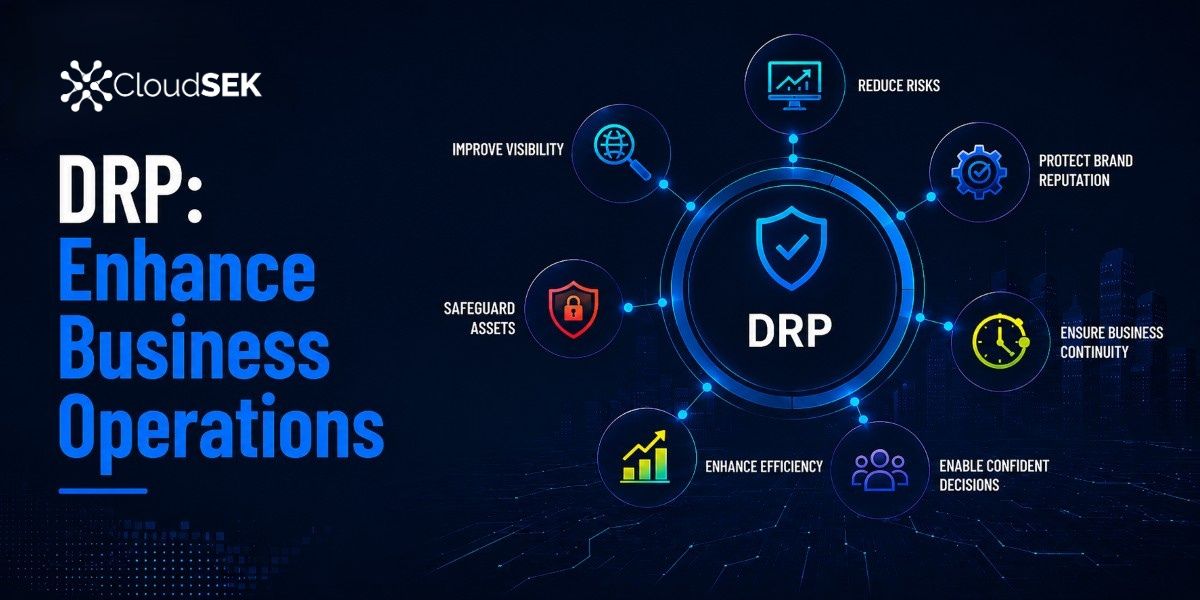
Digital Risk Protection enhances business operations through proactive threat detection, rapid incident response, risk visibility, regulatory compliance, and security automation. Continuous monitoring across digital assets helps organizations identify exposed credentials, phishing campaigns, data leaks, and brand abuse before they disrupt business activities.
Expanding digital footprints have created new exposure points across websites, cloud environments, third-party vendors, and social platforms. Greater awareness of external threats allows security teams to prioritize critical issues and respond with confidence.
Actionable threat intelligence supports informed decisions across cybersecurity, governance, and operational planning. Businesses that integrate Digital Risk Protection into their security strategy are better equipped to maintain continuity in an evolving threat landscape.
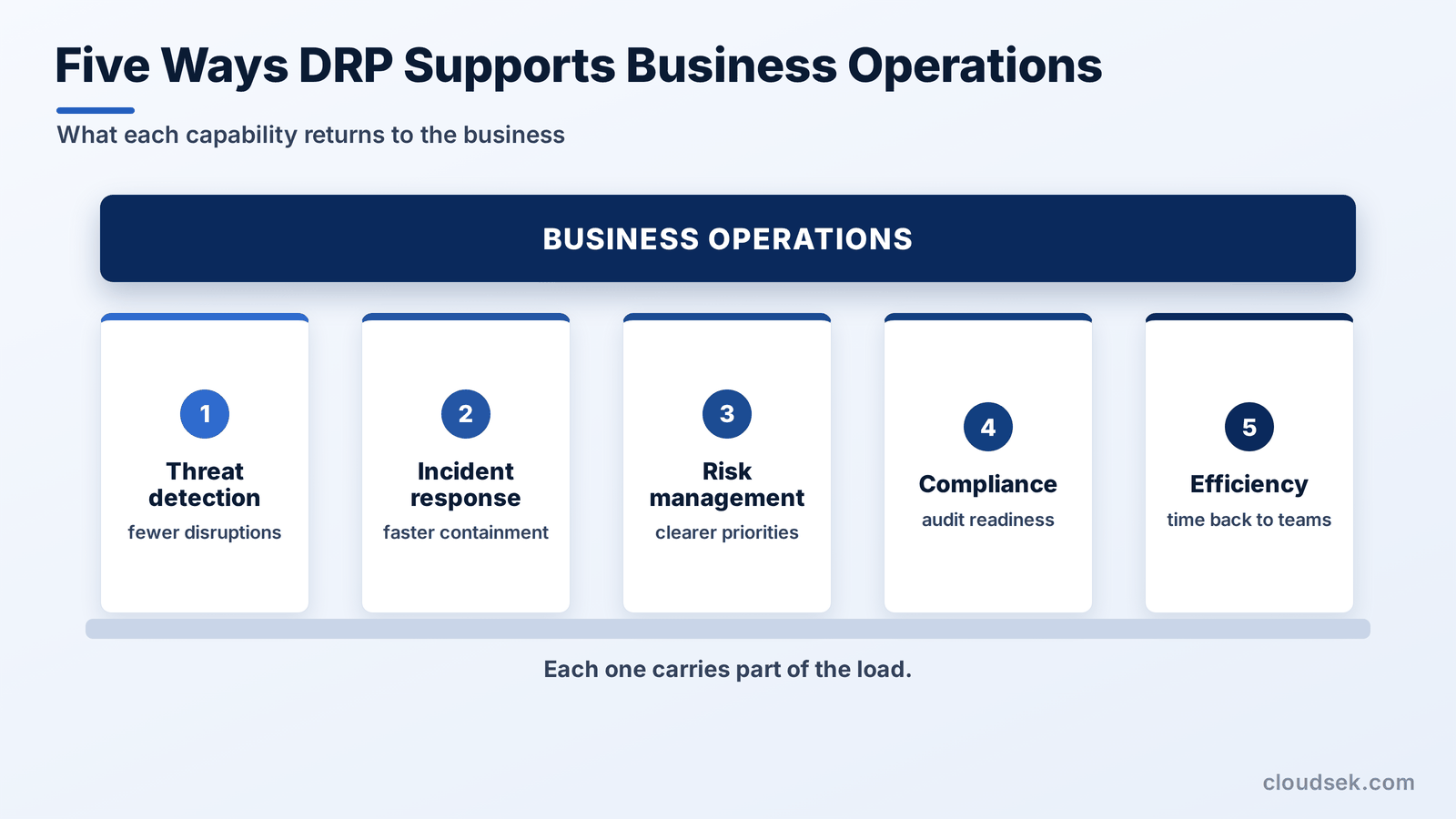
Proactive threat detection reduces the risk of service interruptions caused by cyber incidents. DRP tools identify credential leaks, phishing domains, malicious infrastructure, and exposed assets before they affect customers, employees, or critical business functions.
Stolen credentials often appear on underground forums and dark web marketplaces before unauthorized access attempts occur. Early discovery gives organizations an opportunity to secure accounts, close security gaps, and prevent larger disruptions.
Consistent oversight of external threats contributes to business continuity and protects revenue-generating activities. Preventive action also reduces the costs and operational strain associated with incident recovery.
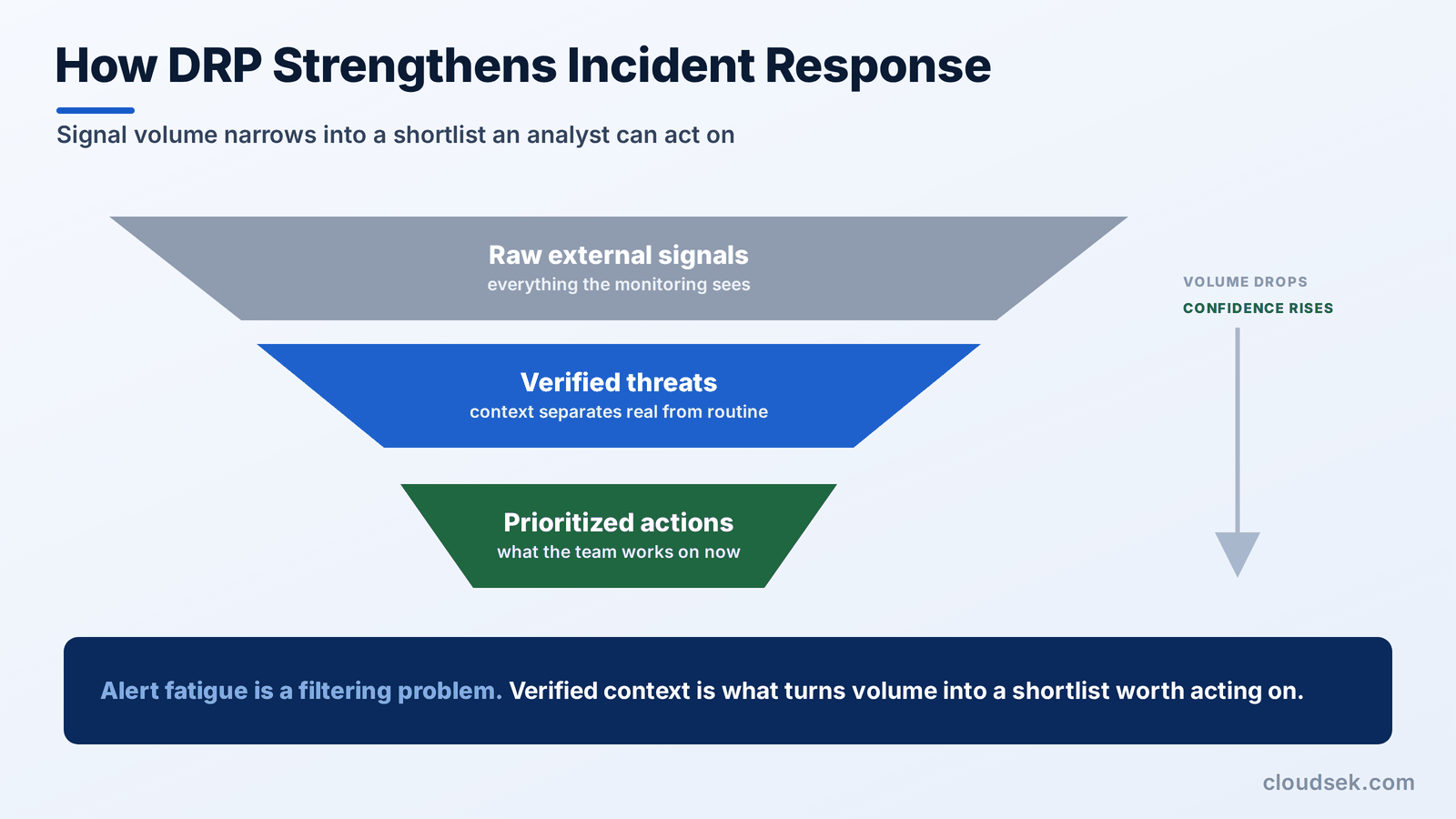
Enhanced incident response reduces the time required to investigate and contain security events. A Digital Risk Protection program connects threat intelligence, attack techniques, affected assets, and business impact into a clearer response picture.
Alert fatigue can make genuine threats harder to separate from routine activity. Verified threat data improves investigation accuracy and accelerates containment decisions during high-priority incidents.
Shorter recovery timelines minimize disruption for customers, employees, and business partners. Reliable response processes also reinforce confidence during periods of uncertainty and reduce prolonged downtime.
Improved risk management provides a broader understanding of vulnerabilities across interconnected business environments. Third-party vendors, cloud platforms, partner networks, public-facing applications, and supply chain relationships can all introduce exposure beyond direct organizational control.
Weaknesses across these dependencies may affect service delivery, customer trust, or growth plans. Identifying them early gives leadership teams a clearer basis for prioritizing investments.
Strategic planning becomes more accurate when decisions are tied to measurable exposure instead of assumptions. Risk teams can align mitigation efforts with the areas most likely to influence business performance.
Better regulatory compliance reduces the likelihood of financial penalties, legal disputes, and reputational damage. Exposed records, unauthorized disclosures, and sensitive data leaks can conflict with privacy regulations and data protection requirements.
Frameworks such as GDPR and CCPA require responsible handling of personal information. Continuous monitoring across external channels improves audit readiness, regulatory reporting, and data governance practices.
Demonstrating accountability reinforces trust among customers, partners, regulators, and stakeholders. Documented evidence also makes compliance reviews easier to manage.
Increased operational efficiency frees teams from repetitive monitoring and investigation tasks. Automation streamlines intelligence collection, alert prioritization, threat correlation, and workflow orchestration across multiple digital channels.
Manual processes often consume valuable time that could be directed toward resilience planning, process improvement, and strategic initiatives. Consolidated intelligence reduces the effort required to gather information from disconnected sources and tools.
Productivity increases as security, compliance, and risk management teams spend more time on high-value work. Better resource allocation contributes to scalable growth without placing additional pressure on existing personnel.
CloudSEK strengthens Digital Risk Protection (DRP) across business operations through AI-driven threat intelligence, continuous monitoring, and predictive risk analysis. Its cloud-native platforms help organizations identify external threats, exposed assets, and emerging attack paths before they disrupt critical business functions.
Platforms such as AIVigil and BeVigil provide visibility into credential leaks, phishing campaigns, brand impersonation, software supply chain risks, and internet-facing vulnerabilities. Intelligence gathered from the surface web, deep web, and dark web enables security teams to prioritize remediation efforts based on potential business impact.
Faster threat identification contributes to business continuity, customer trust, and informed decision-making across security, compliance, and risk management functions. Integration with existing security workflows also reduces manual effort, allowing teams to respond to evolving threats with greater speed and accuracy.
Book a demo today to see how XVigil can help protect your organization.
Protect your organization from external threats like data leaks, brand threats, dark web originated threats and more. Schedule a demo today!
Schedule a Demo
.png)