🚀 أصبحت CloudSek أول شركة للأمن السيبراني من أصل هندي تتلقى استثمارات منها
اقرأ المزيد
.avif)

الأدلة الجنائية الرقمية هي فرع من علوم الأدلة الجنائية يُعنى بتحديد الأدلة الرقمية وحفظها وتحليلها وتوثيقها لضمان قبولها في التحقيقات أو أمام المحاكم. وتطبق هذه الأدلة أساليب تحقيق مثبتة على البيانات المستمدة من أي جهاز يقوم بتخزين المعلومات أو نقلها.
غالباً ما يُستخدم هذا المصطلح بالتبادل مع الأدلة الجنائية الحاسوبية، على الرغم من اختلاف نطاق كل منهما. فالأدلة الجنائية الحاسوبية تغطي الأدلة المستمدة من أجهزة الحوسبة مثل أجهزة الكمبيوتر المكتبية والخوادم، بينما تمتد الأدلة الجنائية الرقمية لتشمل الهواتف والشبكات وحسابات السحابة وأي مصدر رقمي آخر.
تندرج الأدلة الجنائية الرقمية ضمن تخصص أوسع يُعرف بـ DFIR، وهو اختصار لـ "الأدلة الجنائية الرقمية والاستجابة للحوادث". ولا يكمن هدفها في إيقاف الهجوم، بل في إعادة بناء ما حدث بطريقة تظل صامدة أمام التدقيق.
ظهرت الأدلة الجنائية الرقمية في ثمانينيات القرن الماضي بالتزامن مع ظهور أجهزة الكمبيوتر الشخصية، وأصبحت تخصصاً رسمياً خلال التسعينيات والعقد الأول من القرن الحادي والعشرين مع تزايد الجرائم الرقمية. وقد تم تطوير إجراءات قياسية لضمان إمكانية الوثوق بالأدلة الرقمية في الإجراءات القانونية.
استمرت الجرائم الرقمية في التصاعد منذ ذلك الحين. فقد سجل مركز شكاوى جرائم الإنترنت التابع لمكتب التحقيقات الفيدرالي (FBI) أكثر من 16.6 مليار دولار كخسائر مُبلغ عنها في عام 2024، وهو ما يمثل زيادة بنسبة 33 بالمائة عن العام السابق، ويمكن أن تعتمد كل قضية من هذه القضايا على الأدلة الرقمية.
تتواجد الأدلة الآن على كل جهاز تقريباً يلمسه الشخص: الهواتف، وأجهزة الكمبيوتر المحمولة، وحسابات السحابة، وأجهزة الاستشعار المتصلة. هذا الانتشار يضع الأدلة الجنائية الرقمية في قلب التحقيقات الحديثة، حيث تترك كل قضية تقريباً أثراً رقمياً.
يخدم هذا المجال عدة احتياجات متميزة؛ فهو يدعم الملاحقات الجنائية، والتحقيقات المؤسسية والداخلية، والاستجابة لانتهاكات البيانات، والتقاضي المدني، والاكتشاف الإلكتروني، وتحديد الجهات المسؤولة عن الهجمات.
تنقسم الأدلة الجنائية الرقمية إلى فروع تحددها مصادر الأدلة. ولكل فرع أدواته وتقنياته الخاصة، على الرغم من أنها جميعاً تشترك في نفس العملية الأساسية.
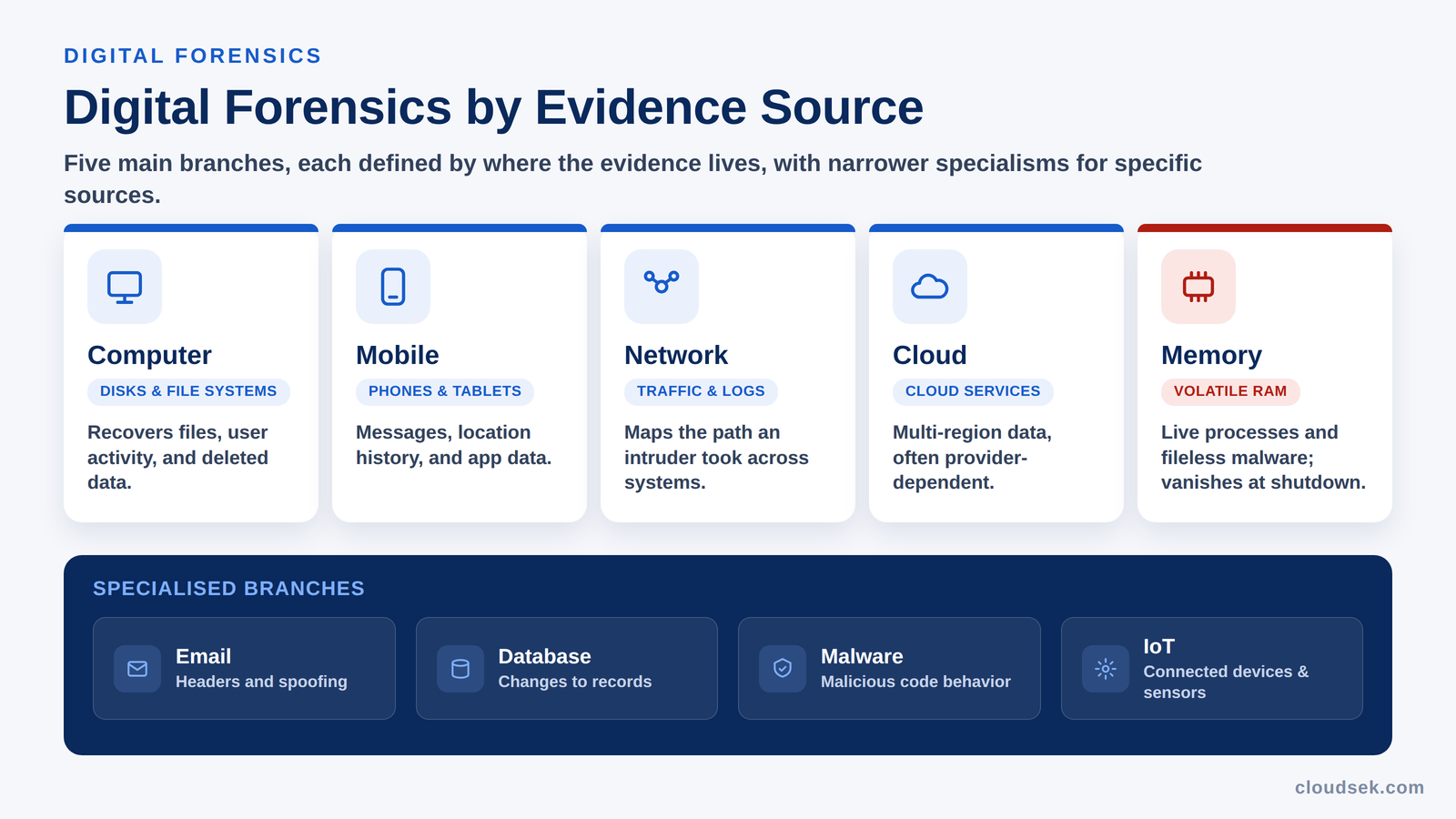
تختص الأدلة الجنائية الحاسوبية بفحص أجهزة الكمبيوتر المكتبية والمحمولة والخوادم. حيث يستعيد المحققون الملفات، ويعيدون بناء نشاط المستخدم، ويسترجعون البيانات المحذوفة من محركات الأقراص وأنظمة الملفات. وهو أقدم الفروع ويشكل الأساس لبقية الفروع الأخرى.
تستهدف الأدلة الجنائية للأجهزة المحمولة الهواتف الذكية والأجهزة اللوحية. وتحتوي هذه الأجهزة على الرسائل، وسجل المواقع، وبيانات التطبيقات، والسجلات المتزامنة مع السحابة، والتي غالباً ما تكون محمية بتشفير قوي. وتختلف طرق الاستخراج باختلاف طراز الجهاز ونظام التشغيل.
تعمل الأدلة الجنائية للشبكات على التقاط حركة المرور وتحليلها لإعادة بناء عملية الاختراق. وهي تفحص حزم البيانات الملتقطة، وسجلات التدفق، وسجلات الأحداث لرسم خريطة لـ مسار الهجوم الذي سلكه المخترق عبر الأنظمة. ونظراً لأن بيانات الشبكة عابرة، فغالباً ما يجب أن تتم عملية الالتقاط بشكل مباشر وفوري.
يبحث التحقيق الجنائي السحابي في الأدلة المخزنة ضمن الخدمات السحابية. وهو يواجه تحديات لا توجد في الفروع الأخرى، مثل تشتت البيانات عبر مناطق جغرافية مختلفة، ومشاركة التحكم مع مزود الخدمة، والتساؤلات حول الاختصاص القضائي الذي تقع ضمنه الأدلة. وغالباً ما يعتمد الحصول على هذه الأدلة على مدى تعاون مزود الخدمة.
يحلل التحقيق الجنائي في الذاكرة محتويات ذاكرة الوصول العشوائي (RAM) للجهاز، وهي الذاكرة المتطايرة التي تحتفظ بالبيانات فقط أثناء تشغيل النظام. يكشف هذا النوع عن العمليات الجارية، والرموز البرمجية المحقونة، ومفاتيح التشفير، والبرمجيات الخبيثة التي تعمل دون ملفات ولا تترك أثراً على القرص الصلب. وبما أن هذه البيانات تتلاشى عند إيقاف التشغيل، فإن التوقيت يعد أمراً بالغ الأهمية.
تتناول عدة فروع أكثر دقة مصادر محددة؛ حيث يتتبع التحقيق الجنائي للبريد الإلكتروني ترويسات الرسائل وعمليات الانتحال، ويعيد التحقيق الجنائي لقواعد البيانات بناء التغييرات التي طرأت على السجلات المخزنة، بينما يفكك التحقيق الجنائي للبرمجيات الخبيثة الأكواد الضارة لفهم سلوكها، ويستعيد التحقيق الجنائي لإنترنت الأشياء (IoT) البيانات من الأجهزة وأجهزة الاستشعار المتصلة.
تعد عملية التحقيق الجنائي تسلسلاً قابلاً للإثبات يحمي سلامة الأدلة من البداية إلى النهاية، وتختلف النماذج في تقسيم مراحلها. معيار NIST SP 800-86 يختصر العمل في أربع مراحل: الجمع، والفحص، والتحليل، وإعداد التقارير، بينما يحدد نموذج المراحل الست كلاً من التحديد والحفظ كخطوات أولية واضحة. وتجعل المراحل الست المذكورة أدناه كل مسؤولية واضحة ومستقلة.

تتضمن مرحلة التحديد العثور على الأدلة وتحديد نطاقها. يقوم المحققون بتحديد الأجهزة والحسابات ومصادر البيانات التي قد تحتوي على معلومات ذات صلة، ثم يقررون ما يندرج ضمن نطاق التحقيق. إن تحديد النطاق بدقة يمنع ضياع الأدلة ويهدر الجهد.
تعمل مرحلة الحفظ على حماية الأدلة من أي تغيير قبل بدء التحليل، وتحكم هذه المرحلة مبدآن أساسيان.
سلسلة الحيازة هي السجل الموثق الذي يوضح من تعامل مع الأدلة، ومتى، وأين، ولماذا، وذلك بدءاً من مرحلة الجمع وصولاً إلى المحكمة. يتم تسجيل كل عملية نقل للأدلة، وأي ثغرة في هذا السجل قد تجعل الأدلة غير مقبولة قانوناً، مما يجعل التوثيق لا يقل أهمية عن البيانات ذاتها. ويحدد المعيار الدولي ISO/IEC 27037 كيفية التعامل مع الأدلة الرقمية للحفاظ على سلامتها.
يحدد ترتيب التطاير تسلسل جمع الأدلة، حيث تُجمع البيانات الأكثر عرضة للضياع أولاً، مثل الذاكرة، والعمليات الجارية، واتصالات الشبكة، والتي تختفي جميعها عند إيقاف تشغيل النظام. أما محتويات القرص والبيانات المؤرشفة، التي تظل ثابتة، فيتم التعامل معها لاحقاً.
تتم عملية الجمع من خلال الحصول على الأدلة ذاتها، مع العمل على نسخ منها لضمان بقاء الأصل دون مساس.
الصورة الجنائية هي نسخة طبق الأصل من جهاز التخزين، تتطابق معه تماماً حتى في البيانات المحذوفة والمخفية. يقوم المحققون بإنشائها باستخدام أداة حظر الكتابة، وهي أداة برمجية أو مادية تسمح بقراءة البيانات دون إمكانية الكتابة عليها، مما يضمن عدم تغير المصدر أثناء عملية النسخ.
التجزئة هي بصمة فريدة يتم حسابها من البيانات باستخدام خوارزميات مثل MD5 أو SHA-256. يقوم المحققون بحساب قيمة التجزئة للأصل والنسخة، ثم يقارنون بينهما. تطابق القيمتين يثبت أن الصورة دقيقة وأنه لم يتم تعديلها لاحقاً.
تتضمن مرحلة الفحص استخراج البيانات ذات الصلة من النسخ التي تم جمعها. حيث يقوم المحققون باستعادة الملفات المحذوفة، واستخراج البيانات من المساحات غير المخصصة، وتصفية المواد غير ذات الصلة، وإظهار الأدلة الجنائية المتعلقة بالقضية. تحول هذه المرحلة القرص الكامل إلى مجموعة مركزة من الأدلة.
يعمل التحليل على تفسير تلك الأدلة. حيث يقوم المحققون بإعادة بناء الجدول الزمني، وربط الأحداث عبر المصادر المختلفة، واستنتاج ما حدث، ومتى، ومن المسؤول. غالباً ما يتم ربط الأنشطة بسلوكيات المهاجمين الموثقة من خلال أطر عمل مثل MITRE ATT&CK، والتي تحول النتائج المتفرقة إلى سرد متماسك للهجوم.
يتم في مرحلة إعداد التقارير تسجيل التحقيق في شكل واضح وقابل للتكرار. يوضح التقرير الجنائي المنهجية المتبعة، والأدوات المستخدمة، وسلسلة الأدلة، والاستنتاجات، بحيث يمكن لفاحص آخر تتبعها. وفي القضايا القانونية، غالباً ما يقدم المحقق هذه النتائج كشهادة خبير.
يعتمد المحققون على أدوات متخصصة، كل منها مناسب لمصدر أو مهمة معينة. هذه الأدوات تخدم العملية ولا تغني عن التقدير البشري الذي يقف خلفها.
تجمع معظم التحقيقات بين العديد من هذه الأدوات، بما يتناسب مع طبيعة الأدلة المتاحة.
يقترن التحقيق الجنائي الرقمي والاستجابة للحوادث معاً تحت مسمى DFIR، لكنهما تجيبان على أسئلة مختلفة. يعمل الاستجابة للحوادث على احتواء التهديد النشط والتعافي منه بأسرع وقت ممكن، بينما يعمل التحقيق الجنائي الرقمي على إثبات الحقائق والأدلة لما حدث، وهو ما يستغرق وقتًا أطول عادةً.
في حال عدم التنسيق بينهما، يحدث تضارب. فالمستجيب الذي يسارع لإزالة البرمجيات الخبيثة قد يمحو بيانات الذاكرة التي يحتاجها المحقق الجنائي، بينما قد يؤدي قيام المحقق بحفظ الأدلة إلى إبطاء عملية التنظيف العاجلة. يدمج مجال DFIR بينهما في سير عمل واحد لضمان بقاء الأدلة سليمة أثناء الاستجابة.
ببساطة، تعمل الاستجابة للحوادث على وقف الضرر، بينما يثبت التحقيق الجنائي الرقمي مسبباته. الفرق الأمنية التي تدير العمليتين معاً تتعافى بشكل أسرع وتحتفظ بأدلة قابلة للاستخدام.
تزداد صعوبة العمل الجنائي عاماً بعد عام بسبب عدة عوامل. فالتشفير القوي قد يجعل البيانات بعيدة المنال دون مفتاح، كما أن تقنيات مكافحة التحقيق الجنائي، مثل المسح الآمن والتلاعب بالطوابع الزمنية، مصممة خصيصاً لتدمير الأدلة أو تزييفها.
يعد الحجم الكبير للمعلومات مشكلة ثانية؛ إذ يؤدي الكم الهائل من الأجهزة والبيانات إلى تراكم العمل، مما يجعل القضايا تنتظر شهوراً للفحص. وتضيف الأدلة السحابية طبقة أخرى من التعقيد، حيث إن توزيع البيانات عبر مناطق ومزودين مختلفين يفرض عوائق قانونية وقضائية أمام جمعها.
المجال نفسه في حالة تغير مستمر؛ إذ تظهر أجهزة وتطبيقات وتنسيقات ملفات جديدة بوتيرة أسرع من قدرة الأدوات على دعمها، مما يضع المحققين في سباق دائم لتحديث أساليبهم.
تكتسب نتائج التحقيق الجنائي معناها من خلال السياق. فعندما يكشف التحقيق عن عنوان IP، أو عينة برمجية خبيثة، أو نمط معين لسلوك المهاجم، تقوم استخبارات التهديدات بربط هذه الآثار بما هو معروف مسبقاً عن الجهات الفاعلة خلفها.
يظهر هذا الدعم بشكل أوضح في مرحلة التحليل. مؤشرات الاختراق، وهي الآثار التقنية التي يتركها الهجوم، يمكن مطابقتها مع قواعد بيانات الاستخبارات لتحديد الأدوات والمجموعات المتورطة. إن ربط السلوك المرصود بـ التكتيكات والتقنيات والإجراءات (TTPs) الموثقة يساعد المحققين على نسب النشاط لفاعليه وفهم الخطوات التالية التي اتخذها المهاجم.
استخبارات التهديدات من CloudSEK هي أحد مصادر هذا السياق، حيث تتبع الجهات الفاعلة في التهديدات وتقنياتها والمؤشرات المرتبطة بالحملات النشطة. تكمل هذه الاستخبارات التحقيق الجنائي ولا تستبدله؛ فالعملية الجنائية تثبت ما حدث بناءً على الأدلة، بينما تفسر استخبارات التهديدات "من" و"لماذا"، وتظل عملية الإسناد معتمدة على الأدلة ذاتها.
التحقيق الجنائي الرقمي هو ممارسة استعادة وفحص البيانات من الأجهزة الرقمية لمعرفة ما حدث بطريقة تصلح كأدلة قانونية. وهو يتعامل مع القرص الصلب أو الهاتف بنفس الطريقة التي يتعامل بها التحقيق الجنائي التقليدي مع مسرح الجريمة.
تتضمن العملية مراحل التحديد، والحفظ، والجمع، والفحص، والتحليل، وإعداد التقارير. ويختصر المعهد الوطني للمعايير والتقنية (NIST) هذه المراحل في أربع: الجمع، والفحص، والتحليل، وإعداد التقارير. وتعمل كل خطوة على حماية سلامة الأدلة.
سلسلة الحيازة هي سجل موثق لكل من تعامل مع قطعة من الأدلة، مع تحديد وقت وسبب كل عملية نقل. وهي تثبت أن الدليل لم يتعرض لأي تلاعب، وأي خلل في هذه السلسلة قد يؤدي إلى عدم قبول الدليل أمام المحكمة.
تركز الاستجابة للحوادث على احتواء الهجمات النشطة والتعافي منها بسرعة، بينما تبحث الأدلة الجنائية الرقمية في تفاصيل ما حدث لأغراض إثباتية. تعطي الاستجابة للحوادث الأولوية للسرعة، بينما تعطي الأدلة الجنائية الأولوية للإثبات. وتجمع منهجية DFIR بين الاثنين في سير عمل واحد.
تشمل الأدوات الشائعة Autopsy وFTK لتحليل الأقراص، وVolatility لتحليل الذاكرة، وWireshark لتحليل حركة مرور الشبكة، وCellebrite للأجهزة المحمولة. ويختار المحققون الأداة المناسبة بناءً على مصدر الدليل.
يتطلب هذا المجال مزيجاً من المهارات التقنية والتحليلية، مثل المعرفة بأنظمة التشغيل وأنظمة الملفات، والإلمام بأدوات التحقيق الجنائي، وفهم الإجراءات القانونية وسلسلة الحيازة، والقدرة على كتابة تقارير واضحة. وتعد الدقة في التفاصيل عنصراً جوهرياً في كل هذه الجوانب.
