🚀 A CloudSEK se torna a primeira empresa de segurança cibernética de origem indiana a receber investimentos da
Leia mais
.avif)

Um vetor de ataque é o método ou caminho que um cibercriminoso usa para obter acesso não autorizado a um sistema, rede ou aplicativo. Ele representa o ponto de entrada que os atacantes exploram para iniciar um ataque cibernético. Em vez de atacar um sistema aleatoriamente, os agentes de ameaças confiam em vetores específicos para contornar os controles de segurança e alcançar recursos confidenciais.
Os vetores de ataque geralmente aproveitam as fraquezas da tecnologia, do comportamento humano ou da configuração do sistema. Por exemplo, um e-mail de phishing pode induzir o usuário a revelar as credenciais de login, enquanto uma falha de software não corrigida pode permitir que os invasores executem códigos maliciosos em um servidor. Em ambos os casos, o vetor fornece o acesso inicial necessário para iniciar o ataque.
Quando os atacantes usam com sucesso um vetor de ataque, eles geralmente se aprofundam no sistema. Esse acesso inicial pode levar ao roubo de dados, à implantação de malware ou ao comprometimento total do sistema. Como os vetores de ataque servem como ponto de partida para a maioria dos incidentes cibernéticos, identificá-los e protegê-los é uma parte essencial da defesa da segurança cibernética.
Os vetores de ataque funcionam como o ponto de entrada que permite que os atacantes se movam de fora de um sistema para dentro dele. Os cibercriminosos procuram pontos fracos no software, nas redes ou no comportamento do usuário que possam ser explorados. Quando encontram uma fraqueza, usam uma técnica específica para alcançar o sistema alvo.
O processo geralmente começa com a identificação de uma vulnerabilidade ou de um recurso exposto. Isso pode ser um aplicativo desatualizado, uma senha fraca ou um serviço de nuvem mal configurado. Depois que a fraqueza é descoberta, o atacante usa um vetor de ataque, como phishing, entrega de malware ou abuso de credenciais, para obter acesso inicial.
Depois que o ponto de entrada é usado com sucesso, o atacante tenta expandir o controle dentro do sistema. Eles podem instalar software malicioso, roubar dados confidenciais, ou mova-se lateralmente para outros sistemas conectados. O vetor de ataque, portanto, atua como a etapa inicial que permite o restante do ataque cibernético.
Os cibercriminosos exploram vetores de ataque identificando pontos de entrada fracos e usando-os para obter acesso não autorizado a sistemas ou dados. Alguns ataques se concentram na coleta silenciosa de informações, enquanto outros interagem diretamente com os sistemas para causar danos ou assumir o controle.
Com base nisso, ele é categorizado principalmente em dois tipos: ataques passivos e ativos.
Os vetores de ataque passivo envolvem observar ou coletar informações sem alterar o próprio sistema. O atacante se concentra em monitorar as comunicações ou coletar dados confidenciais silenciosamente. Essas ações ajudam os criminosos a entender como um sistema funciona antes de lançar um ataque maior.
Exemplos comuns incluem monitoramento de tráfego de rede, detecção de pacotes e captura de credenciais de login de fontes de dados expostas. Como os ataques passivos não alteram os sistemas, eles podem passar despercebidos por longos períodos.
Os vetores de ataque ativos envolvem interação direta com um sistema para explorar pontos fracos e obter controle. Nesses casos, os invasores manipulam ativamente software, redes ou usuários para obter acesso não autorizado.
Os exemplos incluem o envio de e-mails de phishing que instalam malware, a exploração de vulnerabilidades de software não corrigidas, a execução de tentativas de login por força bruta ou a injeção de código malicioso em aplicativos da web. Esses ataques geralmente levam ao comprometimento do sistema, ao roubo de dados ou à interrupção do serviço.
Os vetores de ataque aparecem em várias formas, dependendo de como os atacantes tentam entrar em um sistema ou rede.
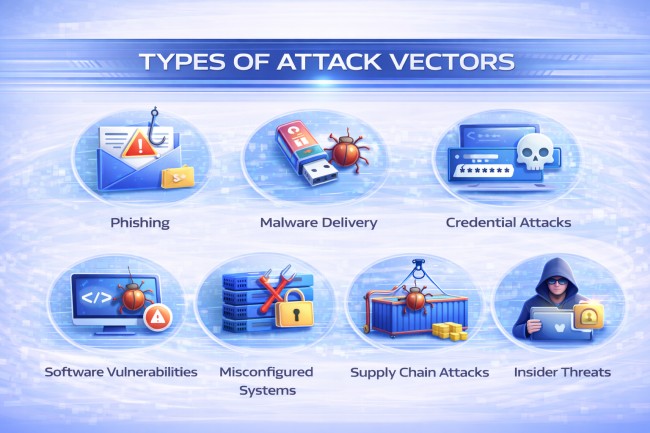
De acordo com a Verizon Relatório de investigações de violação de dados de 2024 (DBIR), mais de 70% das violações de dados envolveram o elemento humano, incluindo phishing, roubo de credenciais ou erro do usuário. Esses métodos funcionam como vetores de ataque comuns usados para obter acesso inicial aos sistemas.
O phishing usa mensagens enganosas para induzir os usuários a revelar informações confidenciais ou instalar arquivos maliciosos. Os atacantes geralmente se fazem passar por organizações confiáveis para fazer com que a mensagem pareça legítima. Phishing por e-mail, spear phishing, e o comprometimento do e-mail comercial são exemplos comuns.
Os vetores de entrega de malware espalham software malicioso por meio de arquivos, sites ou downloads. Os atacantes escondem malware em anexos de e-mail, aplicativos infectados ou sites comprometidos. Uma vez executado, o malware pode roubar dados, instalar portas traseiras, ou controle o sistema.
Os ataques de credenciais se concentram em obter acesso às contas explorando senhas fracas ou reutilizadas. As técnicas incluem ataques de reutilização de senhas, preenchimento de credenciais e tentativas de login por força bruta. Depois que as credenciais válidas são obtidas, os invasores podem fazer login como usuários legítimos.
As vulnerabilidades de software se tornam vetores de ataque quando os invasores exploram falhas em aplicativos ou sistemas operacionais. O software não corrigido pode permitir a execução remota de código ou o acesso não autorizado. As vulnerabilidades de aplicativos da Web podem expor bancos de dados ou informações confidenciais.
Sistemas mal configurados criam pontos de acesso não intencionais para os atacantes. Os exemplos incluem armazenamento em nuvem exposto, serviços abertos ou configurações de segurança fracas. Esses erros permitem que os invasores acessem recursos confidenciais sem explorar vulnerabilidades complexas.
Os ataques à cadeia de suprimentos têm como alvo fornecedores confiáveis de software ou fornecedores de serviços para distribuir códigos maliciosos. Em vez de atacar diretamente a organização final, os atacantes comprometem atualizações, bibliotecas ou ferramentas de desenvolvimento usadas por muitas organizações. Quando o software é instalado ou atualizado, o código malicioso entra no sistema.
Ameaças internas ocorrem quando indivíduos de uma organização usam indevidamente seu acesso. Isso pode envolver funcionários roubando dados intencionalmente ou usuários expondo credenciais por meio de comportamento descuidado. Como os insiders já têm acesso autorizado, detectar esses ataques pode ser difícil.
O vetor de ataque, a superfície de ataque e o caminho do ataque descrevem diferentes partes de como um ataque cibernético acontece. Um vetor de ataque é o método que os atacantes usam para entrar em um sistema. A superfície de ataque se refere a todos os pontos de entrada possíveis que poderiam ser explorados. O caminho de ataque descreve a rota que os atacantes seguem dentro de um sistema após obterem o acesso inicial. Entender essas diferenças ajuda as equipes de segurança a identificar onde os ataques começam e como eles se espalham.
Aqui está a tabela de comparação para entender de uma maneira melhor:
Em maio de 2017, a campanha de ransomware WannaCry se espalhou pela Internet explorando uma vulnerabilidade do Windows conhecida como EternalBlue. O ataque foi vinculado ao Grupo Lazarus. Os atacantes usaram a vulnerabilidade do software como vetor de ataque para infectar sistemas não corrigidos automaticamente. Mais de 200.000 computadores em mais de 150 países foram afetados, incluindo sistemas pertencentes ao Serviço Nacional de Saúde. Os hospitais foram forçados a cancelar consultas e fechar serviços essenciais, causando grandes interrupções operacionais.
Em 2020, os invasores comprometeram o processo de atualização de software da SolarWinds e inseriram códigos maliciosos nas atualizações da plataforma Orion. O ataque foi atribuído ao grupo de ameaças APT29. As organizações que instalaram a atualização infectada, sem saber, permitiram que invasores entrassem em suas redes. Cerca de 18.000 clientes baixaram a atualização comprometida, incluindo agências governamentais dos EUA e grandes corporações. A violação expôs comunicações confidenciais e desencadeou uma das maiores investigações de segurança cibernética da história recente.
Em julho de 2020, os atacantes usaram a engenharia social como vetor de ataque para manipular funcionários do Twitter para que forneçam acesso a ferramentas administrativas internas. Os atacantes atacaram a equipe por meio de táticas de phishing e falsificação de identidade por telefone. Depois que o acesso foi obtido, eles sequestraram contas de alto perfil pertencentes a indivíduos como Elon Musk e Barack Obama. As contas comprometidas publicaram mensagens fraudulentas de criptomoedas, levando a fraudes financeiras e prejudicando a confiança nos controles de segurança da plataforma.
Os vetores de ataque são perigosos porque fornecem o primeiro ponto de entrada de que os atacantes precisam para comprometer um sistema. Depois que o ponto de entrada é usado com sucesso, os invasores podem ignorar os controles de segurança e começar a interagir com os sistemas internos. Esse acesso inicial geralmente acontece sem detecção imediata.
Depois de entrar em uma rede, os atacantes podem roubar dados confidenciais, instalar software malicioso ou interromper serviços. Um único vetor de ataque pode levar a incidentes maiores, como violações de dados, infecções por ransomware ou fraude financeira. Os danos podem afetar indivíduos e organizações.
Os vetores de ataque são especialmente arriscados porque geralmente exploram pontos fracos comuns, como erro humano, senhas fracas ou software não corrigido. Essas fraquezas existem em muitos ambientes, o que oferece aos atacantes várias oportunidades de obter acesso. Proteger esses pontos de entrada é essencial para reduzir o risco de ataques cibernéticos.
As equipes de segurança identificam os vetores de ataque examinando sistemas, configurações e atividades do usuário para descobrir possíveis pontos de entrada que os invasores poderiam explorar. Esse processo ajuda as organizações a detectar pontos fracos antes de serem usados em ataques reais.
As equipes de segurança realizam avaliações de vulnerabilidades para verificar os sistemas em busca de pontos fracos conhecidos. Essas ferramentas verificam versões de software, configurações e serviços expostos. Os resultados mostram quais falhas os atacantes poderiam usar como pontos de entrada.
O teste de penetração simula ataques cibernéticos reais em um ambiente controlado. Os testadores éticos de segurança tentam explorar vulnerabilidades da mesma forma que um atacante faria. O teste revela quais vetores de ataque podem comprometer o sistema com sucesso.
A inteligência de ameaças fornece informações sobre as técnicas atuais de ataque usadas pelos cibercriminosos. As equipes de segurança analisam essa inteligência para entender quais vetores estão sendo explorados ativamente. Isso ajuda as organizações a se concentrarem nas ameaças mais relevantes.
Os registros do sistema e da rede registram atividades em aplicativos, servidores e dispositivos. As equipes de segurança analisam esses registros para detectar comportamentos suspeitos ou tentativas de intrusões. Os padrões nos registros podem revelar possíveis vetores de ataque usados contra a organização.
Para evitar vetores de ataque, reduzir as fraquezas do sistema, fortalecer os controles de acesso e melhorar a conscientização do usuário. As organizações devem se concentrar em eliminar os pontos de entrada que os invasores geralmente exploram para obter acesso inicial.

Informe os funcionários sobre ameaças comuns, como e-mails de phishing, anexos maliciosos e links suspeitos. Muitos ataques começam com erro humano. O treinamento ajuda os usuários a reconhecer mensagens enganosas e evitar ações inseguras.
Examine regularmente sistemas e aplicativos em busca de pontos fracos de segurança. Os programas de gerenciamento de vulnerabilidades identificam falhas antes que os invasores possam explorá-las. A correção imediata reduz possíveis pontos de entrada.
Mantenha os sistemas operacionais, aplicativos e dispositivos atualizados com os patches de segurança mais recentes. As atualizações de software corrigem falhas de segurança conhecidas. A aplicação de patches impede que os invasores explorem sistemas desatualizados.
Ative a autenticação multifator para contas e serviços importantes. A MFA exige uma etapa de verificação adicional além de uma senha. Essa camada extra dificulta muito o acesso não autorizado.
Implante ferramentas de monitoramento de rede e soluções de segurança de terminais para detectar atividades suspeitas. Esses sistemas identificam malware, tentativas incomuns de login e tentativas de acesso não autorizado. A detecção precoce ajuda a interromper os ataques antes que eles se espalhem.
Configure servidores, armazenamento em nuvem e aplicativos com configurações seguras. Feche portas desnecessárias, desative serviços não utilizados e restrinja o acesso público sempre que possível. A configuração adequada reduz a exposição acidental.
Limite as permissões do usuário de acordo com as funções do trabalho. Essa abordagem segue o princípio do menor privilégio. Restringir o acesso reduz os danos que os invasores podem causar se uma conta for comprometida.
O phishing é o vetor de ataque mais comum. Os atacantes enviam e-mails ou mensagens enganosas para induzir os usuários a revelar credenciais ou baixar arquivos maliciosos.
Sim, phishing é um vetor de ataque. Ele permite que os invasores obtenham acesso inicial manipulando os usuários para que forneçam informações confidenciais ou executem malware.
Sim, os atacantes geralmente combinam vários vetores de ataque em um ataque. Por exemplo, eles podem usar phishing para roubar credenciais e depois explorar uma vulnerabilidade de software para expandir o acesso.
Um vetor de ataque é o caminho usado para entrar em um sistema, enquanto um exploit é a técnica usada para tirar proveito de uma vulnerabilidade. O vetor fornece acesso e a exploração permite que o ataque seja bem-sucedido.
