🚀 A CloudSEK se torna a primeira empresa de segurança cibernética de origem indiana a receber investimentos da
Leia mais
.avif)

Principais conclusões
A segurança da IoT é a proteção dos dispositivos conectados e dos dados que eles trocam contra acesso ou interrupção não autorizados. Ele garante que tudo, desde pequenos sensores até sistemas industriais de IoT, possa funcionar com segurança em uma rede.
Muitos dispositivos de IoT executam software simples e usam métodos de comunicação leves que os tornam alvos mais fáceis para os invasores. Medidas de segurança, como autenticação, criptografia e monitoramento de dispositivos, ajudam a reforçar esses pontos fracos.
À medida que a IoT se expande para residências, hospitais, fábricas e cadeias de suprimentos, o impacto de um único dispositivo comprometido aumenta significativamente. A segurança efetiva da IoT mantém os dispositivos confiáveis, evita a manipulação de dados e reduz o risco de interrupção em toda a rede.
A segurança OT protege os sistemas industriais que executam processos físicos, como linhas de fabricação, redes elétricas e operações de tratamento de água. Ele se concentra em manter esses ambientes seguros, confiáveis e continuamente disponíveis, pois qualquer interrupção pode afetar as operações do mundo real.
Diferentemente dos ambientes de TI que protegem principalmente os dados, os sistemas OT dependem de equipamentos como PLCs, plataformas SCADA e controladores ICS que devem operar sem interrupção. A proteção de sistemas exige abordagens personalizadas para hardware legado, comunicação determinística e requisitos rígidos de tempo de atividade.
A segurança moderna de OT também aborda os novos riscos criados à medida que as redes de OT se conectam aos sistemas de TI e de nuvem. Essa convergência expõe a infraestrutura crítica a ataques cibernéticos, tornando essenciais a segmentação, o controle rigoroso de acesso e o monitoramento contínuo.
A diferença entre a segurança de IoT e OT vem do que cada ambiente protege e de como os riscos afetam suas operações. A IoT lida com dispositivos conectados e fluxos de dados, enquanto a OT se concentra na proteção de processos físicos que devem ser executados sem interrupção.
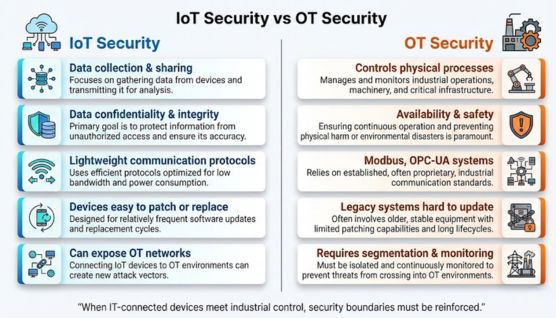
A IoT foi projetada para coletar, compartilhar e processar dados em ambientes conectados. O OT foi projetado para controlar processos físicos em que o tempo de atividade e a precisão são essenciais.
A segurança da IoT se concentra na confidencialidade e na integridade dos dados, pois as violações geralmente expõem ou alteram as informações. A segurança de OT prioriza a disponibilidade e a segurança, pois interrupções podem interromper a produção ou danificar o equipamento.
A IoT usa protocolos leves otimizados para velocidade de comunicação e simplicidade do dispositivo. A OT depende de protocolos industriais, como Modbus e OPC-UA, que não foram originalmente criados com a segurança cibernética em mente.
Os dispositivos de IoT geralmente podem ser corrigidos ou substituídos sem grande impacto. Os sistemas OT geralmente são executados em hardware legado que não pode ser colocado off-line, dificultando as atualizações.
À medida que a IoT se conecta às redes de OT, as vulnerabilidades na IoT podem se tornar pontos de entrada na infraestrutura crítica. Isso aumenta a necessidade de forte segmentação e monitoramento em ambos os ambientes.
A IoT desempenha um papel cada vez maior nos ambientes de OT ao adicionar dados em tempo real, visibilidade remota e automação mais inteligente às operações industriais. Sensores e dispositivos conectados ajudam os sistemas de OT a tomar decisões mais rápidas e melhorar a eficiência sem interromper os processos físicos.
Os sensores de IoT capturam dados contínuos sobre o desempenho do equipamento, as condições ambientais e a atividade do fluxo de trabalho. Essa visibilidade ajuda as equipes de OT a detectar problemas precocemente e otimizar as operações.
Os dados de condição dos dispositivos de IoT suportam modelos que prevêem falhas no equipamento antes que elas ocorram. Os avisos antecipados reduzem o tempo de inatividade e prolongam a vida útil dos ativos industriais.
A conectividade de IoT permite que as operadoras monitorem e ajustem os sistemas de OT a partir de locais remotos. Essa capacidade aumenta a flexibilidade operacional e reduz a necessidade de intervenções no local.
A automação possibilitada pela IoT simplifica processos como gerenciamento de energia, fluxo de material e tempo de produção. Essas melhorias melhoram a produtividade e reduzem os custos operacionais.
A IoT atua como uma ponte entre TI e OT conectando plataformas digitais a equipamentos físicos. Essa integração oferece suporte a análises, ferramentas de otimização e gerenciamento centralizado.
Os sistemas de IoT enfrentam riscos de segurança significativos porque dependem de um grande número de dispositivos simples e conectados que geralmente operam com proteção mínima.
Muitos dispositivos de IoT ainda dependem de nomes de usuário padrão ou senhas simples, o que os torna alvos fáceis para os invasores. Uma vez comprometidos, os dispositivos podem ser usados para roubar dados, interromper serviços ou obter um acesso mais profundo à rede.
Os produtos de IoT geralmente permanecem sem patches por longos períodos porque as atualizações são lentas, manuais ou não são suportadas. Isso deixa as vulnerabilidades conhecidas abertas e exploráveis muito depois de existirem as correções.
Os protocolos de comunicação leves na IoT são projetados para velocidade, não para segurança. Sem criptografia ou autenticação, os atacantes podem interceptar comandos ou alterar dados em trânsito.
Os ecossistemas de IoT se espalham por residências, hospitais, frotas e fábricas, criando uma enorme superfície de ataque. Um único dispositivo fraco pode se tornar um trampolim para comprometer uma rede inteira.
Uma vez infectados, os dispositivos de IoT podem ser combinados em enormes botnets capazes de sobrecarregar sites e aplicativos. Esses ataques coordenados podem desativar os serviços e causar interrupções generalizadas.
Os sistemas OT enfrentam riscos de segurança de alto impacto porque executam operações físicas que não toleram interrupções. Qualquer violação tem o potencial de interromper a produção, danificar o equipamento ou colocar a segurança em risco.
Muitos ambientes de OT ainda dependem de hardware de décadas atrás que não possui recursos de segurança integrados. Substituir ou atualizar esse equipamento é difícil, deixando lacunas de vulnerabilidade de longo prazo.
As redes OT geralmente operam sem segmentação interna, permitindo que um invasor se mova livremente uma vez dentro. Um único ponto de entrada pode expor vários sistemas críticos.
Protocolos industriais, como Modbus e BACnet, foram projetados para confiabilidade, não para cibersegurança. Comandos e dados geralmente são transferidos sem autenticação ou criptografia.
Os sistemas OT essenciais não podem fazer pausas para correções ou manutenções frequentes. Atualizações atrasadas aumentam a chance de vulnerabilidades conhecidas permanecerem exploráveis.
Os ataques cibernéticos em ambientes de OT podem causar resultados físicos, incluindo falhas no equipamento ou riscos operacionais. As consequências do mundo real tornam a OT um alvo cada vez mais atraente para os atacantes.
A conexão entre os sistemas IoT e OT apresenta novos desafios de segurança porque os dispositivos digitais agora interagem diretamente com as operações físicas. Essa combinação expande a superfície de ataque e facilita a movimentação de ameaças em ambientes que antes eram separados.
Os dispositivos de IoT geralmente se tornam pontos de entrada que levam os invasores às redes de OT. Um único sensor vulnerável pode criar uma rota para sistemas industriais críticos.
Os ambientes conectados combinam a escala da IoT com a sensibilidade da OT. Isso cria mais pontos de acesso e, ao mesmo tempo, aumenta o impacto potencial de uma violação.
A IoT usa métodos de comunicação leves, enquanto a OT depende de protocolos industriais criados para garantir a confiabilidade. A combinação de ambos introduz lacunas de compatibilidade e segurança que os invasores podem explorar.
Os sistemas de TI, IoT e OT frequentemente compartilham dados e infraestrutura, reduzindo o isolamento. Menos separação aumenta as chances de movimento lateral durante um ataque.
Um compromisso que começa na IoT pode se transformar em interrupções que afetam a produção, a segurança ou a infraestrutura crítica. A convergência transforma ameaças cibernéticas rotineiras em riscos operacionais.
Proteger os sistemas de IoT e OT exige uma abordagem em camadas, pois cada ambiente tem riscos e necessidades operacionais diferentes. O objetivo é reduzir a exposição e, ao mesmo tempo, manter os dispositivos e processos industriais funcionando com segurança.
A separação das redes IoT, OT e TI limita o movimento lateral durante um ataque. Limites claros garantem que um compromisso em uma área não possa se espalhar facilmente para outra.
Cada dispositivo e usuário deve provar a identidade antes de obter acesso, mesmo dentro da rede. A verificação contínua evita comandos não autorizados ou expansão lateral.
Limitar as permissões reduz a chance de uso indevido ou alterações acidentais em sistemas críticos. O gerenciamento robusto de credenciais protege dispositivos e equipamentos operacionais.
O monitoramento comportamental ajuda a detectar precocemente atividades incomuns, sejam elas provenientes de um sensor de IoT comprometido ou de um controlador de OT. A detecção mais rápida reduz a chance de impacto operacional.
Um plano de atualização estruturado ajuda a proteger os sistemas de IoT e OT sem interromper as operações essenciais. A correção priorizada se concentra primeiro nas vulnerabilidades mais críticas.
A IoT e a OT estão se tornando mais conectadas a cada ano, trazendo novas oportunidades de eficiência e novos desafios de segurança. Entender como os dois ambientes operam ajuda as organizações a proteger seus dispositivos, proteger processos críticos e reduzir o risco operacional.
Uma estratégia de segurança forte deve levar em conta a escala da IoT, a sensibilidade da OT e a crescente interdependência entre as duas. Com visibilidade clara, proteção estruturada e monitoramento proativo, as equipes podem manter operações físico-digitais mais seguras e resilientes.
A segurança da IoT protege os dispositivos conectados e seus dados, enquanto a segurança da OT protege os sistemas industriais que controlam os processos físicos. Os incidentes de OT têm maiores riscos porque podem causar interrupções no mundo real ou danos ao equipamento.
Os sistemas OT dependem de hardware legado que não pode ser facilmente atualizado. Interromper esses sistemas para manutenção pode afetar a produção e a segurança.
Sim, as redes interconectadas permitem que os invasores passem de dispositivos de IoT para sistemas de OT se a segmentação for fraca. Um único dispositivo comprometido pode se tornar um ponto de entrada.
A manufatura, a energia, os serviços públicos e o transporte dependem muito da segurança da OT. Esses setores usam sistemas de controle críticos que devem operar sem interrupção.
Os dispositivos de IoT geralmente usam autenticação fraca e raramente recebem atualizações oportunas. Os atacantes exploram essas lacunas para obter acesso ou criar grandes botnets.
A IoT fornece dados e visibilidade em tempo real que ajudam as equipes de OT a tomar decisões mais rápidas e informadas. Isso melhora a eficiência e oferece suporte à detecção precoce de problemas.
A segmentação cria limites claros entre as zonas da rede para limitar o movimento lateral. Os compromissos em uma área são contidos antes de chegarem aos sistemas críticos.
O controle de acesso Zero Trust, o monitoramento contínuo, as políticas de credenciais sólidas e a aplicação estruturada de patches aprimoram a proteção em ambos os ambientes. Essas práticas ajudam a manter a estabilidade e reduzir os riscos.
