Relatório de situação: Escalada no Oriente Médio (27 de fevereiro a 1º de março de 2026)
O relatório examina a forte escalada após os ataques conjuntos de Israel e EUA ao Irã em 28 de fevereiro de 2026, desencadeando um conflito híbrido que mistura ataques cinéticos com operações cibernéticas sem precedentes. O Irã enfrentou uma interrupção quase total da Internet, enquanto mísseis retaliatórios e atividades cibernéticas se espalharam por Israel, pelo Golfo e além. Mais de 150 incidentes hacktivistas foram registrados, com riscos globais de repercussão nos setores de energia, finanças, TI e infraestrutura crítica
Receba as últimas notícias, ameaças e recursos do setor.
CloudSEK Threat Intelligence
CloudSEK's Threat Intelligence team, a group of cybersecurity experts led by Koushik Sivaraman, primarily focuses on the research and analysis of threat intelligence related to threat actors, malware, vulnerability/ exploitation, data breach incidents, etc.
Nenhum item encontrado.
Sumário executivo
Este relatório analisa o cenário geopolítico e cibernético em rápida evolução no Oriente Médio após os ataques conjuntos de Israel e Estados Unidos ao Irã, lançados em 28 de fevereiro de 2026, e as operações cibernéticas associadas e os riscos de repercussão da 27 de fevereiro a 1 de março de 2026 e em andamento. O conflito entrou em uma fase híbrida que combina ataques cinéticos em grande escala, interrupção quase total do ambiente digital do Irã e aumento da atividade de ameaças cibernéticas que afetam os setores regionais e globais de TI e infraestrutura crítica.
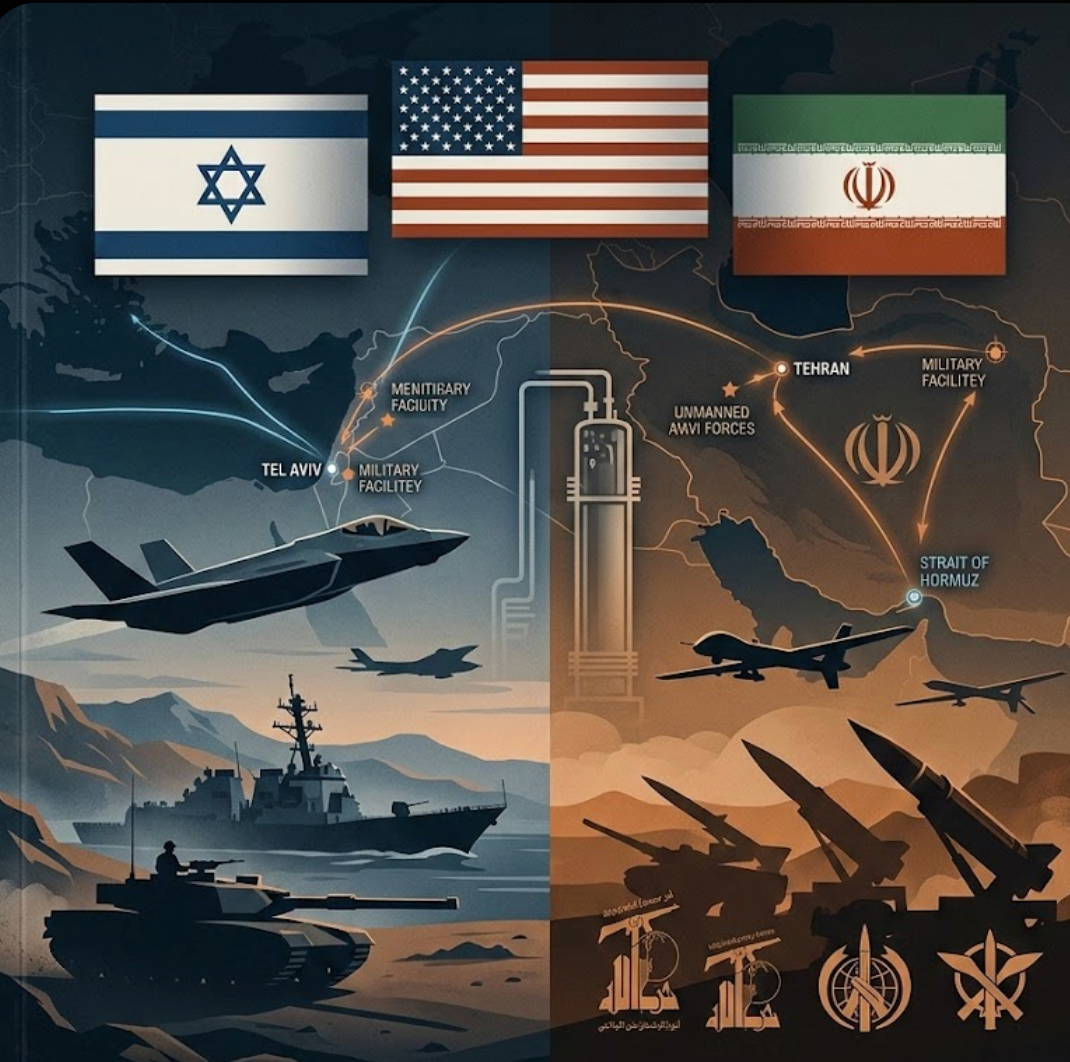
Fonte da imagem: Gemini (Nano banana)
Principais descobertas
Israel e os Estados Unidos realizaram ataques coordenados contra a liderança iraniana, militares e instalações nucleares sob a Operação Leão Ruido/Fúria Épica, enquanto o Irã retaliou com barragens de mísseis em bases regionais de Israel e dos EUA.
Paralelamente à campanha cinética, Israel lançou o que foi descrito como o maior ataque cibernético na história contra o Irã, contribuindo para um apagão quase total da Internet, interrupção dos serviços governamentais, da mídia e de partes da infraestrutura de energia e aviação.
Os Emirados Árabes Unidos e outros estados do Golfo relataram ondas sofisticadas e cada vez mais Ataques cibernéticos habilitados por IA sobre sistemas governamentais, finanças e setores vitais, de 21 a 26 de fevereiro de 2026, que, segundo as autoridades nacionais, foram sistematicamente detectados e frustrados usando monitoramento e resposta coordenados, mantendo os serviços essenciais on-line.
O uso de longa data do Irã de APTs dirigidos pelo IRGC/Mois e de grupos hacktivistas delegados fornece um conjunto de ferramentas pronto para retaliação assimétrica contra Israel, Estados Unidos, estados do Golfo e países de segunda ordem com laços econômicos ou políticos com o conflito.
Países afetados de segunda ordem, incluindo Índia, estados europeus, Japão e Coréia do Sul, enfrentam riscos elevados de espionagem, comprometimento da cadeia de suprimentos, DDoS, ransomware e desinformação, à medida que os agentes de ameaças exploram as interdependências globais em energia, finanças, transporte e serviços de TI.
As cadeias de suprimentos globais e os fluxos de energia estão enfrentando novas interrupções, à medida que as principais empresas de petróleo e gás e comerciantes suspendem temporariamente os embarques através do Estreito de Ormuz, as principais linhas de contêineres retiram navios das rotas de Ormuz/Mar Vermelho, e exportadores indianos e europeus relatam maiores custos de frete e seguro e maiores tempos de trânsito, especialmente nas rotas Índia-Europa/EUA.
Recomendações para organizações
Ações preventivas imediatas para aumentar a barreira de entrada para a tentativa de agentes de ameaças.
Redefinição de credenciais em toda a empresa:Realize uma rotação de credenciais em toda a organização para todos os funcionários. Isso preparará sua organização para ataques de hacktivistas e agentes de ameaças de nível baixo a moderado que dependem do comprometimento baseado em credenciais.
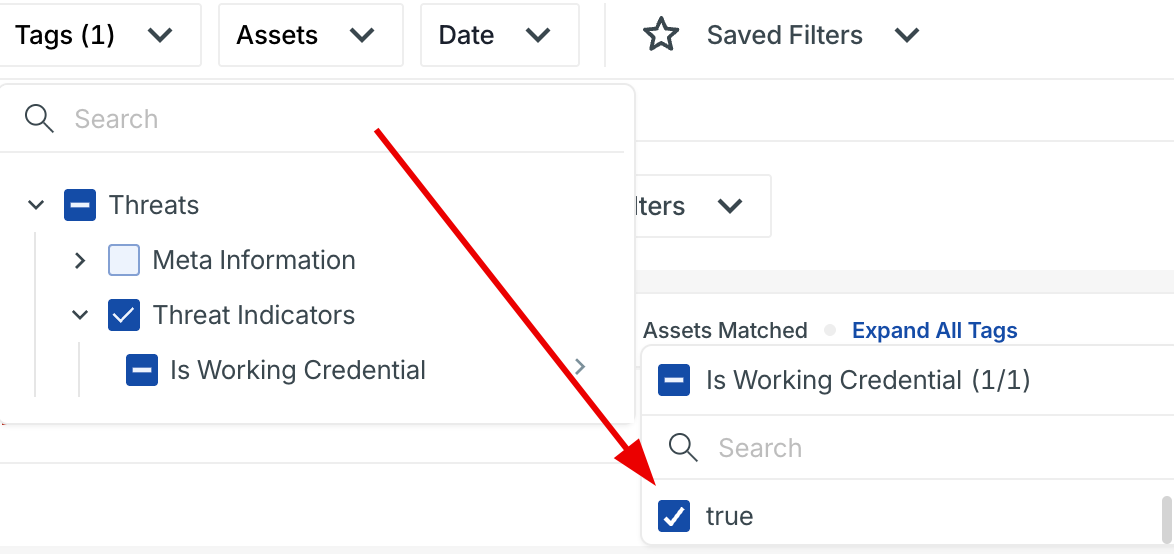
Para usuários do Xvigil: Use o Computador comprometido módulo e Violações de credenciais módulo para verificar as credenciais vazadas na Deep and Dark Web. De Magnitude, selecione ALTO para filtrar e priorizar credenciais críticas vazadas.
Imponha a autenticação multifator (MFA): em todos os caminhos de acesso externo, especialmente nos consoles de administração de VPN, RDP, SSH e nuvem.
Para usuários do BeVigil: Para fortalecer ainda mais seus ativos, corrija as descobertas críticas identificadas em Scanners de aplicativos da Web e Scanners CVE para eliminar ameaças discretas e aumentar a barreira de entrada para a tentativa de agentes de ameaças.
Alinhe-se às recomendações do governo: Acompanhe os alertas do DHS, da ENISA, do CERT nacional e do ISAC setoriais relacionados às ameaças iranianas e regionais; integre as atualizações de IOCs e TTP aos fluxos de trabalho de engenharia de detecção e SIEM.
Defina os manuais de escalada e crise: Estabeleça critérios claros para passar para os modos de “alerta elevado” (análogos ao “Shields Up”), incluindo monitoramento intensificado, aumento de equipe e janelas de mudança restritas para sistemas críticos.
Controles técnicos e endurecimento
Identidade, acesso e perímetro:
Audite dispositivos VPN e de acesso remoto em busca de backdoors, contas desconhecidas e alterações de configuração não autorizadas; aplique patches urgentemente e segmente interfaces de gerenciamento.
Implemente controles de acesso condicional e de sessão para mitigar os ataques de AiTM e roubo de tokens destacados como as principais ameaças na região.
Segurança de rede e endpoint:
Implemente EDR/XDR robustos e coleta de registros em endpoints e servidores; priorize as detecções de comportamentos conhecidos de APT no Irã e no Oriente Médio (Cobalt Strike, web shells, abuso do PowerShell, despejo de credenciais).
Monitore respostas de DNS anômalas, redirecionamentos HTTP inesperados e certificados TLS autoassinados ou não confiáveis como possíveis indicadores de interceptação ou redirecionamento de tráfego.
DDoS e disponibilidade:
Interaja com ISPs e provedores de nuvem para garantir a mitigação de DDoS e a eliminação de tráfego capazes de surtos, com manuais específicos para cargas de trabalho governamentais, financeiras e de mídia que podem ter impacto político.
Proteção e recuperação de dados:
Mantenha backups off-line e imutáveis para sistemas críticos, especialmente ICS/OT, saúde e principais aplicativos de negócios; teste regularmente a restauração em cenários simulados de limpador ou ransomware.
Prioridades de monitoramento e detecção
Filtragem geográfica e baseada em parceiros: Aplique uma análise aprimorada ao tráfego de e para faixas de IP do Oriente Médio e às conexões envolvendo parceiros ou fornecedores regionais em setores de alto risco.
Caçando ameaças para APTs de longa permanência: Realize buscas com foco em registros de VPN, infraestrutura de identidade e dispositivos periféricos para identificar possíveis comprometimentos a longo prazo, conforme destacado por campanhas recentes.
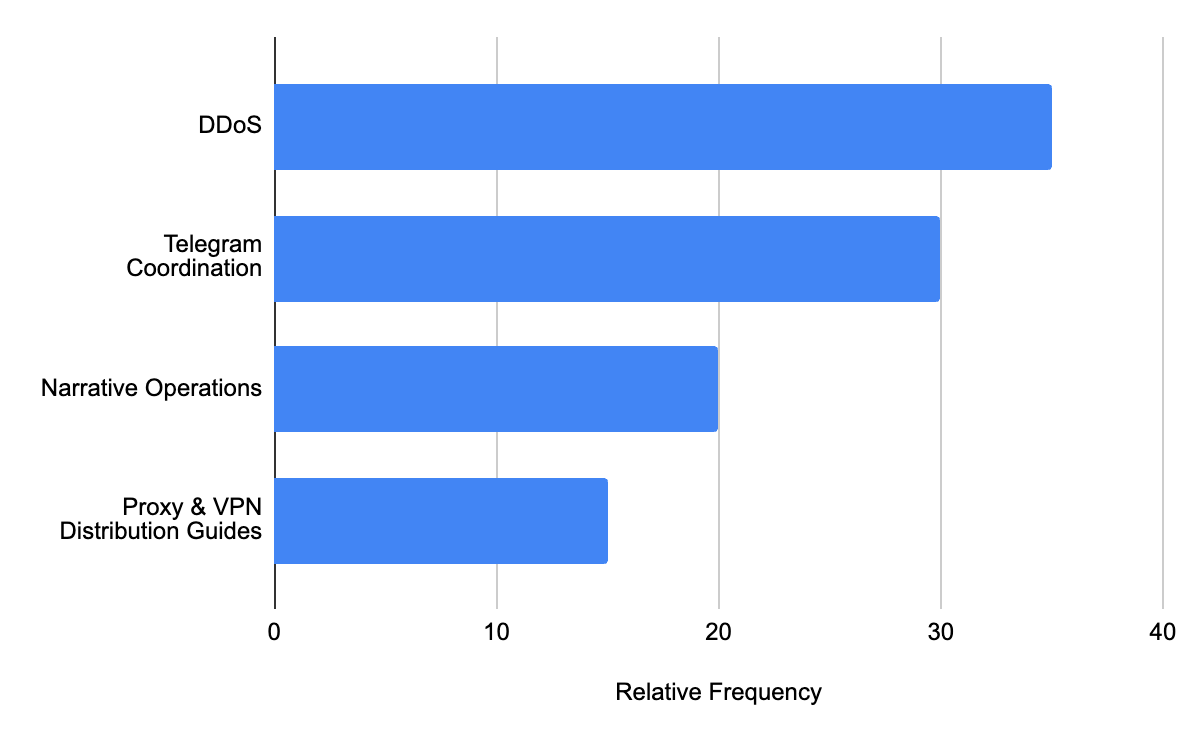
Monitoramento hacktivista e de desinformação: Acompanhe o Telegram, as mídias sociais e os canais públicos de “operações” para obter indicações de campanhas coordenadas direcionadas ao seu setor ou região, especialmente para organizações financeiras, governamentais e de mídia.
Contexto geopolítico e cronograma de escalada
Antecedentes anteriores a 2026: tensões entre Irã e Israel e EUA
Por mais de uma década, o Irã e Israel se envolveram em confrontos encobertos e abertos envolvendo conflitos por procuração, assassinatos direcionados e operações cibernéticas sustentadas. A estratégia pós-Stuxnet do Irã posicionou as capacidades cibernéticas como um pilar assimétrico central, permitindo a interrupção da infraestrutura regional, espionagem e campanhas de influência por meio de proxies com negação plausível.
A guerra de Gaza de 2023—2024 e as subsequentes escaramuças entre Irã e Israel aceleraram essa trajetória, incluindo relatos de ataques atribuídos por Israel à distribuição iraniana de combustível, usinas siderúrgicas e instituições financeiras ligadas a grupos como o “Predatory Sparrow”. Em Junho de 2025, um conflito de doze dias entre Irã e Israel contou com atividades coordenadas de hacktivistas e APT, centenas de alegados ataques cibernéticos e aumento das operações de falsificação de GPS e informações em toda a região.
No início de 2026, EUA, Irã e As tensões entre Israel e Irã aumentaram sobre os programas nucleares e de mísseis do Irã e a atividade regional por procuração, juntamente com um significativo aumento militar dos EUA no Oriente Médio. Analistas alertaram que o ecossistema cibernético iraniano APT33/35, Oilrig/Muddywater e grupos hacktivistas alinhados ao IRGC serviriam como uma ferramenta de linha de frente em qualquer confronto renovado.
Ao mesmo tempo, a atividade cibernética regional se intensificou:
Estados do GCC, particularmente os Emirados Árabes Unidos, informado ataques cibernéticos diários sofisticados e aprimorados por IA direcionados aos setores governamental e financeiro.
Várias empresas observaram a exploração de backdoor de VPN, conchas web persistentes e segmentação multissetorial em finanças, saúde, educação, tecnologia e varejo.
Recomendações do CTI observou a presença de longo prazo da APT iraniana na infraestrutura crítica do Oriente Médio por meio de roubo de credenciais e comprometimento de VPN desde o início de 2025.
27 a 28 de fevereiro de 2026: Escalada cinética e cibernética
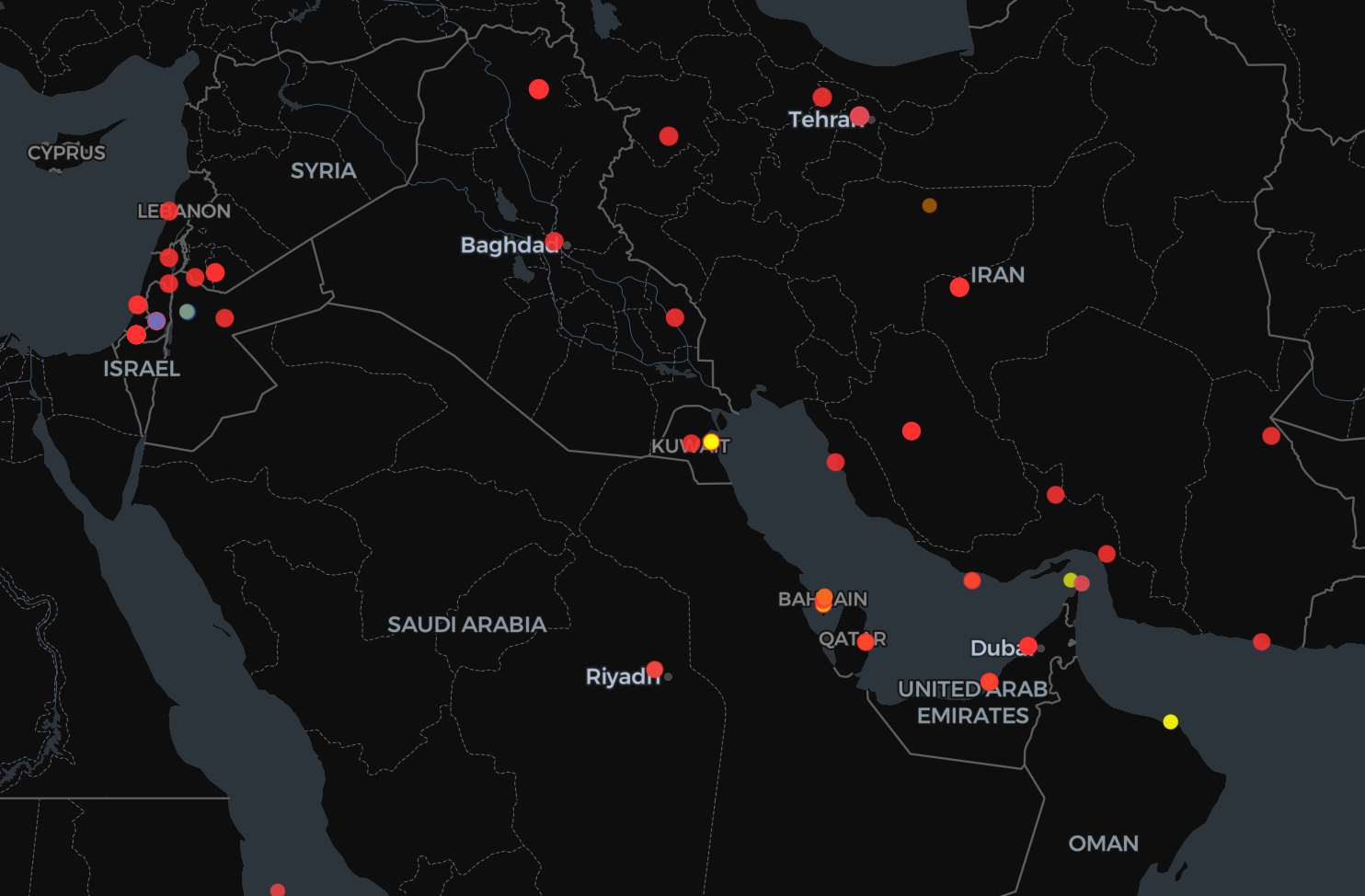
Em 28 de fevereiro de 2026, Israel e os Estados Unidos lançaram ataques coordenados contra complexos de liderança iraniana, instalações do IRGC e infraestrutura nuclear sob os codinomes Roaring Lion e Operation Epic Fury. Os alvos incluíram Teerã, Isfahan, Qom, Karaj, Kermanshah e outros locais estratégicos. Os ataques supostamente danificaram o complexo do líder supremo Ali Khamenei e interromperam as comunicações da liderança sênior de segurança.
O Irã retaliou com mísseis balísticos e drones atacando bases de Israel e dos EUA na Jordânia, Síria, Kuwait, Bahrein, Catar, Arábia Saudita e Emirados Árabes Unidos, enquanto o movimento houthi no Iêmen retomou os ataques no Mar Vermelho.
Simultaneamente, notícias descreveu uma operação cibernética israelense em grande escala contra o Irã, caracterizada como a maior da história, resultando em uma disrupção digital generalizada e em uma “névoa digital” nacional.
Países envolvidos direta e indiretamente
Beligerantes primários
Irã 🇮🇷 — Alvo das greves conjuntas e principal adversário no confronto. O IRGC e o Ministério da Inteligência (MOIS) supervisionam um ecossistema cibernético maduro que combina APTs alinhados ao estado e grupos hacktivistas procuradores capazes de espionagem, interrupção e operações de influência coordenadas.
Israel 🇮🇱 — Principal ator militar regional que conduz ataques em território iraniano e é um antigo adversário cibernético do Irã, com um histórico de operações cibernéticas ofensivas atribuídas à Unidade 8200 e a grupos como Predatory Sparrow.
Estados Unidos🇺🇸 — Parceiro estratégico de Israel e co-líder dos ataques de 28 de fevereiro de 2026, mantendo uma extensa base no Golfo Pérsico e um histórico sustentado de confrontos cibernéticos com o Irã, particularmente em torno de questões nucleares e de infraestrutura crítica.
Estados regionais sob incêndio ou risco elevado
Em retaliação, o Irã lançou mísseis e drones contra instalações de Israel e dos EUA em vários estados:
Jordânia — Hospeda forças dos EUA e ativos de defesa antimísseis.
Síria — Teatro operacional para representantes iranianos e forças dos EUA/Coalizão.
Kuwait, Bahrein, Catar, Arábia Saudita, Emirados Árabes Unidos — Principais centros de base e centros econômicos dos EUA, tornando-os potenciais alvos cinéticos e cibernéticos.
Simultaneamente, representantes baseados no Líbano e no Iêmen, incluindo o Hezbollah e os houthis, aumentaram a pressão, elevando a exposição ao risco marítimo, aéreo e cibernético relacionado.
Países afetados de segunda ordem
Estados com laços econômicos, diplomáticos ou digitais com a região enfrentam riscos de repercussão e disrupção setorial:
Índia — Grande importador de energia do Golfo e fornecedor de TI/BPO que atende clientes do Oriente Médio e de Israel.
Estados da União Europeia (notavelmente Alemanha, França, Reino Unido) — Hospede empresas financeiras, industriais e de energia ativas nos mercados do Golfo e de Israel e são alvos frequentes de atividades cibernéticas ligadas ao Irã.
Japão e Coréia do Sul — Economias tecnológicas e industriais expostas pela dependência energética do Oriente Médio e pelos riscos de ICS vinculados à cadeia de suprimentos.
Turquia — Centro regional de logística e telecomunicações que une a Europa e o Oriente Médio, com exposição por meio de rotas de trânsito e corredores de energia.
Atividades cibernéticas: o que, quando e como (27 a 28 de fevereiro e contexto imediato)
A ofensiva cibernética de Israel contra o Irã
Quando os ataques aéreos começaram em 28 de fevereiro de 2026, Israel teria lançado uma campanha cibernética em grande escala com o objetivo de paralisar as redes de informação, comando e infraestrutura crítica do Irã.
O que (efeitos):
A conectividade com a Internet no Irã caiu para cerca de 4% dos níveis normais, resultando em um apagão nacional quase total.
A infraestrutura crítica, a mídia oficial (incluindo a IRNA e a Tasnim, vinculada ao IRGC) e os sistemas de comunicação de segurança foram severamente interrompidos, contribuindo para falhas na comunicação da liderança.
Serviços digitais governamentais e aplicativos locais em cidades como Teerã, Isfahan e Shiraz sofreram interrupções generalizadas.
Quando:
As interrupções se intensificaram em 28 de fevereiro de 2026, poucas horas após o início das operações aéreas conjuntas, com monitores independentes confirmando o declínio acentuado da conectividade naquele dia.
Guerra eletrônica, incluindo interferência e falsificação de sistemas de navegação e comunicação.
Ataques DDoS contra infraestrutura governamental e de mídia.
Intrusões de rede profundas visando sistemas de energia e aviação, potencialmente aproveitando o acesso prévio ou vulnerabilidades de dia zero.
Sequestro ou desfiguração de mídia para disseminar mensagens anti-regime.
A escala da interrupção sugere que a arquitetura alternativa da “internet nacional” do Irã foi sobrecarregada, causando falhas de segmentação sistêmica.
Resposta cibernética e de informação do Irã
Apesar da conectividade restrita, os relatórios e os padrões de conflito anteriores indicam uma resposta defensiva e ofensiva dupla.
Medidas defensivas imediatas:
Restrições de internet impostas pelo estado, semelhantes às paralisações anteriores de protestos e conflitos, provavelmente destinadas a limitar a visibilidade do adversário C2, gerenciar dissidências e obscurecer os desenvolvimentos no campo de batalha.
Controles de comunicação mais rígidos para funcionários, com maior dependência de redes fechadas e seguras.
Tendências ofensivas (padrões atuais e históricos):
Coordenou o IRGC/MOIS APT e as operações hacktivistas de compartilhamento de ferramentas e infraestrutura.
Visando entidades governamentais e de defesa de Israel e dos EUA, instituições financeiras, mídia, saúde, serviços públicos de água e infraestrutura crítica em todo o Oriente Médio e estados ocidentais.
Uso de spear-phishing, exploração de VPN e dispositivos de ponta, web shells, malware personalizado (incluindo limpadores) e ferramentas focadas em ICS/OT.
À medida que a conectividade se estabiliza, a retaliação assimétrica por meio de frentes proxy e hacktivista permanece altamente provável.
Emirados Árabes Unidos e GCC: ataques apoiados por IA e alerta elevado
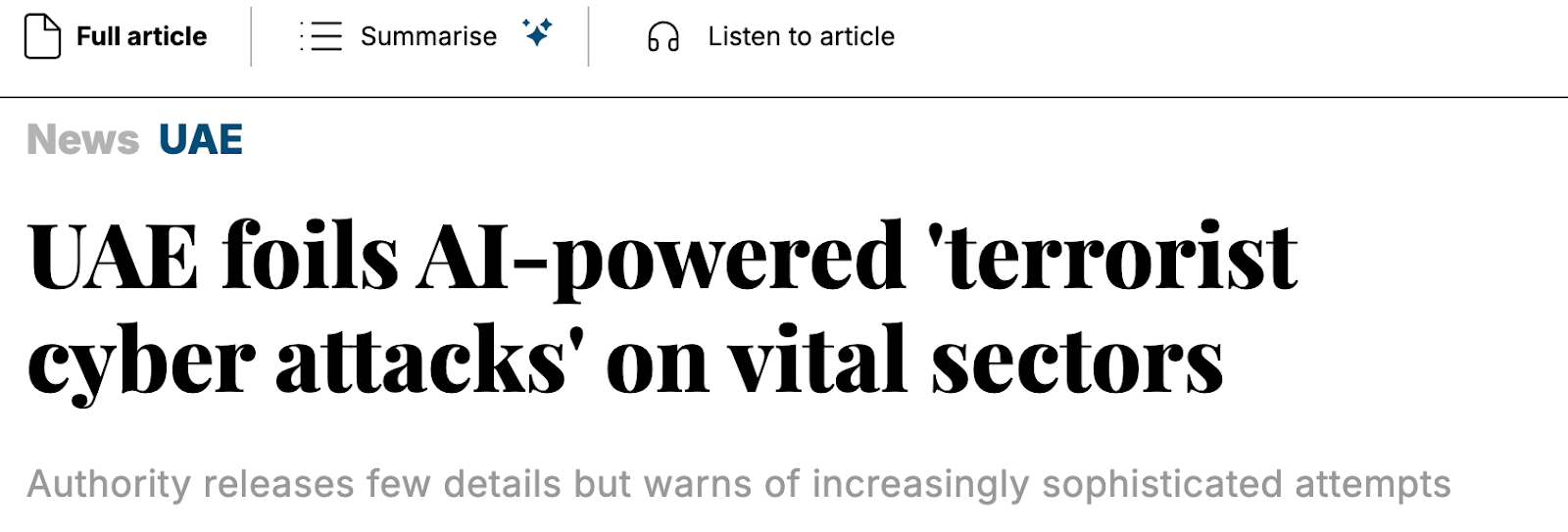
Na semana anterior às greves, os Emirados Árabes Unidos divulgaram que haviam frustrado campanhas cibernéticas coordenadas apoiadas por IA voltadas para setores vitais.
Tentativas de phishing, malware e ransomware aprimoradas por IA contra sistemas governamentais e instituições financeiras.
Pelo menos 128 incidentes de ameaças cibernéticas confirmados no início de 2026, afetando fortemente a administração governamental, os bancos e os serviços financeiros.
Quando:
Divulgado publicamente de 22 a 23 de fevereiro de 2026, dias antes da escalada de 27 a 28 de fevereiro, em meio a um aumento mais amplo na atividade cibernética regional.
Como:
Engenharia social adaptativa, cargas úteis ofuscadas, mudanças automatizadas na infraestrutura e tentativas de infiltração na rede.
Embora a atribuição permaneça não confirmada, o tempo e a estratégia são consistentes com atores alinhados ao estado ou ligados ao terrorismo que investigam as defesas regionais.
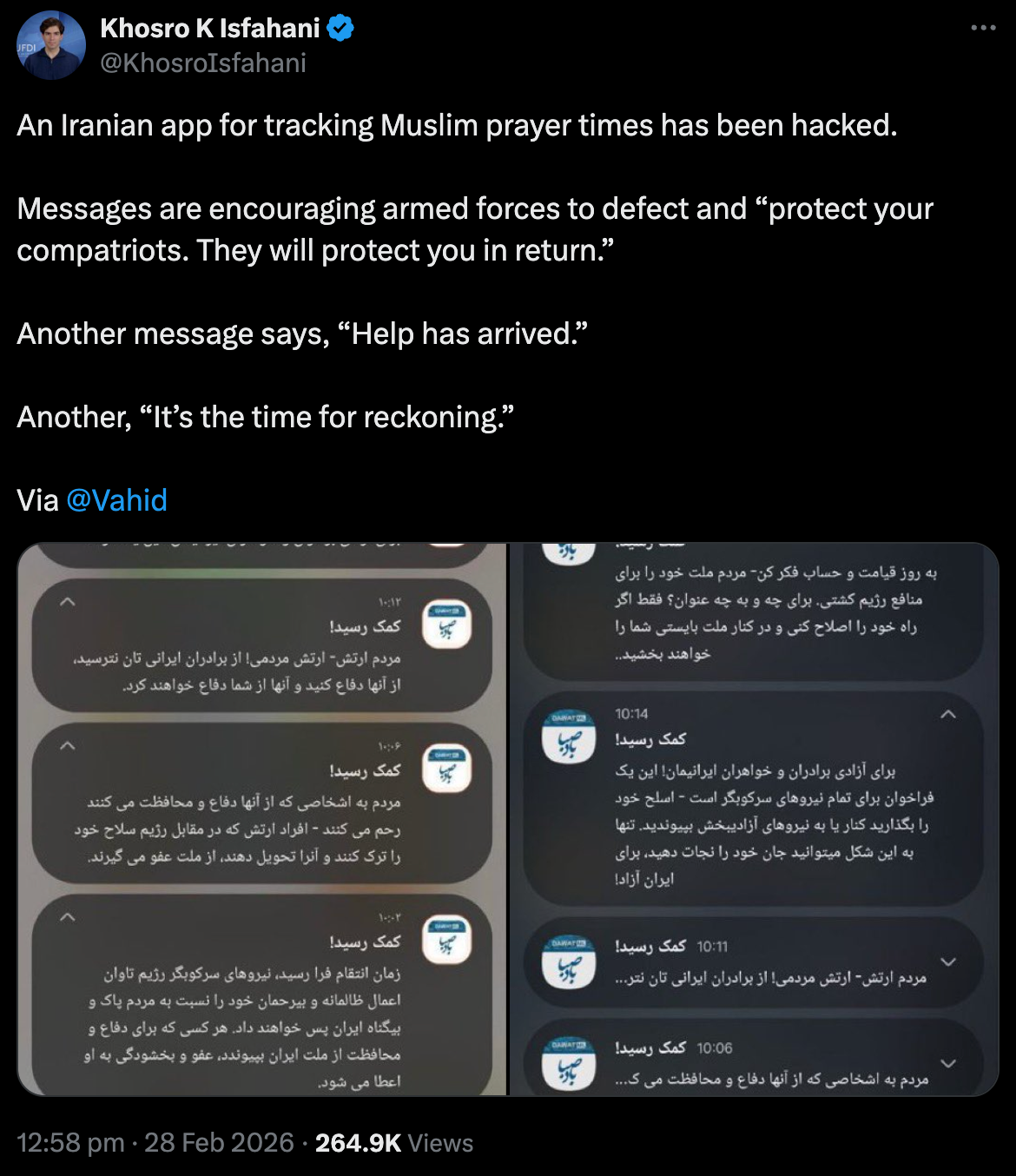
Um aplicativo iraniano usado para rastrear os horários de oração dos muçulmanos teria sido hackeado, com usuários recebendo notificações push alarmantes contendo mensagens políticas e militares. As mensagens supostamente instavam os membros das forças armadas a desertar e “proteger seus compatriotas”, prometendo proteção em troca, enquanto outros declararam “A ajuda chegou” e “É hora de acertar as contas”. O incidente destaca como plataformas digitais amplamente usadas e até mesmo aplicativos religiosos podem se tornar alvos de ataques cibernéticos e ser aproveitados para espalhar propaganda ou mensagens desestabilizadoras durante períodos de tensão.
Atividade da campanha hacktivista (28 de fevereiro a 1º de março de 2026)
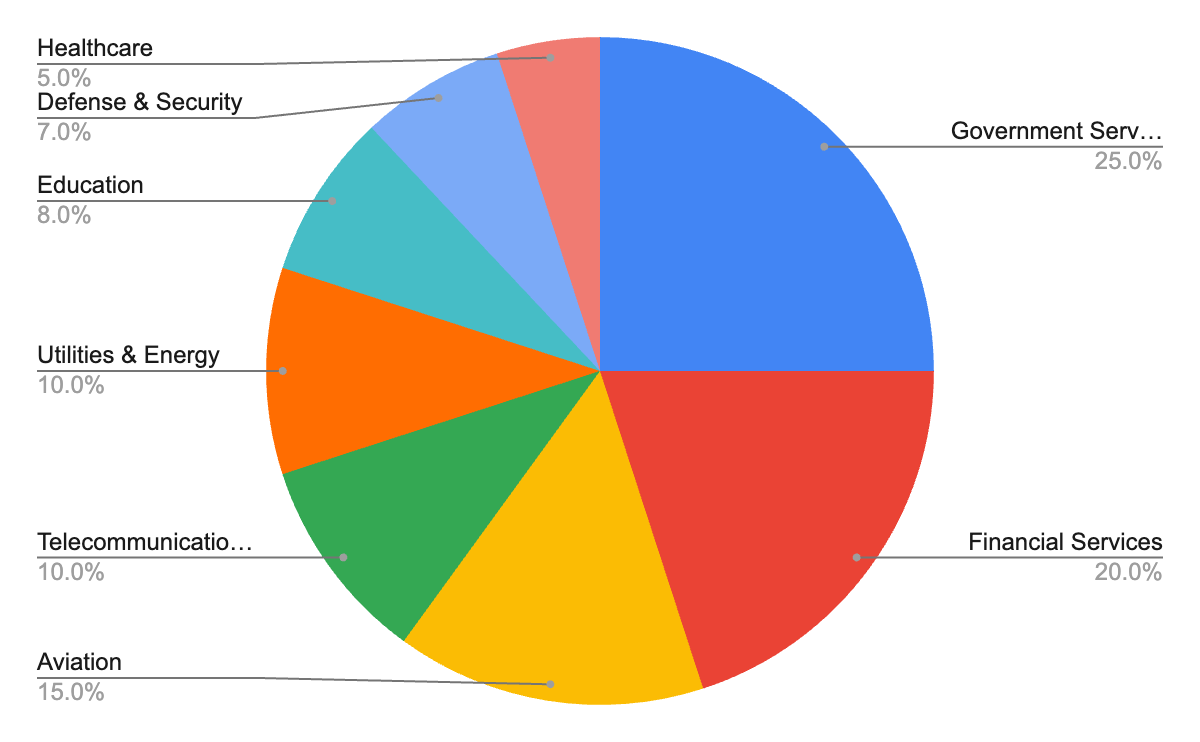
Entre 28 de fevereiro e 1º de março de 2026, mais de 150 incidentes hacktivistas foram reivindicados em canais abertos de hacktivistas monitorados pelos feeds do Oriente Médio da CloudSEK. A atividade está explicitamente ligada à atual escalada envolvendo Israel, Palestina e Irã, e é dominada por DDoS, desfiguração de sites e alegadas operações de violação de dados contra alvos governamentais, financeiros, de aviação, telecomunicações e outros alvos de infraestrutura crítica na região.
Embora a atribuição seja autorrelatada e a validação técnica seja limitada para algumas reivindicações, o volume, o agrupamento de alvos e a sobreposição de mensagens indicam várias campanhas pouco coordenadas em vez de ataques isolados.
Principais grupos e campanhas hacktivistas
Entre 28 de fevereiro e 1º de março de 2026, vários grupos hacktivistas conduziram ou alegaram atividades cibernéticas disruptivas coordenadas alinhadas principalmente com narrativas pró-Irã e pró-Palestina. A maioria das operações envolveu ataques de DDoS, interrupção de sites, alegações de desfiguração, afirmações de vazamento de dados e mensagens de propaganda coordenadas contra Israel e estados considerados como apoiadores da política israelense ou norte-americana.
Atores alinhados pró-Irã/Anti-Israel
Rede DieNet//Rede DieNet V5 liderou campanhas de DDoS em grande escala contra portais governamentais, provedores de telecomunicações, aeroportos e instituições financeiras no Bahrein, Catar, Emirados Árabes Unidos, Kuwait, Arábia Saudita e Estados Unidos, descrevendo a atividade como retaliação pela percepção de agressão contra o Irã.
SylhetGangsG1//SYLHETGANG SG//Anônima Sylhet conduziu ataques DDoS contra entidades governamentais e de infraestrutura do Oriente Médio, incluindo ativos corporativos israelenses.
Resistência ciberislâmica focado na construção de alianças e coordenação de campanhas, anunciando a cooperação com outros atores hacktivistas e da marca APT para ampliar as operações contra Israel, os EUA e os estados que hospedam bases militares dos EUA.
Atores alinhados pró-Palestina/Anti-Israel
Nação dos Salvadores alegou ataques de DDoS, comprometimento de sites e exfiltração de dados, incluindo a interrupção do Ministério da Educação de Israel e uma reclamação de roubo de dados de 21 GB contra uma entidade privada saudita.
RipperSec conduziu campanhas de DDoS contra o governo israelense e ativos relacionados a drones e emitiu anúncios de interrupção em horários específicos.
Equipe DarkStorm alegou operações de DDoS e atividades de vazamento de dados contra entidades financeiras israelenses, com algumas repercussões na Arábia Saudita.
DragonForce Malásia focado principalmente em mensagens de ameaças e conteúdo de mobilização direcionado à infraestrutura israelense.
Princesa fantasma//TheGhostsItM amplificou as campanhas #OpIsrael, coordenou as mensagens entre os estados do GCC e promoveu ameaças contra concessionárias israelenses e entidades adjacentes à defesa.
FANTASMAS ÁRABES emitiu amplas declarações de ameaças contra Israel, Estados Unidos, Arábia Saudita e Emirados Árabes Unidos sob a marca #OpIsraelTeam.
Sistema de erro Babayo e Keymous Plus anunciou operações planejadas em grande escala contra Israel e a Índia, embora com comprovação técnica limitada.
Atividade anti-Jordânia/anti-Catar/anti-Irã
Grupo Handala alegou a interrupção da infraestrutura do posto de gasolina da Jordânia, afirmando uma paralisação nacional (não verificada).
Equipe Anônima BD direcionou os serviços on-line do Ministério do Interior do Catar com atividades de DDoS, estruturando ações em torno de queixas geopolíticas.
404 CREW CYBER TEAM//Disrupt0r conduziu operações contra sistemas de CFTV iranianos e divulgou vulnerabilidades na web, ao mesmo tempo em que fez referência a alvos israelenses.
Padrão geral
Em todos os grupos, a atividade mostra:
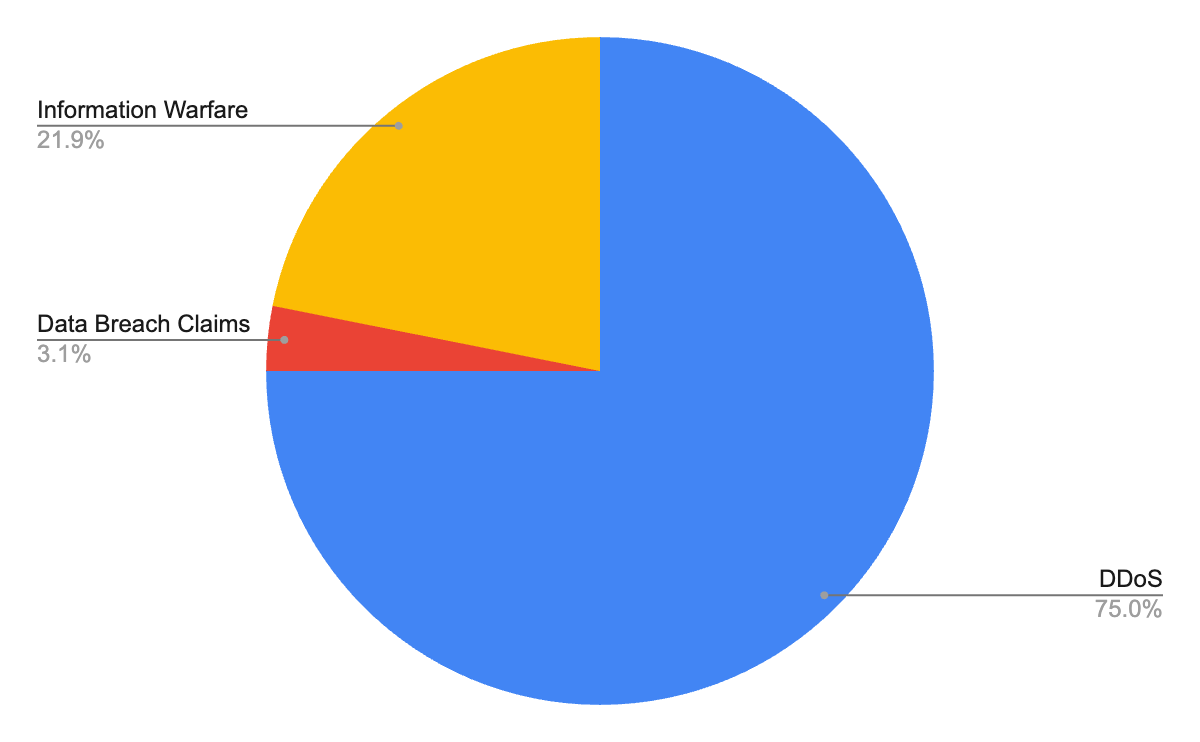
Forte dependência de DDoS como tática principal
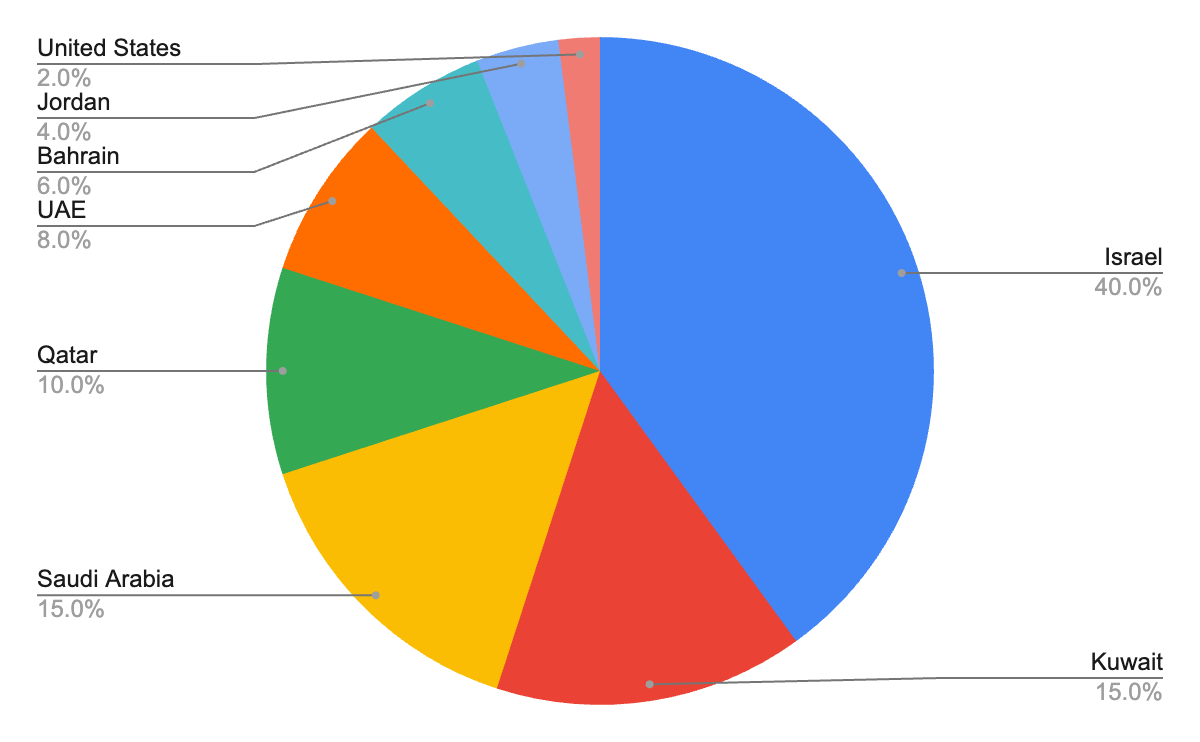
Conjuntos de metas sobrepostos nos estados do GCC e em Israel
Propaganda coordenada e sinalização de alianças
Combinação da marca hacktivista com narrativas de atores de ameaças de alta capacidade
As campanhas refletem uma disrupção cibernética vagamente coordenada e baseada em narrativas, em vez de incidentes isolados e independentes.
Distribuição do tipo de ataque
Fonte: Xvigil
Ênfase no alvo principal
Fonte: Xvigil
Distribuição setorial
Fonte: Xvigil
Distribuição comum de TTP e ferramentas
Fonte: Xvigil
Impacto nos ecossistemas digitais e de TI dos países envolvidos
Isolamento digital do Irã e tensão de infraestrutura
O Irã sofreu uma grave interrupção digital após perda generalizada de conectividade e atividade cibercinética.
Colapso de conectividade: O tráfego da Internet supostamente caiu para ~ 4% dos níveis normais, restringindo severamente o comércio transfronteiriço, os fluxos financeiros e as operações remotas.
Interrupção do serviço governamental: Interrupções em portais e plataformas de serviços públicos prejudicaram a coordenação da saúde, a logística e a continuidade administrativa.
Pressão nacional da intranet: Os sistemas de roteamento doméstico e de “internet nacional” enfrentaram um estresse interno e externo combinado, deixando os serviços essenciais instáveis.
Ambiente de ameaças elevadas de Israel, apesar da forte postura cibernética
Embora Israel mantenha um ecossistema de cibersegurança altamente avançado, a escalada intensificou a pressão cibernética assimétrica.
Phishing e roubo de credenciais: As campanhas vinculadas ao Irã continuam visando funcionários, jornalistas, acadêmicos e segmentos críticos da força de trabalho por meio de portais de login falsificados e anexos maliciosos.
Foco na infraestrutura crítica: Hospitais, sistemas de água e instalações industriais continuam sendo alvos persistentes; tentativas de comprometimento foram detectadas e mitigadas, mas indicam uma intenção contínua do adversário.
Exposição de alta tecnologia: O denso ecossistema de cibersegurança, fintech e startups de Israel o torna resiliente e simbolicamente atraente para operações de roubo, interrupção e extorsão de dados.
Presença regional vinculada aos Estados Unidos e à OTAN
O envolvimento militar direto e a extensa base no Golfo elevam a exposição ao risco cibernético.
Segmentação de infraestrutura crítica: Historicamente, os APTs iranianos sondaram os ambientes de água, energia, saúde e ICS dos EUA usando força bruta, preenchimento de credenciais e exploração de vulnerabilidades.
Risco da cadeia de suprimentos e do contratante: Fornecedores de defesa, operadores logísticos e provedores de comunicações por satélite/marítimas vinculados às operações regionais continuam sendo alvos prováveis de espionagem e interrupção.
Estados do Golfo (Arábia Saudita, Emirados Árabes Unidos, Catar, Bahrein, Kuwait)
Os estados do Golfo estão estrategicamente expostos devido à infraestrutura de energia, centros financeiros e presença militar dos EUA.
Segmentação setorial: Os setores governamental, de petróleo e gás, bancário, de aviação e de telecomunicações enfrentaram campanhas sofisticadas de phishing, ransomware e disrupção no início de 2026.
Ameaças habilitadas por IA: O aumento do uso da IA generativa aprimora o realismo do phishing, a escala de fraudes e a eficácia da engenharia social do ransomware.
Resposta regulatória versus lacunas: O investimento e a supervisão cibernéticos estão se acelerando, mas persistem fraquezas na segmentação OT/ICS, na governança de riscos de terceiros e na maturidade de resposta rápida.
Países afetados de segunda ordem e perspectivas do setor de TI
Visão geral dos canais de disseminação
Os países não diretamente envolvidos no conflito permanecem expostos por meio de dependências econômicas, digitais e de infraestrutura indiretas. Os principais canais de disseminação incluem:
Mercados de energia e commodities: A volatilidade dos preços e as interrupções no fornecimento podem restringir a produção industrial, aumentar os custos operacionais e afastar as prioridades de gastos de TI das iniciativas de transformação para a resiliência e o gerenciamento de riscos.
Cadeias de suprimentos digitais: Organizações que dependem de serviços terceirizados de TI, hospedagem em nuvem, fornecedores de segurança cibernética ou provedores de BPO no Oriente Médio e em Israel podem enfrentar instabilidade no serviço, atrasos nos prazos de entrega ou maior exposição a riscos de terceiros.
Infraestrutura global compartilhada: Sistemas de logística marítima e de aviação, redes de satélites, rotas de cabos submarinos e regiões de nuvem que servem ou transitam pelo Oriente Médio representam interdependências sistêmicas. Interrupções ou alvos nesses centros podem produzir efeitos em cascata além da zona de conflito imediata.
Country/Region
Key Links to Middle East
Expected Cyber & IT Impact
India
Major importer of Middle Eastern energy; extensive IT/BPO service provision for Gulf and Israeli firms; growing defense and tech ties.
Heightened risk of DDoS, phishing, and extortion targeting Indian IT providers and financial institutions connected to Israeli/Gulf clients; potential attempts to compromise Indian cloud or data-center infrastructure as a pivot into regional networks.
EU (Germany, France, UK)
Hosts energy majors, banks, and industrial firms with significant Gulf and Israeli exposure; political backing for U.S./Israel varies but visible.
Surge in politically motivated DDoS, data leaks, and ransomware against banks, energy companies, and government portals seen as supportive of Israel/U.S.; increased disinformation operations to influence public opinion and policy.
Japan & South Korea
Key buyers of Middle Eastern oil and gas; technology vendors and shipbuilders supporting Gulf infrastructure and logistics.
Cyber-espionage against energy, shipping, and industrial firms; risk of ICS/OT compromise in projects linked to Gulf infrastructure; potential disruptions in maritime logistics IT platforms.
Turkey
Transit hub for energy pipelines and regional internet traffic; complex relations with Iran, Israel, and NATO.
Exposure of telecom and IXPs to probing and DDoS, potential compromise of hosting and VPN providers as staging grounds; risk of politically driven attacks by both pro- and anti-Iran/Israel hacktivist groups.
Tendências globais do setor de TI em escalada
Crescimento do ransomware e da extorsão de dados: Os agentes de ameaças combinam cada vez mais motivos criminais e estatais, usando ransomware e vazamentos de dados para financiar operações e exercer pressão geopolítica, com o Oriente Médio como um importante ponto crítico.
Operações aprimoradas por IA: Modelos de linguagem ampla e inteligência artificial generativa estão sendo usados para phishing, personalização de malware e desinformação, já evidentes em campanhas regionais e que devem se expandir globalmente.
Exploração de terceiros e de VPN: Ataques persistentes em VPNs e dispositivos periféricos destacam a necessidade de fortalecer os caminhos de acesso remoto e monitorar a infraestrutura em busca de alterações não autorizadas ou backdoors.
Perspectiva de ameaças específicas do setor
Energia e infraestrutura crítica (petróleo, gás, energia, água)
Foco regional: A infraestrutura de energia do Irã, Israel e do Golfo é altamente direcionada devido à importância estratégica e do mercado global.
Ameaças: Ataques de ICS/OT, limpadores disfarçados de ransomware, falsificação de GPS afetando oleodutos e operações marítimas, DDoS contra plataformas de comercialização/logística.
Repercussão global: Empresas de energia e concessionárias de energia fora da região enfrentam maiores riscos de espionagem e ransomware se os sistemas ICS forem comprometidos.
Governo e Defesa
Alvos: Ministérios da Defesa, Interior, Relações Exteriores e Inteligência em Israel, Irã, EUA e estados do Golfo.
Táticas: Campanhas de APT usando phishing, roubo de credenciais, web shells e malware personalizado; hacktivistas amplificam campanhas de DDoS e vazamento para causar impacto político.
Serviços financeiros e Fintech
Centros regionais: Emirados Árabes Unidos, Arábia Saudita, Catar e Israel enfrentam tentativas de phishing, ransomware e intrusão apoiadas por IA em sistemas bancários e de pagamento.
Mercados de segunda ordem: Bancos europeus e asiáticos conectados ao comércio no Oriente Médio podem ver campanhas de DDoS e roubo de dados com motivação política.
Saúde e serviços públicos
Foco regional: Hospitais e centros médicos em Israel e estados vizinhos são alvos de atores ligados ao Irã; ataques bem-sucedidos podem prejudicar a resposta emergencial e o moral.
Organizações humanitárias: ONGs em zonas de conflito podem enfrentar roubo de dados, desinformação e ataques cibernéticos direcionados contra funcionários e beneficiários.
Provedores de TI, nuvem e telecomunicações
Fornecedores regionais: ISPs e plataformas de nuvem no Irã, Israel, Turquia e Golfo podem ser direcionados diretamente ou usados como base para ataques mais amplos.
Fornecedores globais: Os hiperescaladores e os provedores de serviços gerenciados que atendem cargas de trabalho do Oriente Médio enfrentam riscos elevados em relação à identidade, aos planos de controle e aos consoles de gerenciamento administrativo.
Recomendações específicas do setor
Energia e infraestrutura crítica
Fortaleça a segmentação de TI—OT; limite estritamente o acesso remoto aos ambientes ICS.
Implemente a detecção de anomalias em variáveis de processo e estações de trabalho de engenharia para detectar atividades suspeitas.
Finanças e bancos
Fortaleça os sistemas antifraude e de monitoramento de transações contra a engenharia social gerada por IA e os ataques BEC.
Coordene exercícios de mesa em todo o setor, simulando campanhas de ransomware ou DDoS vinculadas ao Irã.
Assistência médica
Priorize a segmentação de rede para sistemas clínicos e backups seguros para EHR e imagens.
Desenvolva procedimentos manuais alternativos para cuidados intensivos durante interrupções induzidas pela Internet.
TI, nuvem e MSPs
Fortaleça os planos de gerenciamento e imponha acesso oportuno/suficiente para administradores.
Inclua relatórios explícitos de incidentes, compartilhamento de inteligência sobre ameaças e cláusulas de resposta conjunta nos contratos de clientes e fornecedores.
Preparação e treinamento organizacionais
Realize campanhas de conscientização sobre spear-phishing, fraudes geradas por IA e engenharia social deepfake.
Faça exercícios com equipes vermelhas e roxas simulando táticas iranianas de APT e hacktivistas para validar as capacidades de detecção e resposta.
Conclusão
O período de 28 de fevereiro a 1 de março de 2026 ilustra um ambiente de ameaças cibernéticas altamente interconectado, onde:
Atores hacktivistas, criminosos e de estados-nação convergem, aproveitando DDoS, ransomware, exfiltração de dados e ataques habilitados por IA.
Os países diretamente envolvidos enfrentam interrupções imediatas nos sistemas governamentais, financeiros, energéticos, de saúde e de defesa, enquanto os países de segunda ordem são afetados por meio de cadeias de suprimentos, mercados de energia e infraestrutura compartilhada.
As organizações devem adotar estratégias holísticas de resiliência cibernética, combinando fortalecimento técnico, defesas específicas do setor, coordenação transfronteiriça e preparação da equipe para mitigar os riscos diretos e indiretos.
O cenário em evolução demonstra que as operações cibernéticas agora são componente central da escalada geopolítica, exigindo monitoramento contínuo, planejamento de resposta adaptável e cooperação internacional proativa para proteger ecossistemas digitais críticos.
.avif)