🚀 CloudSEK featured in the 2026 Frost Radar™!
Read more
.avif)

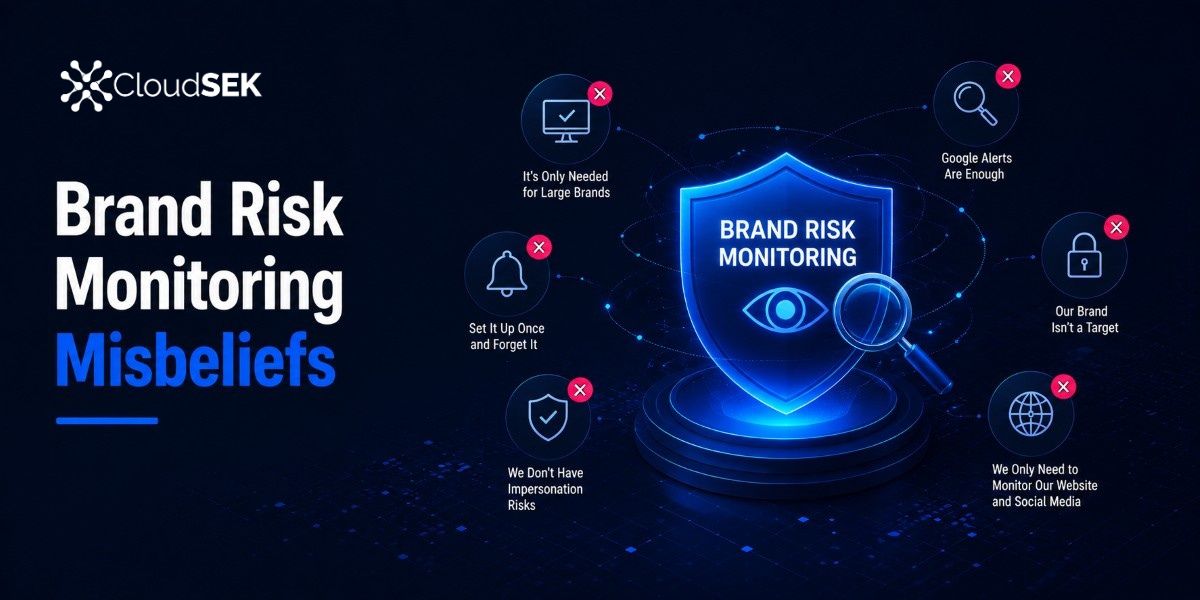
Brand risk monitoring is often misunderstood as a crisis-only activity, a social media function, a tool for large enterprises, or a fully automated process. Other common misbeliefs include treating negative reviews as the only threat, relying solely on mention tracking, expecting instant results, believing technology can prevent every crisis, and viewing monitoring as an unnecessary expense.
Organizations operating with these assumptions can overlook emerging reputation risks and miss opportunities to respond before issues escalate. Public perception often shifts across news sites, review platforms, online communities, and customer feedback channels.
Accurate risk management requires broader visibility, contextual analysis, and consistent oversight across digital touchpoints. Exploring these misconceptions helps clarify how effective monitoring protects trust, strengthens resilience, and supports long-term business growth.
Misconceptions surrounding brand risk monitoring often prevent organizations from identifying reputation threats, evaluating consumer sentiment, and protecting stakeholder trust effectively.
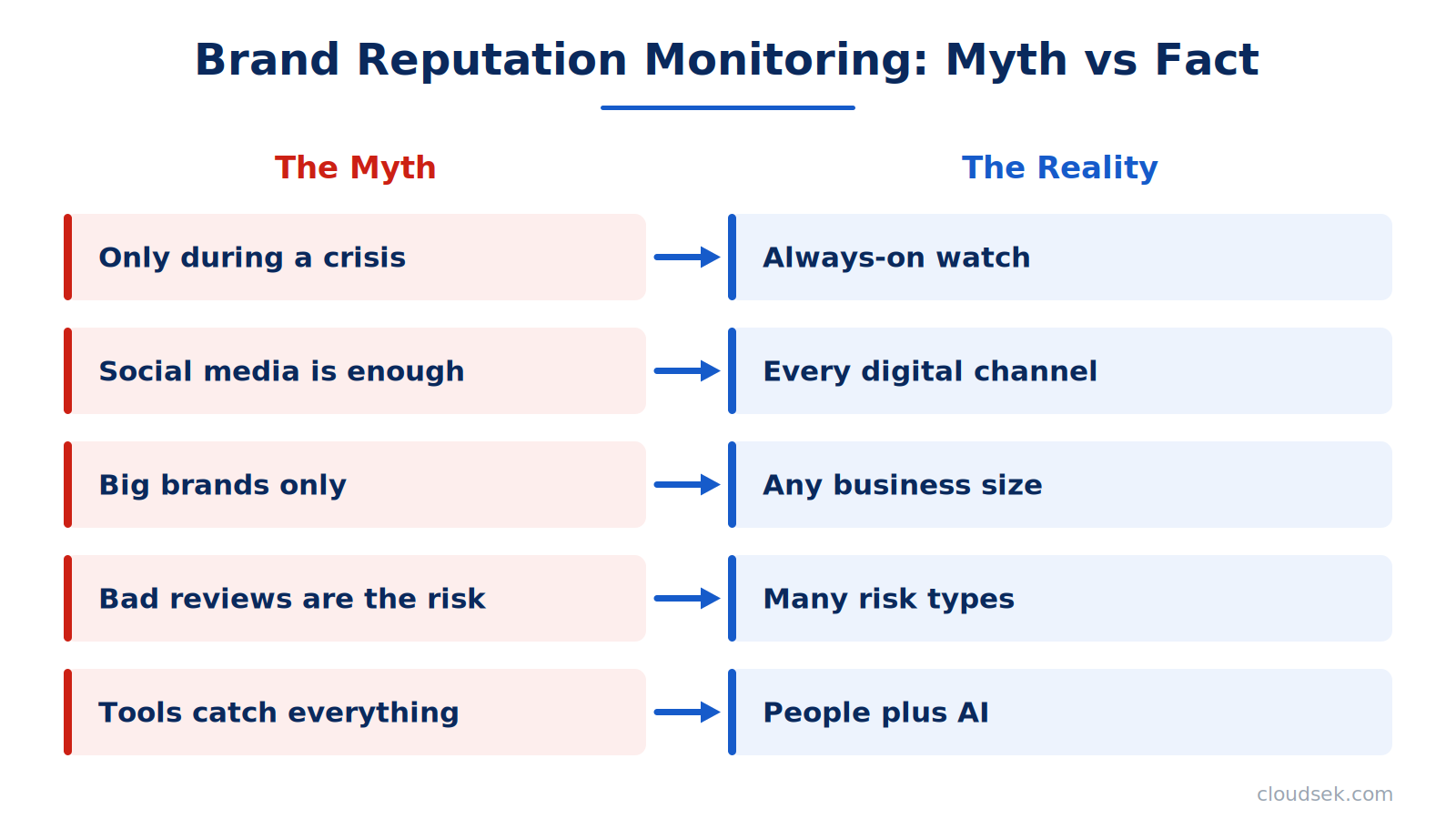
Many teams begin monitoring activities after negative publicity gains attention across digital channels. Waiting for a crisis to unfold reduces visibility into warning signals that could have been identified much earlier.
Reputation threats often originate through customer feedback, online reviews, news coverage, or industry discussions long before they attract widespread attention. Continuous monitoring supports early threat detection and allows businesses to act before public perception deteriorates.
Social networks generate valuable brand mentions, yet public conversations extend far beyond platforms such as LinkedIn, Facebook, Instagram, and X. Industry blogs, review websites, podcasts, discussion forums, and news outlets frequently influence brand perception just as much.
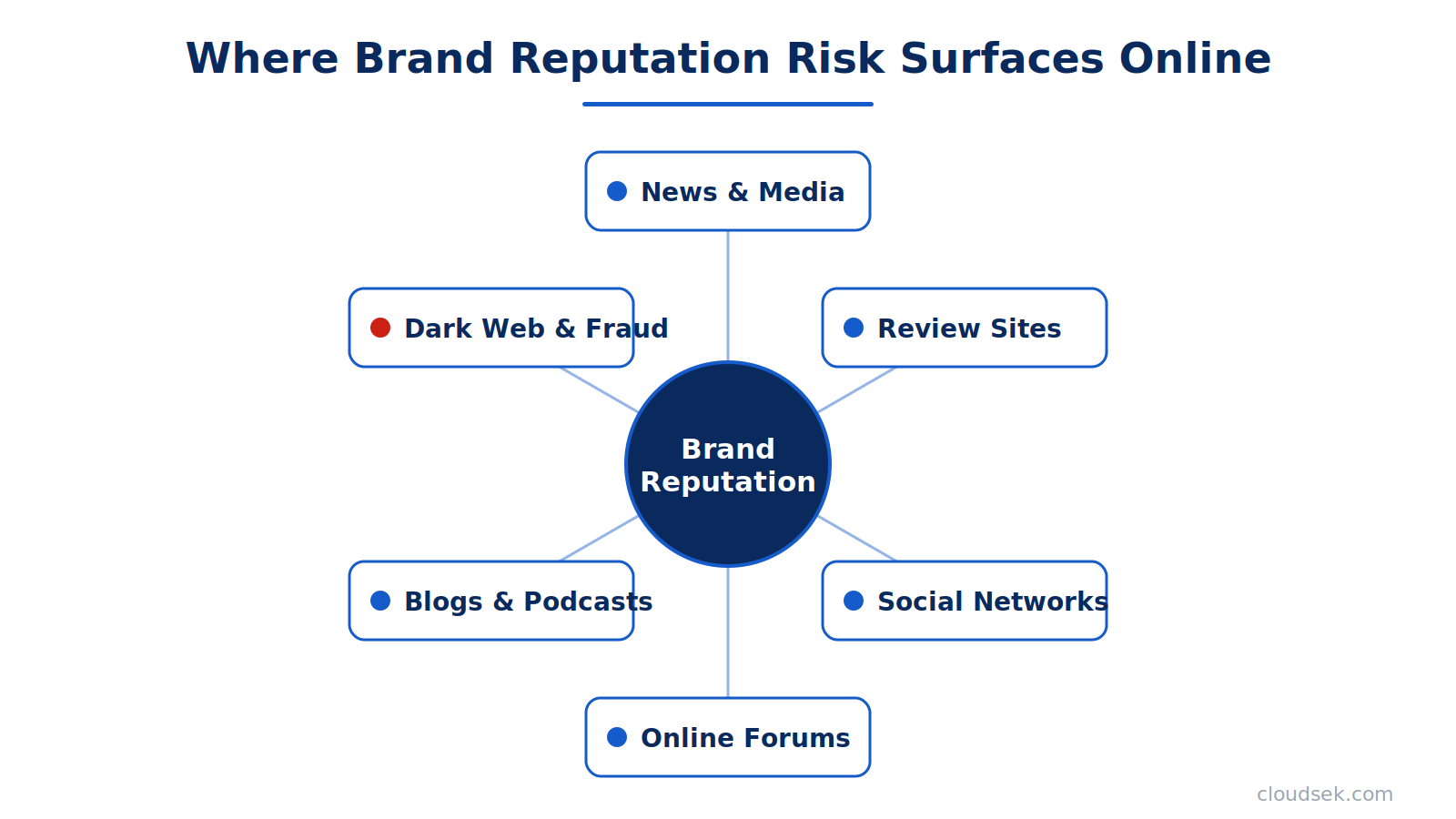
Limited channel coverage can leave significant gaps in risk intelligence. Broader monitoring creates a more accurate picture of audience sentiment and emerging reputation concerns.
Brand reputation influences purchasing behavior regardless of company size, market reach, or industry category. Small businesses and growing organizations face many of the same reputation challenges as global corporations. Negative publicity can spread rapidly through local communities and digital networks.
Early awareness helps organizations respond quickly and preserve customer confidence before damage becomes difficult to reverse.
Poor ratings represent only one aspect of reputation risk. Misinformation, regulatory issues, executive controversies, product failures, data breaches, and misleading media narratives can create equally serious consequences.
Strong monitoring programs evaluate multiple risk indicators rather than concentrating solely on review platforms. Comprehensive visibility improves an organization's ability to anticipate and manage diverse threats.
Advanced platforms provide real-time alerts, media monitoring, sentiment analysis, and AI-powered risk detection capabilities.
Technology improves visibility but cannot eliminate uncertainty or predict every outcome.
Response quality often determines how stakeholders perceive an incident after it occurs. Crisis management plans, communication strategies, and leadership decisions remain essential components of reputation protection.
Artificial intelligence can process millions of data points and identify unusual patterns across digital ecosystems. Automated systems excel at speed, scalability, and continuous observation.
Contextual interpretation still requires human expertise. Sarcasm, cultural references, emerging social trends, and sensitive public issues often demand analysis that software alone cannot provide.
Large numbers of brand mentions may appear positive at first glance. Conversation volume, however, reveals little about emotional tone, audience reaction, or underlying concerns.Sentiment analysis adds critical context by measuring attitudes expressed within discussions. Meaningful insights emerge from understanding how people feel rather than simply counting references.
Reputation monitoring delivers visibility from day one, yet strategic value develops through ongoing observation and analysis.
Consumer sentiment, brand perception, and stakeholder attitudes evolve over time rather than overnight. Long-term data helps organizations identify recurring patterns and emerging risks. Consistent evaluation supports better decision-making and stronger reputation management outcomes.
Some organizations view monitoring platforms as an additional operational cost instead of a business safeguard. Financial losses associated with reputational damage often exceed the investment required for preventive oversight.
Customer trust, market credibility, investor confidence, and brand equity contribute directly to long-term growth. Protecting those assets through proactive monitoring strengthens resilience and reduces exposure to avoidable risks.
Brand risk monitoring plays an important role in helping organizations identify reputation threats across news outlets, review platforms, social networks, and other digital channels. Broader visibility into public conversations allows businesses to address concerns before they influence customer trust and brand perception.
Common misconceptions often create gaps in monitoring efforts and reduce awareness of emerging issues. Ideas such as crisis-only monitoring, complete automation, or reliance on mention volume alone can prevent organizations from seeing the full picture.
Consistent observation, sentiment analysis, media monitoring, and informed decision-making contribute to a more effective approach to reputation management. Businesses that prioritize ongoing risk awareness are better equipped to protect brand equity, maintain stakeholder confidence, and support long-term growth.
CloudSEK's XVigil is a powerful tool designed to provide comprehensive digital risk protection. By incorporating XVigil into your brand risk monitoring strategy, you can debunk these misbeliefs and ensure robust protection for your brand. Key features of XVigil include:
Book a demo today to see how XVigil can help your organization protect its brand.
Protect your organization from external threats like data leaks, brand threats, dark web originated threats and more. Schedule a demo today!
Schedule a Demo
.png)