🚀 أصبحت CloudSek أول شركة للأمن السيبراني من أصل هندي تتلقى استثمارات منها
اقرأ المزيد
.avif)

بيانات الاعتماد المسربة هي بيانات مصادقة مكشوفة مثل أزواج كلمات مرور البريد الإلكتروني أو أسماء المستخدمين أو كلمات المرور المجزأة التي يمكن الوصول إليها بعد خرق البيانات. يستخرج المهاجمون هذه المعلومات من الأنظمة المخترقة ويوزعونها عبر قنوات مختلفة عبر الإنترنت.
تحدث الانتهاكات عندما يسمح الوصول غير المصرح به للمهاجمين بتنزيل قواعد بيانات المستخدم التي تحتوي على تفاصيل تسجيل الدخول الحساسة. غالبًا ما تتضمن البيانات المكشوفة كلاً من بيانات اعتماد النص العادي والقيم المجزأة اعتمادًا على تنفيذ أمان النظام.
تنتشر بيانات الاعتماد المسروقة بسرعة عبر النظم البيئية للمجرمين الإلكترونيين حيث يتم إعادة استخدامها أو بيعها أو دمجها مع مجموعات بيانات أخرى. يزيد هذا التعرض من مخاطر الوصول غير المصرح به، مما يجعل المراقبة المستمرة ضرورية للأمن.
يتم توزيع بيانات الاعتماد المسربة عبر بيئات متعددة عبر الإنترنت حيث يقوم المهاجمون بتخزين البيانات المسروقة وإعادة استخدامها.
أسواق الويب المظلمة هي المراكز الأساسية حيث يتم بيع مقالب بيانات الاعتماد بكميات كبيرة. تتيح هذه المنصات التوزيع على نطاق واسع، مما يسمح للمهاجمين بإعادة استخدام البيانات المسروقة عبر أهداف متعددة.
تُستخدم منتديات Hacker لمشاركة وتبادل قواعد بيانات الاعتماد المسربة داخل المجتمعات المقيدة. يؤدي الوصول المحدود إلى زيادة قيمة هذه المصادر لتتبع التسريبات التي ظهرت حديثًا.
تلتقط برامج Infostealer الضارة بيانات الاعتماد من الأنظمة المصابة وتخزنها في سجلات منظمة. تحتوي السجلات على بيانات جديدة وصحيحة، مما يجعلها فعالة للغاية للاستغلال الفوري.
قم بلصق بيانات اعتماد استضافة المواقع التي تتم مشاركتها بشكل عام بنص عادي. يسمح الوصول المفتوح للأنظمة الآلية باكتشاف البيانات المكشوفة وفهرستها بسرعة.
تعرض المستودعات العامة بيانات الاعتماد بسبب التكوينات الخاطئة أو التحميلات العرضية. أظهرت حالة أبلغت عنها CloudSek بيانات اعتماد مكشوفة في مستودع GitHub كان من الممكن أن تعرض الأنظمة الحساسة لأكثر من 500 موظف للخطر.
تكتشف منصات الأمن السيبراني بيانات الاعتماد المسربة باستخدام أنظمة آلية تقوم بمسح البيانات المكشوفة وجمعها وعرضها باستمرار من مصادر متعددة.
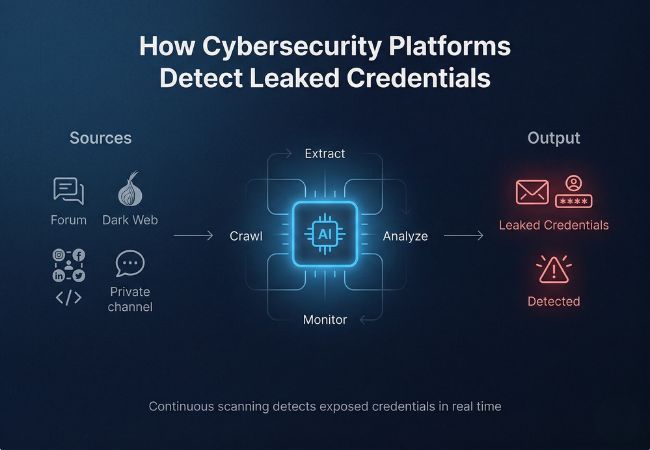
تحدد أنظمة اكتشاف المصدر الأماكن التي من المحتمل أن تظهر فيها البيانات المسربة عبر الويب. تقوم المنصات بتعيين البيئات عالية المخاطر مثل المنتديات والأسواق والمستودعات للمراقبة المستمرة.
تقوم برامج زحف الويب بفحص الصفحات المفهرسة وغير المفهرسة لجمع بيانات الاعتماد المكشوفة على نطاق واسع. تعمل هذه الأنظمة بشكل مستمر لالتقاط البيانات المنشورة حديثًا بمجرد ظهورها.
تقوم محركات الكشط الآلية باستخراج بيانات الاعتماد الأولية من مصادر غير منظمة مثل المنشورات وعمليات التفريغ. ثم يتم إعادة توجيه البيانات المستخرجة للتصفية والمعالجة.
خلاصات معلومات التهديدات توفير بيانات مجمعة مسبقًا حول الانتهاكات وبيانات الاعتماد المسربة. يؤدي التكامل مع هذه الخلاصات إلى توسيع التغطية بما يتجاوز المصادر المكتشفة داخليًا.
ذكاء مفتوح المصدر تجمع المجموعة البيانات المتاحة للجمهور من المستودعات ومواقع الويب والمنتديات. يساعد هذا الأسلوب في اكتشاف التسريبات التي يمكن الوصول إليها بشكل مفتوح ولكن يتم توزيعها على نطاق واسع.
تركز مراقبة المصدر المغلق على تتبع تسريبات بيانات الاعتماد داخل المجتمعات المقيدة والمنصات الخاصة. الرؤية المحدودة تجعل هذه البيئات ضرورية لاكتشاف التسرب في المراحل المبكرة.
تتيح تقنيات التسلل الوصول إلى المجموعات الخاصة والمنتديات التي تتم دعوتها فقط والقنوات المشفرة. يساعد هذا الأسلوب في الكشف عن تسريبات بيانات الاعتماد قبل أن يتم توزيعها على نطاق واسع.
تقوم المنصات بمعالجة بيانات الاعتماد المكشوفة والتحقق منها عن طريق تحويل البيانات المجمعة إلى ذكاء منظم ومعتمد وقابل للاستخدام.
يستخرج تحليل البيانات أزواج كلمات مرور البريد الإلكتروني وأسماء المستخدمين والحقول ذات الصلة من عمليات التفريغ الأولية. تتيح المخرجات المهيكلة التحليل النهائي المتسق.
تعمل تسوية البيانات على توحيد التنسيقات عبر مجموعات البيانات من مصادر مختلفة. تعمل البنية المتسقة على تحسين دقة المطابقة وتقليل التناقضات.
تعمل أنظمة إلغاء البيانات المكررة على التخلص من بيانات الاعتماد المتكررة التي تم جمعها من مصادر متعددة. تعمل مجموعات البيانات الفريدة على تحسين الوضوح وتقليل عبء المعالجة.
تقارن مطابقة التجزئة تجزئات كلمات المرور المسربة بقواعد البيانات المعروفة. تحدد تقنيات المطابقة بيانات الاعتماد المعاد استخدامها دون الكشف عن قيم النص العادي.
يتحقق التحقق من صحة بيانات الاعتماد مما إذا كانت بيانات الاعتماد المكشوفة تظل نشطة أو قابلة للاستخدام. تحدد نتائج التحقق مستويات المخاطر وتحديد الأولويات.
يربط ارتباط البيانات بيانات الاعتماد عبر العديد من الانتهاكات ومجموعات البيانات. تكشف السجلات المرتبطة عن أنماط التعرض المتكررة ومجموعات التسوية الأكبر.
اقرأ المزيد: كيف تعمل استخبارات التهديدات؟
ترتبط بيانات الاعتماد المكشوفة بمستخدمين حقيقيين أو مؤسسات من خلال تحليل المعرفات والبيانات الوصفية والإشارات السياقية عبر مجموعات البيانات.
يعمل تعيين نطاق البريد الإلكتروني على ربط بيانات الاعتماد المسربة بمؤسسات محددة باستخدام أسماء النطاقات. تساعد نطاقات الشركات في تحديد الشركات المتأثرة وحسابات الموظفين. تعرف على المزيد حول أمان البريد الإلكتروني.
مطابقة اسم المستخدم والاسم المستعار لهويات الروابط المستخدمة عبر منصات مختلفة. يكشف تحليل الأنماط عن الاتصالات بين الحسابات التي تنتمي إلى نفس المستخدم.
يستخدم تحليل البيانات الوصفية معلومات مثل الطوابع الزمنية وبيانات IP وسياق المصدر. تعمل الإشارات الإضافية على تحسين الدقة في تحديد الملكية.
تجمع أنظمة تحليل الهوية نقاط بيانات متعددة لإنشاء ملفات تعريف مستخدم موحدة. توفر مجموعات البيانات المرتبطة عرضًا كاملاً للتعرض عبر الانتهاكات.
تقوم نماذج تسجيل المخاطر بتعيين الخطورة بناءً على تكرار التعرض وصلاحية الاعتماد. تشير الدرجات الأعلى إلى احتمالية أكبر للاستغلال.
تتيح مراقبة بيانات الاعتماد المسربة الكشف السريع عن البيانات المكشوفة وتقليل مخاطر الوصول غير المصرح به.
تعتمد هجمات حشو بيانات الاعتماد على كلمات المرور المعاد استخدامها عبر منصات متعددة. يسمح اكتشاف بيانات الاعتماد المكشوفة للأنظمة بحظر محاولات تسجيل الدخول غير المصرح بها قبل توسيع نطاقها.
يحدث الاستيلاء على الحساب عندما يتمكن المهاجمون من الوصول باستخدام بيانات اعتماد مسربة. تتيح المراقبة المستمرة التعرف السريع على الحسابات المخترقة وتمنع التحكم غير المصرح به.
تستخدم أوراق الاعتماد المسربة على نطاق واسع في الاحتيال المالي و سرقة الهوية. يساعد اكتشاف البيانات المخترقة على تقليل المعاملات غير المصرح بها وإساءة استخدام الحساب.
يحدد التتبع المستمر بيانات الاعتماد المسربة حديثًا ضمن أطر زمنية قصيرة عبر مصادر متعددة. يحد وقت الاكتشاف المنخفض من فرص المهاجمين لاستغلال البيانات المكشوفة.
تتيح تنبيهات التعرض لبيانات الاعتماد إجراءات فورية مثل إعادة تعيين كلمة المرور وقيود الوصول. تعمل الاستجابة السريعة على تقليل التأثير العام للحوادث الأمنية.
تكشف المراقبة المستمرة عن أنماط التعرض لبيانات الاعتماد عبر الأنظمة والمستخدمين. تعمل الرؤى من هذه الأنماط على تعزيز آليات المصادقة وسياسات الوصول.
تدعم مراقبة بيانات الاعتماد الامتثال التنظيمي من خلال تحديد التعرض للبيانات الحساسة. تحسين الرؤية للمخاطر يعزز الاستعداد للتدقيق والحوكمة الأمنية.
يتتبع CloudSek بيانات الاعتماد المسربة من خلال منصتها xviGil التي تعتمد على الذكاء الاصطناعي، والتي تراقب البيانات المكشوفة عبر بيئات الويب السطحية والعميقة والمظلمة. تقوم البصمات الرقمية بتعيين الأصول التنظيمية مثل المجالات والنطاقات الفرعية لاكتشاف تسريبات بيانات الاعتماد ذات الصلة.
تقوم xviGil بفحص منتديات الجرائم الإلكترونية ولصق المواقع والمستودعات والقنوات المشفرة مثل Telegram لتحديد أسماء المستخدمين المكشوفة وكلمات المرور ومفاتيح API وبيانات اعتماد السحابة. تتيح بحيرة البيانات الخاصة التي تحتوي على سنوات من بيانات الاختراق التاريخية اكتشاف بيانات الاعتماد الجديدة والمخترقة سابقًا.
يساعد المسح المستمر عبر قوائم التجميع والمصادر السرية على تحديد تطابقات بيانات الاعتماد في الوقت الفعلي. تؤكد عمليات التحقق صحة البيانات المسربة وتنتج تنبيهات قابلة للتنفيذ تسمح لفرق الأمان بتدوير بيانات الاعتماد ومنع المزيد من الاختراق.
