🚀 أصبحت CloudSek أول شركة للأمن السيبراني من أصل هندي تتلقى استثمارات منها
اقرأ المزيد
.avif)

تُعد أتمتة ذكاء التهديدات إحدى قدرات الأمن السيبراني حيث تقوم الأنظمة بمعالجة تدفقات بيانات التهديدات باستخدام الذكاء الاصطناعي والتعلم الآلي لتوليد قرارات أمنية فورية. تتدفق البيانات من المعلومات مفتوحة المصدر والسجلات الداخلية وموجزات الذكاء الخارجية عبر خطوط الأنابيب الآلية التي تقضي على المعالجة اليدوية.
تنتج بيئات الأمان قياسًا مستمرًا عن بُعد عبر نقاط النهاية والبنية التحتية السحابية وطبقات الشبكة، مما يجعل الارتباط اليدوي غير فعال. تقوم الأنظمة الآلية بتقييم مؤشرات التسوية والأنماط السلوكية في وقت واحد لتحسين سرعة الكشف وتقليل متوسط الوقت للكشف ومتوسط الوقت للاستجابة.
تعتمد عمليات سير عمل استخبارات التهديدات التقليدية على التحقيق الذي يقوده المحللون، مما يؤخر الاستجابة أثناء الهجمات النشطة. يحل التنفيذ الآلي محل هذه التأخيرات من خلال إثراء الإجراءات والتحقق منها وتشغيلها على الفور عبر أنظمة الأمان المتكاملة.
تواجه فرق الأمن ضغوطًا متزايدة مع استمرار ارتفاع حجم التهديدات والتعقيد وتوقعات الاستجابة عبر البيئات الحديثة، مما يجعل الأتمتة ضرورية لاتخاذ القرار في الوقت المناسب.
تعمل أتمتة معلومات التهديدات من خلال سحب البيانات باستمرار من مصادر مثل خلاصات المعلومات مفتوحة المصدر والسجلات الداخلية ومنصات معلومات التهديدات الخارجية. يتم تنظيم البيانات الواردة وتطبيعها حتى تتمكن الأنظمة من معالجتها على الفور دون تصفية يدوية.
يبدأ التحليل عندما تربط الأنظمة مؤشرات التسوية بالأنماط السلوكية عبر الشبكات ونقاط النهاية والبيئات السحابية. تقوم نماذج التعلم الآلي وقواعد الكشف بتقييم هذه البيانات في الوقت الفعلي لتحديد النشاط المشبوه وتعيين الأولوية بناءً على المخاطر.
يتم تنفيذ الاستجابة من خلال منصات متكاملة مثل SIEM و SOAR، حيث تؤدي كتيبات اللعب المحددة مسبقًا إلى اتخاذ إجراءات فورية. يتم التعامل مع التنبيهات واحتواء التهديدات وسير عمل الحوادث تلقائيًا، مما يقلل من التأخير بين الاكتشاف والاستجابة.
يتم تشغيل التشغيل الآلي للمعلومات المتعلقة بالتهديدات من خلال مجموعة تقنيات متعددة الطبقات حيث يؤدي كل نظام دورًا محددًا في معالجة البيانات وتحليلها والاستجابة لها.
تعتمد أنظمة الأمان الحديثة على طبقات مترابطة متعددة لتحويل بيانات التهديدات الأولية إلى قرارات قابلة للتنفيذ.
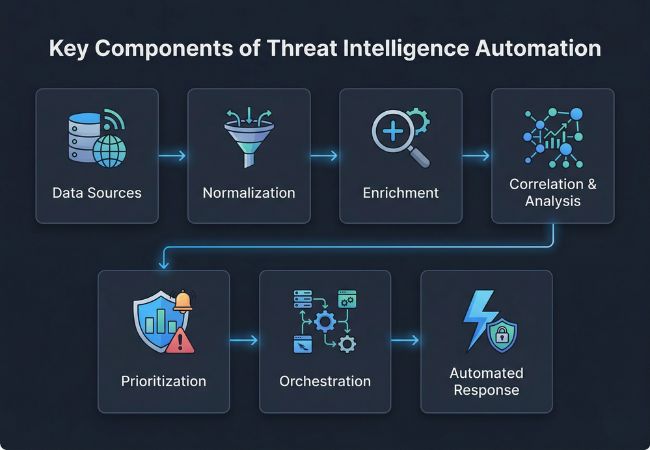
يبدأ جمع البيانات بمدخلات من ذكاء مفتوح المصدروالسجلات الداخلية وموجزات التهديدات والمصادر السرية. توفر هذه المدخلات إشارات مستمرة حول سلوك المهاجم ونقاط الضعف والمخاطر الناشئة.
يتم توحيد البيانات الواردة من تنسيقات مختلفة في بنية متسقة للمعالجة. يزيل التطبيع التناقضات ويضمن التوافق عبر الأنظمة.
يضيف الإثراء سياقًا مثل السمعة وتحديد الموقع الجغرافي والتصنيف إلى المؤشرات الأولية. تعمل هذه العملية على تحويل نقاط البيانات المعزولة إلى ذكاء ذي مغزى للتحليل.
يربط الارتباط الأنماط عبر نقاط النهاية والشبكات ونشاط المستخدم لاكتشاف الحالات الشاذة. تقوم النماذج التحليلية بتقييم العلاقات بين الأحداث لتحديد التهديدات المحتملة بدقة.
ترتيب الأولويات يصنف التهديدات بناءً على شدتها ومستوى المخاطر والتأثير المحتمل. يساعد ذلك الفرق على التركيز على الحوادث الخطيرة بدلاً من الانغماس في التنبيهات منخفضة القيمة.
يتيح التكامل الاتصال بين أدوات المراقبة وأنظمة الاستجابة عبر حزمة الأمان. تضمن عملية التنسيق أن عمليات الكشف والتحليل والاستجابة تعمل كسير عمل موحد.
تقوم آليات الاستجابة بتنفيذ إجراءات محددة مسبقًا مثل التنبيه أو الحظر أو عزل الأصول المتأثرة. يقلل التنفيذ الآلي من التأخير ويحد من الوقت الذي يتعين على المهاجمين فيه استغلال الأنظمة.
تعمل الأتمتة على تحسين السرعة والنطاق والكفاءة في عمليات الأمن السيبراني، ولكن القيود في التكامل وجودة البيانات والتنفيذ يمكن أن تؤثر على النتائج إذا لم تتم إدارتها بشكل صحيح.
تعالج الأتمتة المهام المتكررة مثل فرز التنبيهات، ارتباط اللجنة الأولمبية الدولية، وإثراء البيانات، مما يقلل من عبء العمل الملقى على عاتق فرق الأمن. غالبًا ما يؤدي العمل المتكرر منخفض القيمة إلى إجهاد المحللين ودورانهم، مما يجعل الأتمتة ضرورية للكفاءة التشغيلية.
تُظهر حوادث العالم الحقيقي التي تم تحليلها بواسطة CloudSek كيف يستغل المهاجمون الفجوات الصغيرة مثل بيانات الاعتماد المكشوفة والتكوينات الخاطئة للوصول السريع إلى الأنظمة الحساسة. تسلط هذه السيناريوهات الضوء على الحاجة إلى الاكتشاف الآلي والاستجابة لتحديد التهديدات قبل أن تتصاعد إلى انتهاكات واسعة النطاق.
تظل الخبرة البشرية ضرورية لتفسير التهديدات المعقدة، خاصة في سيناريوهات الهجوم الجديدة والتحليل الاستراتيجي. توفر الأتمتة السرعة والنطاق، بينما يقدم المحللون الحكم والسياق واتخاذ القرار الذي لا يمكن للآلات تكراره.
يمكن لفرق الأمان إدارة معلومات التهديدات يدويًا أو من خلال التشغيل الآلي، ولكن الاختلافات في السرعة والحجم والكفاءة تؤثر بشكل كبير على نتائج الأمان الإجمالية.
تطبق المؤسسات معلومات التهديدات الآلية عبر وظائف الأمان المتعددة لتحسين الاكتشاف والاستجابة وإدارة المخاطر في بيئات العالم الحقيقي.
تستخدم فرق عمليات الأمان الأتمتة لمراقبة التنبيهات باستمرار عبر نقاط النهاية والشبكات والأنظمة السحابية. يقلل الفرز الآلي من الضوضاء ويساعد المحللين على التركيز على التهديدات ذات الأولوية العالية. تعرف على المزيد: أفضل ممارسات SOC.
تؤدي عمليات سير عمل الاستجابة للحوادث إلى إجراءات محددة مسبقًا مثل عزل الأنظمة المخترقة أو حظر الأنشطة الضارة. يقلل التنفيذ التلقائي من وقت الاستجابة ويحد من تأثير الحوادث الأمنية.
تستخدم فرق البحث عن التهديدات الذكاء الآلي لتحديد التهديدات المخفية والأنماط المشبوهة عبر مجموعات البيانات الكبيرة. يعمل التحليل المستمر على تحسين اكتشاف تقنيات الهجوم المتقدمة وغير المعروفة سابقًا.
تستخدم الأنظمة المالية الأتمتة لاكتشاف المعاملات الاحتيالية وسلوك المستخدم غير الطبيعي في الوقت الفعلي. يساعد الاكتشاف المبكر على منع الخسارة المالية وحماية بيانات العملاء الحساسة.
تستخدم فرق الأمان الذكاء الآلي لتحديد نقاط الضعف وتحديد أولوياتها بناءً على مستوى المخاطر وقابلية الاستغلال. يضمن هذا الأسلوب معالجة نقاط الضعف الحرجة قبل أن يتمكن المهاجمون من استغلالها.
تراقب الأنظمة الآلية المنتديات السرية وقواعد البيانات المسربة والقنوات الخارجية للحصول على بيانات الاعتماد والتهديدات المكشوفة. يساعد الاكتشاف المبكر للمخاطر الخارجية المؤسسات على الاستجابة قبل حدوث الضرر.
تولد البيئات السحابية كميات كبيرة من القياس عن بُعد التي تتطلب تحليلًا آليًا للمراقبة الفعالة. تضمن الأتمتة الحماية المتسقة عبر البنية التحتية الديناميكية والموزعة.
تقوم الأنظمة الآلية بتحليل رسائل البريد الإلكتروني وعناوين URL والملفات لاكتشاف محاولات التصيد الاحتيالي والحمولات الضارة. يساعد التحديد السريع على منع سرقة بيانات الاعتماد والإصابات بالبرامج الضارة عبر المؤسسات.
يعتمد اختيار النظام الأساسي المناسب على مدى فعالية معالجة الذكاء والتكامل مع الأنظمة الحالية ودعم اتخاذ القرار في الوقت الفعلي.
يجب أن تدعم المنصات مصادر الاستخبارات المتنوعة، بما في ذلك السجلات الداخلية والتغذية الخارجية وخدمات استخبارات التهديدات. تعمل التغطية الواسعة على تحسين الرؤية عبر أسطح الهجوم المختلفة وتقليل النقاط العمياء.
يجب تحليل بيانات التهديدات والعمل عليها على الفور لمنع المهاجمين من استغلال نقاط الضعف النشطة. تؤدي المعالجة المتأخرة إلى زيادة المخاطر من خلال توسيع الفترة بين الاكتشاف والاستجابة.
يضمن التوافق مع أدوات الأمان الحالية تبادل البيانات بسلاسة عبر البيئة. يؤدي التكامل الضعيف إلى إنشاء صوامع حيث لا يمكن للذكاء أن يؤدي إلى اتخاذ إجراءات فعالة.
تسمح عمليات سير العمل المخصصة للمؤسسات بتحديد إجراءات الاستجابة استنادًا إلى خطورة التهديد والسياق. تعمل كتيبات اللعب المرنة على تحسين الاتساق وتقليل الاعتماد على التدخل اليدوي.
يجب أن تتعامل الأنظمة مع أحجام البيانات المتزايدة دون تدهور الأداء مع نمو البنية التحتية. تؤدي قابلية التوسع المحدودة إلى تهديدات ضائعة وتحليل أبطأ.
تعمل لوحات المعلومات الواضحة وبيانات التهديدات الموثوقة على تحسين عملية اتخاذ القرار أثناء الحوادث النشطة. يؤدي الذكاء غير المتسق أو منخفض الجودة إلى إيجابيات كاذبة واستجابات غير فعالة.
توفر CloudSek التشغيل الآلي لمعلومات التهديدات من خلال منصات تعتمد على الذكاء الاصطناعي تعالج كميات كبيرة من بيانات التهديدات الخارجية والداخلية. يربط نهج الذكاء الاصطناعي السياقي الخاص به جمع البيانات وتحليلها والاستجابة لها في سير عمل مؤتمت مستمر.
تراقب الأنظمة الآلية مصادر الويب السطحية والعميقة والمظلمة لاكتشاف تسرب البيانات وبيانات الاعتماد المكشوفة والتهديدات الناشئة في الوقت الفعلي. تقوم نماذج التعلم الآلي بربط هذه البيانات لتوليد درجات المخاطر وتحديد أولويات الحوادث، مما يسمح للفرق بالتركيز على الأحداث الأمنية الحرجة.
تعمل عمليات سير العمل المتكاملة على تمكين الإجراءات التلقائية مثل إزالة المجالات الضارة وحظر التهديدات وتشغيل كتيبات الاستجابة عبر الأنظمة المتصلة. تعمل منصات مثل xVigiL و BeVigil على توسيع هذه القدرة من خلال تأمين المخاطر الرقمية الخارجية والنظم البيئية المتنقلة من خلال الذكاء والتحليل المستمر.
تواجه المؤسسات كميات كبيرة من بيانات التهديدات التي لا يمكن معالجتها يدويًا في الوقت الفعلي. تعمل الأتمتة على تحسين سرعة الاكتشاف وتقليل مخاطر الاستجابة المتأخرة أثناء الهجمات النشطة.
تقوم أنظمة الأتمتة بمعالجة البيانات من السجلات وموجزات التهديدات ونشاط الشبكة ومصادر المعلومات الخارجية. يتضمن ذلك المؤشرات والأنماط السلوكية والإشارات من البيئات الداخلية والخارجية.
تعمل الأتمتة على تقليل المخاطر من خلال تحديد التهديدات والاستجابة لها في وقت مبكر من دورة حياة الهجوم. لا يمكنها منع جميع الهجمات ولكنها تحد بشكل كبير من التأثير من خلال الاكتشاف والاستجابة بشكل أسرع.
يمكن للمؤسسات من جميع الأحجام استخدام الأتمتة وفقًا لاحتياجات الأمان والبنية التحتية الخاصة بها. تسمح المنصات القابلة للتطوير للفرق الصغيرة بتحسين الكفاءة دون استثمارات كبيرة في الموارد.
تستفيد الفرق الصغيرة من خلال تقليل عبء العمل اليدوي والتركيز على التهديدات الحرجة بدلاً من المهام المتكررة. تتيح الأتمتة لموارد محدودة التعامل مع كميات أكبر من بيانات الأمان بفعالية.
يختلف وقت التنفيذ بناءً على تعقيد البنية التحتية ومتطلبات التكامل. يمكن أن يستغرق النشر الأساسي أسابيع، بينما قد يستغرق التكامل الكامل عبر الأنظمة عدة أشهر.
يوفر الاكتشاف الآلي تحليلًا متسقًا وسريعًا عبر مجموعات البيانات الكبيرة. يضيف المحللون البشريون السياق الأعمق والتحقق من الصحة، مما يجعل النهج المشترك أكثر فعالية من أي من الطريقتين وحدهما.
تركز منصة معلومات التهديدات (TIP) على جمع بيانات التهديدات وإثرائها وإدارتها. تعمل منصة SOAR على أتمتة إجراءات الاستجابة من خلال تنفيذ عمليات سير العمل بناءً على هذا الذكاء.
