🚀 A CloudSEK se torna a primeira empresa de segurança cibernética de origem indiana a receber investimentos da
Leia mais
.avif)

A inteligência estratégica de ameaças é uma análise de alto nível das ameaças cibernéticas que ajuda as organizações a entender os riscos de longo prazo, os motivos dos invasores e o impacto nos negócios para uma tomada de decisão informada.
Essa inteligência se concentra no cenário mais amplo de ameaças, em vez de nos detalhes técnicos. Isso explica por que os ataques acontecem, quem está por trás deles e qual é o alvo deles. Uma visão mais ampla ajuda as organizações a entender o risco em termos comerciais claros, em vez de dados técnicos brutos.
Insights claros conectam a segurança cibernética à estratégia de negócios. Esses insights traduzem informações complexas sobre ameaças em uma compreensão acionável para a liderança. A análise de tendências de longo prazo revela padrões no comportamento do atacante e apoia um melhor planejamento e gerenciamento de riscos.
A inteligência estratégica confiável de ameaças se origina de várias fontes de alto nível que fornecem contexto e profundidade. Essas fontes incluem relatórios de inteligência contra ameaças, publicações de pesquisa de segurança cibernética, recomendações governamentais, relatórios do setor, análises geopolíticas, monitoramento da dark web, inteligência de código aberto (OSINT), plataformas de inteligência comercial, dados de segurança interna e fontes de notícias globais. A combinação dessas fontes cria uma visão completa e precisa do cenário de ameaças.
A inteligência estratégica de ameaças é importante porque melhora a tomada de decisões, fortalece a conscientização sobre riscos, identifica ameaças emergentes, apoia o planejamento de longo prazo, prepara as organizações para riscos futuros e desenvolve a conscientização em nível de setor.
De acordo com a pesquisa da IBM Security, as organizações que utilizam efetivamente a inteligência contra ameaças podem detectar e responder às ameaças cibernéticas até 50% mais rápido do que aquelas sem programas de inteligência estruturada.
Aqui estão os principais benefícios da inteligência estratégica contra ameaças:
A inteligência estratégica de ameaças fornece insights claros que os líderes usam para tomar decisões informadas. Ele explica os riscos em termos comerciais, em vez de linguagem técnica. Uma melhor compreensão ajuda os executivos a alocar recursos e definir prioridades com confiança.
A inteligência precisa destaca quais ameaças são mais importantes para a organização. Ele conecta os riscos cibernéticos ao impacto financeiro, operacional e de reputação. Uma clara consciência dos riscos ajuda as organizações a se concentrarem no que realmente afeta os negócios.
A análise contínua revela novos padrões de ataque e agentes de ameaças em evolução. Essa visibilidade mostra como as ameaças mudam com o tempo. A conscientização precoce ajuda as organizações a se manterem à frente dos riscos potenciais.
Insights de longo prazo orientam estratégias de segurança e investimentos futuros. As organizações alinham suas defesas às ameaças esperadas em vez de reagir aos incidentes. O planejamento estratégico reduz a incerteza e melhora a resiliência.
Organizações preparadas respondem de forma mais rápida e eficaz às ameaças. A inteligência fornece o contexto necessário para antecipar os riscos antes que eles ocorram. Uma melhor preparação reduz as interrupções e melhora a postura geral de segurança.
A inteligência estratégica mostra como as ameaças afetam setores e concorrentes específicos. Ele revela padrões de ataque direcionados e riscos setoriais. A conscientização do setor ajuda as organizações a avaliar sua postura de segurança e a se manterem competitivas.
A inteligência estratégica de ameaças se destaca por seu escopo, foco e pela forma como comunica insights aos tomadores de decisão. A seguir estão as principais características da inteligência estratégica contra ameaças:
A inteligência estratégica de ameaças se concentra em padrões amplos de ameaças, em vez de detalhes técnicos. Ele explica as tendências, a intenção do atacante e a direção geral do risco. Essa visão de alto nível ajuda os líderes a entender as ameaças sem precisar de conhecimento técnico.
A análise se concentra nas tendências ao longo de meses ou anos, em vez de incidentes de curto prazo. Ele monitora como as ameaças evoluem e como o comportamento do invasor muda com o tempo. Uma visão de longo prazo apoia o planejamento e a preparação de riscos futuros.
Os insights conectam as ameaças cibernéticas diretamente ao impacto nos negócios, como perda financeira, interrupção operacional ou danos à reputação. Essa conexão torna as informações relevantes para a liderança. O contexto de negócios garante que as decisões estejam alinhadas às prioridades organizacionais.
As informações são apresentadas em linguagem clara e simples, sem complexidade técnica. Os relatórios geralmente incluem resumos, classificações de risco e insights importantes. A comunicação simples garante que os líderes possam entender e agir rapidamente com base nas informações.
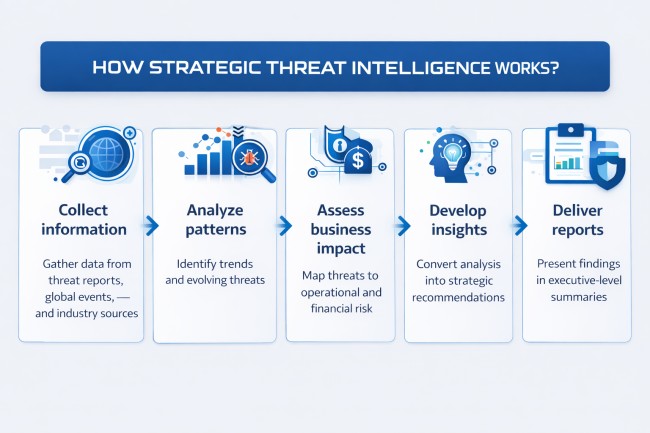
A inteligência estratégica de ameaças funciona coletando informações, analisando tendências de longo prazo, avaliando o impacto nos negócios e fornecendo insights claros para a tomada de decisões.
O processo começa com a coleta de informações de várias fontes confiáveis, como relatórios de ameaças, análises do setor e eventos globais. Os analistas analisam essas informações para identificar padrões e mudanças no cenário de ameaças. A análise de padrões revela como as ameaças evoluem e quais riscos estão se tornando mais significativos com o tempo.
Depois que os padrões são identificados, a próxima etapa se concentra em entender como essas ameaças afetam a organização. Isso envolve o mapeamento de ameaças às operações comerciais, ao impacto financeiro e às metas estratégicas. Uma avaliação de impacto clara ajuda a liderança a entender quais riscos exigem atenção.
A etapa final transforma a análise em insights simples e estruturados. Esses insights são compartilhados por meio de relatórios elaborados para tomadores de decisão. Relatórios claros garantem que os líderes possam agir rapidamente e tomar decisões estratégicas informadas.
A inteligência estratégica de ameaças depende de vários componentes essenciais que criam uma compreensão completa do cenário de ameaças.
A análise do cenário de ameaças examina ameaças globais e específicas do setor. Ele identifica tendências, tipos de ataque comuns e setores-alvo. Essa análise fornece uma imagem clara do ambiente geral de risco.
O perfil do adversário estuda quem são os atacantes, o que eles querem e quão capazes eles são. Ele se concentra em motivos como ganho financeiro, espionagem ou interrupção. Compreender os atacantes ajuda a prever suas ações futuras.
As estruturas de avaliação de risco avaliam como as ameaças afetam a organização. Eles medem possíveis danos às operações, finanças e reputação. A avaliação estruturada ajuda a priorizar os riscos com base no impacto real.
O contexto geopolítico conecta ameaças cibernéticas a eventos globais, como conflitos, regulamentações ou mudanças econômicas. Esses fatores influenciam o comportamento e a segmentação do atacante. O contexto global explica por que certas ameaças surgem ou aumentam.
Os relatórios executivos apresentam insights em um formato claro e simples. Os relatórios destacam os principais riscos, tendências e recomendações sem complexidade técnica. Relatórios claros garantem que os líderes entendam e ajam com base nas informações.
As organizações enfrentam lacunas de visibilidade, prioridades pouco claras e decisões de segurança reativas quando falta um contexto estratégico. Aqui estão os principais problemas que uma inteligência estratégica de ameaças resolve:
Muitas organizações veem eventos de segurança isolados, mas perdem o panorama geral. Isso cria confusão sobre a direção geral do risco. A inteligência estratégica de ameaças resolve isso fornecendo uma visão clara das ameaças e tendências de longo prazo.
As decisões de segurança geralmente acontecem sem vinculá-las às metas de negócios. Isso leva a prioridades desalinhadas e desperdício de recursos. A inteligência estratégica de ameaças conecta os riscos cibernéticos aos objetivos de negócios, melhorando o alinhamento das decisões.
Grandes volumes de dados de ameaças dificultam a identificação do que é mais importante. As equipes podem se concentrar em questões de baixo impacto. A inteligência estratégica de ameaças destaca os riscos de alto impacto, ajudando as organizações a se concentrarem no que realmente importa.
Muitas organizações respondem somente após a ocorrência de incidentes. Essa abordagem aumenta os danos e o tempo de recuperação. A inteligência estratégica de ameaças muda a abordagem de reativa para proativa, identificando riscos futuros com antecedência.
Os líderes geralmente não têm uma compreensão clara das ameaças cibernéticas devido à complexidade técnica. Isso limita a tomada de decisão eficaz. A inteligência estratégica contra ameaças simplifica as informações, tornando-as acessíveis e úteis para executivos.

As organizações aplicam a inteligência estratégica de ameaças em cenários específicos em que a compreensão dos riscos de longo prazo influencia diretamente as decisões.
As equipes executivas confiam em relatórios claros e concisos para entender o cenário de ameaças. Esses relatórios destacam os principais riscos, tendências e possíveis impactos nos negócios. Os relatórios estruturados ajudam os líderes a tomar decisões estratégicas informadas.
As decisões orçamentárias dependem da compreensão de quais ameaças representam o maior risco. A inteligência estratégica mostra onde investir em ferramentas, equipes ou controles. O planejamento informado garante que os recursos sejam usados de forma eficaz.
Diferentes setores enfrentam diferentes tipos de ameaças. A inteligência estratégica identifica os riscos específicos do setor e as áreas de foco do atacante. A análise do setor ajuda as organizações a se prepararem para ataques direcionados.
Durante fusões e aquisições, as organizações precisam avaliar a postura de segurança cibernética da empresa-alvo. A inteligência estratégica revela riscos potenciais e ameaças ocultas. Uma avaliação precisa evita futuros problemas de segurança após a integração.
As políticas e estruturas de segurança exigem alinhamento com as ameaças do mundo real. A inteligência estratégica orienta a criação de políticas com base nos riscos atuais e futuros. Políticas bem informadas melhoram a governança geral da segurança.
A inteligência estratégica de ameaças enfrenta desafios relacionados ao volume de dados, lacunas de contexto, limitações de recursos e ameaças que mudam rapidamente.
Grandes quantidades de dados criam confusão em vez de clareza. As organizações coletam informações de várias fontes, mas nem todas são úteis. Muitos dados não filtrados dificultam a identificação do que realmente importa.
Outro desafio vem da falta de um contexto comercial claro. Os dados brutos de ameaças geralmente não explicam como os riscos afetam as operações ou a receita. Ao mesmo tempo, é necessário que analistas qualificados interpretem essas informações, e nem toda organização tem acesso a essa experiência. O contexto e os recursos limitados reduzem a eficácia da inteligência.
As ameaças continuam evoluindo rapidamente, o que dificulta a previsão a longo prazo. Os atacantes mudam métodos, alvos e estratégias ao longo do tempo. A mudança constante exige uma análise contínua para manter a inteligência relevante e precisa.
Inteligência de ameaças estratégica, tática e operacional são tipos de inteligência de ameaças, mas diferem em foco, horizonte de tempo e uso. A inteligência estratégica explica os riscos de longo prazo e o impacto nos negócios. A inteligência tática se concentra nos métodos e técnicas do atacante. A inteligência operacional rastreia ameaças ativas e campanhas em andamento. Cada tipo tem um propósito diferente, mas funciona em conjunto para fortalecer a segurança geral.
Aqui está a tabela de comparação para entender de uma maneira melhor:
Os resultados efetivos dependem de como a inteligência é coletada, analisada e fornecida em toda a organização. Aqui estão as melhores práticas de inteligência estratégica contra ameaças que uma organização deve seguir:
A inteligência estratégica de ameaças deve refletir as prioridades organizacionais, como receita, operações e reputação. Esse alinhamento garante que os insights permaneçam relevantes para os tomadores de decisão. O alinhamento comercial aumenta o valor da inteligência.
Insights confiáveis exigem dados de várias fontes, como relatórios, pesquisas e eventos globais. Entradas diversas reduzem o viés e melhoram a precisão. Várias fontes criam um quadro de ameaças mais completo.
Os relatórios devem apresentar as informações de forma clara e estruturada, sem complexidade técnica. Formatos simples ajudam os líderes a entender os riscos rapidamente. A comunicação clara melhora a velocidade da tomada de decisões.
Os cenários de ameaças mudam com o tempo, então a inteligência deve se manter atualizada. Atualizações regulares garantem que os insights reflitam as últimas tendências. As atualizações contínuas mantêm a relevância e a precisão.
A inteligência estratégica deve se conectar aos processos existentes de gerenciamento de riscos. Essa integração garante que os insights influenciem decisões e ações reais. A integração fortalece a estratégia geral de segurança.
O objetivo é fornecer insights de alto nível que orientem as decisões de negócios e de segurança.
Executivos, CISOs e gerentes de risco são os que mais se beneficiam dos insights estratégicos.
Sim, ele apóia decisões de longo prazo em vez de ações técnicas imediatas.
A inteligência estratégica se concentra nas tendências e no impacto, enquanto a inteligência técnica se concentra em indicadores e dados.
