🚀 CloudSEK featured in the 2026 Frost Radar™!
Read more
.avif)

Dark web monitoring helps identify potential cyber threats by uncovering exposed credentials, leaked data, ransomware indicators, and threat actor activity before attacks occur. Early visibility into these risks enables security teams to investigate vulnerabilities and reduce the likelihood of compromise.
Stolen information frequently appears in underground forums, marketplaces, and leak sites where cybercriminals exchange data and discuss potential targets. Monitoring these environments reveals warning signs that may remain invisible through traditional security measures.
Early threat identification reduces the chances of a minor exposure developing into a major security incident. Dark web intelligence provides valuable insights that help organizations prioritize risks and strengthen cybersecurity defenses.
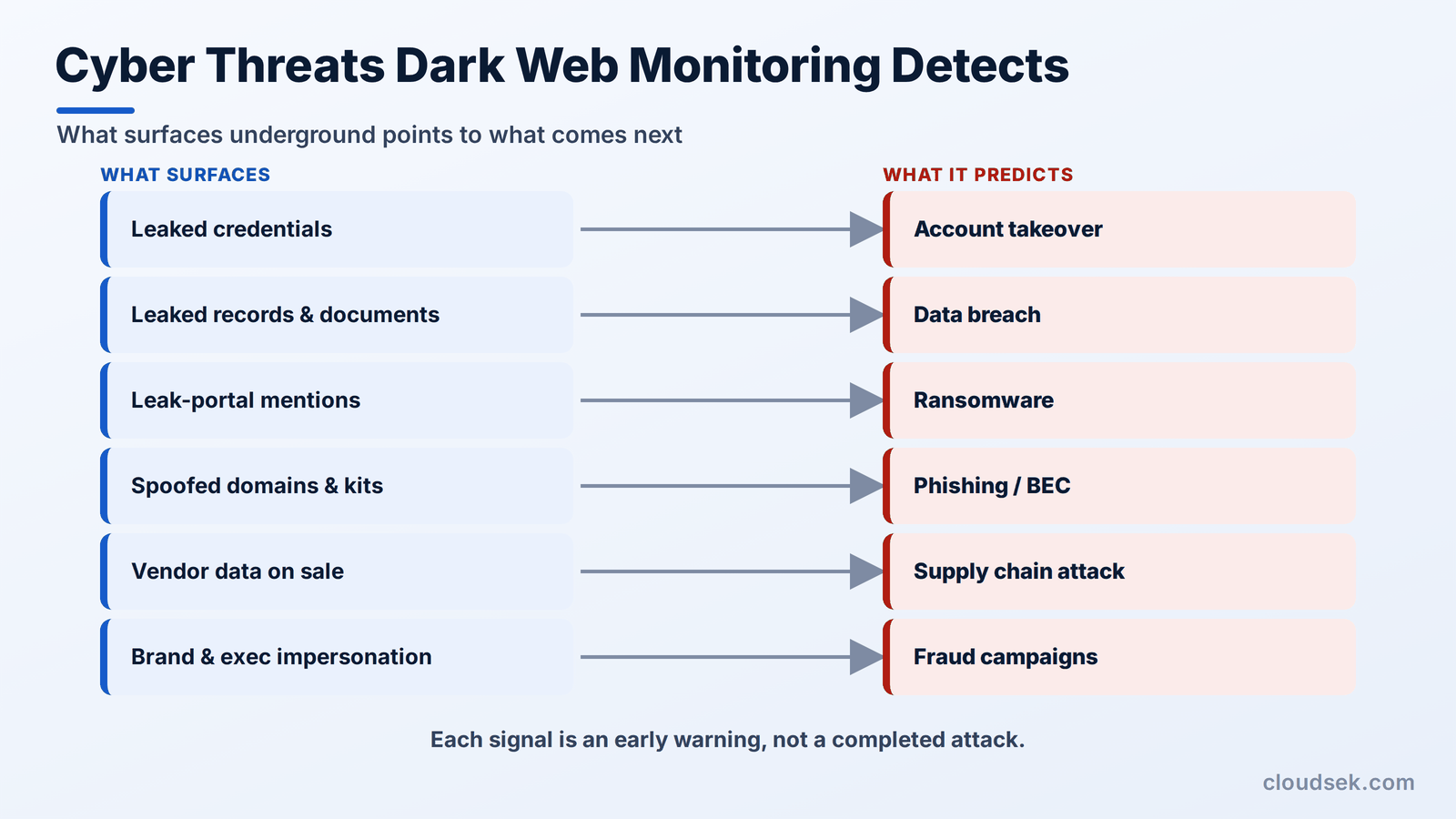
Dark web monitoring uncovers attack indicators, exposed assets, and suspicious activity that may signal potential cyber threats before they escalate into security incidents.
Compromised usernames and passwords are frequently traded after phishing attacks, malware infections, and data breaches. Discovery of these credentials highlights account takeover risks and allows security teams to secure affected accounts before malicious access occurs.
Confidential records, financial information, and internal documents often surface on underground leak platforms. Visibility into exposed data helps assess breach severity and identify security risks linked to unauthorized disclosure.
Threat actors regularly exchange information about vulnerabilities, attack techniques, and potential targets across private forums. Intelligence gathered from these conversations can reveal developing cyber threats and emerging attack campaigns.
Leak portals operated by ransomware groups often contain information about compromised networks and stolen data. Tracking these sources provides insight into extortion-related threats that may impact businesses and critical assets.
Fraudulent domains, phishing kits, and impersonation templates are commonly distributed through underground marketplaces. Monitoring these assets helps uncover phishing threats aimed at employees, customers, and business partners.
Breaches affecting vendors and service providers can introduce risks across interconnected business environments. References to compromised supplier data may indicate supply chain threats capable of affecting multiple organizations.
Company names, executive identities, and digital assets are frequently abused to support scams and deceptive campaigns. Detection of illegitimate brand usage helps reduce fraud risks and protect stakeholder trust.
Discussions involving stolen access, exploit availability, or target-specific reconnaissance often point to malicious intent. Recognition of these signals provides valuable threat intelligence that can guide defensive actions and risk mitigation efforts.
Information circulating across underground communities often reveals attack patterns that may impact businesses, employees, customers, and digital assets.
Compromised credentials remain one of the most common causes of unapproved account access. Intelligence gathered from dark web sources can reveal exposed accounts before malicious actors attempt to use them.
Large datasets containing customer information, employee records, and business documents frequently appear after unauthorized disclosures. References to leaked information may uncover incidents that have not yet been publicly identified.
Extortion groups often leave traces through leak portals, victim disclosures, and underground discussions. Visibility into these activities provides insight into campaigns targeting specific sectors and organizations.
Email impersonation campaigns rely on stolen credentials and compromised mailboxes to deceive employees or business partners. Dark web intelligence can reveal indicators linked to these schemes before significant financial damage occurs.
Confidential information may be exposed by employees, contractors, or individuals with legitimate access to company systems. Leaked documents, internal communications, and shared credentials can signal potential insider-related risks.
Company names, trademarks, domains, and executive identities are sometimes misused to create convincing imitation websites or deceptive communications. Identifying these activities helps protect customers and preserve brand credibility.
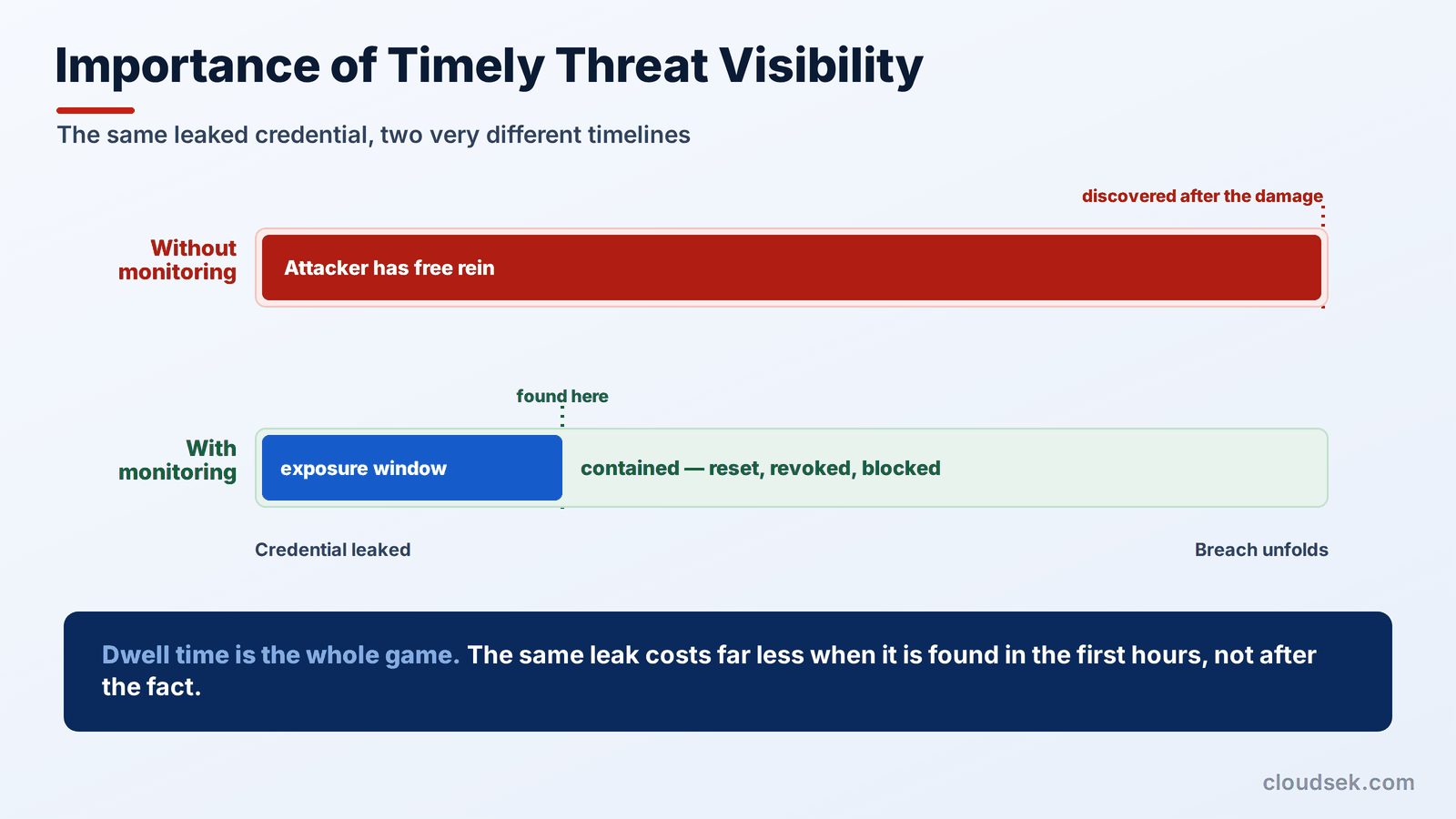
Security incidents become more difficult to contain as attackers gain additional time to move across systems, access sensitive information, or expand their reach.
Threat intelligence enables security teams to investigate suspicious activity before it develops into a larger incident. Quicker action reduces dwell time and limits opportunities for further compromise.
Suspicious access, data exposure, and service disruption often cause greater damage when they remain unnoticed for extended periods. Visibility into potential risks allows corrective measures to be implemented sooner.
Recovery expenses, regulatory penalties, legal costs, and business interruption can create significant financial strain. Identifying warning signs before an incident escalates helps minimize these potential losses.
Customer confidence can decline when sensitive information becomes exposed or widely publicized. Awareness of developing risks allows businesses to address concerns before they affect public perception.
Consistent visibility into external risks strengthens an organization's ability to anticipate, withstand, and recover from malicious activity. A proactive approach improves long-term readiness against evolving attack techniques.
CloudSEK’s XVigil Deep and Dark Web Monitoring detects threat signals by scouring thousands of sources across dark sites, marketplaces, code hosting platforms, document-sharing sites, large breach dumps, IRC, I2P pages, and Telegram channels. This helps uncover leaked credentials, exposed data, fraud activity, targeted threats, and cybercriminal conversations linked to an organization’s digital assets.
The platform uses an asset and watchword-led monitoring approach to provide deeper context behind every reported cyber threat. Its AI-based machine learning capabilities help deliver specific, timely, and actionable intelligence so security teams can respond before risks escalate.
Beyond detection, XVigil supports takedowns for phishing pages, infringing domains, fake social media accounts, unofficial apps, and other brand abuse incidents. Results can also be exported, integrated with SIEM, SOAR, ticketing, incident management tools, and shared through APIs, Syslog, STIX, and TAXII feeds for faster security response.
CloudSEK’s XVigil offers comprehensive deep and dark web monitoring, covering thousands of sources to detect compromised credentials, stolen data, and other potential threats.
Gain situational awareness of the “unknown” territory and empower your security team with actionable intelligence.
Book a demo today to see how XVigil can help protect your organization.
Protect your organization from external threats like data leaks, brand threats, dark web originated threats and more. Schedule a demo today!
Schedule a Demo
.png)
.png)