🚀 أصبحت CloudSek أول شركة للأمن السيبراني من أصل هندي تتلقى استثمارات منها
اقرأ المزيد
.avif)

لا تظل الهجمات الإلكترونية مخفية دائمًا. يحدث الهجوم النشط عندما يتدخل مهاجم بشكل مباشر في الأنظمة لتغيير البيانات أو تعطيل الخدمات أو السيطرة في الوقت الفعلي. تسبب هذه الهجمات ضررًا فوريًا لأن الأنظمة يتم تغييرها أثناء تشغيلها بنشاط.
الهجمات النشطة مهمة لأن تأثيرها يتصاعد بسرعة. وفقًا لتقرير تكلفة خرق البيانات الصادر عن IBM، يتسبب متوسط حوادث برامج الفدية في أكثر من 20 يومًا من التعطل التشغيلي، مما يوضح مدى السرعة التي يمكن أن تؤدي بها الهجمات النشطة إلى تعطيل العمليات التجارية.
يعد فهم ماهية الهجوم النشط وكيفية عمله وكيف يمكن للمؤسسات منعه أمرًا بالغ الأهمية لحماية البيئات الرقمية الحديثة.
الهجوم النشط هو هجوم الأمن السيبراني الذي يقوم فيه المهاجم بتغيير أو تعطيل أو إتلاف نظام أو شبكة أو بيانات بشكل مباشر للسيطرة أو التسبب في حدوث اضطراب. يتطلب هذا التغيير تفاعلًا مباشرًا مع الأنظمة. يؤدي التفاعل المباشر إلى تغيير حالة النظام، وتنتج حالة النظام المتغيرة تأثيرًا فوريًا يمكن ملاحظته.
في الأمن السيبراني، تعني كلمة «نشط» التنفيذ الذي يغير العمليات، مثل تعديل البيانات أو مقاطعة الخدمات أو التلاعب بالاتصالات. تؤثر هذه الإجراءات على السرية أو النزاهة أو التوفر.
تعتبر الهجمات النشطة خطيرة لأن التعديل المتعمد يسبب ضررًا في الوقت الفعلي، بما في ذلك انقطاع الخدمة والبيانات التالفة وفقدان التحكم التشغيلي.
يعمل الهجوم النشط عن طريق الدخول إلى النظام وتغيير طريقة عمل هذا النظام عن عمد.
تبدأ العملية عندما يحصل المهاجم على وصول غير مصرح به. يحدث الوصول غير المصرح به من خلال بيانات الاعتماد المسروقة أو الثغرات الأمنية المستغلة أو البرامج الضارة.
بعد الوصول، يقوم المهاجم بتنفيذ إجراءات مباشرة داخل النظام. تتضمن هذه الإجراءات تغيير البيانات أو إيقاف الخدمات أو تعديل التكوينات أو التحكم في العمليات. تعمل العمليات الخاضعة للرقابة والبيانات المعدلة على تغيير السلوك العادي للنظام.
يؤدي السلوك المتغير إلى إحداث تأثير تشغيلي فوري. يظهر التأثير الفوري في صورة انقطاع الخدمة أو إخراج النظام غير الصحيح أو المعلومات التالفة أو فقدان التحكم الإداري.
يُظهر الهجوم النشط خصائص مميزة تجعل من السهل التعرف على التهديدات السلبية وفصلها عنها. فيما يلي الخصائص الرئيسية للهجمات النشطة:
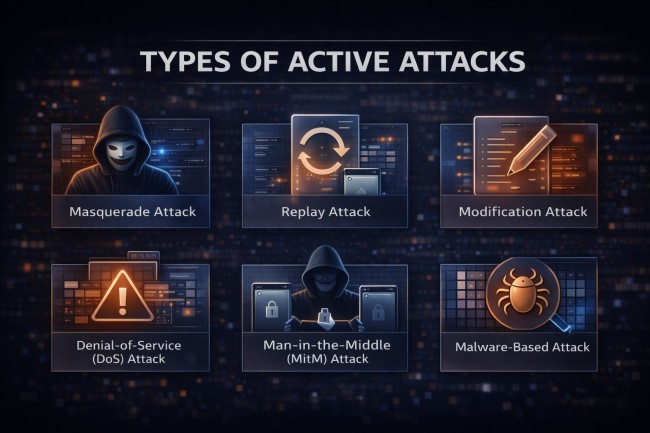
تختلف الهجمات النشطة في الأسلوب، ولكن كل نوع يتداخل بشكل مباشر مع الأنظمة أو البيانات أو الاتصالات. فيما يلي الأنواع الشائعة من الهجمات النشطة:
يحدث هجوم التنكر عندما يتظاهر المهاجم بأنه مستخدم حقيقي وموثوق به. يستخدم المهاجم أسماء المستخدمين أو كلمات المرور أو رموز الوصول المسروقة لتسجيل الدخول. بمجرد تسجيل الدخول، يتعامل النظام مع المهاجم على أنه شرعي. تسمح هذه الهوية الزائفة للمهاجم بتغيير الإعدادات أو الوصول إلى البيانات الحساسة أو تنفيذ إجراءات مقيدة دون إثارة شكوك فورية.
يحدث هجوم إعادة التشغيل عندما يلتقط المهاجم بيانات صالحة مرسلة عبر شبكة ويرسلها مرة أخرى لاحقًا. قد تتضمن البيانات الملتقطة طلبات تسجيل الدخول أو رسائل المصادقة أو أوامر المعاملات. ولأن البيانات كانت صالحة في الأصل، فإن النظام يقبلها مرة أخرى. تسمح إعادة الاستخدام هذه للمهاجمين بتكرار الإجراءات مثل تسجيل الدخول أو الموافقة على المعاملات دون معرفة بيانات الاعتماد.
يركز هجوم التعديل على تغيير المعلومات. يقوم المهاجم بتغيير البيانات أثناء نقلها أو تخزينها. يمكن أن تتضمن هذه التغييرات تحرير الملفات أو تعديل إدخالات قاعدة البيانات أو تغيير قيم التكوين. تتسبب البيانات المعدلة في سلوك نظام غير صحيح أو سجلات خاطئة أو قرارات غير آمنة استنادًا إلى معلومات تالفة.
يتسبب هجوم الحرمان من الخدمة في إرباك النظام حتى يتوقف عن الاستجابة. يرسل المهاجم طلبات مفرطة أو حركة مرور تستهلك موارد النظام. عند استنفاد الموارد، لا يمكن للمستخدمين الشرعيين الوصول إلى الخدمات. قد يتباطأ النظام أو يتعطل أو يصبح غير متاح تمامًا.
هجوم الرجل في الوسط يضع المهاجم بين طرفين متصلين. يقوم المهاجم باعتراض الرسائل سرًا ويمكنه قراءتها أو تغييرها أو استبدالها. يعتقد كلا الطرفين أنهما يتواصلان بشكل مباشر، بينما يقوم المهاجم بمعالجة البيانات مثل بيانات اعتماد تسجيل الدخول أو الأوامر أو المعلومات المالية.
يستخدم الهجوم المستند إلى البرامج الضارة برامج ضارة للتحكم في الأنظمة أو إتلافها. يقوم المهاجم بتثبيت البرامج الضارة التي تعمل داخل النظام. يمكن لهذا البرنامج تشفير الملفات أو حذف البيانات أو التجسس على النشاط أو تعطيل عناصر التحكم في الأمان أو منح الوصول البعيد على المدى الطويل. تسمح البرامج الضارة للمهاجمين بتنفيذ الإجراءات بشكل متكرر دون تفاعل مستمر.
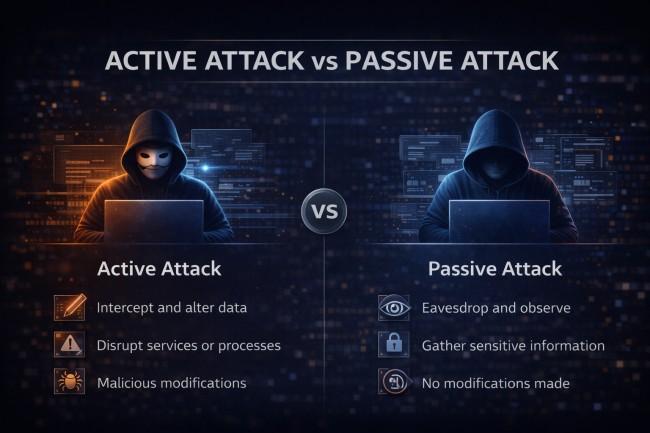
الفرق الرئيسي بين الهجوم النشط والهجوم السلبي هو تداخل النظام. يتداخل الهجوم النشط بشكل مباشر مع الأنظمة لتغيير السلوك وخلق تأثير فوري ومرئي، بينما يراقب الهجوم السلبي البيانات فقط دون تغيير الأنظمة، ويظل صامتًا ومخفيًا.
تؤثر الهجمات النشطة على النزاهة والتوافر من خلال تغيير البيانات أو إيقاف الخدمات أو السيطرة. تؤثر الهجمات السلبية على السرية من خلال جمع المعلومات دون تعديل العمليات.
فيما يلي جدول مقارنة لفهم أفضل:
يستخدم المهاجمون تقنيات هجوم نشطة محددة للوصول والتحكم في الأنظمة وإحداث تغييرات تشغيلية مباشرة. فيما يلي التقنيات الأكثر شيوعًا:
يحدث استغلال بيانات الاعتماد عندما يستخدم المهاجمون تفاصيل تسجيل دخول مسروقة أو مسربة أو ضعيفة. تسمح بيانات الاعتماد الصالحة للمهاجمين بدخول الأنظمة كمستخدمين موثوق بهم. يتيح الوصول الموثوق تغييرات التكوين والوصول إلى البيانات والإجراءات الإدارية.
يحدث اختطاف الجلسة بعد أن يقوم المستخدم بتسجيل الدخول بنجاح. يلتقط المهاجمون معرفات الجلسة ويتحكمون في الجلسة النشطة. تسمح الجلسات التي يتم التحكم فيها للمهاجمين بالتصرف دون إعادة المصادقة.
يتضمن التلاعب بحركة المرور اعتراض اتصالات الشبكة. يقوم المهاجمون بتعديل حزم البيانات أثناء الإرسال. تؤدي حركة المرور المعدلة إلى أوامر معدلة أو استجابات خاطئة أو معلومات تالفة.
استنفاد الموارد يستهدف سعة النظام. يقوم المهاجمون بإغراق الأنظمة بالطلبات أو العمليات. تتسبب الموارد المستنفدة في بطء الأداء أو فشل الخدمة أو إيقاف التشغيل الكامل.
يحدث تنفيذ التعليمات البرمجية الضارة عندما يقوم المهاجمون بتشغيل برامج ضارة داخل الأنظمة. تعمل البرامج الضارة المنفذة على تغيير سلوك النظام عن طريق تشفير الملفات أو حذف البيانات أو تعطيل الدفاعات أو الحفاظ على التحكم طويل المدى.
تُظهر هذه الأمثلة الواقعية للهجمات النشطة كيف يؤدي تفاعل النظام المباشر إلى ضرر فوري وقابل للقياس.
في نوفمبر 2014، قام مهاجمون مرتبطون بحراس السلام باختراق شركة Sony Pictures Entertainment. قام المهاجمون بحذف البيانات وتسريب الملفات السرية وتعطيل الأنظمة الداخلية. أوقفت شركة Sony عملياتها لأسابيع، وعانت من أضرار بالسمعة، وواجهت خسارة مالية كبيرة.
في مايو 2017، أطلق المهاجمون المرتبطون بمجموعة Lazarus هجوم WannaCry رانسوم وير. استهدف الهجوم المنظمات في جميع أنحاء العالم، بما في ذلك الخدمة الصحية الوطنية. من خلال استغلال ثغرة Windows، يتم تشفير الأنظمة الضارة في الوقت الفعلي. فقدت المستشفيات الوصول إلى سجلات المرضى، وتأخرت العمليات الجراحية، وتعطلت الخدمات في جميع أنحاء المملكة المتحدة.
في يونيو 2017، استهدف المهاجمون المرتبطون بالدولة الروسية الشركات الأوكرانية باستخدام برنامج NotPetya الضار. وكان من بين الضحايا الرئيسيين ميرسك. انتشرت البرامج الضارة بسرعة عبر شبكات الشركات ودمرت بيانات النظام. أغلقت شركة Maersk عملياتها في موانئ متعددة، مما تسبب في تأخير الشحن العالمي وخسائر مالية تتجاوز 300 مليون دولار.
في مايو 2021، هاجمت مجموعة برامج الفدية DarkSide Colonial Pipeline. قام المهاجمون بتشفير الأنظمة الداخلية، مما أجبر الشركة على إيقاف عمليات توصيل الوقود. تسبب الإغلاق في نقص الوقود في جميع أنحاء شرق الولايات المتحدة وأدى إلى تدابير استجابة حكومية طارئة.
تعتبر الهجمات النشطة خطيرة لأنها تسبب ضررًا مباشرًا وفوريًا للأنظمة بمجرد بدء التنفيذ. تتداخل هذه الهجمات مع الأنظمة الحية، مما يعني أن الضرر يبدأ أثناء العمليات العادية وينتشر في غضون دقائق أو ساعات.
تؤدي الهجمات النشطة إلى الإضرار بالتكامل والتوافر من خلال تغيير البيانات أو التكوينات أو البرامج وإيقاف الخدمات أو زيادة التحميل عليها. تؤدي البيانات المعدلة إلى نتائج غير صحيحة، بينما تمنع الخدمات غير المتاحة الوظائف الهامة وتعطل العمليات التجارية.
من الصعب التعافي من الهجمات النشطة لأن تغييرات النظام تستمر بعد انتهاء الهجوم. تتطلب الملفات المشفرة والبيانات المحذوفة والتكوينات التالفة الاستعادة أو إعادة البناء أو استبدال النظام بالكامل، مما يزيد من وقت التعطل والتكلفة والمخاطر التشغيلية.
يتم اكتشاف الهجمات النشطة من خلال تحديد تغييرات النظام في الوقت الفعلي التي تشير إلى التداخل المباشر مع العمليات العادية. يركز الاكتشاف على الإجراءات التي تعدل السلوك أو البيانات أو التوفر أثناء تشغيل الأنظمة.
يحدد اكتشاف الشذوذ السلوكي خط الأساس للنشاط العادي ويحدد الانحرافات. تشير الزيادات المفاجئة في الإجراءات أو تنفيذ الأوامر غير المتوقع أو سلوك النظام غير الطبيعي إلى أن المهاجم يتفاعل بنشاط مع النظام.
تقوم مراقبة النزاهة بتتبع الملفات الهامة وقواعد البيانات والتكوينات للتغييرات. يشير أي تعديل غير مصرح به إلى تغيير مكونات النظام، وهي علامة مباشرة على هجوم نشط.
يفحص تحليل نمط المصادقة كيفية قيام المستخدمين بتسجيل الدخول واستخدام الامتيازات. تشير مواقع تسجيل الدخول غير المنتظمة أو أوقات الوصول غير العادية أو التصعيد السريع للامتيازات إلى استخدام بيانات الاعتماد المسروقة بشكل نشط.
يقوم فحص حركة مرور الشبكة بتحليل تدفق البيانات المباشر عبر الشبكات. تكشف الحزم المعدلة أو الطلبات المتكررة أو حجم حركة المرور غير الطبيعي أو الوجهات غير المتوقعة عن الاعتراض أو التلاعب أو إساءة استخدام الموارد.
يجمع الارتباط بين تنبيهات متعددة في عرض تهديد واحد. عندما تظهر أخطاء المصادقة وتغييرات التكامل والتلاعب بحركة المرور معًا، تزداد ثقة الاكتشاف وتؤكد نشاط الهجوم النشط.
يتم منع الهجمات النشطة عن طريق تقليل نقاط دخول الهجوم وحظر الوصول غير المصرح به وإيقاف التنفيذ قبل تغيير الأنظمة.
المصادقة القوية تحمي الوصول إلى النظام. تمنع المصادقة متعددة العوامل وكلمات المرور القوية المهاجمين من استخدام بيانات الاعتماد المسروقة لتسجيل الدخول والعمل كمستخدمين موثوق بهم.
يؤدي الوصول الأقل امتيازًا إلى تقييد الأذونات. يحصل المستخدمون والخدمات على الوصول المطلوب فقط، مما يحد من ما يمكن للمهاجمين تغييره في حالة اختراق الحساب.
تقوم تجزئة الشبكة بفصل الأنظمة إلى مناطق معزولة. تمنع المناطق المعزولة المهاجمين من التنقل عبر الشبكات وتوسيع الهجمات النشطة إلى ما بعد نقطة الدخول الأولية.
توفر المراقبة المستمرة رؤية في الوقت الفعلي. يسمح الاكتشاف المبكر للسلوك غير الطبيعي للفرق بإيقاف التنفيذ قبل تعديل الأنظمة أو تعطيلها.
تزيل إدارة التصحيح نقاط الضعف القابلة للاستغلال. تعمل التحديثات المنتظمة على إغلاق الثغرات الأمنية التي يستخدمها المهاجمون للوصول وتنفيذ الإجراءات الضارة.
تعمل حماية نقطة النهاية على حظر التنفيذ الضار. تمنع الأنظمة المتصلبة البرامج غير المصرح بها وتغييرات التكوين وآليات الثبات.
يقلل وعي المستخدم من التعرض لبيانات الاعتماد. يتجنب المستخدمون المدربون محاولات التصيد الاحتيالي والإجراءات غير الآمنة التي تمكن المهاجمين من الوصول الأولي.
تنجح ميزة منع الهجمات النشطة عندما يتم تقييد الوصول، ويتم حظر التنفيذ، وتستمر الرؤية، مما يؤدي إلى إيقاف المهاجمين قبل حدوث تغييرات في حالة النظام.
تقدم CloudSek مجموعة من إمكانات الأمن السيبراني المدعومة بالذكاء الاصطناعي والتي تساعد المؤسسات على إيقاف الهجمات النشطة قبل أن يتمكن المهاجمون من التسبب في تلف مباشر للنظام من خلال تحديد نقاط الضعف ومراقبة نشاط التهديد وإنتاج تنبيهات قابلة للتنفيذ.
تتحد أدوات CloudSek لمساعدة المؤسسات على تقليل متجهات الهجمات واكتشاف الأنشطة الضارة مبكرًا وتحديد أولويات الإجراءات الدفاعية - وكلها عناصر أساسية في منع الهجمات النشطة من التقدم إلى اختراق النظام.
