🚀 أصبحت CloudSek أول شركة للأمن السيبراني من أصل هندي تتلقى استثمارات منها
اقرأ المزيد
.avif)

البوت هو تطبيق برمجي ينفذ مهام آلية عبر الإنترنت، وغالباً ما يقوم بذلك بسرعة تفوق بكثير قدرة البشر. تتنوع البوتات بين أدوات مفيدة مثل زواحف محركات البحث، وبرامج ضارة تسرق الحسابات وتستخلص البيانات.
تهيمن البوتات الآن على شبكة الإنترنت. ففي عام 2024، وصلت حركة المرور الآلية إلى 51% من إجمالي حركة مرور الويب، متجاوزة بذلك حركة المرور البشرية لأول مرة منذ عقد من الزمن، حيث شكلت البوتات الضارة وحدها 37%، وفقاً لتقرير البوتات الضارة (Bad Bot Report).
البوت هو برنامج يتبع مجموعة من التعليمات لتنفيذ مهام متكررة من تلقاء نفسه، دون الحاجة إلى تدخل بشري في كل مرة. تحاكي معظم البوتات السلوك البشري، مثل تصفح صفحة أو إرسال رسالة، وذلك بسرعة ونطاق يفوقان القدرات البشرية.
توجد البوتات للقيام بما لا يستطيع الإنسان فعله على نطاق واسع: تكرار مهمة آلاف المرات دون كلل. تخدم هذه الكفاءة الشركات من خلال الأتمتة، وتخدم المهاجمين من خلال الإساءة الآلية، وهو ما يرسخ الانقسام بين البوتات النافعة والضارة الموضح أدناه.
يعمل البوت من خلال تشغيل كود يتصل بشبكة ويتفاعل مع المواقع الإلكترونية أو التطبيقات أو واجهات برمجة التطبيقات (APIs) تماماً كما يفعل المستخدم، ولكن بشكل آلي. يقوم البوت بإرسال الطلبات، وقراءة الاستجابات، والتصرف بناءً عليها وفقاً لبرمجته.
تنقسم البوتات إلى مجموعتين بناءً على مستوى ذكائها. تتبع البوتات القائمة على القواعد نصوصاً برمجية ثابتة وتتعامل مع مهام يمكن التنبؤ بها، بينما تستخدم البوتات المدعومة بالذكاء الاصطناعي التعلم الآلي للتكيف، وإجراء المحادثات، وتجنب الكشف. يحمل كل بوت متصل بالإنترنت عنوان IP يحدد حركة مروره.
تعد البوتات المدعومة بالذكاء الاصطناعي المجموعة الأسرع نمواً. يتيح الذكاء الاصطناعي التوليدي للمهاجمين بناء بوتات ضارة أكثر قدرة على المراوغة، كما يسمح لزواحف الذكاء الاصطناعي بجمع محتوى الويب على نطاق واسع لتدريب النماذج، وهو سبب رئيسي لتجاوز حركة المرور الآلية لحركة المرور البشرية عبر الإنترنت.
تندرج البوتات تحت فئات متعددة بناءً على المهمة التي تؤديها.
الخط الفاصل بين البوت النافع والبوت الضار يعتمد على الإذن والنية، وليس على التكنولوجيا. تلتزم البوتات النافعة بالقواعد التي يضعها الموقع، مثل ملف robots.txt، وتؤدي مهام يسمح بها مالك الموقع، مثل فهرسة البحث أو مقارنة الأسعار.
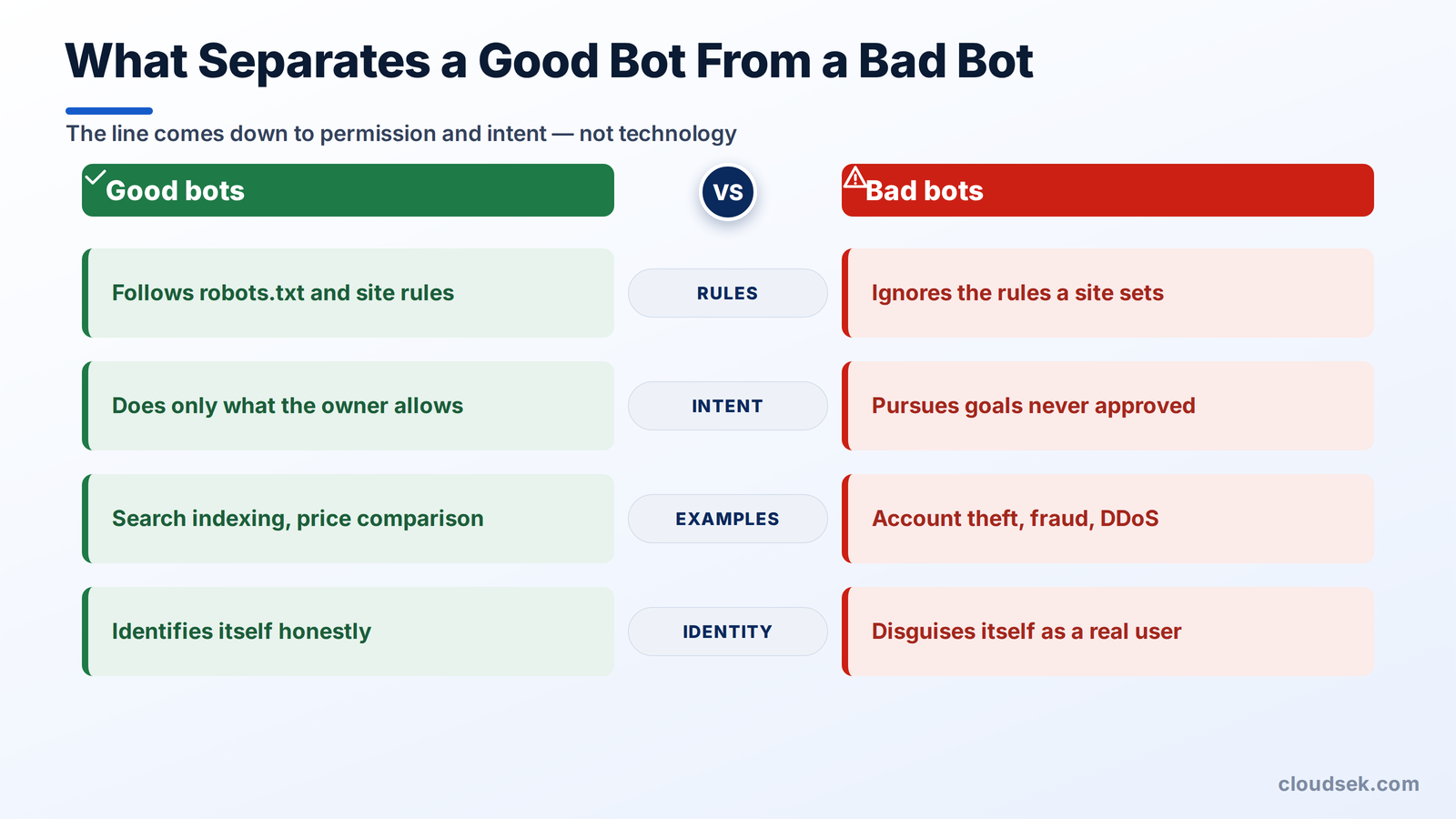
تتجاهل البوتات الضارة تلك القواعد وتسعى لتحقيق أهداف لم يوافق عليها مالك الموقع أبداً. فهي تقتحم الحسابات، وتسرق المحتوى، وترتكب عمليات احتيال، أو ترهق الخوادم، وغالباً ما تتنكر في هيئة مستخدمين حقيقيين لتجنب اكتشافها.
تعد البوتات الضارة المحرك وراء بعض أكثر الهجمات شيوعاً على المواقع والتطبيقات. وهناك سبعة أنماط مسؤولة عن معظم الأضرار.
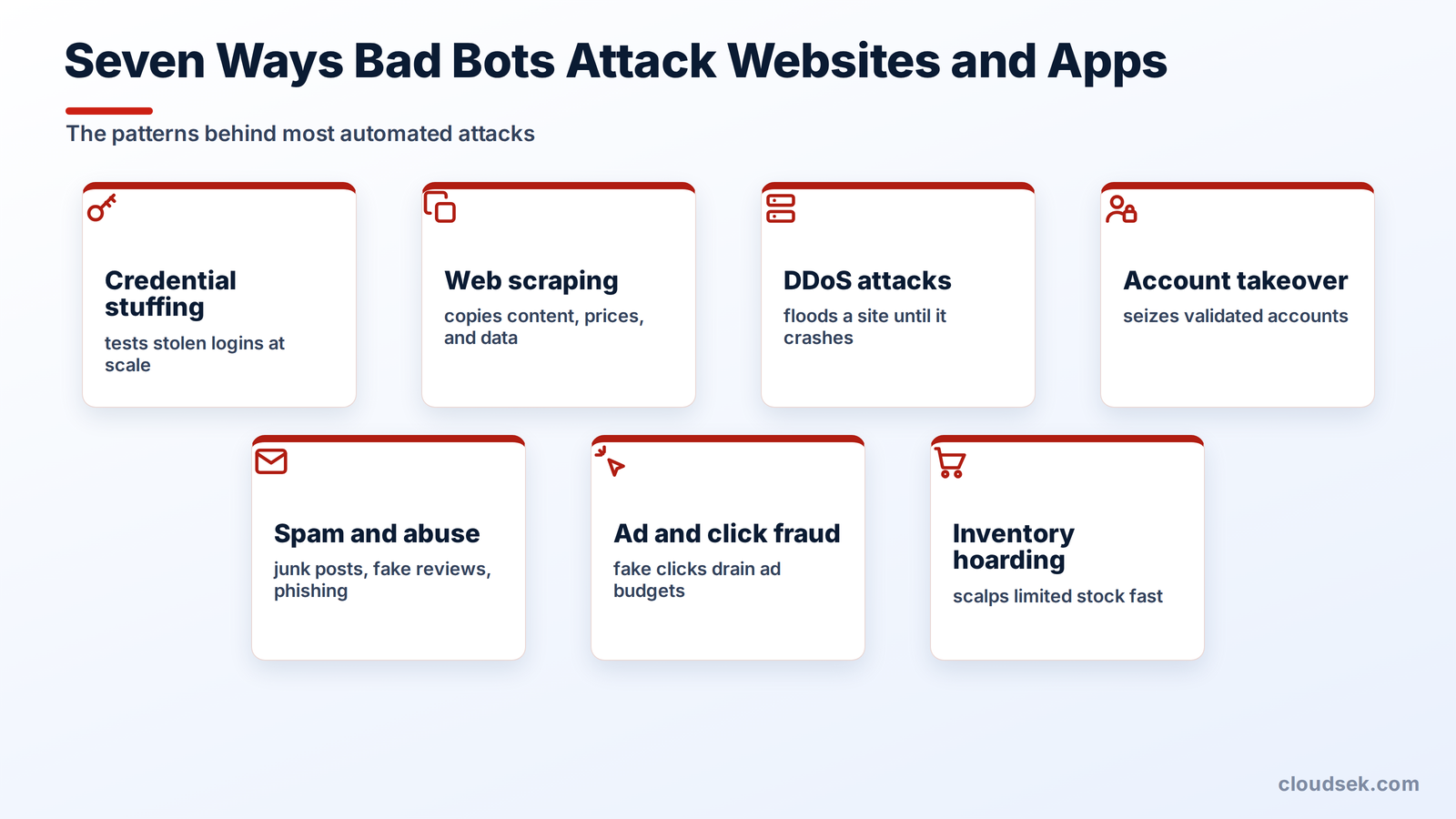
تختبر البوتات أزواجاً مسروقة من أسماء المستخدمين وكلمات المرور على صفحات تسجيل الدخول لاختراق الحسابات. تأتي هذه الأزواج من خروقات سابقة، مما يجعل بيانات الاعتماد المسربة الوقود المحرك لهذه الهجمات.
تقوم روبوتات الكشط بنسخ المحتوى والأسعار والبيانات على نطاق واسع، مما يؤدي إلى تقويض المنافسين أو سرقة الملكية الفكرية. كما أن عمليات الكشط المكثفة ترهق الخوادم وتؤدي إلى تحريف التحليلات.
تغرق جيوش الروبوتات الموقع بحركة مرور هائلة حتى يتباطأ أو ينهار. وتستخدم هجمات حجب الخدمة الموزعة العديد من الأجهزة في وقت واحد لإغراق الهدف.
بمجرد أن تتحقق الروبوتات من صحة بيانات الاعتماد المسروقة، يستولي المهاجمون على الحساب لاستنزاف الأموال أو سرقة البيانات أو ارتكاب عمليات احتيال. وقد ارتفعت معدلات الاستيلاء على الحسابات بشكل حاد مع أتمتة الروبوتات لهذه العملية.
تنشر روبوتات البريد المزعج تعليقات غير مفيدة ومراجعات وهمية وروابط تصيد عبر النماذج والمنتديات. كما أنها تجمع عناوين البريد الإلكتروني وتنشر عمليات الاحتيال على نطاق واسع.
تنشئ الروبوتات نقرات وانطباعات وهمية لاستنزاف ميزانيات الإعلانات أو تضخيم الإيرادات. يكلف هذا الاحتيال المعلنين مليارات الدولارات كل عام.
تقوم روبوتات المضاربة بشراء أو حجز المخزون المحدود، من تذاكر الحفلات الموسيقية إلى الأحذية الرياضية، بشكل أسرع من أي إنسان. ثم يقومون بإعادة بيعها بأسعار مرتفعة أو حرمان العملاء الحقيقيين من الحصول عليها.
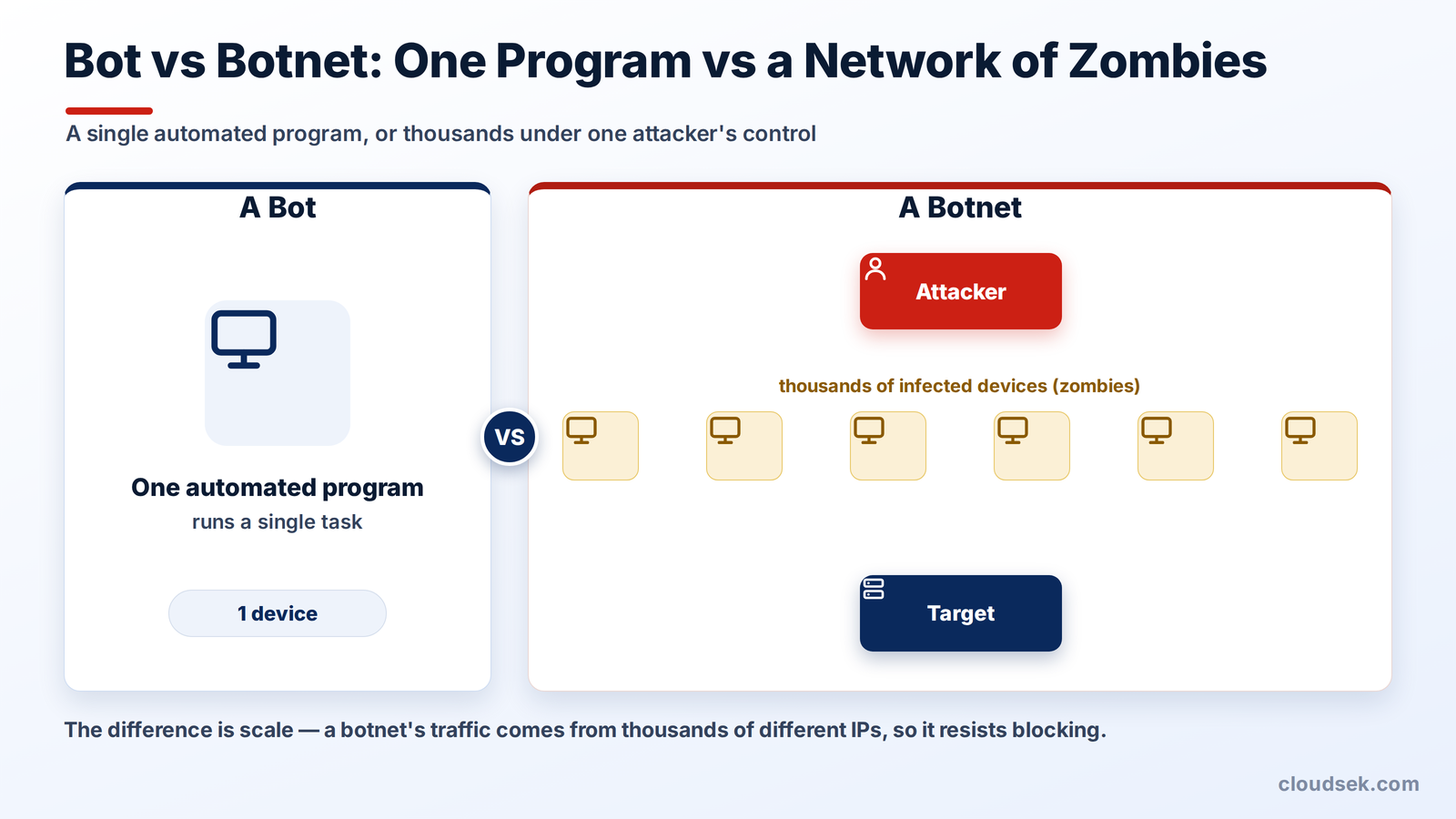
الروبوت هو برنامج آلي واحد، بينما شبكة الروبوتات (Botnet) هي شبكة من العديد من الأجهزة المصابة، حيث يقوم كل منها بتشغيل روبوت تحت سيطرة مهاجم واحد. الفرق الجوهري يكمن في النطاق: يقوم الروبوت الواحد بمهمة محددة، بينما تنسق شبكة الروبوتات آلافاً منها في وقت واحد.
هذا النطاق هو ما يجعل شبكات الروبوتات خطيرة. ولأن حركة مرور شبكة الروبوتات تأتي من آلاف الأجهزة وعناوين IP المختلفة، فمن الصعب حظرها، مما يجعلها المحرك وراء هجمات DDoS الكبيرة، وحملات البريد المزعج، وعمليات حشو بيانات الاعتماد. تعمل الأجهزة المصابة، التي غالباً ما تُسمى "الزومبي"، على تنفيذ أوامر المهاجم دون علم أصحابها.
تُظهر شبكة "ميراي" (Mirai) هذا النطاق في الواقع. ففي عام 2016، أصابت مئات الآلاف من أجهزة إنترنت الأشياء (IoT) من خلال كلمات المرور الافتراضية، وشنت هجوم DDoS أدى إلى إخراج تويتر ونتفليكس وريديت عن الخدمة من خلال إغراق مزود خدمة DNS المعروف باسم "Dyn". إن وكالة الأمن السيبراني وأمن البنية التحتية (CISA) الخاصة بـ تحذير بشأن تهديد Mirai يوضح بالتفصيل كيفية انتشار شبكة البوتات عبر الأجهزة ذات الحماية الضعيفة.
يتطلب إيقاف البوتات الضارة التمييز بينها وبين المستخدمين الحقيقيين والبوتات المشروعة، ثم حظر تلك الضارة منها.
يبدأ الاكتشاف بتحليل السلوك. تراقب أدوات الأمان العلامات التي لا يصدرها البشر، مثل آلاف الطلبات في الدقيقة، أو مسارات حركة الماوس غير المنطقية، أو عمليات تسجيل الدخول من مواقع جغرافية متناقضة. وتعمل نماذج تعلم الآلة على تقييم حركة المرور للفصل بين البوتات والبشر.
تعتمد الدفاعات الشائعة على طبقات متعددة من عناصر التحكم. يوجه ملف robots.txt البوتات الملتزمة، ويحدد معدل الطلبات لكل مصدر، بينما تحظر اختبارات CAPTCHA الأتمتة البسيطة، وتمنع المصادقة متعددة العوامل بوتات حشو بيانات الاعتماد من استخدام كلمات المرور المسروقة. وتتولى أنظمة إدارة البوتات المتخصصة وجدران حماية تطبيقات الويب التعامل مع الحالات المعقدة. مشروع التهديدات المؤتمتة التابع لـ OWASP يصنف النطاق الكامل لهجمات البوتات وطرق مواجهتها.
كلمة "بوت" هي اختصار لـ "روبوت". وهي تشير إلى برمجيات تنفذ مهام مؤتمتة، وليست آلة مادية.
نعم، البوتات قانونية، ومعظمها يؤدي أغراضاً مفيدة مثل فهرسة نتائج البحث وتقديم دعم العملاء. أما استخدام البوتات في الاحتيال أو سرقة الحسابات أو شن الهجمات فهو غير قانوني، رغم أن التقنية نفسها ليست كذلك.
غالباً ما يكشف البوت عن نفسه من خلال الردود الفورية أو العامة أو المتكررة التي تتجنب الإجابة على أسئلة محددة. تستجيب البوتات بسرعة تفوق سرعة الكتابة البشرية وتواجه صعوبة في فهم سياق المحادثة المتابعة.
تواجه قطاعات السفر والتجزئة والخدمات المالية أكبر قدر من حركة مرور البوتات الضارة. في عام 2024، شكلت البوتات الضارة 59% من حركة مرور مواقع التجزئة، وكانت مسؤولة عن 27% من إجمالي هجمات البوتات ضد مواقع السفر.
يقوم البوت بأتمتة المهام ويمكن أن يكون مفيداً أو ضاراً، بينما الفيروس هو برنامج خبيث ينتشر عن طريق إصابة الملفات. العديد من البوتات مشروعة، في حين أن الفيروس يكون دائماً ضاراً.
تؤدي الروبوتات الضارة إلى إبطاء أداء الموقع، وتشويه التحليلات، وسرقة المحتوى، وزيادة تكاليف الاستضافة. كما أن حركة المرور الكثيفة الناتجة عن الروبوتات تزاحم المستخدمين الحقيقيين وتتسبب في تضخم فواتير البنية التحتية.
