🚀 أصبحت CloudSek أول شركة للأمن السيبراني من أصل هندي تتلقى استثمارات منها
اقرأ المزيد
.avif)

يُعتبر "كريبر" (Creeper) على نطاق واسع أول فيروس حاسوبي، على الرغم من أنه عمل تقنياً كأول دودة حاسوبية. كتب بوب توماس برنامج "كريبر" في شركة BBN عام 1971. كان هذا البرنامج التجريبي ذاتي النسخ ينتقل عبر شبكة "أربانت" (ARPANET) ويعرض سطراً واحداً من النص: "أنا كريبر: أمسك بي إن استطعت".
لم يتسبب "كريبر" في أي ضرر ولم يسرق أي بيانات. بدأت تلك التجربة الوحيدة سلالة تنتج الآن أكثر من 450,000 عينة برمجية خبيثة جديدة يومياً، وفقاً لـ AV-TEST.
أنشأ بوب توماس "كريبر" في عام 1971 أثناء عمله في شركة BBN (بولت وبيرانيك ونيومان)، وهي شركة أبحاث في كامبريدج ساعدت في بناء شبكة "أربانت". كتب توماس البرنامج بلغة التجميع (Assembly) الخاصة بجهاز PDP-10 ليعمل على نظام التشغيل TENEX. وقد أطلق عليه هذا الاسم تيمناً بـ "كريبر"، وهو شخصية شريرة خضراء من مسلسل الرسوم المتحركة "سكوبي دو" في السبعينيات.
سبق المفهومُ الكودَ البرمجي. فقد وصف عالم الرياضيات جون فون نيومان الأوتوماتا ذاتية النسخ في أواخر الأربعينيات، وحوّل "كريبر" تلك النظرية إلى برنامج عملي بعد عقدين من الزمن.
كان "كريبر" يعمل عن طريق نسخ نفسه من حاسوب إلى آخر عبر شبكة "أربانت"، ثم إزالة نفسه من الجهاز الذي غادره. حددت ثلاث خطوات سلوكه.
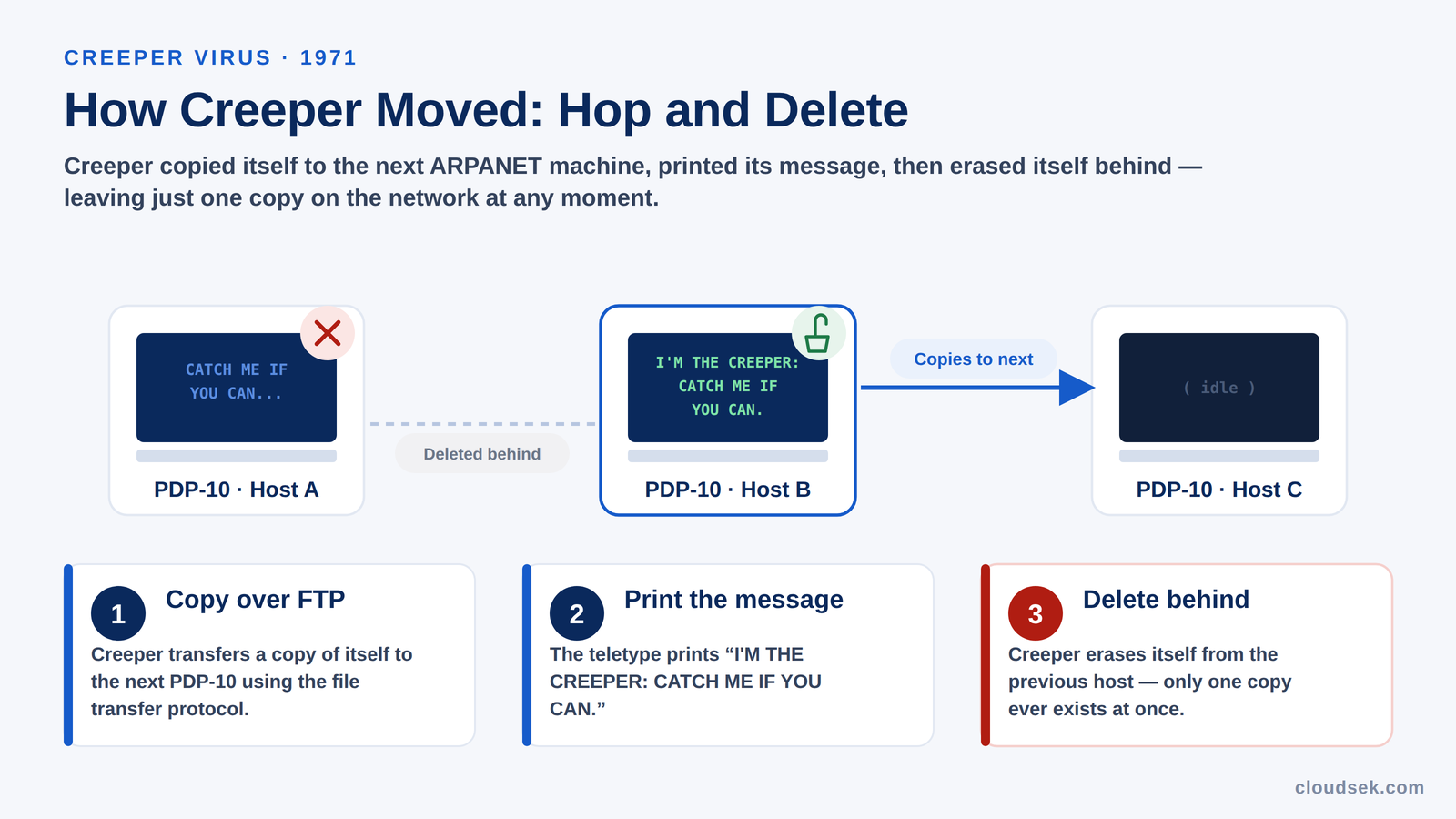
هذا النمط القائم على الانتقال والحذف أبقى نسخة واحدة فقط من "كريبر" على الشبكة في أي لحظة. أثبت تصميمه مفهوم الكود المتنقل، وهو برنامج يعيد توطين نفسه، بدلاً من البرمجيات الخبيثة البرمجيات الخبيثة التي تترك نسخاً خلفها.
لا، لم يكن فيروس "كريبر" ضاراً. لم يقم "كريبر" بتشفير أي شيء، ولم يحذف أي ملفات، ولم يسرق أي بيانات. كان إجراءه الوحيد هو طباعة رسالة استفزازية، مما جعله تجربة حميدة بدلاً من كونه هجوماً.
انتشر "كريبر" أبعد مما كان ينوي توماس. فقد عطل أجهزة التليتايب في مواقع الأبحاث وأثار قلق المسؤولين في مختبرات مثل معهد ماساتشوستس للتكنولوجيا (MIT) وستانفورد، على الرغم من أنه لم يتلف أي بيانات أثناء ذلك.
كان برنامج Reaper أول برنامج لمكافحة الفيروسات، وقد كُتب حوالي عام 1972 لتعقب برنامج Creeper وحذفه. تنقل Reaper عبر شبكة ARPANET بنفس الطريقة التي تنقل بها Creeper، حيث كان يزيل كل نسخة يعثر عليها.
ينسب المؤرخون برنامج Reaper إلى راي توملينسون، مهندس شركة BBN الذي اخترع البريد الإلكتروني وتنسيق العنوان "@". تظل سجلات تأليف Reaper غير مكتملة، وقد توفي توملينسون في عام 2016 دون تأكيد التفاصيل.
يُعد Creeper من الناحية التقنية دودة حاسوبية، على الرغم من أن التاريخ الشائع يطلق عليه لقب أول فيروس. تنتشر الدودة عبر الشبكة من تلقاء نفسها، بينما يرتبط الفيروس بملف مضيف ويحتاج إلى مستخدم لتشغيله. يُعرف المعهد الوطني للمعايير والتقنية (NIST) الدودة بأنها برنامج ذاتي النسخ ينتشر عبر الشبكة دون الحاجة إلى برنامج مضيف أو تدخل من المستخدم.
هناك تفصيل دقيق يوضح الفرق؛ فقد كان برنامج Creeper الأصلي لبوب توماس ينتقل ويحذف نفسه، بينما قامت نسخة لاحقة من إعداد راي توملينسون بالنسخ وترك نسخ خلفها، وهي النسخة المقبولة عموماً كأول دودة حاسوبية. أما مصطلح "فيروس الحاسوب" فقد ظهر لاحقاً، وصاغه الباحث فريد كوهين في عام 1983.
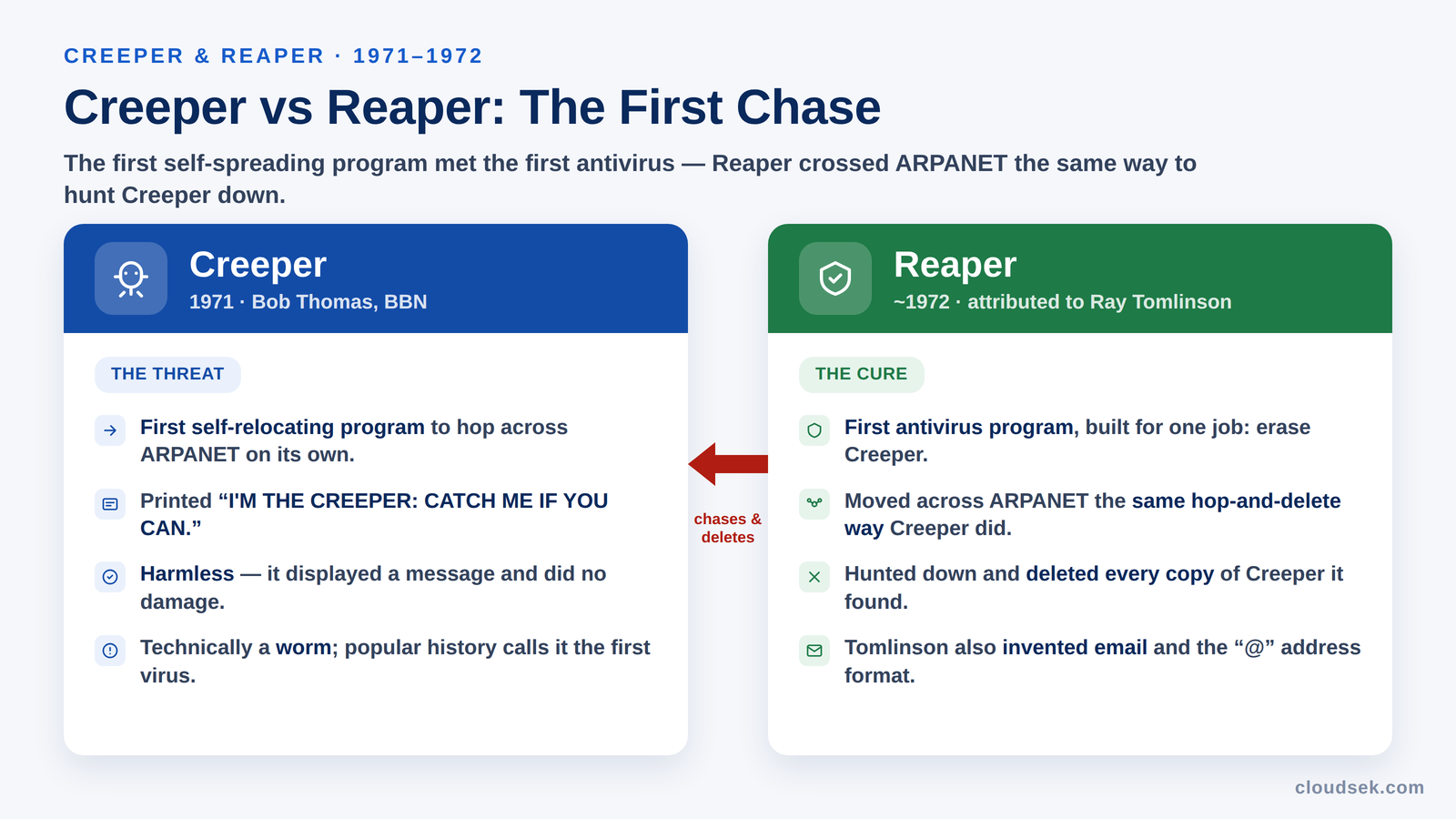
تكمن أهمية Creeper في أنه أثبت أن البرمجيات يمكنها الانتقال عبر الشبكة دون مساعدة بشرية. أكد هذا الإثبات نظرية فون نيومان وكشف عن خطر لم تكن هناك دفاعات لمواجهته بعد.
أدى ظهوره إلى إطلاق أول استجابة لمكافحة الفيروسات ووضع النمط لكل منافسات الأمن السيبراني منذ ذلك الحين. كما ألهم التنافس بين Creeper وReaper لعبة "Core War"، وهي لعبة برمجة مبكرة تتنافس فيها البرامج للسيطرة على الذاكرة.
مهد Creeper الطريق لسلسلة من البرامج ذات القدرات المتزايدة. ترسم أربع محطات رئيسية المسار من مجرد تجربة غير ضارة إلى تهديد حديث.
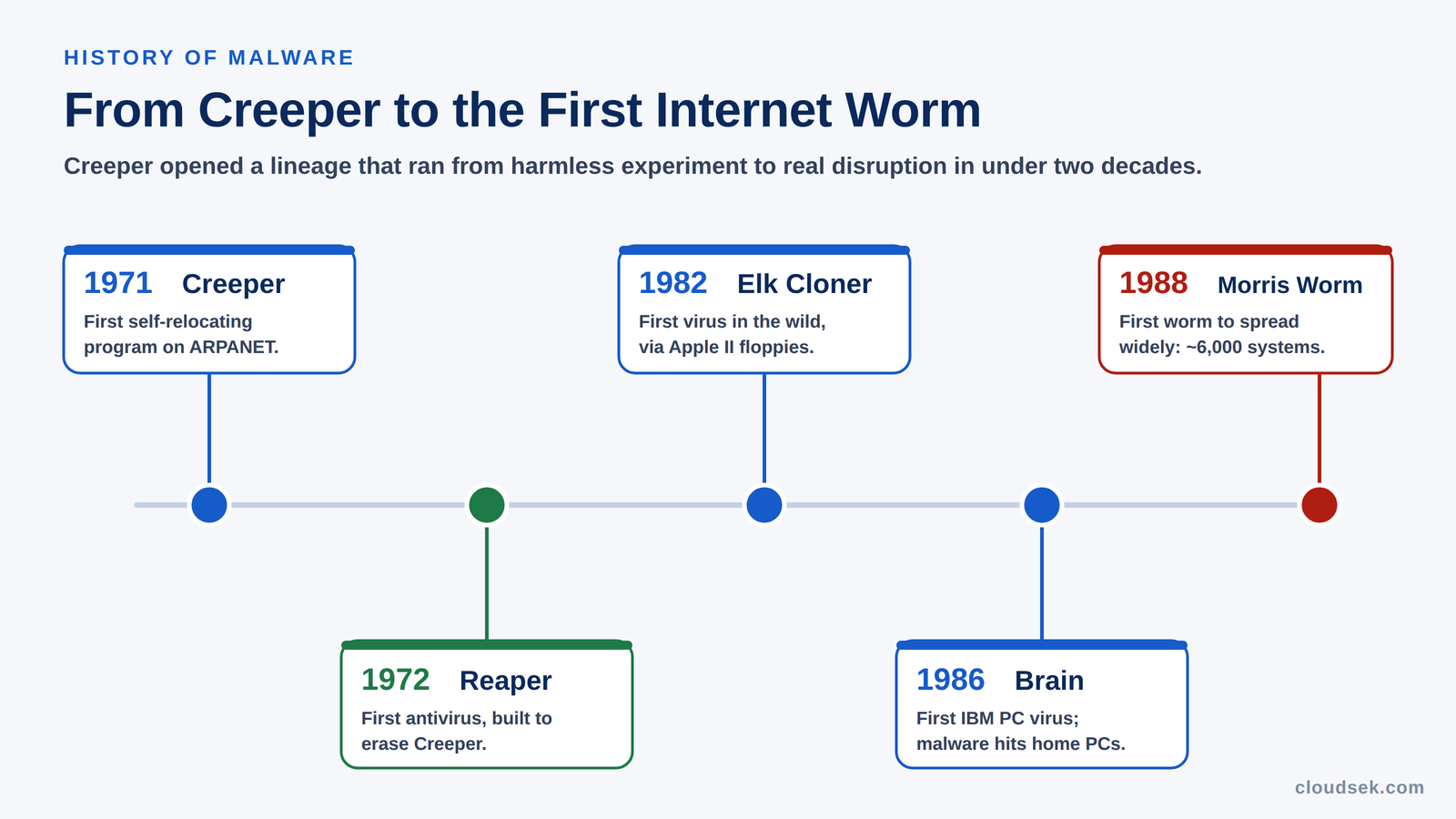
توضح هذه البرامج تحول البرمجيات الخبيثة من مجرد تجارب غير ضارة إلى اضطرابات حقيقية. تهديدات البرمجيات الخبيثة الحديثة سرقة بيانات الاعتماد، وتشفير البيانات لطلب فدية، والعمل على نطاق صناعي.
ابتكر بوب توماس فيروس كريبر عام 1971 أثناء عمله في شركة BBN. صممه توماس كتجربة لاختبار ما إذا كان بإمكان برنامج ما التنقل عبر الشبكة من تلقاء نفسه.
من الناحية التقنية، يُعد كريبر دودة حاسوبية وليس فيروساً. فقد انتشر عبر شبكة ARPANET من تلقاء نفسه دون الحاجة للارتباط بملف مضيف، وهو ما يتطابق مع تعريف الدودة الحاسوبية.
لا، لم يكن فيروس كريبر خطيراً. فهو لم يتسبب في تلف أي ملفات ولم يسرق أي بيانات، بل كان يكتفي بعرض رسالة قبل الانتقال إلى الحاسوب التالي.
كانت رسالة كريبر تقول: "أنا كريبر: حاول الإمساك بي إن استطعت". وقد ظهرت هذه الرسالة على شاشات أجهزة التلكس المتصلة بشبكة ARPANET المصابة.
ريبر هو أول برنامج لمكافحة الفيروسات، تم إنشاؤه حوالي عام 1972 لحذف كريبر. كان البرنامج يتنقل عبر شبكة ARPANET ليزيل نسخ كريبر من كل نظام يعثر عليه.
لا، لم يعد فيروس كريبر موجوداً خارج الأرشيفات التاريخية. فقد كان يعمل فقط على أنظمة ARPANET ونظام التشغيل TENEX في السبعينيات، وهي أنظمة أصبحت قديمة وغير مستخدمة اليوم.
