🚀 CloudSEK featured in the 2026 Frost Radar™!
Read more
.avif)

Triple Extortion Ransomware is a cyberattack method where attackers use three pressure tactics—data encryption, data theft, and external threats such as DDoS attacks to force victims into paying a ransom.
Triple Extortion Ransomware builds on earlier ransomware models by adding more pressure layers. It targets both systems and reputation. Locked systems disrupt operations, stolen data creates privacy risks, and external pressure damages trust. These combined effects make Triple Extortion Ransomware more aggressive and harder to handle than traditional ransomware attacks.
Triple Extortion Ransomware uses three distinct layers of pressure that work together to force victims into paying a ransom.
Access to files and systems is blocked through encryption. This layer stops normal operations, because critical data becomes unusable until a ransom is paid.
Sensitive data is stolen before encryption takes place. This layer creates additional pressure because attackers threaten to leak or sell the data if payment is not made.
Pressure extends beyond internal systems through actions like DDoS attacks, public exposure, or direct contact with customers and partners. This layer increases urgency because it affects reputation and external relationships.
Triple extortion ransomware works through a step-by-step attack process that gains access, expands control, steals data, encrypts systems, and applies multiple layers of pressure.
Here is the step-by-step attack process of triple extortion ransomware:
Attackers enter the system using methods like phishing emails, software vulnerabilities, or stolen login credentials. This access gives them a starting point inside the network.
Access is maintained by creating backdoors and increasing permissions. This step allows attackers to stay hidden and gain deeper control over systems.
Access expands as attackers move across systems to find valuable data and critical infrastructure. This movement helps them understand the environment and identify high-impact targets.
Important data is collected and transferred out of the system before encryption begins. This step creates leverage because attackers can threaten to leak the stolen information.
Critical files and systems are locked using ransomware. This encryption blocks access to data and disrupts normal operations, which increases pressure on the victim.
Additional pressure is applied through actions like DDoS attacks, public leak threats, or direct contact with customers and partners.
Demands Combined Ransom Payments
Attackers demand payment by combining all pressure points into one strategy. This demand forces quick decisions because delaying payment increases damage across multiple areas.
Triple Extortion Ransomware is dangerous because it steals data, encrypts systems, and disrupts services simultaneously, which increases damage and reduces the victim’s ability to respond.
According to IBM’s Cost of a Data Breach Report 2023, ransomware-related breaches increased recovery costs by more than 20% compared to the global average breach cost, due to extended downtime, remediation efforts, and data recovery challenges.

Here are the main risks of triple extortion ransomware:
Costs rise beyond just the ransom amount. Organizations face recovery expenses, downtime losses, legal costs, and potential fines, which makes the overall impact much higher.
Attackers target customers, partners, and third parties using stolen data. This expansion increases pressure because the attack affects more people than just the organization.
Stolen data can be leaked publicly or shared with stakeholders. This exposure reduces trust because customers and partners lose confidence in the organization’s security.
Encrypted systems block access to critical files and services. This disruption stops daily operations, which directly affects productivity and service delivery.
Stolen sensitive data can violate data protection laws. This violation leads to penalties and regulatory actions, which increase long-term consequences.
Attackers use multiple tactics at once, which limits the victim’s options. This pressure weakens negotiation, because delaying payment increases damage across different areas.
Triple Extortion Ransomware is prevented by strengthening access control, securing systems, and preparing for rapid recovery.
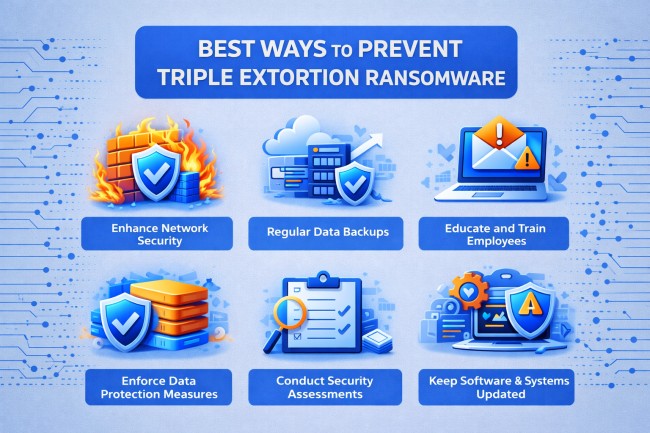
Here are the best strategies to prevent triple extortion ransomware:
User access stays restricted through multi-factor authentication and limited permissions. This control reduces risk because attackers cannot easily use stolen credentials to access critical systems.
Systems stay secure when software updates and patches are applied on time. This practice removes known weaknesses, which prevents attackers from exploiting vulnerabilities.
Security tools protect systems at multiple levels. Endpoint protection detects malware, network security blocks unauthorized access, and email filters stop phishing attempts before they reach users.
Staff awareness reduces human errors that attackers often exploit. Training helps employees identify suspicious emails and activities, which prevents unauthorized access.
Data remains recoverable when backups are stored securely and tested regularly. This preparation ensures that systems can be restored without paying a ransom.
Triple Extortion Ransomware spreads through common attack vectors that exploit human errors, weak security, and exposed systems.
Phishing emails remain one of the most common entry points. Attackers send emails containing malicious links or attachments that appear legitimate, leading users to share credentials or unknowingly install malware.
Unpatched software vulnerabilities create direct entry points into systems. Attackers scan for outdated applications and exploit known weaknesses, which allows them to access networks without user interaction.
Stolen credentials provide easy access to internal systems. Attackers use techniques like brute force attacks or credential stuffing to gain login access, which helps them bypass security controls.
Remote access services such as RDP and VPNs are frequent targets. Weak configurations or exposed ports allow attackers to connect directly to systems, which gives them control over critical infrastructure.
In July 2021, the REvil ransomware group exploited a vulnerability in Kaseya’s VSA remote management software. The attack affected around 1,500 businesses globally through managed service providers. Attackers encrypted systems, stole data, and demanded a ransom of $70 million, which caused widespread operational disruption.
In January 2023, the LockBit ransomware group targeted the UK’s Royal Mail using ransomware combined with data exfiltration and public leak threats. International shipping services were disrupted for weeks, and sensitive data was threatened for release, which damaged operations and reputation.
In mid-2023, the Clop ransomware group exploited a zero-day vulnerability in MOVEit file transfer software. The attack impacted over 2,000 organizations and millions of individuals by stealing sensitive data. Attackers used data theft and extortion without encryption in some cases, which still applied strong pressure through leak threats and public exposure.
Triple Extortion Ransomware differs from double extortion ransomware by adding a third pressure layer that targets external stakeholders and services, which increases overall impact.
Double extortion ransomware focuses on two tactics—encrypting data and threatening to leak stolen information. Triple extortion builds on this by adding external pressure, such as DDoS attacks or direct contact with customers and partners. This added layer increases haste because the attack affects both internal systems and external relationships.
Yes. Some attacks skip encryption and rely only on data theft and external pressure, which still forces victims to pay due to leak threats.
The attack can take a few days to several weeks, depending on how long attackers stay inside the system before launching the final stage.
Industries like healthcare, finance, and critical infrastructure are targeted more often because they rely on continuous operations and handle sensitive data.
No. Attackers use different pressure methods, such as public leaks or contacting customers, while DDoS is one of several options.
No. Backups help restore data after encryption, but they do not prevent data leaks or external pressure from attackers.
No. Paying does not guarantee data recovery or deletion of stolen data, because attackers may still leak or misuse the information.
Attackers use emails, leak websites, or direct communication with customers and partners to increase pressure and force payment.
CloudSEK provides real-time threat intelligence that helps organizations detect data leaks, exposed credentials, and attacker activity early. This early visibility reduces risk because threats are identified before attackers can use stolen data for extortion.
With CloudSEK’s digital risk protection platform, organizations monitor their external attack surface, track dark web activity, and receive actionable alerts. These insights improve response speed because security teams can act quickly to stop attacks before they escalate into triple extortion.
