🚀 CloudSEK featured in the 2026 Frost Radar™!
Read more
.avif)

A package arrives that no one ordered. There is no note, no sender name, and often no return address, just a cheap item like seeds, costume jewelry, or a phone accessory. It looks like a harmless mix-up, yet an unordered package is frequently the calling card of a brushing scam.
A brushing scam is a fake-review fraud in which a seller ships unrequested goods to a real name and address, then posts a glowing verified-purchase review in that person's name. In 2025, the practice turned more dangerous, as the FBI warned that scammers had begun slipping QR codes into the packages to steal personal and financial data.
A brushing scam is a form of e-commerce fraud built to manufacture fake product reviews. A dishonest seller sends an unordered item to a real person, the platform records it as a genuine sale, and the seller then writes a positive review under that person's name, so it appears as a trusted verified purchase.
Ranking is the goal, not generosity. Verified-purchase reviews carry weight with shoppers and marketplace algorithms, so a flood of them pushes a product higher in search results and lends it false credibility. The items shipped are deliberately cheap, since the seller only needs a delivery to register, not a valuable gift.
A brushing scam mainly runs in three stages.
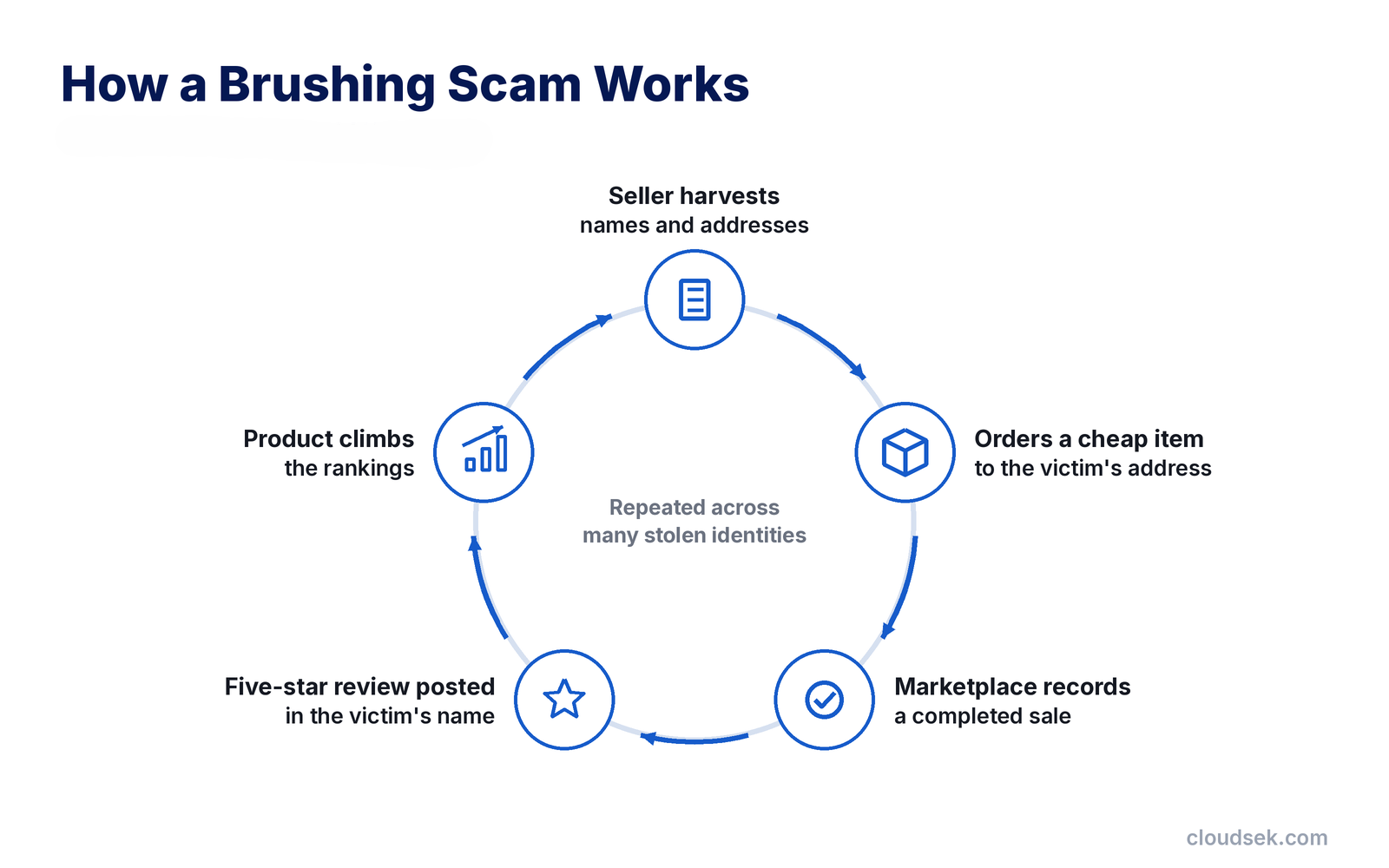
The seller first needs real delivery details. Names and addresses come from data breaches, leaked or purchased contact lists, and public sources, which the US Postal Inspection Service notes are often gathered through illicit means for later misuse.
Using those details, the seller places an order to the victim's address, often paying for the cheap item out of pocket. The package ships and the marketplace marks it delivered, creating a record of a completed, verifiable sale.
With a delivery on file, the seller writes a five-star review in the recipient's name, flagged as a verified purchase. Repeated across many stolen identities, these reviews inflate a product's rating and bury genuine feedback.
Brushing scams drew national attention in the summer of 2020, when thousands of Americans across all 50 states received unsolicited packets of seeds postmarked from China. Many arrived in envelopes mislabeled as jewelry or toys, holding nothing but random seeds.
After investigating alongside Customs and Border Protection, the US Department of Agriculture concluded the shipments were most likely a brushing scam, cheap and lightweight items sent to generate fake reviews. Officials still urged recipients not to plant the seeds, citing the risk of invasive species, and the episode showed how ordinary a brushing package looks while quietly signaling that an address is exposed.
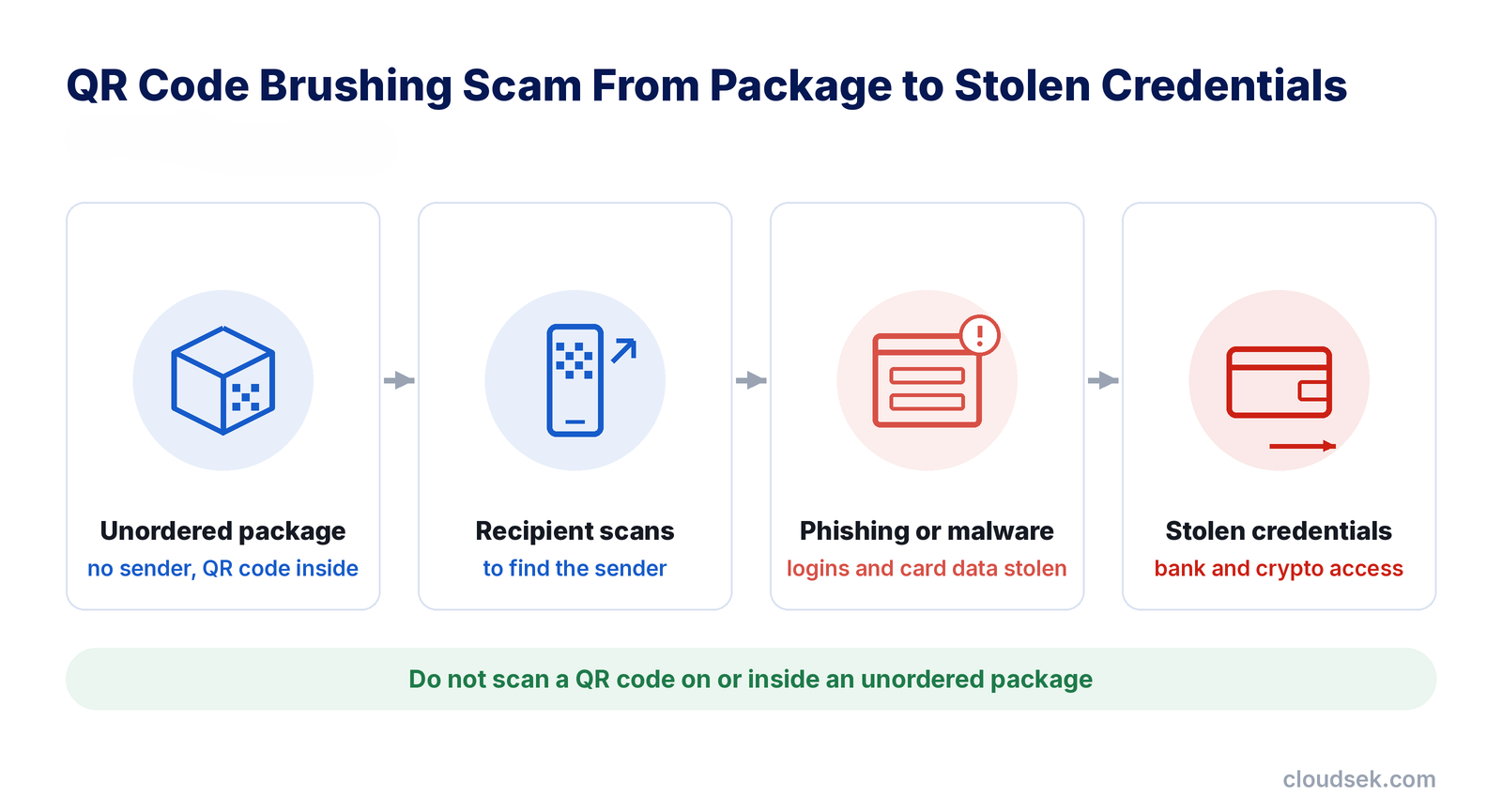
Brushing scams took a sharper turn when criminals added QR codes to the packages. Because the box carries no sender information, a curious recipient scans the code hoping to learn who sent the item or how to return it.
That scan is the trap. The code leads to a phishing page that harvests logins and card details, or triggers a malware download that steals data from the phone. The FBI has linked these codes to theft of banking credentials and even cryptocurrency access, turning a nuisance package into a direct financial attack.
A free package sounds like a win, though a brushing scam carries real costs:
A brushing package tends to share a recognizable set of traits:
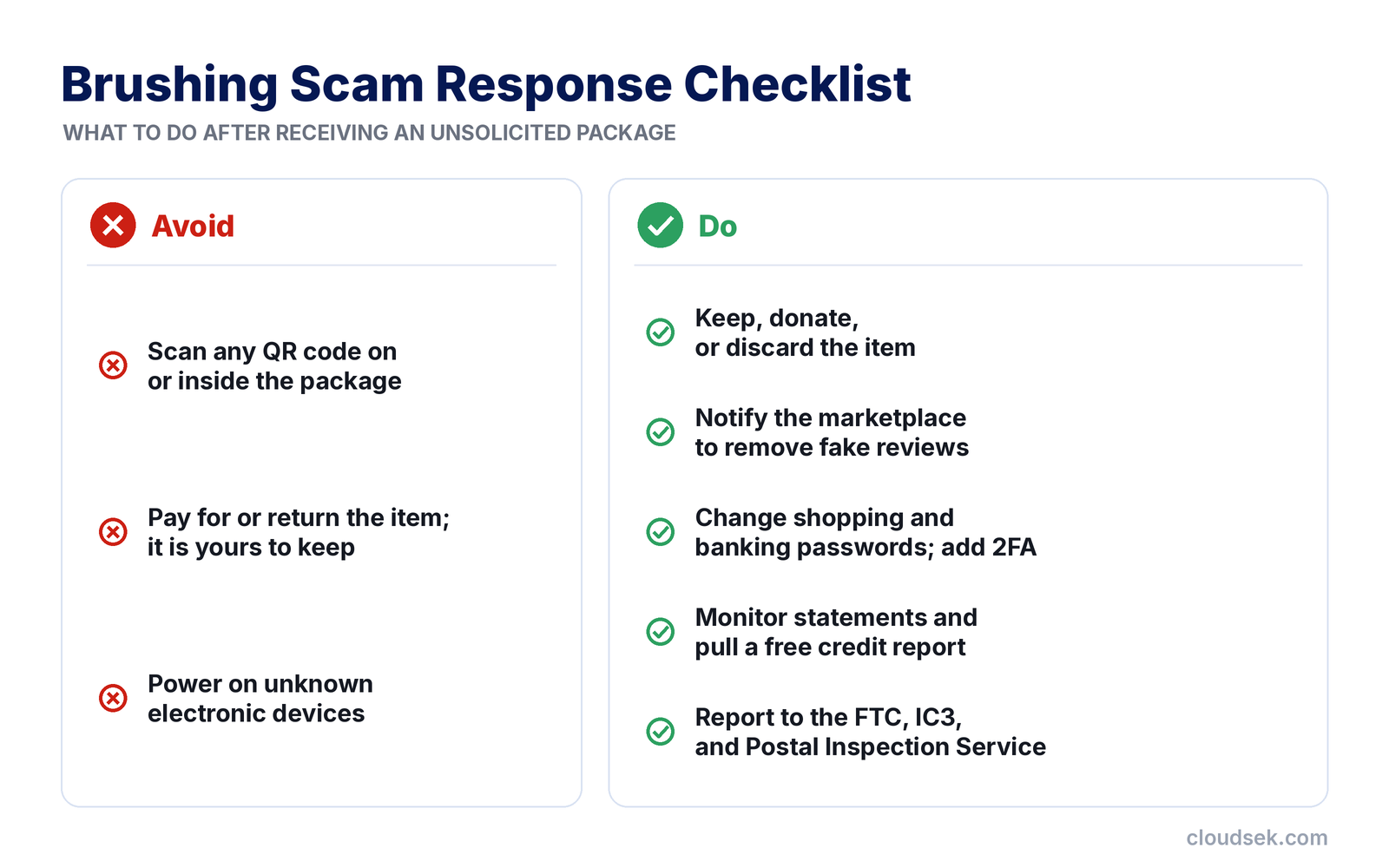
Handling a brushing package safely takes a few deliberate steps:
Limiting exposure lowers the odds of being used in a brushing scheme:
No, the recipient is not charged for the items, since the seller pays to create the fake order. The real cost is exposed personal data and the risk of QR-code fraud.
Yes, indirectly, because a brushing package signals that personal data is already exposed, and the QR-code variant enables direct financial fraud. Monitoring accounts and credit closely is wise.
Yes, brushing scams break consumer-protection law, and the FTC's 2024 rule specifically bans fake reviews with civil penalties. Misusing personal data adds further legal exposure.
Most brushing items are cheap and harmless, but unsolicited electronics and QR codes warrant caution, as either is a potential malware or fraud vector. Recipients are advised not to power on unknown devices or scan codes.
Holiday shipping volumes surge, so fraudulent packages blend in and draw less suspicion. Higher marketplace activity gives sellers extra cover to plant fake reviews.
Marketplaces remove fake reviews once detected and often penalize or ban the seller. The wrongly named reviewer's account is usually cleared, though the exposed personal data remains a concern.
