🚀 أصبحت CloudSek أول شركة للأمن السيبراني من أصل هندي تتلقى استثمارات منها
اقرأ المزيد
.avif)

تعمل المؤسسات الحديثة في بيئات رقمية عالية التوزيع وقائمة على السحابة ومترابطة حيث تمتد مخاطر الأمان إلى ما هو أبعد من حدود الشبكة التقليدية. مع توسع المؤسسات واعتمادها للخدمات السحابية وتمكين العمل عن بُعد ودمج النظم البيئية التابعة لجهات خارجية، يصبح الأمان وظيفة مهمة للأعمال وليس اهتمامًا تقنيًا بحتًا. يعالج أمن المؤسسات هذا الواقع من خلال توفير نهج منظم على مستوى المؤسسة لإدارة المخاطر وحماية الأصول الحيوية وضمان المرونة التشغيلية.
تستكشف هذه المقالة كيفية عمل أمن المؤسسات، ولماذا هو ضروري، وما يحميه، والمكونات الأساسية والتحديات التي ينطوي عليها، وكيف تقوم المؤسسات ببناء وإدارة وتطوير برامج أمن المؤسسات لدعم عمليات الأعمال الآمنة والمستدامة.
أمان المؤسسة هو الحماية الشاملة لبيانات المؤسسة وأنظمتها وهوياتها وشبكاتها وعملياتها عبر بيئة المؤسسة بأكملها.
وهي تشمل ضوابط التكنولوجيا والعمليات التشغيلية وممارسات القوى العاملة وأطر الحوكمة لتأمين الأصول الرقمية والتنظيمية على نطاق واسع.
الهدف الأساسي لأمن المؤسسة هو الحد من المخاطر والمرونة التشغيلية واستمرارية الأعمال دون انقطاع في البيئات المعقدة والموزعة.
يعمل أمان المؤسسة من خلال تطبيق ضوابط متعددة الطبقات في جميع أنحاء المؤسسة، ودمج الأشخاص والعمليات والتكنولوجيا، وتكييف الحماية باستمرار بناءً على المخاطر والرؤية والتعليقات التشغيلية.
الأمان متعدد الطبقات عبر بيئات المؤسسات
يقوم أمان المؤسسة بتطبيق طبقات أمان متعددة عبر الأنظمة المحلية والأنظمة الأساسية السحابية ونقاط النهاية والتطبيقات والشبكات. تعمل كل طبقة على تقليل التعرض والحد من تقدم الهجوم عند فشل عنصر تحكم آخر. يعزز هذا التصميم متعدد الطبقات المرونة في بيئات المؤسسات المختلطة والموزعة.
تكامل الأشخاص والعمليات والتكنولوجيا
يعمل أمان المؤسسة كنموذج تشغيل على مستوى المؤسسة بدلاً من مجموعة من الأدوات. يقوم الأشخاص بتأسيس المساءلة وملكية القرار، وتحدد العمليات عمليات سير العمل القابلة للتكرار ومسارات التصعيد، وتفرض التكنولوجيا عناصر التحكم أثناء توليد الرؤية. يضمن هذا التكامل توافق الإجراءات الأمنية مع أولويات العمل والتوسع باستمرار عبر المؤسسة.
دورة حياة أمنية مستمرة قائمة على المخاطر
يعمل أمان المؤسسة كدورة حياة مستمرة تسترشد بالمخاطر وتأثير الأعمال:
تضمن دورة الحياة هذه تطور أمان المؤسسة جنبًا إلى جنب مع التهديدات والتغييرات التقنية والنمو المؤسسي.
المراقبة المركزية والأتمتة والتنفيذ المستند إلى السياسة
يعتمد أمان المؤسسة على المراقبة المركزية لربط الإشارات عبر البيئات ودعم اتخاذ قرارات أسرع ومستنيرة. تعمل عمليات سير العمل المؤتمتة والتنسيق على تقليل وقت الاستجابة والاحتكاك التشغيلي، بينما يضمن الإنفاذ المستند إلى السياسة ثبات الوصول ومعالجة البيانات وضوابط الأمان عبر البيئات المحلية والسحابة والبيئات المختلطة.
تعمل هذه الآليات معًا على تمكين أمن المؤسسات من العمل على نطاق واسع، والبقاء متوافقًا مع مخاطر الأعمال، ودعم العمليات الآمنة والمرنة في البيئات الرقمية المعقدة.
يُعد أمن المؤسسات مهمًا لأن المؤسسات الحديثة تعمل في بيئات رقمية كبيرة وموزعة ومتطورة باستمرار حيث تؤثر الإخفاقات الأمنية بشكل مباشر على الأداء المالي والمكانة التنظيمية والمساءلة التنفيذية.
يعمل أمان المؤسسة على حماية الأعمال من خلال تقليل المخاطر عبر المجالات التشغيلية والاستراتيجية الهامة:
حماية الأصول الحساسة
تدير الشركات بيانات العملاء والملكية الفكرية والسجلات المالية والمعلومات المنظمة التي تتطلب حماية مستمرة لمنع الخسارة المالية والتعرض القانوني.
الاستمرارية التشغيلية
تتسبب الحوادث الإلكترونية في التعطل وتعطيل الخدمة وفقدان الإنتاجية عبر وحدات الأعمال والمناطق الجغرافية، مما يؤثر بشكل مباشر على الإيرادات وتقديم الخدمات.
الامتثال التنظيمي والقانوني
يجب أن تمتثل الشركات للوائح مثل GDPR و HIPAA و PCI DSS والتفويضات الخاصة بالصناعة، حيث يؤدي عدم الامتثال إلى غرامات وعقوبات وتدقيق تنظيمي.
السمعة وثقة العملاء
تؤدي خروقات البيانات وانقطاع الخدمة إلى تقليل ثقة العملاء وإلحاق الضرر بمصداقية العلامة التجارية وخلق تأثير طويل الأجل على السوق.
دعم التحول الرقمي
يؤدي اعتماد السحابة والعمل عن بُعد وعمليات تكامل الجهات الخارجية إلى توسيع سطح الهجوم وزيادة تعقيد الأمان، مما يجعل أمان المؤسسة ضروريًا للابتكار الآمن والنمو.
يعمل أمن المؤسسات على تقليل المخاطر المؤسسية من خلال حماية الاستقرار المالي ودعم المساءلة على مستوى المديرين التنفيذيين ومجالس الإدارة وتمكين العمليات التجارية المرنة والمتوافقة والآمنة على نطاق واسع.
يحمي أمان المؤسسة مجموعة كاملة من الأصول التي تمكن المؤسسة من العمل بأمان، والبقاء متوافقة، والحفاظ على الاستمرارية عبر النظم البيئية الرقمية المعقدة والمترابطة.
أصول البيانات
معلومات العملاء والملكية الفكرية والسجلات المالية وبيانات الموظفين والمعلومات المنظمة المخزنة عبر أنظمة المؤسسة والمنصات السحابية وخدمات الطرف الثالث.
البنية التحتية لتقنية المعلومات
الشبكات والخوادم ونقاط النهاية ومراكز البيانات وأحمال العمل السحابية والبيئات المتصلة خارجيًا التي تدعم عمليات المؤسسة اليومية.
التطبيقات والخدمات الرقمية
تطبيقات الويب وواجهات برمجة التطبيقات وبرامج المؤسسات ومنصات SaaS والأنظمة المطورة داخليًا التي يستخدمها الموظفون والشركاء والبائعون والعملاء.
الهويات والوصول
الموظفون والمتعاقدون والشركاء وحسابات الخدمة والمستخدمون ذوو الامتيازات الذين يصلون إلى موارد المؤسسة والمؤسسة الممتدة.
عمليات الأعمال
توفر النظام ووقت تشغيل الخدمة وإنتاجية القوى العاملة واستمرارية العمليات التجارية الهامة عبر المناطق ووحدات الأعمال.
بصمة المؤسسة الخارجية
الأصول الرقمية والنطاقات وعمليات الدمج والأنظمة المرتبطة بالشركاء التي تمثل سطح الهجوم الممتد للمؤسسة ووجود العلامة التجارية.
من خلال حماية هذه المناطق بشكل جماعي، يقلل أمان المؤسسة من المخاطر عبر البيئات الداخلية والخارجية، ويحد من الأعطال، ويدعم العمليات الموثوقة والموثوقة على المستوى المؤسسي.
يعتمد أمان المؤسسة على مجموعة من المكونات التقنية والتشغيلية والإدارية المترابطة التي تحمي المؤسسة بشكل جماعي عبر الأنظمة والمستخدمين والبيانات والبيئات. يعالج كل مكون منطقة مخاطر مميزة مع دعم الرؤية والتحكم والمرونة على مستوى المؤسسة.
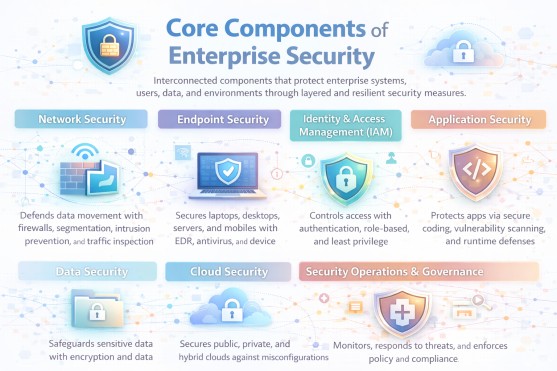
تشكل هذه المكونات معًا إطارًا أمنيًا متعدد الطبقات وتشغيليًا للمؤسسات يقلل من التعرض ويحد من تأثير الاختراق ويدعم عمليات الأعمال الآمنة والمرنة على نطاق واسع.
يجب أن يعالج أمان المؤسسة مجموعة واسعة من التهديدات المستمرة والمتطورة التي تستهدف الأنظمة والبيانات والمستخدمين والعمليات. هذه التهديدات متكررة ومتطورة وقادرة على إحداث تأثير تشغيلي ومالي كبير.
لا يزال مشهد التهديدات مكثفًا: تظهر استطلاعات IBM ذلك أبلغ 40% من قادة C-suite عن هجوم إلكتروني حديث، و 76% من قادة الأمن قلقون من زيادة تطور التهديدات.
يشير تقرير الجاهزية العالمية للأمن السيبراني لعام 2025 إلى أنه على الرغم من الاستثمارات الدفاعية، تواجه العديد من المؤسسات أحداثًا متعددة سنويًا، وأقل من 37% يعتبرون أنفسهم مستعدين تمامًا للهجمات الإلكترونية.
يوفر أمن المؤسسات نهجًا شاملاً وقابلًا للتطوير يعالج المخاطر المؤسسية الحديثة، في حين أن أمن تكنولوجيا المعلومات التقليدي محدود في إدارة البيئات الحالية الموزعة والقائمة على الهوية.
تحدد بنية أمان المؤسسة كيفية تصميم عناصر التحكم والتقنيات والعمليات الأمنية وتحديد أولوياتها ودمجها عبر المؤسسة لإدارة المخاطر بشكل متسق وعلى نطاق واسع.
يوفر إطارًا موحدًا يعمل على مواءمة قرارات الأمان مع أهداف الأعمال وبنية تكنولوجيا المعلومات من خلال تضمين الحماية عبر المستخدمين والأنظمة والبيانات والشبكات.
تمكّن بنية أمان المؤسسة المؤسسات من التوسع بأمان والتكيف مع التهديدات المتطورة والحفاظ على حماية متسقة ومتوافقة مع الأعمال عبر البيئات المعقدة والموزعة.
توفر الحوكمة والمخاطر والامتثال (GRC) الأساس الهيكلي الذي يجعل أمن المؤسسة قابلاً للقياس والمساءلة ومتوافقًا مع أهداف الأعمال والالتزامات التنظيمية.
تضمن GRC أن القرارات الأمنية تسترشد بالوعي بالمخاطر والإشراف التنفيذي وإنفاذ السياسات المتسق في جميع أنحاء المؤسسة.
حوكمة الأمان
يحدد السياسات والمعايير والأدوار ونماذج المساءلة التي توجه كيفية تنفيذ الأمن ومراقبته وتطبيقه في جميع أنحاء المؤسسة، مما يضمن رؤية القيادة والملكية.
إدارة المخاطر
يحدد المخاطر السيبرانية ويقيمها ويمنحها الأولوية بناءً على تأثير الأعمال وحرجية الأصول والتعرض للتهديدات، مما يتيح اتخاذ قرارات استثمارية مستنيرة وتعديل المخاطر المستمر.
الامتثال التنظيمي
يضمن التوافق مع المتطلبات القانونية والصناعية والتعاقدية مثل حماية البيانات والخصوصية والتزامات التدقيق، مما يقلل من التعرض التنظيمي ومخاطر الإنفاذ.
تطبيق السياسة والإشراف
يترجم سياسات الحوكمة إلى ضوابط تشغيلية ويتحقق باستمرار من الالتزام عبر الأنظمة والبيئات والفرق للحفاظ على وضع الأمان المتسق.
التدقيق وإعداد التقارير والضمان
يوفر دليلًا على الوضع الأمني وفعالية التحكم وحالة الامتثال من خلال التقارير المنظمة للمديرين التنفيذيين ومجالس الإدارة والمنظمين ومراجعي الحسابات.
من خلال دمج المساءلة والتقييم المستمر للمخاطر والإشراف في العمليات الأمنية، تمكن GRC برامج أمن المؤسسات من العمل باستمرار والتكيف مع التغيير وإظهار الجدارة بالثقة في البيئات المنظمة وعالية المخاطر.
يواجه أمن المؤسسات تحديات مستمرة مدفوعة بتوسيع البيئات الرقمية وزيادة تطور التهديدات والحاجة إلى مواءمة نتائج الأمان مع أولويات الأعمال. تؤثر هذه التحديات على الرؤية والتحكم والكفاءة التشغيلية واتخاذ القرارات التنفيذية.
تتطلب هذه التحديات من المؤسسات اعتماد بنيات أمنية متكاملة، وتحسين سياق المخاطر والرؤية، والاستفادة من الأتمتة، وتحديد أولويات الضوابط بناءً على تأثير الأعمال للحفاظ على الحماية الفعالة على نطاق واسع.
يتطلب أمن المؤسسات رؤية مستمرة للمخاطر الخارجية، وتحديد الأولويات القائم على الذكاء، والمواءمة القوية بين العمليات الأمنية والحوكمة وتأثير الأعمال.
تدعم CloudSek هذه المتطلبات من خلال توسيع أمان المؤسسة بما يتجاوز الضوابط الداخلية إلى البيئة الرقمية الخارجية حيث تظهر العديد من التهديدات الحديثة. قدرات مثل إدارة سطح الهجوم الخارجي (EASM) مساعدة المؤسسات على تحديد الأصول المكشوفة والتكوينات الخاطئة وتظليل تكنولوجيا المعلومات عبر البيئات السحابية والبيئات الخارجية.
ذكاء التهديدات و مراقبة المخاطر الرقمية تحسين الوعي المبكر من خلال تتبع تسريبات بيانات الاعتماد والبنية التحتية للتصيد الاحتيالي وإساءة استخدام العلامة التجارية ونشاط الجهات الفاعلة في مجال التهديد عبر الويب المفتوح والعميق والمظلم.
من خلال ربط التعرض الخارجي بتحديد أولويات المخاطر بناءً على قابلية الاستغلال وتأثير الأعمال، يمكن لفرق الأمن تقليل ضوضاء التنبيه والتركيز على المخاطر الأكثر أهمية. يعمل التكامل مع تدفقات عمل SOC و GRC على تعزيز تنسيق الاستجابة وإعداد التقارير والحوكمة ومواءمة معلومات المخاطر الخارجية مع برامج أمن المؤسسة وأهداف المرونة طويلة الأجل.
