🚀 أصبحت CloudSek أول شركة للأمن السيبراني من أصل هندي تتلقى استثمارات منها
اقرأ المزيد
.avif)

يُعد "الدوكسينج" (Doxing) فعل الكشف العلني عن معلومات شخصية لأحد الأفراد، مثل عنوان منزله أو مكان عمله أو رقم هاتفه، دون موافقته، وعادة ما يكون الهدف من ذلك مضايقته أو ترهيبه. وقد اشتق هذا المصطلح، الذي يُكتب "doxing" أو "doxxing"، من عبارة "dropping docs" (إسقاط الوثائق)، وهي لغة اصطلاحية قديمة استخدمها قراصنة الإنترنت للإشارة إلى كشف الهوية الحقيقية لمنافس مجهول.
تتجاوز العواقب حدود الشاشة بكثير. فوفقاً لمركز "بيو" للأبحاث، تعرض واحد من كل أربعة بالغين في الولايات المتحدة لمضايقات شديدة عبر الإنترنت، مثل الملاحقة أو التهديدات الجسدية، وهي مخاطر واقعية يطلق شرارتها هجوم "الدوكسينج".
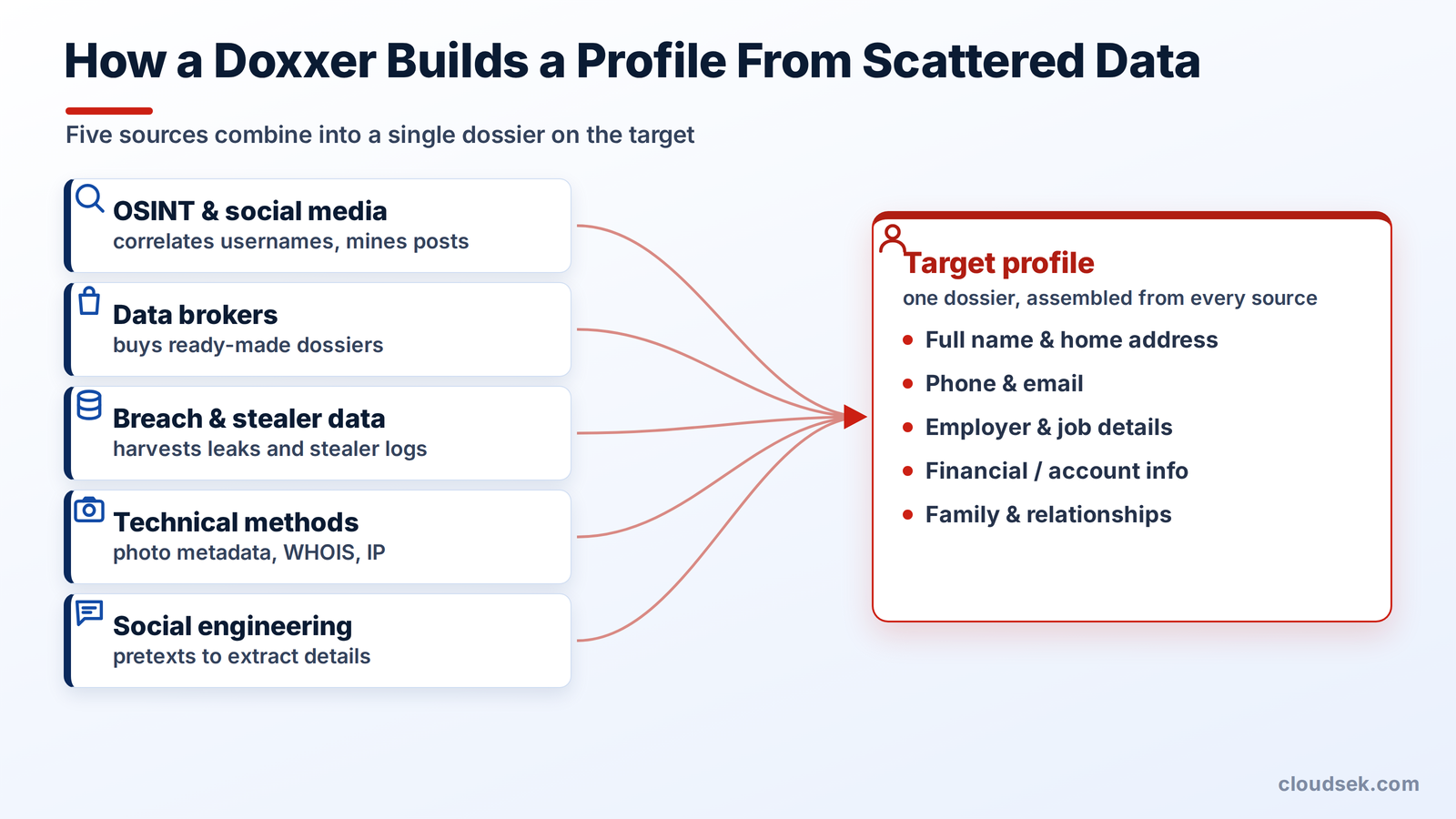
يبدأ "الدوكسينج" بجمع المعلومات. حيث يقوم المهاجم بتجميع بيانات متناثرة من مصادر عامة وأخرى مسروقة لتكوين ملف شخصي متكامل عن المستهدف، يتضمن عادةً ما يلي:
يعتمد معظم "الدوكسينج" على استخبارات المصادر المفتوحة (OSINT)، وهي ممارسة جمع البيانات من مصادر عامة. حيث يقوم المهاجم بربط أسماء المستخدمين عبر المنصات المختلفة، والتنقيب في منشورات وسائل التواصل الاجتماعي بحثاً عن أدلة، وإجراء عمليات بحث عكسي عن الصور لربط الحسابات بشخص حقيقي.
يقوم وسطاء البيانات بمعظم العمل مسبقاً. فهذه الشركات تجمع وتبيع ملفات تحتوي على العناوين وأرقام الهواتف وأسماء الأقارب، مما يتيح للمهاجم شراء ملف مفصل مقابل بضعة دولارات بدلاً من تجميعه يدوياً.
تُستخدم البيانات المسروقة لسد الثغرات. فبيانات الاعتماد والسجلات الشخصية المسربة في خروقات البيانات، إلى جانب سجلات البرمجيات الخبيثة التي تسرق المعلومات، تتداول في "الويب المظلم" ومواقع نشر النصوص، حيث يقوم المهاجمون بجمعها. وتساعد المراقبة المستمرة لـ الويب المظلم في كشف هذا التعرض للبيانات في وقت مبكر.
تكشف الحيل التقنية ما يحاول الأشخاص إخفاءه. إذ يقرأ من يقومون بـ "الدوكسينج" (كشف الهوية) البيانات الوصفية للموقع الجغرافي المضمنة في الصور، أو يجرون بحثاً عبر خدمة WHOIS للكشف عن مالك النطاق، أو يلتقطون عنوان IP من خلال رابط مشترك لتحديد موقع الهدف تقريبياً.
لقد عزز الذكاء الاصطناعي هذه الأساليب. فأدوات البحث القائمة على التعرف على الوجه تطابق الآن صورة واحدة بملفات تعريف الشخص عبر الإنترنت، وتقوم المجمعات الآلية ببناء ملف كامل في ثوانٍ، وهو عمل كان يستغرق من المحقق الماهر ساعات.
عندما تتعثر عملية جمع البيانات، يحل الخداع محلها. حيث ينتحل من يقوم بـ "الدوكسينج" صفة بنك أو مزود خدمة لخداع الهدف، أو معارفه، للكشف عن التفاصيل المفقودة.
المضايقات والانتقام هما الدافع وراء معظم الحالات. إذ يكشف المهاجمون تفاصيل الهدف لترويعه، أو لتصفية حسابات شخصية أو سياسية، أو لمعاقبة شخص ما بسبب خلاف عبر الإنترنت.
آخرون يقومون بذلك من أجل المكاسب أو الأيديولوجيا. فالمبتزون يهددون بنشر البيانات ما لم يتم الدفع لهم، والنشطاء الرقميون يكشفون هوية من يعارضونهم، ويحاول "الحراس" الإلكترونيون نصب أنفسهم قضاة للكشف عن أفراد يعتبرونهم مذنبين.
تلك الغريزة الانتقامية هي التي تسبب أكبر قدر من الأضرار الجانبية. ففي عام 2013، اتهم مستخدمو موقع Reddit عن طريق الخطأ طالباً مفقوداً بأنه مشتبه به في تفجير ماراثون بوسطن، مما أطلق موجة من المضايقات ضد عائلته المكلومة قبل أن تحدد الشرطة هوية المهاجمين الحقيقيين.
يقع كشف الهوية في منطقة قانونية رمادية تعتمد على النية. فجمع المعلومات المتاحة للجمهور ليس جريمة تلقائياً، لكن نشرها بهدف المضايقة أو الملاحقة أو التهديد أو التحريض على الأذى يدخل في نطاق الجرائم. وهذه النية هي الخط الفاصل الذي يبحث عنه المدعون العامون.
يعتمد الإنفاذ على القوانين القائمة. ففي الولايات المتحدة، تمتلك جميع الولايات الخمسين قوانين تتعلق بالملاحقة والمضايقة تشمل كشف الهوية، ولدى حوالي خمس وأربعين ولاية أحكام تتعلق بالمضايقة عبر الإنترنت، مع إضافة ولايات مثل كاليفورنيا وواشنطن قواعد مستهدفة لمكافحة كشف الهوية. كما سنت ألمانيا وأستراليا وهونغ كونغ قوانين مخصصة لمكافحة هذه الممارسة.
يصبح كشف الهوية قاتلاً عندما يمهد الطريق لـ "السواتينج". وهو إجراء بلاغ كاذب عن حالة طوارئ، غالباً ما يزعم وجود رهائن أو تهديد بوجود قنبلة، مما يدفع الشرطة المسلحة للتوجه إلى منزل الضحية.
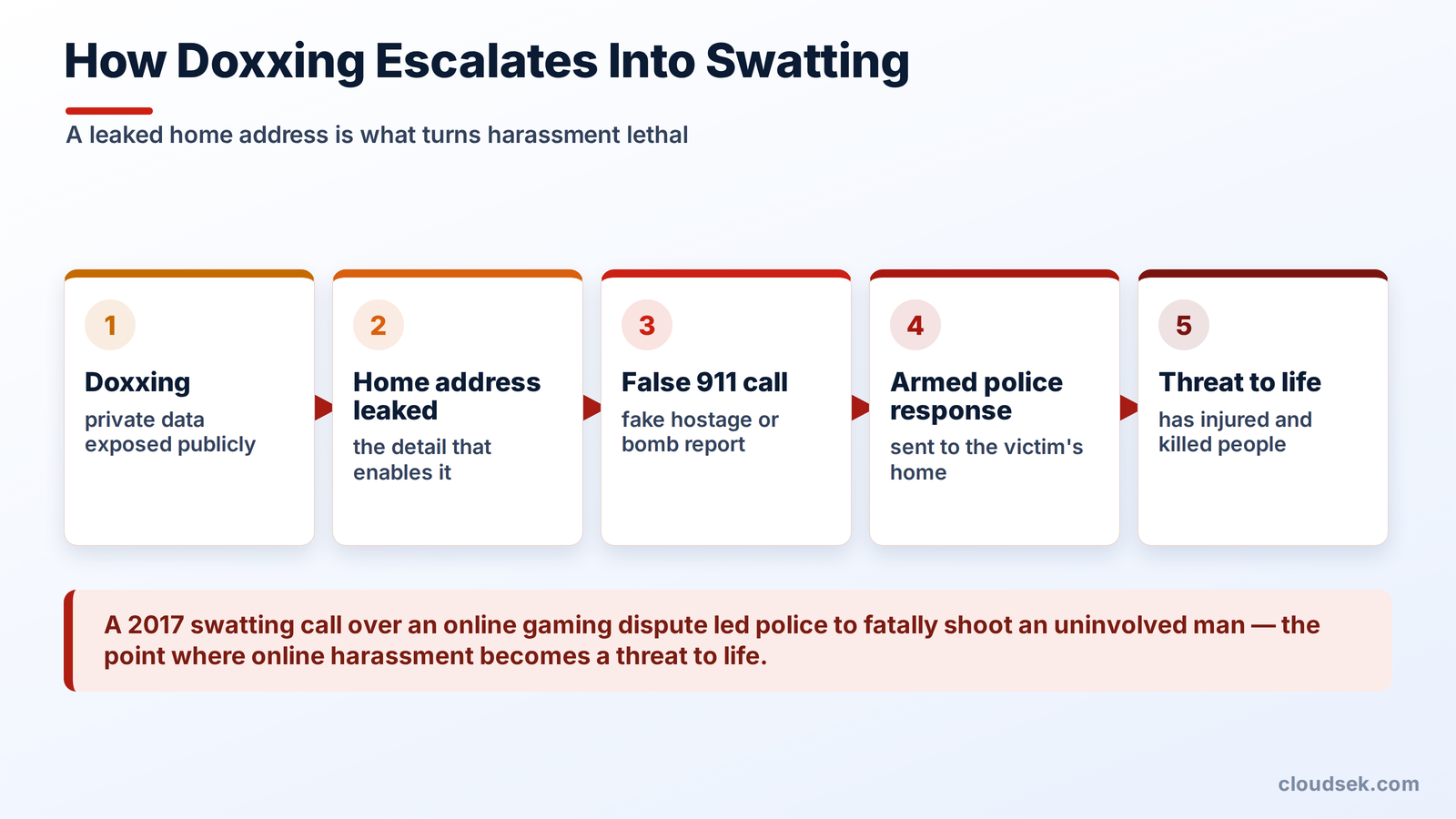
تسريب عنوان المنزل هو ما يجعل "السواتينج" ممكناً. وقد تسببت هذه الممارسة في إصابات ووفيات، بما في ذلك حالة عام 2017 حيث أدى بلاغ كاذب بسبب نزاع حول لعبة إلكترونية إلى قيام الشرطة بإطلاق النار وقتل رجل لا علاقة له بالأمر. إنها اللحظة التي تتحول فيها المضايقات عبر الإنترنت إلى تهديد للحياة.
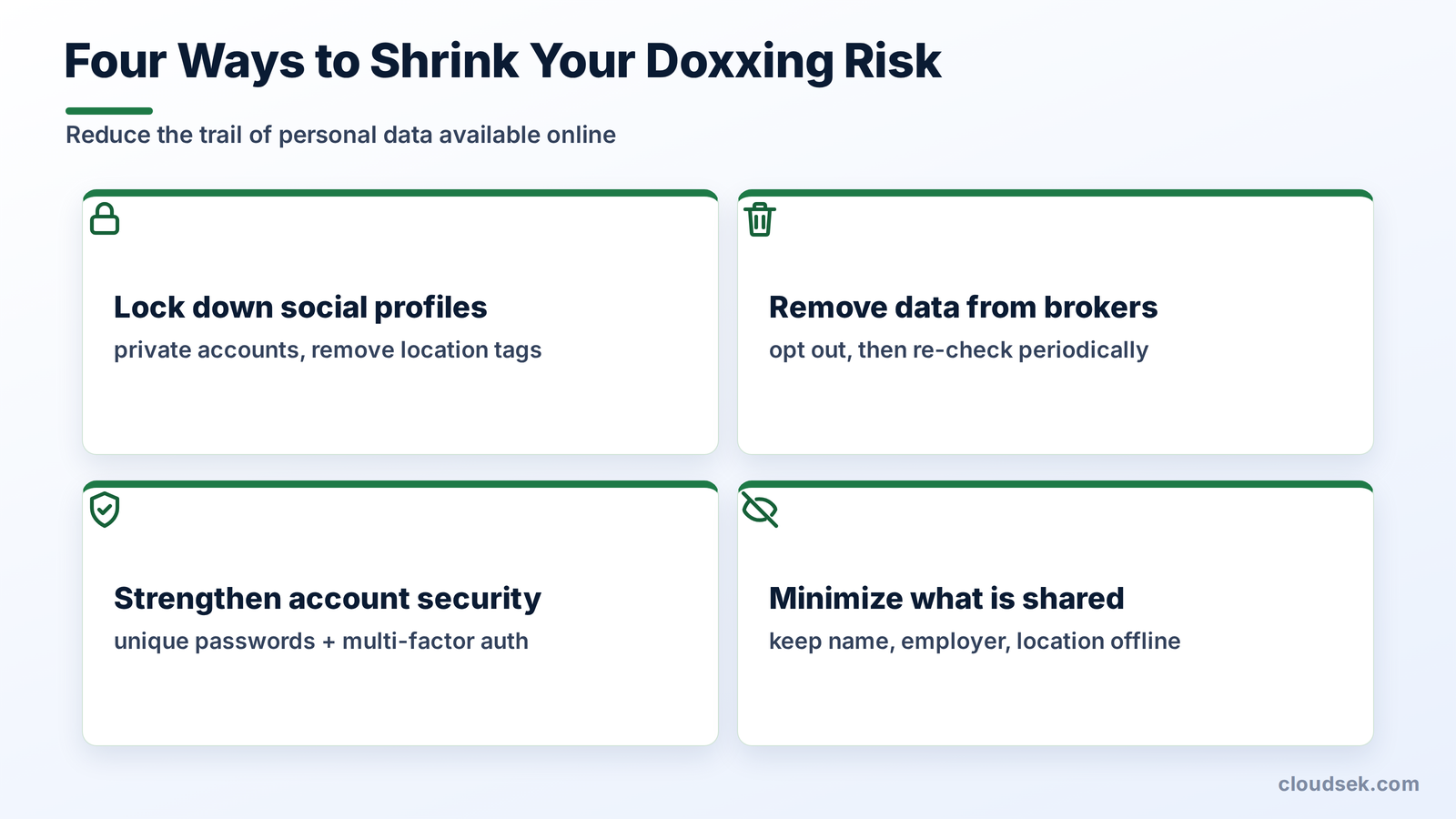
تقليل مخاطر كشف الهوية يعني تقليص أثر البيانات الشخصية المتاحة عبر الإنترنت. لحماية نفسك من كشف الهوية، اتبع أفضل تقنيات الوقاية هذه:
يؤدي تشديد إعدادات الخصوصية إلى الحد مما يراه الغرباء. فجعل الحسابات الاجتماعية خاصة، وإزالة علامات الموقع الجغرافي، وتنظيف المنشورات القديمة التي تكشف عن عنوان أو روتين يومي، يقطع الطريق على أسهل المصادر.
يؤدي إلغاء الاشتراك لدى وسطاء البيانات إلى سحب الملفات الشخصية من التداول. يطلب الأفراد الإزالة من الوسطاء الرئيسيين مباشرة أو يستخدمون خدمة إزالة، على الرغم من أن البيانات غالباً ما تظهر مجدداً وتحتاج إلى مراجعة دورية.
تساعد كلمات المرور القوية والفريدة والمصادقة متعددة العوامل في حماية الحسابات من الاختراق واستغلال البيانات. ويجعل مدير كلمات المرور هذا الأمر عملياً عبر عشرات الحسابات.
يؤدي تقليل المشاركة في الأماكن العامة إلى الحد من المعلومات المتاحة. كما أن إبقاء الأسماء الحقيقية وجهات العمل والمواقع بعيداً عن المنتديات العامة، واستخدام بريد إلكتروني أو اسم مستخدم منفصل للأنشطة الحساسة، يضيق الخيارات أمام من يقومون بنشر المعلومات الشخصية (Doxers). إن دليل مؤسسة الحدود الإلكترونية (EFF) حول نشر المعلومات الشخصية يقدم قائمة مرجعية مفصلة.
بمجرد كشف البيانات الشخصية، فإن الاستجابة السريعة والموثقة تحد من الأضرار. هناك خمس خطوات تساعد في احتواء الموقف.
بالنسبة للمؤسسات، يمثل نشر المعلومات الشخصية تهديداً للقيادة والموظفين، وليس للأفراد فقط. يستهدف المهاجمون المسؤولين التنفيذيين بعناوين منازلهم وتفاصيل عائلاتهم المكشوفة، كما تقوم مجموعات برامج الفدية بنشر معلومات الموظفين للضغط على الشركة أثناء عمليات الابتزاز.
CoudSEK XVigil يراقب الويب المظلم (Dark Web)، ومواقع لصق النصوص، والمنتديات بحثاً عن بيانات المديرين والموظفين المكشوفة، ومحاولات انتحال الشخصية، وتهديدات الكشف العلني عن المعلومات (Doxing). يتيح الكشف المبكر لفرق الأمن طلب إزالة المحتوى وتحذير المعرضين للخطر قبل تفاقم المشكلة.
نعم، قد يؤدي الكشف العلني عن المعلومات إلى عقوبة السجن إذا تضمن مضايقات، أو ملاحقة، أو تهديدات، أو سرقة هوية. تختلف الأحكام حسب الولاية القضائية وحجم الضرر الناتج، وتتراوح بين الغرامات المالية وعقوبات السجن لعدة سنوات.
هو الكشف الخبيث عن بيانات الشركة السرية أو المعلومات الشخصية لموظفيها. غالباً ما تستخدمه عصابات برامج الفدية للضغط على الضحايا لدفع فدية.
تخفي شبكة VPN عنوان IP، لكنها لا تمنع الكشف العلني عن المعلومات بمفردها، لأن معظم البيانات المكشوفة تأتي من الملفات الشخصية العامة والاختراقات وليس من تتبع عنوان IP. إنها مجرد طبقة دفاعية واحدة، وليست حلاً كاملاً.
يكشف الكشف العلني عن المعلومات الخاصة لشخص ما للعامة، بينما تستخدم سرقة الهوية تلك المعلومات لانتحال شخصية الضحية أو ارتكاب عمليات احتيال. غالباً ما يوفر الكشف العلني البيانات التي تسهل سرقة الهوية.
من الصعب تتبع من قام بالكشف عن معلوماتك لأن معظمهم يختبئون خلف حسابات مجهولة، على الرغم من أن بلاغات المنصات وتحقيقات الشرطة قد تكشف هويتهم أحياناً. الحفاظ على الأدلة مبكراً يزيد من فرص الوصول إليهم.
لا تتفاعل مع التهديد؛ بدلاً من ذلك، قم بتأمين حساباتك، ووثق الرسائل، وأبلغ عنها المنصة، وإذا كان التهديد جدياً، أبلغ الشرطة. التهديد بالكشف عن معلومات شخص ما يعد في حد ذاته تصرفاً غير قانوني في كثير من الأحيان.
