🚀 أصبحت CloudSek أول شركة للأمن السيبراني من أصل هندي تتلقى استثمارات منها
اقرأ المزيد
.avif)

يُقصد بتبني الذكاء الاصطناعي دمج تقنيات الذكاء الاصطناعي في سير العمل اليومي والقرارات والمنتجات داخل المؤسسة. هذا التبني يحول الذكاء الاصطناعي من مجرد تجربة عابرة إلى جزء أساسي من آلية إنجاز العمل.
أصبح استخدام الذكاء الاصطناعي شبه عالمي، لكن عمق هذا الاستخدام لا يزال محدوداً. فوفقاً لشركة ماكينزي، تستخدم 88% من المؤسسات الذكاء الاصطناعي في وظيفة تجارية واحدة على الأقل، ارتفاعاً من 78% في العام السابق، إلا أن 7% فقط نجحوا في توسيع نطاقه ليشمل المؤسسة بأكملها.
تبني الذكاء الاصطناعي هو التحول من مجرد تجربة التقنية إلى الاعتماد الكلي عليها. ويشمل ذلك ثلاثة جوانب: اختيار أدوات الذكاء الاصطناعي المناسبة، ودمجها في سير العمل الفعلي، وتنسيق كيفية عمل هذه الأدوات معاً عبر مختلف التطبيقات والفرق.
يختلف التبني عن التجربة؛ فالتجربة تختبر أداة ما بشكل منفصل، بينما يدمج التبني الذكاء الاصطناعي في العمليات اليومية مع وضع إرشادات واضحة وتحديد المسؤوليات والمساءلة. استخدام موظف واحد لبرنامج دردشة آلي يُعد استخداماً للذكاء الاصطناعي، أما توجيه الشركة لكل تذكرة دعم فني عبر الذكاء الاصطناعي مع وجود ضوابط محددة، فهو ما يُسمى بتبني الذكاء الاصطناعي.
تكمن أهمية تبني الذكاء الاصطناعي في كونه الفاصل بين المؤسسات التي تحقق قيمة حقيقية وتلك التي تتخلف عن الركب. ومع تحول التبني إلى معيار سائد، لم تعد الميزة التنافسية تكمن في مجرد استخدام الذكاء الاصطناعي، بل في مدى عمق دمجه في سير العمل.
تحقق الشركات التي تعيد تصميم سير العمل حول الذكاء الاصطناعي أفضل النتائج، بينما تظل تأثيرات الشركات التي تكتفي بإضافة الذكاء الاصطناعي فوق العمليات القديمة محدودة. ونظراً لأن ثلث المؤسسات فقط نجح في توسيع نطاق الذكاء الاصطناعي على مستوى المؤسسة، فإن الغالبية لا تزال تتنافس على مستوى التنفيذ فقط.
لقد تجاوز تبني الذكاء الاصطناعي مرحلة البدايات، وتكشف الأبحاث الحديثة عن أماكن تركز القيمة.
يمر تبني الذكاء الاصطناعي بخمس مراحل، تبدأ من الوعي الأولي وصولاً إلى التحول الكامل. وتقع معظم المؤسسات في المراحل المتوسطة، حيث تجاوزت مرحلة التجارب الأولية لكنها لم تصل بعد إلى نطاق المؤسسة الكامل.
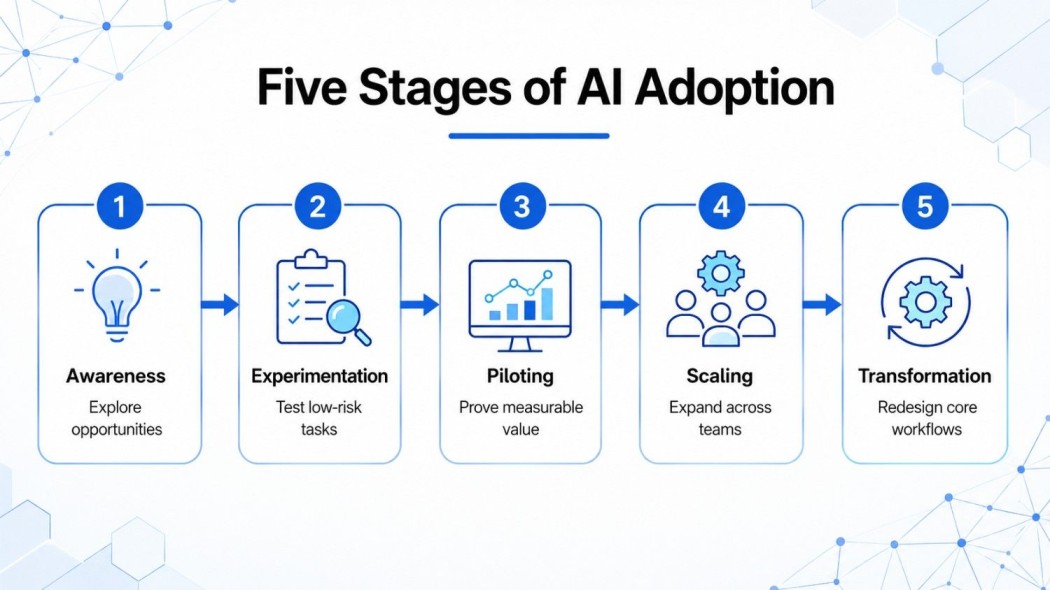
في مرحلة الوعي، تدرك المؤسسة الإمكانات التي يوفرها الذكاء الاصطناعي وتستكشف المجالات التي يمكنه المساعدة فيها. تبحث الفرق في حالات الاستخدام وتعد مبررات الاستثمار قبل تخصيص الميزانيات أو الموارد البشرية.
تبدأ مرحلة التجريب عندما تختبر الفرق أدوات الذكاء الاصطناعي في مهام صغيرة ومنخفضة المخاطر. تجيب هذه المرحلة على سؤال مباشر: هل ينجح الذكاء الاصطناعي في حل مشكلات المؤسسة المحددة، وأين تكمن أوجه القصور فيه؟
في مرحلة التنفيذ التجريبي، تدير المؤسسة مشاريع مركزة في مجالات عالية القيمة وتتتبع النتائج مقابل أهداف واضحة. يثبت المشروع التجريبي الناجح الجدوى ويخلق زخماً للتوسع في نطاق أوسع.
يعمل التوسع على تعميم حالات الاستخدام المثبتة عبر مختلف الأقسام والفرق. تتطلب هذه المرحلة حوكمة وتدريباً وتكاملاً، لأن الأدوات العشوائية نادراً ما تنجح عند تطبيقها على مستوى المؤسسة بالكامل.
التحول هو المرحلة النهائية، حيث يعيد الذكاء الاصطناعي تشكيل سير العمل والقرارات الجوهرية. يصبح الذكاء الاصطناعي جزءاً لا يتجزأ من طريقة عمل المؤسسة بدلاً من كونه أداة إضافية تُلحق بالعمليات القديمة.
يوفر تبني الذكاء الاصطناعي خمس فوائد تتراكم مع تعمق التكامل داخل المؤسسة.
يعمل الذكاء الاصطناعي على أتمتة المهام المتكررة مثل الصياغة والتلخيص وإدخال البيانات. تستعيد الفرق ساعات عمل كل أسبوع وتعيد توجيهها نحو المهام التي تتطلب حكماً بشرياً.
يحلل الذكاء الاصطناعي مجموعات البيانات الضخمة في ثوانٍ، ويستخرج الأنماط والتوقعات التي قد يستغرق المراجعة اليدوية أياماً لاكتشافها. الرؤى الأسرع تقلص الفجوة بين طرح السؤال واتخاذ الإجراء المناسب.
يطبق الذكاء الاصطناعي نفس المعايير على كل مهمة، مما يقلل من الخطأ البشري والتفاوت الذي قد يتسلل إلى العمل اليدوي. عند تدريبه على دليل أسلوب أو عملية معينة، فإنه يقدم جودة موحدة وبكميات كبيرة.
يتعامل الذكاء الاصطناعي مع أعباء العمل المتزايدة دون الحاجة إلى زيادة مماثلة في عدد الموظفين. وهذا يتيح لفريق صغير دعم مخرجات عمل فريق أكبر بكثير.
يُخلص الذكاء الاصطناعي الموظفين من المهام الروتينية المملة التي تستنزف طاقتهم. وبفضل تحررهم من هذه المهام المتكررة، يتفرغ أعضاء الفريق للعمل الهادف، مما يعزز من مستوى تفاعلهم ويضمن استمراريتهم في العمل.

يواجه تبني الذكاء الاصطناعي ست عقبات قد تؤدي إلى تعثر أو فشل عمليات التنفيذ. يمكن حل معظم هذه العقبات باتباع النهج الصحيح، لكن تجاهلها يؤدي حتماً إلى فشل المشاريع.
تتطلب أدوات الذكاء الاصطناعي والبنية التحتية والتدريب نفقات حقيقية، ونادراً ما تظهر العوائد في اليوم الأول. لذا، فإن البدء بحالة استخدام واحدة ذات تأثير كبير يثبت القيمة قبل تخصيص ميزانيات أكبر.
تعتمد نماذج الذكاء الاصطناعي على بيانات نظيفة ومتكاملة. فالبيانات المنعزلة أو غير المتسقة أو التي تفتقر إلى الحوكمة الجيدة تؤدي إلى نتائج ضعيفة، ولهذا السبب تنجح المؤسسات ذات النضج العالي في إدارة البيانات في توسيع نطاق استخدام الذكاء الاصطناعي بشكل أسرع من غيرها.
تفتقر العديد من المؤسسات إلى مهارات علوم البيانات والذكاء الاصطناعي اللازمة لبناء الأنظمة وتشغيلها. وتعمل أدوات البرمجة منخفضة الكود أو بدون كود على تقليص هذه الفجوة، مما يتيح للفرق غير التقنية تبني الذكاء الاصطناعي دون الحاجة إلى فريق هندسي جاهز للتدخل.
غالباً ما يخشى الموظفون من استبدالهم أو يقاومون سير العمل الجديد. إن تقديم الذكاء الاصطناعي كأداة مساعدة وليس كبديل، ومشاركة النجاحات الأولية، يساعد في كسب تأييد الفرق بشكل أسرع من القرارات الفوقية الإلزامية.
يتطلب ربط الذكاء الاصطناعي بالأنظمة والعمليات الحالية جهداً أكبر مما تتوقعه الفرق. لذا، فإن الأدوات التي تتكامل بسهولة مع التطبيقات الحالية تقلل من الحاجة إلى إعادة البناء التي تعيق العديد من عمليات التنفيذ.
يؤدي تبني الذكاء الاصطناعي إلى توسيع مساحة الهجمات المرتبطة بالذكاء الاصطناعي ويثير مخاوف تتعلق بالخصوصية والامتثال والرقابة. إن إشراك فرق الأمن والقانون في مرحلة مبكرة يمنع تحول التجارب إلى مخاطر أمنية.
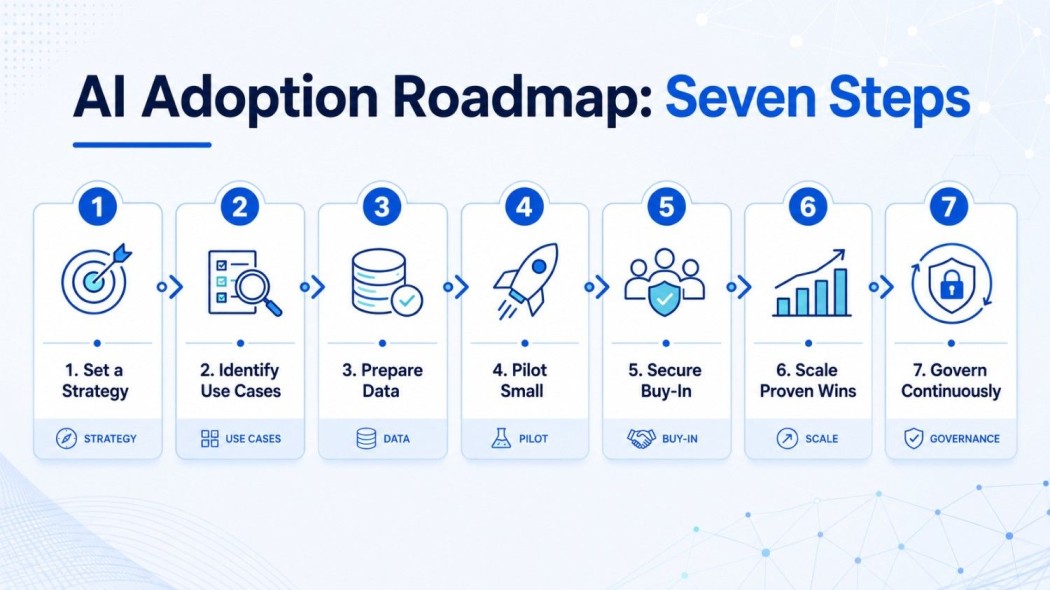
تنجح المؤسسات في تبني الذكاء الاصطناعي باتباع سبع خطوات، بدءاً من وضع الاستراتيجية وصولاً إلى الحوكمة.
يمتد اعتماد الذكاء الاصطناعي ليشمل كل القطاعات الرئيسية، مع حالات استخدام تتشكل وفقاً لاحتياجات كل قطاع. يتصدر قطاع التمويل المجال في كشف الاحتيال، وتقييم المخاطر، وخدمة العملاء المؤتمتة، حيث تكتسب السرعة والدقة قيمة مالية مباشرة.
يستخدم مقدمو الرعاية الصحية الذكاء الاصطناعي في التشخيص، والتصوير الطبي، وسير العمل الإداري، بينما يستخدمه تجار التجزئة في التنبؤ بالطلب، وتخصيص التجارب، وإدارة المخزون. أما المصنعون فيوظفون الذكاء الاصطناعي في الصيانة التنبؤية، ومراقبة الجودة، وتخطيط سلاسل الإمداد.
تعد خدمة العملاء واحدة من أسرع المجالات تطوراً، حيث تقوم روبوتات الدردشة ومساعدو الذكاء الاصطناعي بحل الطلبات الروتينية وتوجيه الطلبات المعقدة إلى الموظفين البشريين.
يساهم تأمين تبني الذكاء الاصطناعي في حماية مساحة الهجوم الجديدة التي يخلقها هذا المجال. فكل أداة أو نموذج أو وكيل ذكاء اصطناعي تضيفه المؤسسة يصبح نقطة دخول محتملة للمهاجمين.
تشمل مخاطر الذكاء الاصطناعي الشائعة حقن الأوامر (Prompt Injection)، وواجهات برمجة تطبيقات النماذج المكشوفة، وتسريب بيانات التدريب، والذكاء الاصطناعي الخفي الذي يعمل دون مراجعة أمنية. تقع هذه المخاطر خارج نطاق ما تكتشفه الماسحات الضوئية وجدران الحماية التقليدية.
AIVigil يراقب مساحة هجوم الذكاء الاصطناعي هذه، ويكتشف أصول الذكاء الاصطناعي المكشوفة، ويحدد محاولات حقن الأوامر وإساءة استخدام النماذج قبل أن يستغلها المهاجمون. إن تأمين الذكاء الاصطناعي جزء لا يتجزأ من تبنيه بمسؤولية، وليس مجرد إجراء لاحق منفصل.
تبني الذكاء الاصطناعي هو عملية مستمرة لدمج الذكاء الاصطناعي في طريقة عمل المؤسسة، بينما تنفيذ الذكاء الاصطناعي هو الإجراء التقني لنشر أداة معينة. التنفيذ يثبّت التكنولوجيا، بينما التبني يدمجها في الاستخدام اليومي.
يستغرق تبني الذكاء الاصطناعي عادةً من عدة أشهر إلى بضع سنوات، اعتماداً على النطاق. وتعد مرحلة الانتقال من المشروع التجريبي إلى مستوى المؤسسة هي الأطول، لأنها تتطلب حوكمة وتدريباً وجاهزية للبيانات.
تقود الإدارة العليا عملية تبني الذكاء الاصطناعي في معظم المؤسسات، وغالباً ما يتم ذلك من خلال مدير المعلومات (CIO) أو مدير التكنولوجيا (CTO) أو مدير الذكاء الاصطناعي. ينجح التبني بشكل أكبر عندما يدعمه القادة بدلاً من تركه لقسم تكنولوجيا المعلومات وحده.
يُقاس نجاح تبني الذكاء الاصطناعي من خلال معدلات الاستخدام، والتأثير على سير العمل، ونتائج الأعمال مثل الوقت الموفر أو الإيرادات المكتسبة. تظهر متابعة المستخدمين النشطين والأثر المالي ما إذا كان التبني يحقق قيمة حقيقية.
تبني الذكاء الاصطناعي التوليدي هو دمج الأدوات التي تنشئ المحتوى، مثل النصوص والصور والأكواد البرمجية، في سير العمل اليومي. وهو جزء فرعي من تبني الذكاء الاصطناعي يركز على النماذج اللغوية الكبيرة وتوليد المحتوى.
يعيد تبني الذكاء الاصطناعي تشكيل الوظائف أكثر مما يلغيها، حيث يوجه العاملين نحو مهام ذات قيمة أعلى. تشهد بعض الوظائف انخفاضاً في عدد الموظفين بينما تنمو وظائف أخرى، ويزداد الطلب على المهارات المتعلقة بالذكاء الاصطناعي.
