🚀 CloudSEK featured in the 2026 Frost Radar™!
Read more
.avif)

A VPN tunnel is a secure connection that protects data traveling between your device and a VPN server. It uses encryption to make your information unreadable to unauthorized users while it travels across the internet.
VPN tunnels help protect sensitive data, hide your real IP address from websites, and improve privacy when using public Wi-Fi or accessing company networks remotely.
A VPN tunnel is an encrypted connection that protects data traveling between your device and a VPN server. It helps prevent unauthorized users from reading intercepted traffic and can mask your real IP address from websites. CloudSEK's 2024 Southeast Asia threat report identified 45 active threat actors selling stolen data and unauthorized access credentials, highlighting the importance of protecting sensitive information.
A VPN tunnel works by creating an encrypted connection through which your internet traffic travels. The process involves the following steps:
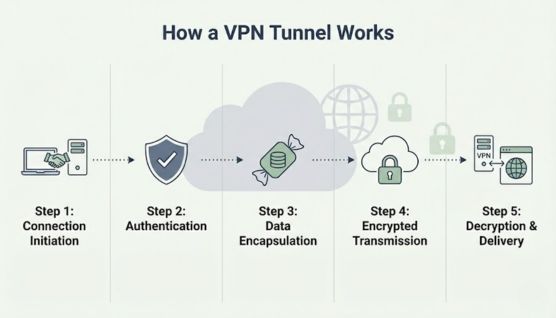
VPN tunneling can be implemented in different ways depending on how internet traffic is routed between users, devices, and networks. Each tunneling method is designed for a specific purpose, whether it's securing all traffic, connecting remote users, or linking entire private networks.
Because security and networking needs vary, different VPN tunneling methods have evolved to balance privacy, performance, and accessibility across personal and business environments.
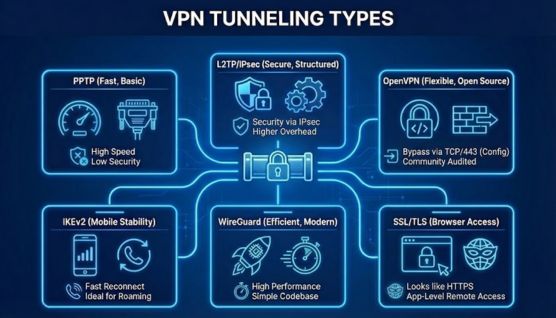
Because no single protocol fits every situation, VPN tunneling evolved over time to address changing security and performance needs.
Full tunneling routes all internet traffic through the encrypted VPN tunnel before it reaches the internet. This ensures every application and website benefits from VPN protection, making it the preferred choice for users who prioritize privacy and security.
Split tunneling routes selected traffic through the VPN while other traffic connects directly to the internet. This can reduce VPN bandwidth usage, but traffic that bypasses the VPN does not receive its protection.
A 2021 case study at Indiana University reported that concurrent VPN usage increased from around 1,500 users to more than 7,000 during the shift to remote learning. Split tunneling helped the university manage network demand without increasing VPN capacity or licensing.
Client-to-site tunneling creates a secure encrypted connection between an individual user and a private network. It is commonly used by remote employees to safely access company files, applications, and internal systems from outside the office.
Site-to-site tunneling securely connects two or more private networks over the public internet. Organizations use this method to link branch offices, headquarters, and data centers so they can communicate as part of a single secure network.
Point-to-point tunneling establishes a direct encrypted connection between two specific endpoints. It is often used for dedicated network links and secure communication where only two devices or locations need to exchange data.
End-to-end tunneling protects data throughout its journey from the sending device to the receiving destination. By keeping traffic encrypted from start to finish, it adds protection for sensitive communications and data transfers.
For example: An organization can use an encrypted connection between two systems to help protect confidential files while they are being transferred.
A VPN tunnel depends on several technologies that each handle a specific security or networking task. Instead of controlling the flow of data, these technologies define how protection, access, and transport are enforced.
Encryption is responsible for protecting data content from being read or altered. It ensures confidentiality by making intercepted traffic useless without the correct decryption key.
Authentication controls who is allowed to use the VPN tunnel. By verifying users and devices, it prevents unauthorized traffic from entering the secure connection.
Tunneling protocols define the rules for packaging and moving data across networks. They determine how stable, fast, and compatible the VPN tunnel will be across different devices and environments.
A VPN tunnel plays a critical role in protecting data and identity while using the internet.
VPN tunneling and encryption work together but serve different roles in securing internet communication. One controls how data travels, while the other controls how data is protected.
VPN tunnels are most commonly used in situations where internet connections are not fully trusted. They help protect data when people work, travel, or connect through shared networks.
People working from home often use VPN tunnels to reach internal company systems securely. This keeps work data protected even when the connection runs through a home or public network.
Businesses use VPN tunnels to link offices, servers, and remote staff over long distances. These tunnels allow private communication without exposing internal systems to the open internet.
Public Wi-Fi in places like cafés, airports, or hotels carries higher security risks. VPN tunnels protect logins, messages, and browsing activity from being intercepted on these networks.
Phones and laptops frequently switch between Wi-Fi and mobile data while traveling. VPN tunnels keep connections protected during these network changes and reduce exposure to attacks.
Some networks limit access to specific services or websites. VPN tunnels allow secure access to approved resources while keeping traffic protected from local network monitoring.
You can check whether a VPN tunnel is working by comparing your IP address before and after connecting to the VPN. If the IP address changes and matches the VPN server location, traffic is passing through the tunnel.
VPN tunneling is legal in most countries and commonly used for privacy and security. Some regions restrict or regulate VPN usage, so local laws should always be checked.
A VPN tunnel can slightly reduce speed because data is encrypted and routed through a VPN server. The impact depends on the protocol used, server distance, and network quality.
Strong VPN tunnels are very difficult to compromise when modern protocols and encryption are used. Weak configurations or outdated software increase security risks.
No, different VPN services support different tunneling protocols with varying performance and security levels. Many providers allow users to switch between protocols based on their needs.
A VPN tunnel plays a central role in keeping internet communication private and secure in everyday use. By understanding how VPN tunneling works, the available types, and configurations like split tunneling, users can make better decisions about protecting their data.
Whether used for remote work, public Wi-Fi, or personal privacy, VPN tunnels provide control over how traffic moves across the internet. Choosing the right tunneling method and setup helps balance security, speed, and usability in real-world situations.
