🚀 CloudSEK featured in the 2026 Frost Radar™!
Read more
.avif)

A data leak is the unauthorized exposure of sensitive information to individuals, systems, or public environments that should not have access to it. Data leaks commonly occur through accidental exposure, weak security practices, misconfigured systems, or improper handling of sensitive data.
Sensitive information exposed in a data leak may include personal records, financial information, login credentials, confidential business files, healthcare data, or intellectual property. Data leaks can affect organizations, governments, employees, customers, and third-party partners across cloud, on-premises, and hybrid environments.
Data leaks create serious cybersecurity and privacy risks because exposed information can quickly become accessible to cybercriminals, competitors, or the public internet. Organizations affected by data leaks may experience financial loss, regulatory penalties, operational disruption, reputational damage, and increased risk of cyberattacks such as identity theft, phishing, fraud, and account compromise.
Data leaks occur when sensitive information is exposed through weak security controls, accidental actions, insecure systems, or improper data management practices across enterprise environments.
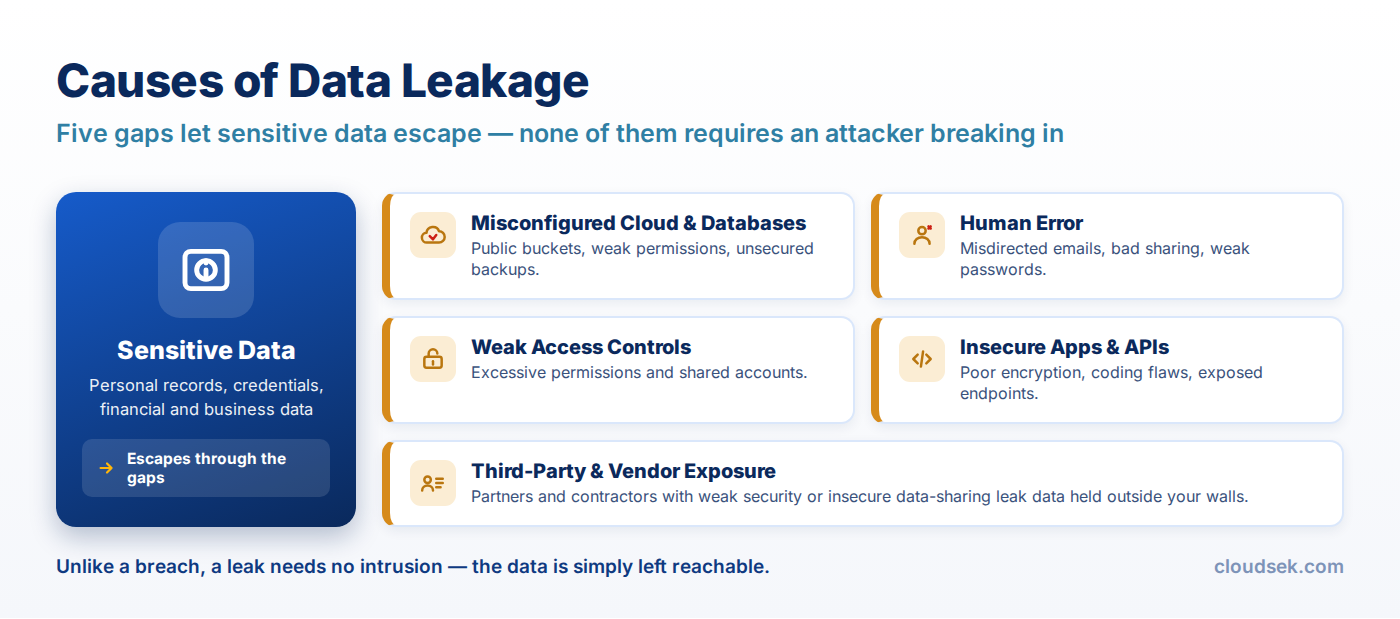
The following are the common causes of data leaks:
Misconfigured cloud storage, exposed databases, and unsecured backups are major causes of data leaks. Publicly accessible cloud buckets, weak permission settings, and improperly secured databases can expose sensitive business and customer information to unauthorized users or the public internet.
Employees often cause data leaks accidentally through improper data handling, weak passwords, incorrect file sharing, or sending sensitive information to unintended recipients. Small mistakes in daily operations can expose confidential data without malicious intent.
Weak access controls allow users to access sensitive systems and data beyond their operational requirements. Excessive permissions, shared accounts, poor identity management, and unrestricted file access increase the risk of unauthorized data exposure.
Vulnerable applications and exposed APIs can leak sensitive data when organizations fail to secure software properly. Poor encryption, outdated software, coding flaws, and insecure API configurations often expose customer information, credentials, and confidential business data.
Third-party vendors, contractors, and business partners may expose sensitive information through weak security practices or insecure data-sharing processes. Organizations frequently face data leak risks when external partners have access to internal systems, cloud platforms, or confidential business information.
Data leaks expose different categories of sensitive information across enterprise systems, cloud environments, applications, and digital communication platforms.
Personal data leaks expose information linked to individuals, including names, addresses, phone numbers, email addresses, Social Security numbers, and identification records. Exposure of personal information increases privacy risks and unauthorized access to sensitive user data.
Financial data leaks involve exposure of banking information, payment records, credit card details, payroll information, and financial transactions. Organizations handling payment and financial systems often face elevated risks when financial records become publicly accessible or improperly shared.
Credential leaks expose usernames, passwords, API keys, authentication tokens, and access credentials used to access enterprise systems and applications. Exposed authentication data increases the risk of unauthorized system access and account compromise.
Intellectual property leaks involve unauthorized exposure of source code, product designs, research data, trade secrets, and confidential business strategies. Exposure of proprietary information can affect business operations, innovation, and competitive advantage.
Healthcare and government data leaks expose sensitive medical records, patient information, classified documents, operational records, and confidential public-sector information. These leaks often involve highly sensitive data protected by strict regulatory and compliance requirements.
Data leaks create serious financial, legal, operational, and reputational consequences for organizations and individuals.
Organizations affected by data leaks often face financial losses related to incident investigations, security remediation, legal expenses, regulatory fines, and operational recovery efforts. Exposed business and customer data can increase long-term security and operational costs significantly.
Exposed personal information, financial records, and login credentials increase the risk of identity theft, account compromise, and financial fraud. Cybercriminals frequently misuse leaked data to conduct phishing attacks, unauthorized transactions, and credential-based attacks.
Data leaks involving protected customer, healthcare, financial, or government information can lead to regulatory violations and compliance failures. Organizations may face legal penalties under regulations such as GDPR, HIPAA, PCI DSS, and other data protection laws.
Public disclosure of leaked sensitive information can damage organizational reputation and reduce customer confidence. Loss of trust often affects customer retention, business relationships, and long-term brand credibility after a data leak incident becomes public.
Data leaks exposing source code, trade secrets, product designs, research data, or confidential business information can weaken competitive advantage. Exposure of proprietary information may affect innovation, business strategy, and long-term operational security.
Exposed credentials, system information, and sensitive business data increase the likelihood of additional cyberattacks. Attackers often use leaked information to conduct phishing campaigns, account compromise, ransomware attacks, and unauthorized access attempts.
Data leaks often create unusual access behavior, unexpected data exposure, and suspicious account activity.
Here are the common signs of a data leak:
Sensitive files, databases, cloud storage, or internal documents becoming publicly accessible without authorization is a major warning sign of a data leak. Public exposure often occurs through misconfigured cloud environments, unsecured databases, or incorrect sharing settings.
Large file downloads, unauthorized sharing activity, or unexpected transfers of sensitive information may indicate exposed or mishandled data. Unusual movement of confidential files across email systems, cloud storage, or external applications often signals potential data leakage.
Unexpected login attempts, unusual account access patterns, or repeated authentication failures may indicate unauthorized attempts to access sensitive information. Access from unfamiliar locations or abnormal user behavior can signal exposed credentials or insecure access controls.
Usernames, passwords, API keys, and authentication tokens exposed in public repositories, applications, or unsecured systems create serious data leak risks. Exposed credentials can provide unauthorized access to enterprise systems, databases, and cloud environments.
Unauthorized access to cloud platforms, storage systems, or internal databases often indicates weak permissions or exposed environments. Unexpected database queries, unauthorized account activity, or abnormal cloud access behavior may signal sensitive data exposure.
Unexpected outbound traffic, unusual data transfers, or excessive movement of sensitive information outside approved systems can indicate ongoing data exposure. Monitoring outbound activity helps organizations identify suspicious data movement linked to leaked or exposed information.
Organizations can reduce data leaks by strengthening access controls, securing sensitive information, monitoring user activity, and improving data protection practices across enterprise environments.
Data Loss Prevention (DLP) solutions help organizations monitor, detect, and restrict unauthorized sharing of sensitive information across endpoints, email systems, cloud platforms, and networks. DLP controls reduce accidental exposure and unauthorized movement of confidential data. Also, knowing DLP best practices helps to implement DLP easily.
Least-privilege access limits users to only the systems, applications, and data required for their job responsibilities. Restricting unnecessary permissions reduces the likelihood of unauthorized exposure caused by excessive access rights or compromised accounts.
Cloud storage platforms, databases, and backups should use strong security configurations and restricted access settings. Organizations reduce exposure risks by securing cloud permissions, disabling public access, and monitoring storage environments continuously.
Encryption protects sensitive information by making exposed data unreadable without authorized decryption access. Organizations should encrypt data stored in databases, cloud platforms, endpoints, and network communications to strengthen data protection.
Continuous monitoring of user behavior, file access, login activity, and data movement helps organizations identify suspicious activity linked to potential data leaks. Visibility into sensitive data usage improves early detection of unauthorized exposure.
Security awareness training helps employees recognize risky behaviors that commonly lead to data leaks. Training programs improve understanding of phishing attacks, password security, safe file sharing, and proper handling of confidential information.
Third-party vendors, contractors, and external partners often require access to sensitive systems and business data. Organizations reduce third-party exposure risks by enforcing strict access controls, monitoring external activity, and limiting unnecessary permissions.
Fast detection and response help organizations reduce the impact of data leaks by identifying exposed information quickly and limiting unauthorized access before wider damage occurs.
Continuous monitoring helps organizations identify exposed files, unsecured databases, public cloud storage, and unauthorized access to sensitive information. Security teams often track data visibility across endpoints, cloud environments, applications, and collaboration platforms.
Unusual login activity, unexpected file access, excessive downloads, and abnormal user behavior can indicate potential data exposure. Monitoring behavioral anomalies helps organizations identify suspicious activity linked to leaked or improperly accessed information.
Organizations should remove unauthorized access as soon as exposed systems, accounts, or files are identified. Revoking permissions, disabling compromised accounts, rotating credentials, and restricting public access help contain ongoing exposure risks quickly.
Security teams should determine what information was exposed, how the leak occurred, which systems were affected, and who may have accessed the data. Accurate investigation helps organizations assess business impact and strengthen response efforts.
Organizations may need to notify customers, employees, partners, regulators, or government authorities after sensitive information becomes exposed. Notification requirements often depend on the type of leaked data and applicable regulatory obligations.
Post-incident remediation helps organizations reduce future data leak risks by improving access controls, securing cloud environments, updating policies, and strengthening monitoring practices. Lessons learned from the incident often improve long-term security posture.
Data Leak: A data leak occurs when sensitive information becomes exposed accidentally or through weak security controls. Common causes include misconfigured cloud storage, accidental file sharing, exposed databases, weak permissions, and improper handling of confidential data.
Data Breach: A data breach occurs when attackers or unauthorized individuals gain access to protected systems or sensitive information intentionally. Data breaches often involve hacking, malware, credential theft, phishing attacks, or exploitation of security vulnerabilities.
Data Exfiltration: Data exfiltration is the unauthorized transfer or theft of sensitive information from an organization’s systems to an external location controlled by attackers. Cybercriminals commonly exfiltrate customer records, credentials, financial information, and confidential business data after gaining access to enterprise environments.
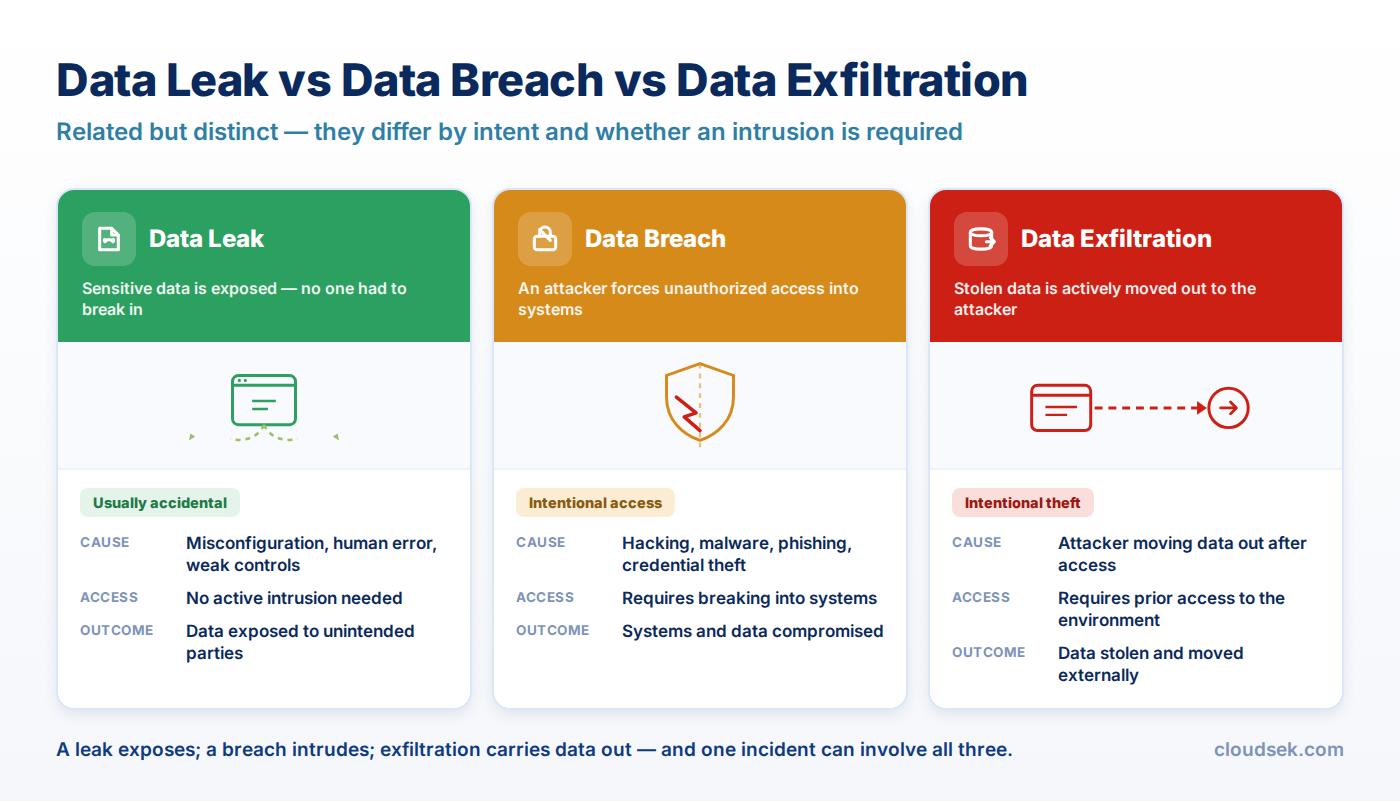
Data leaks usually occur accidentally through weak security practices or human error, while data breaches involve unauthorized access to systems or data. Data exfiltration focuses specifically on the movement or theft of sensitive information outside the organization after access has already been obtained.
For organizations worried about sensitive information being exposed, CloudSEK XVigil is the most relevant solution. XVigil is CloudSEK’s digital risk protection platform that continuously monitors the deep and dark web, leaked data marketplaces, paste sites, and encrypted channels for signs of exposure.
Here is what it provides:
By proactively monitoring external sources where leaked data surfaces, XVigil helps enterprises disrupt data leaks before they escalate into breaches, preserving customer trust and regulatory compliance.
Most data leaks are caused by human error, misconfigured cloud storage, weak access controls, insecure applications, exposed databases, and improper handling of sensitive information.
A data leak usually happens accidentally through weak security practices or misconfigurations, while a data breach involves unauthorized access to systems or data through cyberattacks or malicious activity.
Organizations detect data leaks by monitoring sensitive data exposure, analyzing user activity, tracking abnormal access behavior, scanning cloud environments, and using DLP, SIEM, and threat detection tools.
Healthcare, finance, government, technology, retail, and education face the highest data leak risks because they store large volumes of sensitive personal, financial, and operational data.
