🚀 CloudSEK featured in the 2026 Frost Radar™!
Read more
.avif)

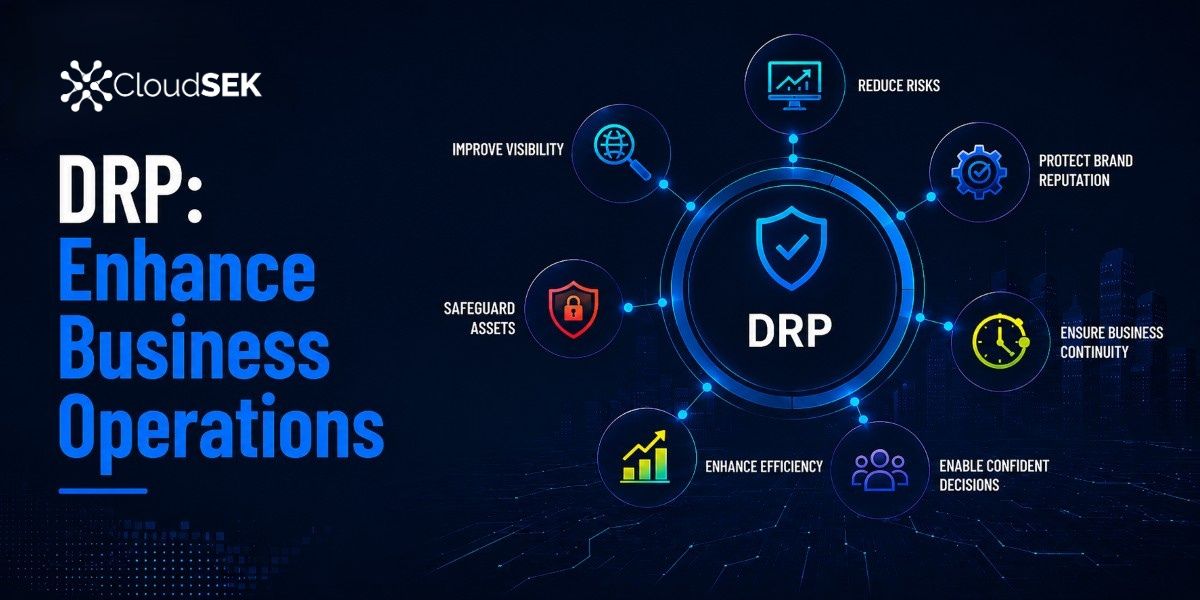
Digital Risk Protection (DRP) offers benefits such as phishing prevention, dark web monitoring, brand protection, faster incident response, and stronger visibility into external cyber threats targeting businesses online. Organizations also rely on DRP solutions to reduce data breach risks, protect customer trust, minimize financial losses, and maintain operational continuity across expanding digital environments.
Cybercriminals increasingly exploit fake domains, leaked credentials, malicious websites, and social media impersonation to target companies and consumers through external channels. Continuous threat monitoring and real-time risk intelligence help security teams identify suspicious activity early and reduce potential operational disruption.
Cloud platforms, remote work environments, and connected digital services have significantly expanded external attack surfaces across every industry. Proactive monitoring and being able to see external threats help create better cybersecurity plans by making systems more resilient, keeping sensitive information safe, and lowering long-term security problems..
Digital Risk Protection (DRP) strengthens cybersecurity strategies by uncovering online threats linked to phishing infrastructure, credential exposure, malicious domains, impersonation campaigns, and public-facing vulnerabilities before they escalate into larger business problems.
Fraudulent login portals, spoofed domains, fake mobile applications, and impersonated customer support accounts are frequently used to deceive customers and employees online. Cybercriminals rely on trusted brand identities to distribute phishing links, collect payment information, and steal user credentials through cloned digital experiences.
Search engines, social media platforms, messaging applications, and online marketplaces often become distribution channels for these impersonation campaigns. Brand protection strategies supported through Digital Risk Protection improve visibility into counterfeit domains, malicious redirects, fraudulent storefronts, and unauthorized brand usage before large-scale scams spread across public channels.
Brand-focused phishing activity continued increasing throughout 2025. APWG’s Q2 2025 Phishing Activity Trends Report documented growth from 333 targeted brands in April to 345 targeted brands in June 2025, highlighting how aggressively threat actors continue exploiting recognizable business identities.
Modern phishing operations rarely begin with email delivery alone. Attackers commonly prepare phishing kits, spoofed authentication portals, QR-code phishing pages, and malicious SaaS login clones days or weeks before credential harvesting campaigns become active.
Threat intelligence feeds connected to domain registrations, phishing infrastructure, DNS activity, and cloned web assets make earlier disruption possible. Identifying fraudulent login environments before large-scale distribution reduces exposure to account takeover attacks, credential stuffing campaigns, and business email compromise incidents supported by Digital Risk Protection workflows.
Social engineering remained one of the most successful intrusion methods during 2025. Microsoft’s Digital Defense Report 2025 found that 28% of investigated breaches originated from phishing or related social engineering activity, reinforcing the importance of identifying phishing infrastructure during early attack preparation stages.
Dark web marketplaces and cybercrime forums regularly distribute compromised credentials, exposed databases, stolen session cookies, API keys, and unauthorized network access. Information leaked into these criminal ecosystems frequently becomes part of ransomware operations, fraud campaigns, or credential-stuffing attacks targeting organizations and customers.
Exposure monitoring across data leak sites, credential marketplaces, and ransomware affiliate channels improves investigation accuracy after compromised information appears online. Faster visibility into leaked employee credentials, exposed customer records, and info-stealer malware logs strengthens incident response efforts connected to digital risk protection programs.
Cybercriminal marketplaces remained heavily involved in breach monetization throughout 2025. ENISA’s Threat Landscape 2025 reported that 68.6% of recorded intrusions resulted in stolen data being leaked through criminal forums, demonstrating how often compromised information is redistributed after successful attacks.
Cloud misconfigurations, exposed admin panels, leaked credentials, vulnerable APIs, and unmanaged internet-facing systems continue creating entry points for unauthorized access. Attackers frequently scan public infrastructure searching for weak authentication controls, outdated software, or exposed development environments connected to sensitive business systems.
Risk prioritization becomes more effective once organizations gain visibility into exposed cloud assets, suspicious DNS activity, malicious domains, and third-party infrastructure weaknesses. External exposure analysis supported by Digital Risk Protection improves breach prevention by identifying exploitable assets before attackers establish persistence or move laterally through connected environments.
Financial impact associated with security incidents remained severe during 2025. IBM’s Cost of a Data Breach Report estimated the global average cost of a breach at USD 4.4 million, emphasizing how exposure management directly influences long-term cybersecurity resilience.
Fake payment portals, impersonated delivery notifications, fraudulent advertisements, and cloned customer service pages can damage public confidence within hours of appearing online. Customers encountering deceptive digital experiences often associate the fraud directly with the legitimate business being impersonated.
Reputation management depends heavily on rapid identification of malicious domains, counterfeit applications, spoofed communications, and unauthorized social media activity. Continuous exposure analysis supported through Digital Risk Protection allows organizations to limit customer interaction with fraudulent infrastructure before misinformation or financial scams spread further.
Cyber-enabled fraud generated substantial public harm throughout 2025. The FBI Internet Crime Report stated that complaints submitted to IC3 surpassed USD 20 billion in reported losses, showing how online fraud campaigns continue affecting both consumers and enterprise brands.
Long investigation timelines allow attackers additional opportunities to expand access privileges, deploy ransomware payloads, exfiltrate sensitive records, or compromise additional systems. Delayed visibility into credential leaks, phishing domains, malicious redirects, or exposed cloud assets significantly increases operational disruption during active incidents.
Threat intelligence connected to compromised credentials, infostealer malware activity, phishing kits, and malicious infrastructure improves investigation accuracy before incidents escalate further. Faster access to external attack indicators enables quicker containment, takedown coordination, password resets, and fraud mitigation efforts through digital risk protection operations.
Intrusion timelines continued challenging cybersecurity operations throughout 2025. Google Cloud’s Mandiant M-Trends 2026 report found that the global median attacker dwell time increased to 14 days, highlighting the importance of reducing detection and response delays wherever possible.
Remote work environments, cloud infrastructure, SaaS platforms, APIs, mobile applications, and third-party integrations continue expanding organizational attack surfaces across public networks. Unmanaged internet-facing assets frequently remain outside formal security oversight until attackers identify and exploit them.
Forgotten subdomains, exposed storage buckets, shadow IT deployments, unsecured development servers, and vulnerable VPN gateways often create exploitable access paths into broader infrastructure environments. External exposure discovery supported through digital risk protection strengthens asset inventory management and improves awareness of publicly accessible systems connected to business operations.
Vulnerability exploitation remained a major intrusion vector throughout 2025. Verizon’s 2025 Data Breach Investigations Report found that 20% of breaches involved exploited vulnerabilities as the initial access method, demonstrating how unmanaged exposure continues contributing to cyber incidents.
Organizations operating in healthcare, finance, retail, insurance, and SaaS industries must maintain stronger oversight of customer information, payment data, and internet-facing infrastructure. Regulatory frameworks increasingly expect businesses to identify unauthorized exposure affecting sensitive digital assets and public-facing systems.
Audit preparation becomes more structured once businesses maintain records related to malicious domains, phishing takedowns, credential exposure investigations, and remediation workflows. Compliance initiatives connected to digital risk protection strengthen visibility into external attack indicators tied to regulated environments and customer-facing systems.
Regulatory enforcement activity remained aggressive throughout 2025. DLA Piper’s GDPR Fines and Data Breach Survey 2026 reported approximately EUR 1.2 billion in GDPR fines issued during 2025, alongside a 22% increase in personal data breach notifications.
Operational downtime, ransomware recovery, fraud reimbursements, legal expenses, forensic investigations, and customer churn can create severe financial pressure after cyber incidents. Economic impact often increases rapidly once phishing campaigns, credential theft operations, or business email compromise attacks affect larger groups of users.
Earlier identification of spoofed payment pages, malicious redirects, compromised accounts, and fraudulent wire transfer activity limits the scale of remediation efforts required after an attack. Financial risk reduction strategies supported by Digital Risk Protection also decrease exposure to credential abuse, online fraud campaigns, and impersonation-based scams targeting employees or customers.
Cybercrime-related costs increased substantially during 2025. Australia’s ASD Annual Cyber Threat Report 2024–25 found that the average self-reported cybercrime cost per business incident increased by 50% to AUD 80,850, demonstrating the growing economic impact of unmanaged digital exposure.
Stable access to cloud services, payment systems, customer portals, communication platforms, and operational infrastructure remains essential for uninterrupted business operations. External cyber threats capable of disrupting these systems can rapidly affect revenue generation, customer engagement, supply chain coordination, and employee productivity.
Resilience planning becomes stronger once organizations gain earlier visibility into ransomware infrastructure, credential leak activity, phishing campaigns, malicious domains, and exposed remote access services. Business continuity strategies integrated with Digital Risk Protection improve preparedness against internet-facing threats capable of interrupting critical operations.
Operational disruption linked to ransomware attacks remained highly visible throughout 2025. The UK NCSC Annual Review 2025 revealed that DragonForce ransomware attacks disrupted payment services and exposed personal information belonging to all 6.5 million Co-op members, demonstrating how quickly external cyber activity can affect enterprise operations and customer trust.
CloudSEK strengthens Digital Risk Protection through Contextual AI, external threat intelligence, and continuous attack surface monitoring across the surface, deep, and dark web. Early visibility into phishing infrastructure, credential leaks, malicious domains, and exposed assets helps organizations reduce cyber risk before attacks escalate.
Hidden subdomains, vulnerable APIs, exposed cloud resources, rogue applications, and impersonation campaigns often expand an organization’s external attack surface without immediate visibility. Automated digital footprint mapping and threat intelligence analysis improve detection of phishing pages, spoofed domains, leaked credentials, and data exposure across public and criminal ecosystems.
XVigil delivers AI-powered External Digital Risk Protection capabilities focused on threat detection, brand monitoring, and cyber risk intelligence across internet-facing environments. BeVigil strengthens infrastructure and mobile application security by uncovering vulnerabilities, exposed components, and security weaknesses connected to modern digital supply chains.
Book a demo today to see how XVigil can help protect your organization.
Protect your organization from external threats like data leaks, brand threats, dark web originated threats and more. Schedule a demo today!
Schedule a Demo
.png)