🚀 CloudSEK featured in the 2026 Frost Radar™!
Read more
.avif)

AI Exposure Discovery is the process of identifying exposed AI assets, insecure AI services, unmanaged integrations, and internet-facing AI infrastructure that increase organizational attack surface exposure.
Modern AI environments operate across cloud platforms, APIs, external tools, vector databases, and connected applications. As organizations expand AI adoption, visibility into exposed AI assets often becomes limited. Misconfigured cloud resources, exposed APIs, leaked credentials, insecure integrations, and unauthorized AI deployments create hidden security risks across enterprise environments.
As organizations accelerate AI adoption, many security teams struggle to answer basic questions: What AI assets are exposed to the internet? Which AI services are connected to sensitive business systems? Where are employees using unsanctioned AI tools? CloudSEK’'s AIVigil addresses these challenges by continuously discovering, monitoring, and assessing AI-related exposures across external attack surfaces, helping organizations gain visibility into both sanctioned and shadow AI environments.
AI exposure discovery helps organizations continuously identify these risks before attackers exploit them. It detects exposed inference endpoints, unsecured storage systems, internet-facing AI services, unmanaged AI applications, and risky third-party integrations connected to enterprise infrastructure.
Security teams use AI exposure discovery to improve visibility across AI environments, monitor external exposure, identify weak configurations, and understand how exposed AI assets create potential attack paths. As attackers increasingly target AI systems and connected infrastructure, AI exposure discovery helps organizations reduce hidden risks and strengthen overall attack surface security.
AI exposure discovery continuously identifies exposed AI assets, insecure integrations, leaked credentials, and risky AI infrastructure across internal and external environments.
AI exposure discovery scans cloud environments, APIs, inference endpoints, AI applications, and internet-facing services to identify publicly accessible AI assets that increase external attack surface exposure.
AIVigil continuously identifies AI-related assets including AI-enabled web applications, exposed large language model (LLM) endpoints, AI APIs, machine learning services, and publicly accessible AI infrastructure. This helps security teams maintain an up-to-date inventory of externally exposed AI resources.
Organizations often connect AI systems with third-party APIs, plugins, cloud platforms, and external services. AI exposure discovery identifies these connected integrations and dependencies to detect unmanaged or risky exposure points.
AI environments frequently use API keys, cloud credentials, access tokens, and authentication secrets to support operations. AI exposure discovery helps identify leaked or exposed credentials that attackers may use to access AI systems and connected infrastructure.
Misconfigured cloud resources, exposed storage systems, weak access controls, and insecure AI deployments create hidden security risks. AI exposure discovery analyzes infrastructure configurations continuously to identify weak security settings and exposed services.
AIVigil enhances this process through attack path analysis that correlates AI exposures with broader organizational attack surface risks. Security teams can understand how an exposed AI endpoint, leaked credential, misconfigured cloud resource, or vulnerable third-party integration could be chained together by an attacker to reach critical systems or sensitive data.
The risks associated with exposed AI infrastructure are not theoretical. As organizations deploy AI services, model interfaces, MCP servers, APIs, and connected AI workflows, seemingly benign exposures can create significant attack opportunities when viewed in the context of broader attack paths.
In a recent customer engagement, CloudSEK's AIVigil identified an exposed Model Context Protocol (MCP) server during routine external AI attack surface monitoring. The endpoint was publicly accessible and responded to MCP protocol requests without requiring authentication, API keys, session tokens, or other access controls.
Further analysis revealed that the server exposed a full inventory of internal AI tools, resources, and prompts available to connected AI workflows. While the service appeared operationally normal, the exposed functionality provided attackers with valuable visibility into the organization's AI ecosystem and available capabilities. Among the accessible tools was a utility designed to fetch and proxy audio content, creating the foundation for a broader exploit chain.
This discovery highlights a key challenge in AI security: individual AI assets may appear low risk when evaluated in isolation, yet become high-impact exposures when their functionality, connected resources, and potential attack paths are fully understood. Continuous AI exposure discovery helps organizations identify these risks before they can be exploited.
Read the full case study to learn how AIVigil uncovered the exposure and helped the organization reduce AI-related attack surface risk:
According to the IBM Global AI Adoption Index, more than 80% of organizations reported increased concern about exposed AI systems, unmanaged AI usage, and expanding AI-related attack surfaces following generative AI adoption.
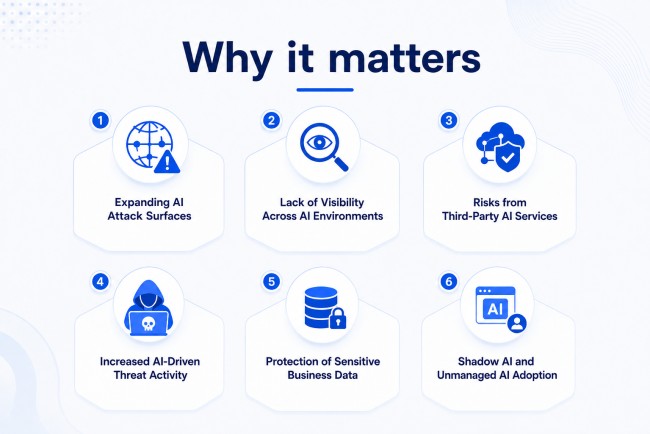
AI exposure discovery helps organizations identify hidden AI-related risks before attackers exploit exposed infrastructure, insecure integrations, unmanaged AI assets, and Shadow AI activity.
Here is why it matters:
Organizations continuously deploy AI APIs, cloud-hosted models, inference endpoints, vector databases, and connected services to support AI operations. Every exposed AI asset increases the external attack surface and creates additional entry points that attackers may target.
AI environments often expand faster than security monitoring and asset tracking processes. Organizations may lose visibility into exposed AI systems, unmanaged deployments, unauthorized AI applications, and Shadow AI tools operating across cloud and hybrid environments.
CloudSEK’'s threat research teams increasingly observe organizations deploying AI services faster than governance and security controls can keep pace. This creates blind spots where AI assets, integrations, and data flows remain unknown to security teams.
Many organizations depend on third-party AI vendors, APIs, plugins, and external cloud services to improve automation and operational efficiency. Insecure integrations, weak vendor security, and exposed external dependencies increase organizational exposure to supply chain and infrastructure risks.
Attackers increasingly target AI systems, APIs, cloud infrastructure, exposed credentials, and unmanaged AI applications to gain unauthorized access or disrupt operations. AI-related threats continue growing as organizations expose more AI assets and connected services to external environments.
AI systems process prompts, customer records, operational data, intellectual property, and other sensitive information continuously. AI exposure discovery helps organizations identify exposed storage systems, insecure APIs, risky AI services, and Shadow AI-related data exposure before sensitive business information becomes publicly accessible or exploitable.
Shadow AI has emerged as one of the fastest-growing AI security challenges. Employees increasingly use public AI platforms, browser-based AI assistants, AI-powered productivity tools, and external AI services without formal security review. These deployments often operate outside established governance processes, creating risks related to data exposure, compliance violations, and unauthorized third-party access to sensitive information.
AIVigil helps organizations identify externally visible Shadow AI services and unmanaged AI assets that expand the organization's attack surface.
Organizations often expose AI assets unintentionally through weak configurations, insecure integrations, unmanaged deployments, and poor visibility across AI environments.
AI APIs and inference endpoints often remain publicly accessible because of weak authentication, poor access controls, or insecure configurations. Attackers target these exposed services to access AI functionality, retrieve sensitive data, or abuse enterprise infrastructure.
AI environments frequently use cloud storage systems to store datasets, prompts, model outputs, and operational data. Misconfigured storage buckets and weak permissions may expose sensitive business information, training data, and internal AI resources publicly.
Vector databases store embeddings and contextual information used by AI systems for retrieval and response generation. Weak security controls and exposed database instances increase the risk of unauthorized access to sensitive AI-related information and enterprise data.
AI systems rely on API keys, authentication tokens, and cloud credentials to connect services and support operations. Exposed credentials in code repositories, logs, cloud environments, or public sources create direct access paths into AI infrastructure and connected systems.
Cloud-hosted AI workloads, compute systems, storage environments, and connected services often contain configuration weaknesses. Misconfigured permissions, exposed ports, and insecure cloud settings increase infrastructure exposure and operational risk significantly.
Employees and teams may deploy AI tools, browser extensions, or third-party AI applications without security approval or centralized monitoring. These unmanaged AI services and Shadow AI deployments increase attack surface exposure and create hidden security risks across enterprise environments.
Strong AI exposure discovery practices help organizations improve visibility, reduce attack surface exposure, and identify hidden AI-related risks before attackers exploit them.
Organizations must continuously scan cloud environments, APIs, AI applications, inference endpoints, vector databases, and connected services to identify newly exposed AI assets and unmanaged deployments across enterprise infrastructure.
Continuous external monitoring helps organizations detect internet-facing AI systems, exposed APIs, insecure cloud resources, leaked credentials, and publicly accessible AI services that increase attack surface risk.
AI environments rely heavily on APIs, access tokens, cloud credentials, and authentication keys to support operations. Strong access controls, credential management, and secure API configurations reduce unauthorized access and infrastructure exposure.
Organizations often connect external AI vendors, plugins, APIs, and automation services into operational workflows. Regular security reviews help identify risky integrations, insecure dependencies, and unmanaged external connections that may introduce hidden attack paths.
Risk assessments should extend beyond direct AI vendors to include supporting cloud providers, plugins, connectors, APIs, and software supply chain dependencies that support AI operations.
Cloud-hosted AI workloads, storage systems, compute environments, and AI services require continuous configuration reviews. Auditing infrastructure helps organizations identify weak permissions, exposed storage buckets, insecure network settings, and other configuration-related security risks.
AI environments change rapidly as organizations deploy new services, APIs, cloud resources, and AI applications continuously. Real-time asset tracking improves visibility into infrastructure changes and helps security teams identify unexpected exposure quickly.
AI exposure discovery is most effective when combined with continuous attack surface monitoring, threat intelligence, and exposure validation. CloudSEK AIVigil helps organizations identify exposed AI assets, discover Shadow AI activity, detect leaked AI credentials, assess third-party AI risks, and understand AI-related attack paths across external environments. By combining AI exposure visibility with actionable threat intelligence, organizations can reduce AI-related attack surface risks and strengthen their overall cyber resilience as AI adoption continues to grow.
AI exposure discovery identifies exposed AI assets, APIs, cloud services, and integrations that increase attack surface risk.
AI exposure discovery helps organizations detect insecure AI systems and reduce AI-related attack paths early.
Exposed AI APIs, vector databases, cloud workloads, credentials, and AI applications are common risks.
Organizations use continuous monitoring, attack surface management, and AI asset discovery techniques.
AI exposure discovery focuses on identifying exposed AI assets, while AI security focuses on protecting AI systems and infrastructure.
