🚀 أصبحت CloudSek أول شركة للأمن السيبراني من أصل هندي تتلقى استثمارات منها
اقرأ المزيد
.avif)

Triple Extoration Ransomware هي طريقة هجوم إلكتروني يستخدم فيها المهاجمون ثلاثة أساليب ضغط - تشفير البيانات وسرقة البيانات والتهديدات الخارجية مثل هجمات DDoS لإجبار الضحايا على دفع فدية.
تعتمد Triple Extoration Ransomware على نماذج برامج الفدية السابقة عن طريق إضافة المزيد من طبقات الضغط. إنه يستهدف كلا من الأنظمة والسمعة. تعمل الأنظمة المقفلة على تعطيل العمليات، وتؤدي البيانات المسروقة إلى مخاطر الخصوصية، والضغط الخارجي يضر بالثقة. هذه التأثيرات المجمعة تجعل Triple Extoration Ransomware أكثر عدوانية وأصعب في التعامل معها من هجمات برامج الفدية التقليدية.
يستخدم Triple Extrausion Ransomware ثلاث طبقات متميزة من الضغط تعمل معًا لإجبار الضحايا على دفع فدية.
يتم حظر الوصول إلى الملفات والأنظمة من خلال التشفير. تقوم هذه الطبقة بإيقاف العمليات العادية، لأن البيانات الهامة تصبح غير قابلة للاستخدام حتى يتم دفع الفدية.
تتم سرقة البيانات الحساسة قبل حدوث التشفير. تخلق هذه الطبقة ضغطًا إضافيًا لأن المهاجمين يهددون بتسريب البيانات أو بيعها إذا لم يتم الدفع.
يمتد الضغط إلى ما وراء الأنظمة الداخلية من خلال إجراءات مثل هجمات DDoS أو التعرض العام أو الاتصال المباشر مع العملاء والشركاء. تزيد هذه الطبقة من الإلحاح لأنها تؤثر على السمعة والعلاقات الخارجية.
يعمل برنامج الفدية الثلاثي للابتزاز من خلال عملية هجوم خطوة بخطوة تتيح الوصول وتوسيع نطاق التحكم وسرقة البيانات وتشفير الأنظمة وتطبيق طبقات متعددة من الضغط.
فيما يلي عملية الهجوم خطوة بخطوة لبرنامج الفدية الابتزاز الثلاثي:
يدخل المهاجمون النظام باستخدام طرق مثل رسائل البريد الإلكتروني المخادعة أو الثغرات الأمنية في البرامج أو بيانات اعتماد تسجيل الدخول المسروقة. يمنحهم هذا الوصول نقطة بداية داخل الشبكة.
يتم الحفاظ على الوصول من خلال إنشاء أبواب خلفية وزيادة الأذونات. تسمح هذه الخطوة للمهاجمين بالبقاء مخفيين والحصول على تحكم أعمق في الأنظمة.
يتم توسيع الوصول مع انتقال المهاجمين عبر الأنظمة للعثور على البيانات القيمة والبنية التحتية الحيوية. تساعدهم هذه الحركة على فهم البيئة وتحديد الأهداف عالية التأثير.
يتم جمع البيانات المهمة ونقلها خارج النظام قبل بدء التشفير. تخلق هذه الخطوة نفوذًا لأن المهاجمين يمكن أن يهددوا بتسريب المعلومات المسروقة.
يتم تأمين الملفات والأنظمة الهامة باستخدام برامج الفدية. يمنع هذا التشفير الوصول إلى البيانات ويعطل العمليات العادية، مما يزيد الضغط على الضحية.
يتم تطبيق ضغط إضافي من خلال إجراءات مثل هجمات DDoS أو تهديدات التسرب العام أو الاتصال المباشر مع العملاء والشركاء.
يطالب بدفعات الفدية المجمعة
يطلب المهاجمون الدفع من خلال دمج جميع نقاط الضغط في استراتيجية واحدة. يفرض هذا الطلب قرارات سريعة لأن تأخير الدفع يزيد الضرر عبر مناطق متعددة.
يعتبر Triple Extoration Ransomware أمرًا خطيرًا لأنه يسرق البيانات ويشفر الأنظمة ويعطل الخدمات في وقت واحد، مما يزيد الضرر ويقلل من قدرة الضحية على الاستجابة.
وفقًا لتقرير تكلفة خرق البيانات لشركة IBM لعام 2023، أدت الاختراقات المتعلقة ببرامج الفدية إلى زيادة تكاليف الاسترداد بأكثر من 20٪ مقارنة بمتوسط تكلفة الاختراق العالمي، بسبب فترات التعطل الممتدة وجهود المعالجة وتحديات استعادة البيانات.

فيما يلي المخاطر الرئيسية لبرامج الفدية ثلاثية الابتزاز:
ترتفع التكاليف إلى ما هو أبعد من مجرد مبلغ الفدية. تواجه المؤسسات نفقات الاسترداد وخسائر وقت التوقف والتكاليف القانونية والغرامات المحتملة، مما يجعل التأثير الإجمالي أعلى بكثير.
يستهدف المهاجمون العملاء والشركاء والأطراف الثالثة باستخدام البيانات المسروقة. يزيد هذا التوسع من الضغط لأن الهجوم يؤثر على عدد أكبر من الأشخاص أكثر من المنظمة فقط.
يمكن تسريب البيانات المسروقة علنًا أو مشاركتها مع أصحاب المصلحة. يقلل هذا التعرض الثقة لأن العملاء والشركاء يفقدون الثقة في أمان المؤسسة.
تمنع الأنظمة المشفرة الوصول إلى الملفات والخدمات الهامة. يؤدي هذا الاضطراب إلى إيقاف العمليات اليومية، مما يؤثر بشكل مباشر على الإنتاجية وتقديم الخدمات.
يمكن أن تنتهك البيانات الحساسة المسروقة قوانين حماية البيانات. يؤدي هذا الانتهاك إلى عقوبات وإجراءات تنظيمية تزيد من العواقب طويلة المدى.
يستخدم المهاجمون أساليب متعددة في وقت واحد، مما يحد من خيارات الضحية. هذا الضغط يضعف التفاوض، لأن تأخير الدفع يزيد الضرر في مناطق مختلفة.
يتم منع Triple Extoring Ransomware من خلال تعزيز التحكم في الوصول وتأمين الأنظمة والاستعداد للتعافي السريع.
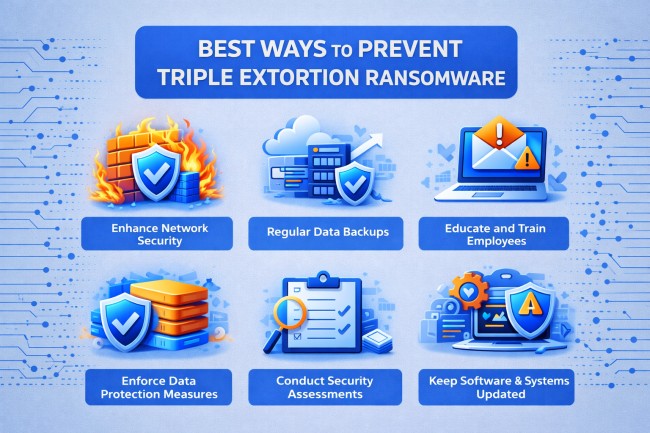
فيما يلي أفضل الاستراتيجيات لمنع برامج الفدية بالابتزاز الثلاثي:
يظل وصول المستخدم مقيدًا من خلال المصادقة متعددة العوامل والأذونات المحدودة. يقلل عنصر التحكم هذا من المخاطر لأن المهاجمين لا يمكنهم بسهولة استخدام بيانات الاعتماد المسروقة للوصول إلى الأنظمة الهامة.
تظل الأنظمة آمنة عند تطبيق تحديثات البرامج والتصحيحات في الوقت المحدد. تزيل هذه الممارسة نقاط الضعف المعروفة، والتي تمنع المهاجمين من استغلال الثغرات الأمنية.
تعمل أدوات الأمان على حماية الأنظمة على مستويات متعددة. تكتشف حماية نقطة النهاية البرامج الضارة، ويحظر أمان الشبكة الوصول غير المصرح به، وتقوم فلاتر البريد الإلكتروني بإيقاف محاولات التصيد الاحتيالي قبل وصولها إلى المستخدمين.
يقلل وعي الموظفين من الأخطاء البشرية التي غالبًا ما يستغلها المهاجمون. يساعد التدريب الموظفين على تحديد رسائل البريد الإلكتروني والأنشطة المشبوهة، مما يمنع الوصول غير المصرح به.
تظل البيانات قابلة للاسترداد عندما يتم تخزين النسخ الاحتياطية بشكل آمن واختبارها بانتظام. يضمن هذا الإعداد إمكانية استعادة الأنظمة دون دفع فدية.
ينتشر Triple Extrostion Ransomware من خلال ناقلات الهجوم الشائعة التي تستغل الأخطاء البشرية والأمن الضعيف والأنظمة المكشوفة.
تظل رسائل البريد الإلكتروني المخادعة واحدة من أكثر نقاط الدخول شيوعًا. يرسل المهاجمون رسائل بريد إلكتروني تحتوي على روابط ضارة أو مرفقات تبدو شرعية، مما يدفع المستخدمين إلى مشاركة بيانات الاعتماد أو تثبيت البرامج الضارة دون علمهم.
تؤدي الثغرات الأمنية غير المصححة في البرامج إلى إنشاء نقاط دخول مباشرة إلى الأنظمة. يقوم المهاجمون بالبحث عن التطبيقات القديمة واستغلال نقاط الضعف المعروفة، مما يسمح لهم بالوصول إلى الشبكات دون تدخل المستخدم.
توفر بيانات الاعتماد المسروقة وصولاً سهلاً إلى الأنظمة الداخلية. يستخدم المهاجمون تقنيات مثل هجمات القوة الغاشمة أو حشو بيانات الاعتماد للوصول إلى تسجيل الدخول، مما يساعدهم على تجاوز ضوابط الأمان.
تعد خدمات الوصول عن بُعد مثل RDP و VPN أهدافًا متكررة. تسمح التكوينات الضعيفة أو المنافذ المكشوفة للمهاجمين بالاتصال مباشرة بالأنظمة، مما يمنحهم التحكم في البنية التحتية الحيوية.
في يوليو 2021، استغلت مجموعة Revil Ransomware ثغرة أمنية في برنامج VSA للإدارة عن بُعد من Kaseya. أثر الهجوم على حوالي 1,500 شركة على مستوى العالم من خلال مزودي الخدمة المُدارة. قام المهاجمون بتشفير الأنظمة وسرقة البيانات والمطالبة بفدية قدرها 70 مليون دولار، مما تسبب في تعطيل العمليات على نطاق واسع.
في يناير 2023، استهدفت مجموعة LockBit ransomware البريد الملكي في المملكة المتحدة باستخدام برامج الفدية جنبًا إلى جنب مع تسرب البيانات وتهديدات التسرب العام. وتعطلت خدمات الشحن الدولية لأسابيع، وتم تهديد البيانات الحساسة بالإفراج عنها، مما أضر بالعمليات والسمعة.
في منتصف عام 2023، استغلت مجموعة Clop ransomware ثغرة أمنية في يوم الصفر في برنامج نقل الملفات MoveIt. أثر الهجوم على أكثر من 2,000 منظمة وملايين الأفراد من خلال سرقة البيانات الحساسة. استخدم المهاجمون سرقة البيانات والابتزاز دون تشفير في بعض الحالات، الأمر الذي استمر في ممارسة ضغوط قوية من خلال تهديدات التسرب والتعرض العام.
يختلف برنامج الفدية الثلاثي للابتزاز عن الابتزاز المزدوج رانسوم وير من خلال إضافة طبقة ضغط ثالثة تستهدف أصحاب المصلحة الخارجيين والخدمات، مما يزيد من التأثير العام.
يركز برنامج الفدية المزدوج للابتزاز على تكتيكين - تشفير البيانات والتهديد بتسريب المعلومات المسروقة. يعتمد الابتزاز الثلاثي على ذلك من خلال إضافة ضغط خارجي، مثل هجمات DDoS أو الاتصال المباشر مع العملاء والشركاء. تزيد هذه الطبقة المضافة من السرعة لأن الهجوم يؤثر على كل من الأنظمة الداخلية والعلاقات الخارجية.
نعم. تتخطى بعض الهجمات التشفير وتعتمد فقط على سرقة البيانات والضغط الخارجي، الأمر الذي لا يزال يجبر الضحايا على الدفع بسبب تهديدات التسرب.
يمكن أن يستغرق الهجوم بضعة أيام إلى عدة أسابيع، اعتمادًا على مدة بقاء المهاجمين داخل النظام قبل إطلاق المرحلة النهائية.
يتم استهداف صناعات مثل الرعاية الصحية والتمويل والبنية التحتية الحيوية في كثير من الأحيان لأنها تعتمد على العمليات المستمرة والتعامل مع البيانات الحساسة.
لا. يستخدم المهاجمون أساليب ضغط مختلفة، مثل التسريبات العامة أو الاتصال بالعملاء، بينما يعد DDoS أحد الخيارات العديدة.
لا. تساعد النسخ الاحتياطية على استعادة البيانات بعد التشفير، ولكنها لا تمنع تسرب البيانات أو الضغط الخارجي من المهاجمين.
لا. لا يضمن الدفع استعادة البيانات أو حذف البيانات المسروقة، لأن المهاجمين قد يستمرون في تسريب المعلومات أو إساءة استخدامها.
يستخدم المهاجمون رسائل البريد الإلكتروني أو تسريب مواقع الويب أو التواصل المباشر مع العملاء والشركاء لزيادة الضغط وفرض الدفع.
يوفر CloudSek معلومات التهديدات في الوقت الفعلي التي تساعد المؤسسات على اكتشاف تسرب البيانات وبيانات الاعتماد المكشوفة ونشاط المهاجم مبكرًا. تقلل هذه الرؤية المبكرة من المخاطر لأن التهديدات يتم تحديدها قبل أن يتمكن المهاجمون من استخدام البيانات المسروقة للابتزاز.
مع منصة CloudSek للحماية من المخاطر الرقمية، تراقب المؤسسات سطح الهجوم الخارجي وتتبع نشاط الويب المظلم وتتلقى تنبيهات قابلة للتنفيذ. تعمل هذه الرؤى على تحسين سرعة الاستجابة لأن فرق الأمن يمكنها التصرف بسرعة لإيقاف الهجمات قبل أن تتصاعد إلى الابتزاز الثلاثي.
