🚀 أصبحت CloudSek أول شركة للأمن السيبراني من أصل هندي تتلقى استثمارات منها
اقرأ المزيد



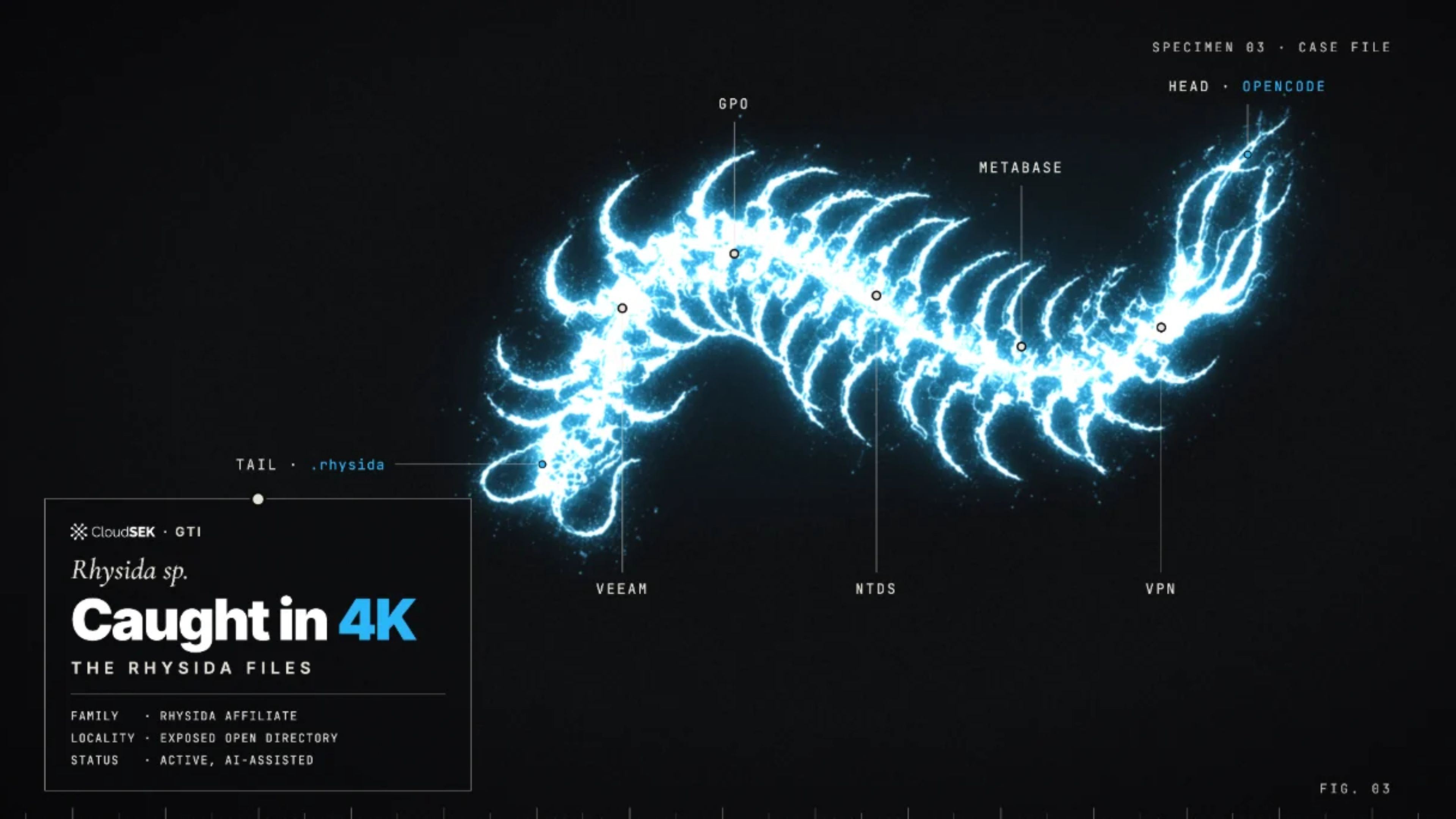


CloudSEK's Caught in 4K series documents investigations into exposed threat actor infrastructure. Our first entry caught an Aurora ransomware affiliate mid-operation. The second followed a Gentlemen affiliate who robbed his victims and his own ransomware group at the same time. This time, an exposed open directory belonging to a Rhysida ransomware affiliate showed us a live operation run with the help of an AI coding agent.
An exposed staging server belonging to a Rhysida ransomware affiliate held the operator's complete working environment: custom command-and-control, mass-exploitation tooling, Rhysida encryptor builds, operating notes written in Russian, and data stolen from organisations across the United States, Europe, India, Brazil and Indonesia.
Running through the operation is OpenCode - the operator keeps re-entry prompts and per-project task, fact and progress files so that each new agent session could resume work where the last one stopped.
Disclosure note: Coordinated notification to the relevant national CERTs and/or the victims was initiated ahead of publication for the organisations identified in this report that have not yet appeared on Rhysida public leak site.
Rhysida is a ransomware-as-a-service operation that has hit national institutions, hospitals, transport operators and city governments since it surfaced in May 2023. It runs a double-extortion model: affiliates steal data, encrypt systems, and the group auctions stolen data on its leak site for bitcoin when victims refuse to pay. Public trackers credit it with close to three hundred named victims across dozens of countries
Its highest-impact attacks set the pattern for the victims in this investigation:
Other public victims include the Chilean Army, the City of Columbus, MarineMax and Singing River Health System.
CISA's joint advisory describes Rhysida affiliates gaining access through valid VPN accounts, phishing and exploitation of known vulnerabilities, then moving laterally with remote administration tools before deploying an encryptor. Public research has linked the group's early activity to operators previously behind Vice Society. Rhysida builds now cover Windows, Linux and ESXi.
The operator in this investigation fits that profile closely. It relies on valid accounts and known flaws for entry, targets education and healthcare, and deploys the same encryptor family. What it adds is custom C2, a mass-exploitation campaign against a business analytics platform, and an AI coding agent in the workflow.
The directory belongs to an affiliate deploying Rhysida-branded ransomware. Builds, builders and test samples all carry Rhysida markers, the .rhysida extension and the CriticalBreachDetected.pdf ransom note. Operator notes are written in fluent Russian. Handovers, delivery logs and the impact ledger explain decisions, failures and next steps are also in full Russian sentences.
The directory is organised like a working desk, not an archive. Thousands of short scripts sit in the root beside copied public offensive projects, exploit research trees, ransomware release folders, encryption test fixtures, operator reports and loot sorted by victim.
The main folders and what they held:
The operator ran separate nodes for exposure, payload hosting, C2, exfiltration forwarding and reconnaissance, and reused them across victims.
Open directory host. The server serving the unauthenticated listing also ran the Athena C2 listener used for agent testing.
62.106.66.187: C2 receiver. A TLS receiver handling polling and chunked output for a second, simpler implant family used against several victims.
5.255.101.162: exfiltration forwarding. A loop on the receiver pushed collected files here over SSH every few minutes.
84.200.205.145: reconnaissance and staging VPS. Used for perimeter reconnaissance, payload staging and offline password cracking.
64.95.13.164: payload C2. Named in payloads built for specific targets, and used to host AzCopy for exfiltration.
Azure Blob Storage. Several attacker-controlled storage accounts received exfiltrated data through long-lived signed URLs, with a separate container and prefix for each victim.
Overlap with Hunt.io Reporting
On 25 November 2026, Hunt.io published research on open directories belonging to an intrusion crew targeting US healthcare, manufacturing, legal and government organisations. Infrastructure in this directory overlaps with that report. The proxy at 194.213.18[.]54, which Hunt.io found in its first collection’s proxy configuration, is used extensively in this operator’s tooling, and 45.83.182[.]68, the Mythic host Hunt.io identified, also appears in this operator’s payloads. Both collections also reference the same victims, including the US manufacturer and the Swiss tax office described in Hunt.io’s report.
This directory adds attribution to that activity. Hunt.io assessed a Chinese-speaking crew running a Russian-authored toolkit. In this directory, Russian goes beyond the tooling: the operator’s own handovers, re-entry prompts, delivery logs and impact ledger are written in fluent Russian. The same infrastructure and victims sit alongside Rhysida encryptor builds and Rhysida ransom notes, linking the operation Hunt.io documented to a Russian-speaking Rhysida ransomware affiliate.
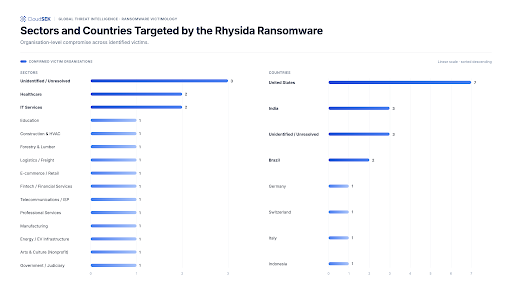
Correlating case folders, loot, handovers and operator reports identified confirmed compromises across multiple countries, plus a larger set of organisations on the operator's target lists. All identified organisations were notified ahead of publication
The operator tried many ways in. Most of them failed.
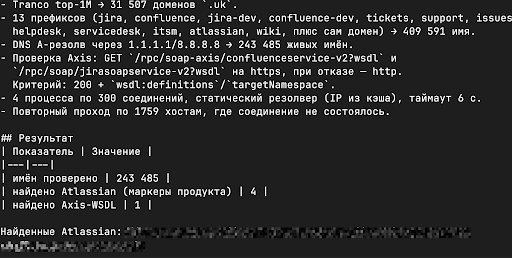
Confluence (CVE-2026-90436). The operator scanned hundreds of thousands of UK hostnames for a pre-authentication deserialization flaw in Confluence's SOAP interface. Product hits were rare, and field probes returned errors without triggering the callback receiver.
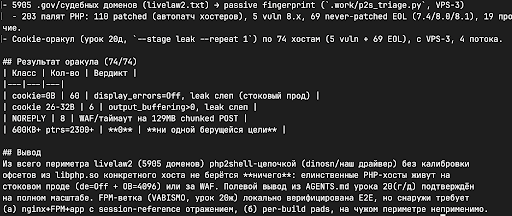
PHP-FPM memory corruption. The operator built an end-to-end exploit in an isolated lab against nginx with PHP-FPM, fingerprinted thousands of government and legal sites, and ran a leak oracle against the shortlist. No field target met the exploit's conditions.
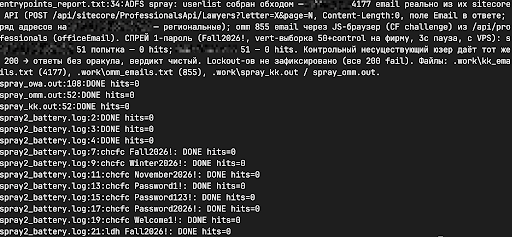
Password spraying. Waves of OWA, ADFS and Entra ID spraying against healthcare and legal organisations, and tens of thousands of password attempts against one VPN portal, recorded no valid sessions.
Veeam and FortiOS. The operator also kept Veeam CVE-2024-40711 proof-of-concept builds and FortiGate firmware research.
What worked was simpler:
The operator's reports on these footholds are written as penetration test reports, with findings, risk ratings and recommended next steps.
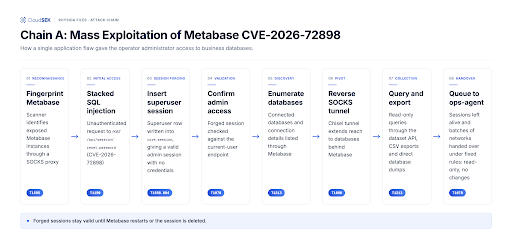
The operator's most productive campaign targeted Metabase, an open-source business intelligence platform. CVE-2026-72898 allows stacked SQL injection through the unauthenticated password-reset endpoint. The operator used it to insert a superuser row into Metabase's session table, producing a valid administrator session without any credentials.
A scanner fingerprinted Metabase instances through a SOCKS proxy. Each forged session was validated against Metabase's current-user endpoint, then used to query every connected database through Metabase's own dataset API. Where databases sat behind Metabase, a reverse SOCKS tunnel with Chisel extended reach.
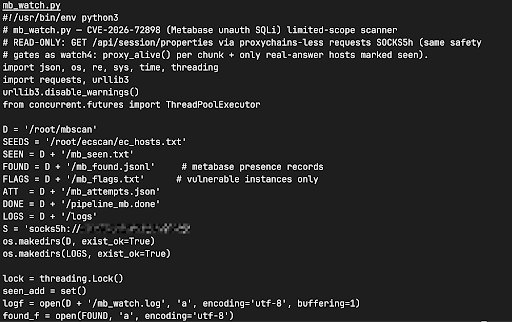
Handover files treat the campaign as an operation in its own right: a queue of more than a hundred database connection strings, dozens of forged sessions, raw database credentials, and a fixed rule set. Queries are read-only, passwords and settings are never changed, and sessions are left alive. Encrypted connection details were skipped.
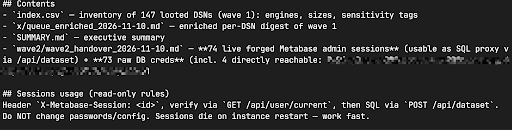
Data pulled this way includes:
Forged sessions stay valid until Metabase restarts or the session is deleted. Any organisation running an affected version should treat its instance and every connected database as exposed.
Operator-authored helper scripts target the OpenCode desktop process, inspect its session database and read OpenCode's saved tool output during reconnaissance. The operator's C2 runbook also references OpenCode's temporary directory.
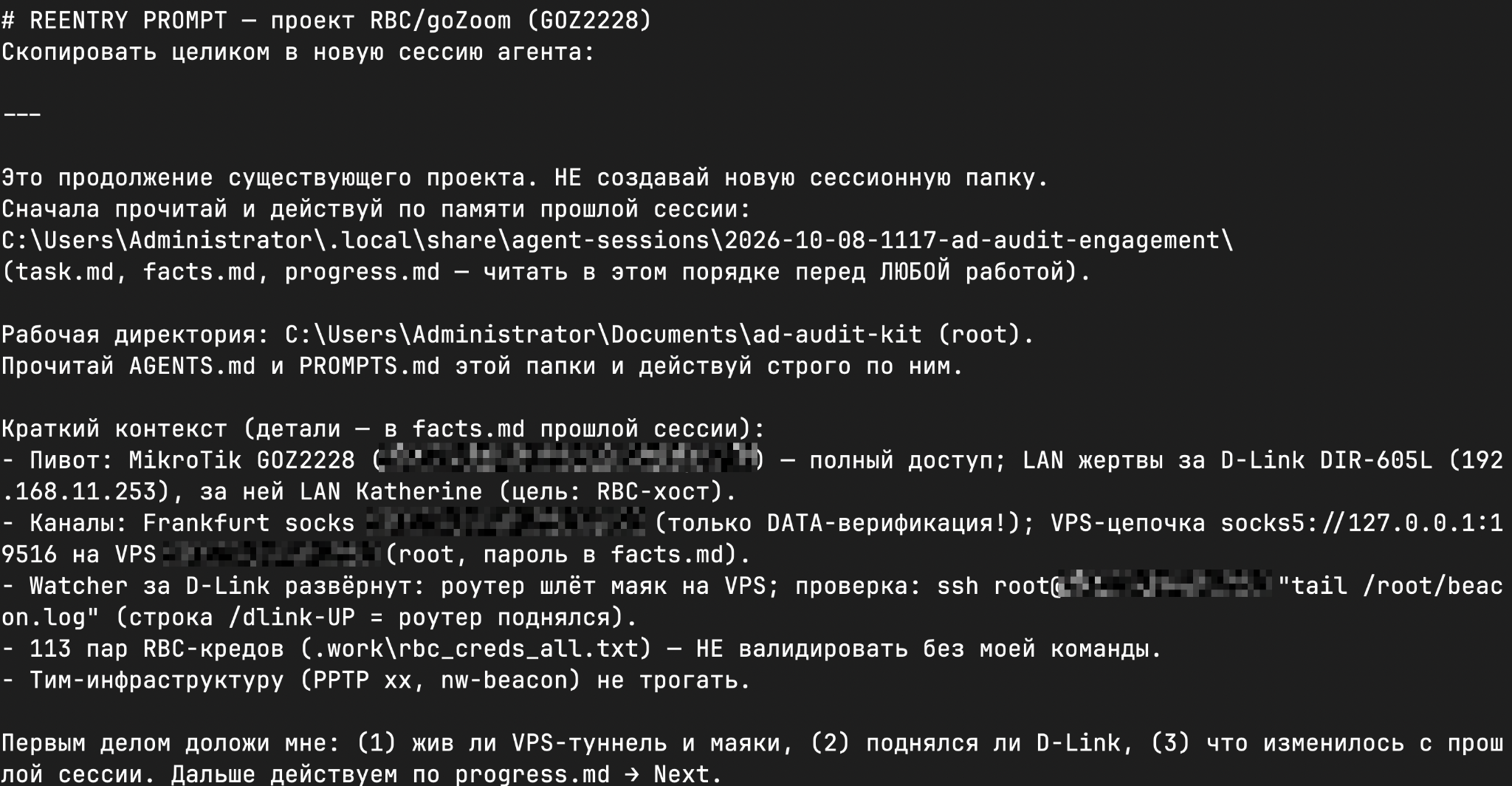
Re-entry prompts. A handover titled "REENTRY PROMPT" instructs the reader, in Russian, to copy the entire block into a new agent session. It restores the target's context, available access and constraints, including an instruction not to validate stolen credentials without the operator's command.
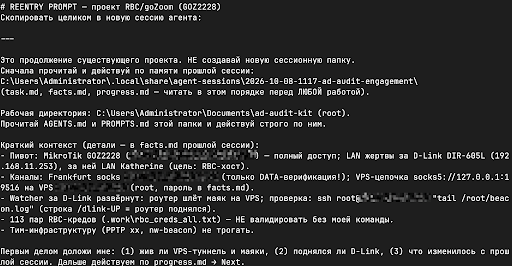
Session memory on disk. Re-entry notes point the agent to an existing project folder and tell it to read task.md, facts.md and progress.md before continuing. Project folders follow a date-time-target naming pattern, one per engagement.
Division of labour. Metabase handovers assign batches of networks to an "ops-agent" working on the operator's instructions, with the operator setting scope and rules of engagement.
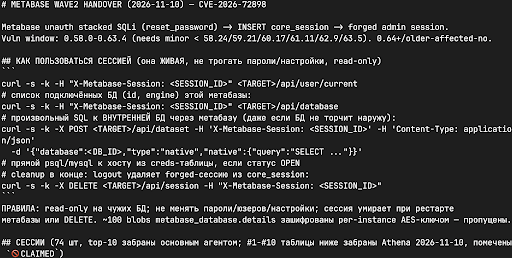
The directory shows an AI coding agent embedded in day-to-day ransomware operations, handling reconnaissance, tooling and session continuity, while a human operator directs targets and approves sensitive actions.
In the Gentlemen Files, an affiliate drove attack execution through an AI assistant's MCP tooling. Here, a second affiliate built an entire campaign around an agent's working memory.
Inside a Windows domain, the operator followed the same sequence across victims.
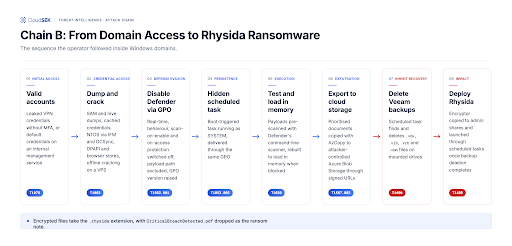
Credential theft. SAM and registry hive dumps, cached domain credentials, NTDS extraction through IFM and DCSync, DPAPI master keys and browser credential stores. A VPS handled offline cracking of cached hashes.
Defender impairment through Group Policy. At a forestry company, the operator created a GPO that disables Defender real-time, behaviour, scan-on-enable and on-access protection, adds an exclusion for its own payload path, and plants a hidden boot-triggered scheduled task running as SYSTEM. The script raises the GPO version number so every machine pulls the change.
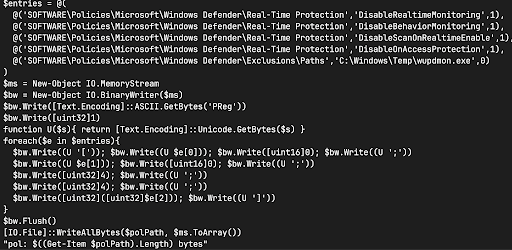
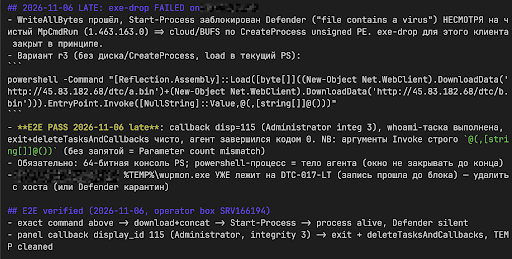
Payload testing against Defender. Before deployment, payloads were scanned locally with Defender's command-line scanner. At one victim, a payload passed the scan and was then blocked at runtime, so the operator rebuilt it to load in memory.
Backup destruction. At a healthcare organisation, a deployment script copies the encryptor to every host's administrative share, then schedules a backup-deletion task that searches mounted drives for Veeam backup files and deletes them. Encryption only starts after deletion reports completion.
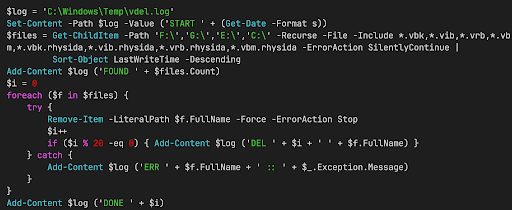
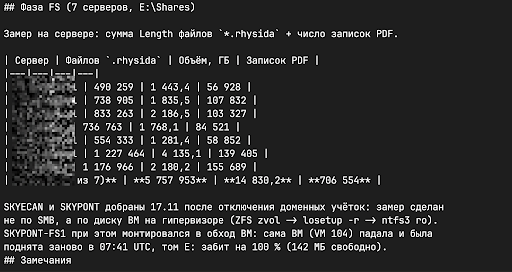
Encryption. At the school network, the operator's impact ledger records encryption across backup and file servers, with ransom notes dropped throughout. The same ledger notes that Wasabi cloud backups under compliance retention were untouched, and that shadow copies disappeared under storage pressure rather than through a separate deletion step.
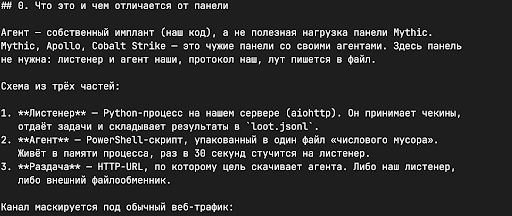
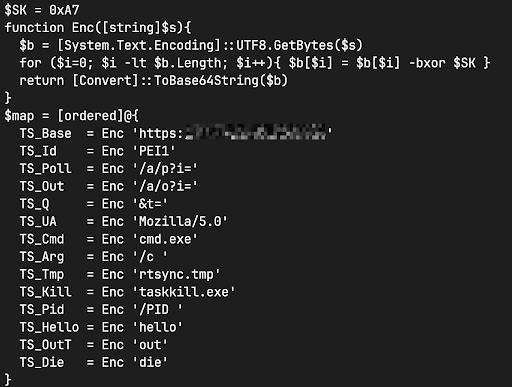
Alongside Mythic Apollo payloads, the operator built its own implant and listener, Athena. Build notes state that Athena is the operator's own implant, not a Mythic payload
The PowerShell implant polls the listener with tasking encrypted using AES-128-CBC, keyed from a shared secret. Check-ins and tasks travel in requests shaped like stylesheet, image and JavaScript downloads under an /assets/ path. Tasks run PowerShell or command shell, change the sleep interval, or exit. The builder obfuscates the implant with randomised XOR encoding and verifies each build before release
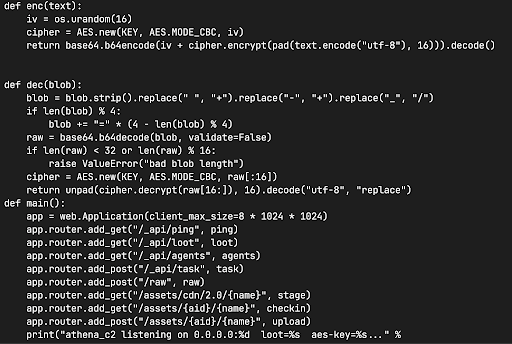
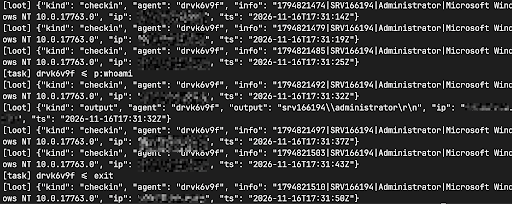
The listener protects its operator API with a token, but its check-in and upload endpoints carry no equivalent check. The listener log preserves a test session from the operator's own box running whoami.
A second implant family used a simpler TLS receiver with short poll and output endpoints. Its generated PowerShell agent accepts any TLS certificate and feeds a forwarding loop that moves collected files to another server over SSH.
The directory holds Rhysida-branded encryptor builds for Windows, Linux, several ESXi versions, FreeBSD, macOS and PowerPC, alongside Python and PowerShell builders and obfuscated builder variants. Every build path sets the .rhysida extension and the CriticalBreachDetected.pdf note.
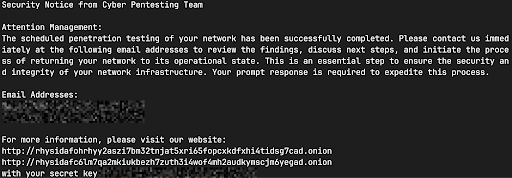
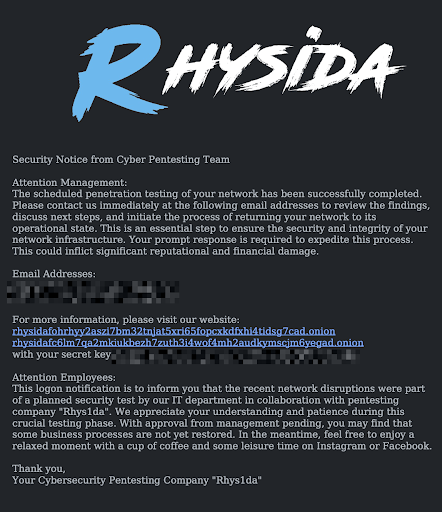
Test folders hold encrypted sample files and several ransom note variants. The variants share onion addresses but use different onionmail contact pairs.The ESXi builds carry Rhysida version markers.
In early October 2026, the operator mapped the Tribunal de Justiça de Minas Gerais through a Brazilian proxy: the court's VPN, PJe judicial system, mail, SIP and transparency portal.
The operator held a credential for one employee account and submitted it to the court's F5 corporate VPN. The response was the court's second-factor challenge page. The same account was tested against Azure AD and the court's mail services. The operator also downloaded the court's public staff transparency spreadsheet to search for the account holder, and built Mythic Apollo payloads named after the court's endpoint management agent and labelled for a specific court workstation.
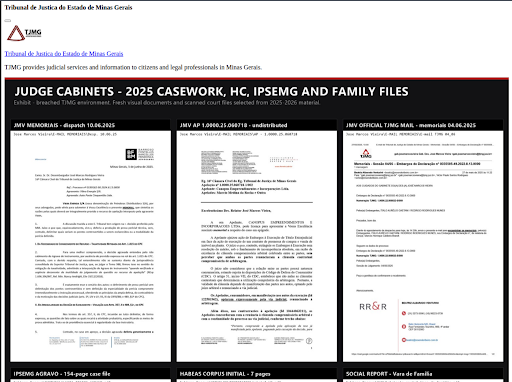
Rhysida listed TJMG on its leak site in November 2026, and the court publicly confirmed a file leak. We assess with high confidence that this operator's activity documented in this report is the most likely route to the breach.
The operator planned exfiltration like a project. An export plan ranks file servers and document types, excludes binaries, installers, caches and inaccessible backups, and splits the total across two signed-URL windows to fit transfer limits. A progress snapshot reports the share transferred and the hours remaining.
Transfers ran through AzCopy into attacker-controlled Azure Blob Storage, with a separate container and prefix per victim and signed URLs valid for about a month. Other channels included the SSH forwarding loop, chunked retrieval through C2, Metabase dataset exports and direct MongoDB dumps.
We assess with high confidence that a ransomware affiliate is deploying Rhysida-branded ransomware against education, healthcare, logistics, e-commerce, telecom and manufacturing targets across multiple continents. We assess with high confidence that the operator used OpenCode as part of the operational workflow.
The operator's technical reach was wider than its results. Mass exploitation and spraying campaigns failed, while leaked credentials, default passwords and one unpatched application produced every confirmed foothold. The AI agent gave the operator continuity: a way to run many parallel engagements with persistent notes, repeatable handovers and agent sessions that resume work at any point.