شهدت أنشطة التهديدات السيبرانية الخفية في فرنسا ارتفاعاً تجاوز أربعة أضعاف خلال عامين، مدفوعة بشكل رئيسي ببيانات الاعتماد المسروقة، وسجلات برمجيات سرقة المعلومات، وبرامج الفدية، والنشاط السيبراني الموالي لروسيا. يكشف أحدث تقرير صادر عن CloudSEK كيف أصبحت الهيئات الحكومية والمؤسسات المالية والمنظمات الصغيرة أكثر عرضة لاقتصاد الجرائم السيبرانية سريع النمو.
باحث في مجال التهديدات الإلكترونية في إنتل، أتفوق في OSINT و HUMINT والهندسة الاجتماعية
براجوال أواستي
Prajwal هو محلل البرامج الضارة في Cloudsek، وهو متخصص في الهندسة العكسية وذكاء التهديدات. يركز على الكشف عن التهديدات الجديدة من خلال أبحاث البرامج الضارة، مع خلفية في Offensive Security و Windows Internals.
ملخص تنفيذي
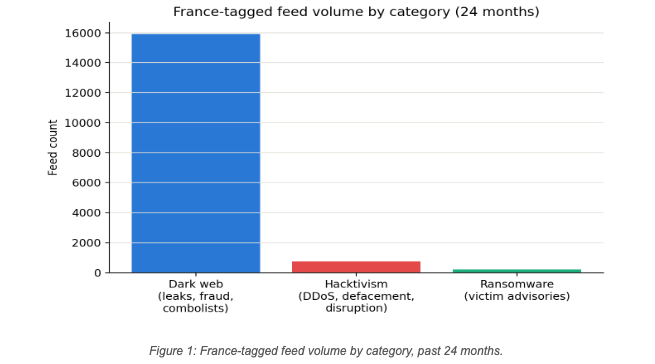
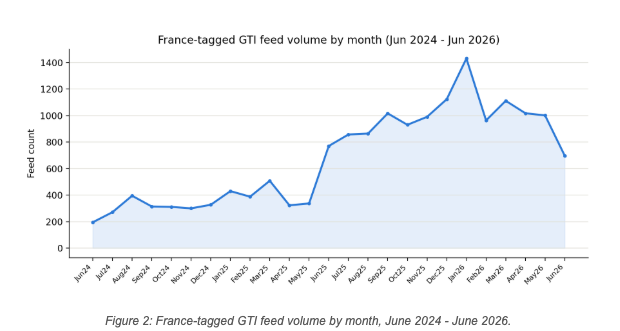
تؤكد بيانات القياس عن بُعد من CloudSEK وجود موجة مستمرة وعالية الكثافة من تسريبات البيانات التي تستهدف فرنسا، وعمليات كشف بيانات الاعتماد، وإخطارات ضحايا برامج الفدية، وأنشطة التعطيل السيبراني عبر العديد من المنتديات والقنوات الخفية. على مدار الـ 24 شهراً الماضية، بلغ إجمالي تسريبات البيانات المرتبطة بفرنسا، ومبيعات بيانات الاعتماد غير المشروعة، وإخطارات ضحايا برامج الفدية، ومطالبات التعطيل السيبراني عبر الويب المظلم ووحدات برامج الفدية والنشاط السيبراني حوالي 17,800 عنصر، مع ارتفاع حجم النشاط الشهري على الويب المظلم (مدفوعاً بشكل كبير بإعادة بيع بيانات الاعتماد وتوزيع التسريبات المجانية) من أقل من 300 شهرياً في منتصف عام 2024 إلى ذروة تجاوزت 1,400 في يناير 2026، ليستقر عند مستوى مرتفع يتجاوز 1,000 شهرياً خلال ربيع 2026 - وهو ما يمثل زيادة بأكثر من 4 أضعاف في الحجم الأساسي على مدار عامين.
ينقسم هذا النشاط إلى ثلاث فئات متميزة يتناولها هذا التقرير: تسريبات البيانات والاحتيال على الويب المظلم (التي تشكل الغالبية العظمى من الحجم، مدفوعة بسجلات برمجيات سرقة المعلومات وإعادة بيع بيانات الاعتماد)، وإخطارات ضحايا برامج الفدية (أقل عدداً ولكنها ذات تأثير كبير، وتتركز على الحكومات المحلية والشركات الصغيرة والمتوسطة)، والنشاط السيبراني (هجمات حجب الخدمة الموزعة DDoS ذات الدوافع السياسية، وتشويه المواقع، ومطالبات الوصول، والتي تهيمن عليها المجموعة الموالية لروسيا NoName057(16)).
لماذا يعد هذا الأمر مهماً: المخاطر التجارية والتنظيمية
هذا ليس مجرد اتجاه نظري في بيانات القياس. فقد أصبحت فرنسا ثاني أكبر جهة إنفاذ للائحة العامة لحماية البيانات (GDPR) في أوروبا بعد أيرلندا، حيث أصدرت اللجنة الوطنية للمعلوماتية والحريات (CNIL) غرامات تراكمية تجاوزت مليار يورو، كما تحول الإنفاذ ضد الإخفاقات الأمنية (على عكس قضايا الموافقة/ملفات تعريف الارتباط) بشكل حاسم من التحذيرات إلى العقوبات التأديبية في الأشهر الستة الماضية.
شركة Free Mobile / Free - غرامة قدرها 42 مليون يورو: فرضت اللجنة الوطنية للمعلوماتية والحريات (CNIL) غرامة قدرها 27 مليون يورو على Free Mobile و15 مليون يورو على Free (بإجمالي 42 مليون يورو) في يناير 2026 بسبب تدابير أمنية غير كافية ساهمت في اختراق عام 2024 الذي كشف 24.6 مليون عقد مشترك، بما في ذلك 5.1 مليون رقم آيبان (IBAN)، وهي أكبر عقوبة أمنية بموجب اللائحة العامة لحماية البيانات في التاريخ الفرنسي.
هيئة France Travail - غرامة قدرها 5 ملايين يورو، 43 مليون سجل: فرضت اللجنة الوطنية للمعلوماتية والحريات (CNIL) غرامة قدرها 5 ملايين يورو على France Travail (وكالة التوظيف الوطنية) في يناير 2026 بسبب اختراق كشف بيانات ما يصل إلى 43 مليون باحث عن عمل، وهو أكبر اختراق في التاريخ الفرنسي من حيث عدد السجلات، مشيرة إلى أن ضعف المصادقة وتوسيع صلاحيات الوصول بشكل مفرط كانا السببين الجذريين.
حجم الاختراقات على المستوى الوطني: تم تقديم أكثر من 5,600 إخطار بوقوع اختراقات إلى اللجنة الوطنية للمعلوماتية والحريات (CNIL) في عام 2024 وحده (وهو رقم قياسي على الإطلاق)، وتم كشف أكثر من 145 مليون سجل تعود لمقيمين فرنسيين عبر الخدمات العامة والرعاية الصحية والاتصالات وتجارة التجزئة بين عامي 2024 و2025، وهو ما يعادل إحصائياً أكثر من حادثتي اختراق لكل مقيم فرنسي.
تعرض قطاع الرعاية الصحية من خلال أطراف خارجية: أدى اختراق في برنامج الممارسات الطبية التابع لشركة Cegedim Santé (MonLogicielMedical.com) إلى كشف بيانات إدارية لحوالي 15 مليون مريض فرنسي تمتد لتاريخ يصل إلى 15 عاماً، مما يوضح كيف يمكن لموردي البرمجيات الخارجيين أن يتسببوا في مخاطر متسلسلة عبر قطاع بأكمله.
تشديد الجدول الزمني التنظيمي: بموجب المادة 33 من اللائحة العامة لحماية البيانات (GDPR)، يجب الإبلاغ عن الاختراقات إلى اللجنة الوطنية للمعلوماتية والحريات (CNIL) في غضون 72 ساعة؛ ويواجه مشغلو الخدمات الحيوية والأساسية واجبات إخطار موازية لوكالة الأمن السيبراني الوطنية (ANSSI) مع استمرار نقل توجيهات NIS2 إلى القانون الفرنسي خلال عام 2026، مما يرفع سقف الامتثال للمنظمات في القطاعات الحيوية.
أصبحت عملية الانتقال من الإخفاق الأمني إلى فرض الغرامات في فرنسا سريعة ومكلفة، حيث تتناسب الغرامات مع نتائج التحقيقات في الإهمال (مثل عدم كفاية المصادقة، ونطاق الوصول المفرط، وضعف التسجيل) وليس فقط مع حجم الاختراق، كما أن الأسباب الجذرية نفسها التي تم تحديدها في بيانات النشاط الخفي في هذا التقرير - مثل كشف بيانات الاعتماد، وضعف المصادقة، ومخاطر الأطراف الخارجية/الموردين - هي العوامل ذاتها التي استشهدت بها اللجنة الوطنية للمعلوماتية والحريات (CNIL) في أكبر عقوباتها الأخيرة.
الحجم والاتجاه (24 شهراً)
ظل حجم البيانات على الويب المظلم أقل من 350 شهرياً خلال معظم عام 2024، ثم ارتفع بثبات خلال أوائل ومنتصف عام 2025، ليتضاعف تقريباً مرة أخرى بين يونيو 2025 وذروة الفترة من ديسمبر 2025 إلى يناير 2026، قبل أن يستقر عند مستوى مرتفع يتجاوز 1,000 شهرياً. يشير هذا النمط المتدرج إلى زيادة هيكلية تراكمية في الاقتصاد السري المحيط بالبيانات الفرنسية، وليس مجرد حادثة فردية أدت إلى ارتفاع هذه الأرقام.
أبرز القطاعات المستهدفة (24 شهراً)
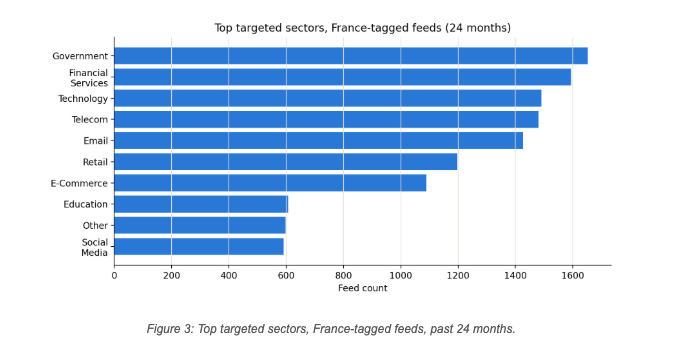
تصدرت قطاعات الحكومة (1,652)، والخدمات المالية (1,594)، والتكنولوجيا (1,491)، والاتصالات (1,480)، والبريد الإلكتروني (1,427) قائمة التعرض للاختراق على مدار العامين الماضيين، تليها قطاعات التجزئة (1,197)، والتجارة الإلكترونية (1,089)، والتعليم (607)، ووسائل التواصل الاجتماعي (591). يعكس تصدر القطاع الحكومي لهذه الفترة ضغوط برامج الفدية المستمرة على البلديات الفرنسية والاستهداف من قبل النشطاء الرقميين للوزارات، بالإضافة إلى الأساس العام لتسريبات بيانات الاعتماد التي تؤثر على جميع القطاعات.
أنواع البيانات الأكثر شيوعاً (24 شهراً)
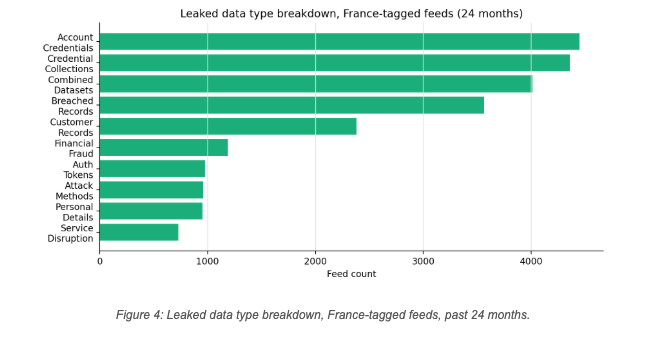
تعد بيانات اعتماد الحسابات (4,447) ومجموعات بيانات الاعتماد (4,360) أكبر فئتين، متقدمتين بفارق ضئيل على مجموعات البيانات المدمجة (4,011) والسجلات المخترقة (3,565). وتليها سجلات العملاء (2,380)، وبيانات الاحتيال المالي (1,188)، ورموز المصادقة (977). هذا التكوين هو السمة المميزة لسجلات برمجيات سرقة المعلومات وقوائم بيانات الاعتماد التي يتم تجميعها وإعادة بيعها على نطاق واسع، بدلاً من الاختراقات المؤسسية الكبيرة التقليدية ذات المصدر الواحد.
نظرة متعمقة على الفئة: الويب المظلم
تعد منتديات وأسواق الويب المظلم المصدر الرئيسي للنشاط المتعلق بفرنسا، حيث تمثل الغالبية العظمى من الحجم المسجل. تتراوح القوائم المعروضة بين قوائم بيانات الاعتماد التجارية وسجلات برمجيات سرقة المعلومات، وصولاً إلى قواعد بيانات ضخمة لمعلومات التعريف الشخصية (PII) وخدمات تزوير الوثائق.
حالات بارزة
اختراق Classic-Days.fr (يونيو 2026): قاعدة بيانات بحجم 11 جيجابايت تتضمن كلمات مرور بنص واضح، ومفاتيح تفعيل، وشفرة مصدرية داخلية قام بتسريبها المهاجم 'Saturne' بعد اكتشاف دليل Apache مكشوف؛ وتعود أدلة محاولات حقن SQL ضد الموقع نفسه إلى عام 2024.
عرض مليوني سجل لمعلومات تعريف شخصية فرنسية للبيع: قام المهاجم '587306' بعرض حوالي مليوني سجل لمعلومات تعريف شخصية (PII) وصفها بأنها تعود لنساء فرنسيات مقابل 399 دولاراً، يتم تسليمها عبر منصة Mega.
تسريب 489 ألف "وثيقة" فرنسية: نشر المهاجم 'Immanuel_Kant' ما يقرب من نصف مليون سجل لمعلومات تعريف شخصية (PII) مقيدة بشرط الرد على المنشور أو ترقية الحساب بدلاً من بيعها بشكل مباشر.
شبكة NormalLeVrai / NearLeVrai: مجموعة فرنسية من المحتالين (تستخدم أسماء مستعارة مثل NormalLeVrai وNearLeVrai، وترتبط بمجموعتي Epsilon وPwnerSec) باعت قواعد بيانات مزيفة تنتحل صفة الوكالة الوطنية للوثائق الآمنة (ANTS) والصندوق الوطني للتأمين الصحي (CPAM)، بالإضافة إلى عمليات احتيال على حسابات لعبة Fortnite وانتحال صفة مجموعات اختراق أخرى.
اختراق ضخم مرتبط بـ Salesforce (أكثر من مليار سجل): أعلن المهاجم المعروف باسم "HiddenHq" عن مجموعة بيانات تضم أكثر من مليار سجل يُزعم أنها سُرقت عبر Salesforce، مما أثر على 36 شركة عالمية كبرى بما في ذلك شركات متعددة الجنسيات لها عمليات في فرنسا، بإجمالي بيانات يبلغ حوالي 2.3 تيرابايت.
أبرز المهاجمين / الأسماء المستعارة (الويب المظلم، آخر 24 شهراً)
Handle
Feed count
Primary activity
SKYNET
635
Bulk PII / credential sale
WhiteMelly
614
Data leak distribution
DevelMakss
279
Combolist / credential sale
AiCombo
194
Combolist distribution
587306
79 (6mo)
Bulk PII sale (French women dataset)
ChimeraZ
71
French real estate, hospitality and government data
Saturne
n/a (named case)
Misconfiguration-driven breach disclosure
تحليل معمق للفئة: برامج الفدية
بلغ إجمالي إخطارات ضحايا برامج الفدية التي تستهدف فرنسا 213 حالة في الأشهر الستة الماضية. ورغم أن حجمها أقل بكثير من نشاط التسريبات على الويب المظلم، إلا أن كل إخطار يمثل اختراقاً تشغيلياً مؤكداً، يتركز بشكل كبير على الهيئات الحكومية المحلية والمؤسسات الصغيرة (0-10 موظفين)، وهي الكيانات الأقل قدرة على التعامل مع الحوادث الأمنية.
حالات بارزة
بلدية ثيفيرفال غرينيون: أعلنت مجموعة MedusaLocker عن هجوم على الإدارة البلدية في ثيفيرفال غرينيون، حيث استخرجت 162 عنوان بريد إلكتروني من الأنظمة الداخلية؛ وقد أُعيد نشر الإخطار تحت اسمي مجموعتين مختلفتين (Medusalocker / bavacai).
بلدية إيغوير: أعلنت مجموعة برامج الفدية Qilin عن حملة مستمرة ضد بلدية إيغوير، حيث تم إدراج نفس الضحية في ثمانية إخطارات منفصلة على الأقل بين 20 و21 يونيو 2026، مما يشير إما إلى محاولات ابتزاز متكررة أو تحديثات مرحلية لمواقع التسريب.
أبرز المهاجمين (برامج الفدية، الأشهر الستة الأخيرة)
Group
France advisories
Typical target
Qilin
8 (single victim, repeat posts)
Local government / municipalities
MedusaLocker
2 (single victim, dual attribution)
Local government
LockBit
Globally top-ranked actor; recurring France presence
Cross-sector, opportunistic
ملاحظة: أعداد إخطارات برامج الفدية مبالغ فيها بسبب إعادة نشر نفس الضحية عبر معرفات إخطار متعددة (كما لوحظ في حالتي Qilin وMedusaLocker أعلاه)؛ لذا فإن أعداد الضحايا الفريدين أقل من الأعداد الواردة في البيانات الخام.
تحليل معمق للفئة: النشاط الاختراقي (Hacktivism)
بلغ إجمالي نشاط النشطاء المخترقين الذي يستهدف فرنسا 742 حالة في الأشهر الستة الماضية. وتهيمن على هذه الفئة مجموعة واحدة هي NoName057(16) التي تدير حملة مستمرة لهجمات حجب الخدمة (DDoS) والمطالبة بالوصول، بدوافع جيوسياسية مرتبطة صراحة بدعم فرنسا لأوكرانيا، إلى جانب خدمات إجرامية سيبرانية غير ذات صلة (مثل تأجير هجمات DDoS، وروبوتات الاحتيال عبر الرسائل النصية القصيرة/كلمات المرور لمرة واحدة، وسرقة بيانات البطاقات) التي تستغل القنوات القريبة من النشطاء المخترقين.
حالات بارزة
هجمات حجب الخدمة (DDoS) على مصنعي طائرات بدون طيار فرنسيين: أعلنت مجموعة NoName057(16)، ضمن حملة #BrokenByte، عن شن هجمات حجب خدمة ضد مصنعي الطائرات بدون طيار الفرنسيين Xsun France وiDrone، بالإضافة إلى وزارة المالية في لوكسمبورغ، مشيرة إلى أن مواقف فرنسا السياسية هي الدافع وراء ذلك.
ادعاء الوصول إلى كاميرات المراقبة في المتحف الوطني للسيارات: ادعت المجموعة تمكنها من الوصول غير المصرح به إلى نظام كاميرات المراقبة في المتحف الوطني للسيارات في ميلوز، مشيرة إلى أن هذا الإجراء جاء رداً على استمرار دعم فرنسا لأوكرانيا.
وكالة رينو / داسيا أورانج (مجموعة GGP): ادعت مجموعة NoName057(16) وصولها إلى أنظمة المراقبة بالفيديو والبيانات الداخلية لوكالة سيارات (بما في ذلك معلومات التعريف الشخصية للعملاء، ولقطات الفيديو، وسجلات الحركة)، واضعة ذلك في إطار ما أسمته "عملية عسكرية خاصة في الفضاء السيبراني" رداً على عقوبات الاتحاد الأوروبي.
هجمات حجب الخدمة الموزعة (DDoS) المنسقة على الوزارات الحكومية: ادعت المجموعة تنفيذ هجمات حجب الخدمة الموزعة (DDoS) ضد العديد من الوزارات الحكومية الفرنسية (الاقتصاد، والعدل، والمالية، والداخلية)، بالإضافة إلى هيئة الطيران المدني والمكتب الوطني للاستقبال، إلى جانب شركات في قطاع الطيران والفضاء.
أبرز الجهات الفاعلة في التهديدات (النشاط السيبراني، خلال الأشهر الستة الماضية)
Actor
Activity type
Motivation
NoName057(16)
DDoS, CCTV/data access claims, defacement
Geopolitical (pro-Russian)
TerraStress.ST
DDoS-for-hire service advertising
Financial
O1s Channel chat V2
Stolen card data sale via Telegram
Financial / cybercriminal
الأسباب الكامنة وراء هذه الزيادة
انتشار برمجيات سرقة المعلومات (Infostealer): تشير هيمنة بيانات اعتماد الحسابات ومجموعات بيانات الاعتماد كأنواع رئيسية للبيانات المسربة إلى أن هذه الزيادة مدفوعة في المقام الأول بجمع سجلات برمجيات سرقة المعلومات على نطاق واسع وإعادة بيعها أو توزيعها مجاناً، بدلاً من كونها ناتجة عن اختراقات متطورة وموجهة.
نموذج تحقيق أرباح منخفض التكلفة والمهارة: تُظهر حوادث متعددة (مثل Pointenergy31.fr وتسريب 489 ألف وثيقة) أن البيانات يتم منحها مقابل نقاط سمعة في المنتديات بدلاً من بيعها، مما يحفز على زيادة حجم البيانات المسربة بغض النظر عن حداثتها أو قيمتها.
إخفاقات في معايير الأمن الأساسية لدى المواقع الصغيرة: يعود اختراق موقع Classic-Days.fr إلى وجود دليل Apache مكشوف يحتوي على تاريخ من ثغرات حقن SQL يعود إلى عامين، مما يعكس وجود إعدادات خاطئة يمكن الوقاية منها ظلت دون معالجة لفترات طويلة في المؤسسات الصغيرة.
التعرض ضمن حملات أوروبية أوسع: تظهر فرنسا بشكل متكرر كواحدة من بين 10 إلى 20 دولة ضمن قوائم البيانات المجمعة (combolists) والحملات الإعلانية الضارة على مستوى أوروبا، مما يرفع من عدد التسريبات المرتبطة بها حتى في حال عدم استهدافها بشكل مباشر.
انتحال صفة المؤسسات الوطنية الموثوقة: تقوم عصابات الاحتيال بتلفيق قواعد بيانات مزيفة بأسماء خدمات حكومية موثوقة (مثل ANTS وCPAM)، مستغلة ثقة الجمهور في الأنظمة الوطنية المركزية للهوية الرقمية والصحة.
تداخل النشاط السيبراني الجيوسياسي: تضيف الحملة المستمرة لمجموعة NoName057(16) طبقة من الاضطرابات ذات الدوافع السياسية المرتبطة بدور فرنسا البارز في سياسات الاتحاد الأوروبي وحلف الناتو، وهي حملة مستقلة عن اقتصاد التسريبات القائم على الدوافع المالية.
ارتفاع قيمة إعادة بيع البيانات الخاضعة للائحة العامة لحماية البيانات (GDPR): غالباً ما تتضمن مجموعات البيانات الفرنسية المخترقة هويات وطنية موثقة، وأرقام تأمين صحي، ومعلومات تعريف شخصية منظمة ومحمية بموجب اللائحة العامة لحماية البيانات (GDPR)، مما يمنحها قيمة إعادة بيع أعلى من البيانات المماثلة غير الخاضعة للتنظيم.
أهداف الحكومات المحلية ذات الموارد المحدودة: تُظهر الهيئات الحكومية المحلية (مثل ثيفيرفال-غرينيون وإيغوير) حداً أدنى من طاقم العمل الأمني (0-10 موظفين)، مما يجعلها عرضة لهجمات برامج الفدية بشكل غير متناسب مقارنة بالمؤسسات الأكبر والأكثر موارد.
توقعات المخاطر وسجل المخاطر التنفيذي
بالنظر إلى المستقبل، من المرجح أن تظل المخاطر المتعلقة بفرنسا مرتفعة بدلاً من أن تتصحح ذاتياً نتيجة لثلاثة عوامل. أولاً، لا تظهر أي مؤشرات على تباطؤ إمدادات بيانات الاعتماد المسروقة عبر برمجيات سرقة المعلومات؛ إذ إن نظام البرمجيات الخبيثة الأساسي أصبح سلعة رخيصة التشغيل، وبالتالي فإن حجمها يتبع حجم السكان المستهدفين، وليس إجراءات أي جهة دفاعية منفردة. ثانياً، تتكثف إجراءات الإنفاذ التي تتخذها هيئة حماية البيانات الفرنسية (CNIL) ضد الإهمال الأمني (بما يختلف عن إنفاذ قواعد ملفات تعريف الارتباط/الموافقة)، مما يعني أن التبعات المالية للاختراق في فرنسا في تزايد حتى لو ظل معدل الاختراقات ثابتاً. ثالثاً، ترتبط حملة NoName057(16) بظروف جيوسياسية مستمرة وليست حدثاً عابراً، لذا يجب التعامل مع مخاطر التعطيل من قبل النشطاء السيبرانيين كبند دائم وليس كحدث استثنائي.
Risk
Driver
Likelihood
Business impact
Executive owner
Credential-based account takeover
Infostealer logs / combolists
High
Fraud loss, customer trust, CNIL Art. 32 exposure
CISO / Head of Fraud
Regulatory fine following breach
CNIL security-negligence enforcement trend
Medium-High
Direct fines (precedent: EUR 5M-42M); mandatory remediation orders
Customer fraud victimization, brand damage even without a direct breach
Marketing / Trust & Safety
التقييم
تعكس الزيادة في تسريبات البيانات المتعلقة بفرنسا وجود سلسلة توريد لجرائم الإنترنت السلعية — مثل سجلات برمجيات سرقة المعلومات، وقواعد البيانات المجمعة، وقوائم بيانات الاعتماد — بدلاً من حملة منسقة وموجهة ضد فرنسا تحديداً. أما نشاط برامج الفدية، ورغم انخفاض حجمه، فإنه يؤثر بشكل غير متناسب على الهيئات الحكومية المحلية ذات الموارد المحدودة. ويسير النشاط السيبراني، الذي تقوده حصرياً تقريباً مجموعة NoName057(16)، في مسار موازٍ ومدفوع بدوافع جيوسياسية، وهو مسار منفصل عن اقتصاد التسريبات القائم على الربح المادي، لكنه يتداخل معه بشكل متزايد من خلال ادعاءات الوصول وسرقة البيانات.
التوصيات — خطة العمل التنفيذية
مرتبة حسب الأولوية والأهمية ومرتبطة بالمخاطر المذكورة أعلاه، وليست مجرد قائمة مراجعة عامة.
Priority
Action
Timeframe
Owner
1
Stand up continuous infostealer-log and combolist monitoring against employee and customer credential sets; this is the single largest exposure category identified.
0-30 days
CISO
2
Enforce MFA universally and deploy credential-stuffing / rate-limiting controls on customer-facing logins.
0-30 days
CISO / IT Security
3
Audit legacy, archived, and regional/subsidiary web systems for basic misconfigurations (exposed directories, unpatched injection flaws) — the pattern behind both the Classic-Days.fr breach and the CNIL's France Travail findings.
30-60 days
CIO / IT Security
4
Review breach-notification readiness against the 72-hour CNIL Article 33 clock; confirm legal, communications, and security teams have a tested joint runbook.
30-60 days
General Counsel / DPO
5
Extend ransomware readiness (offline backups, segmentation, EDR coverage) to smaller regional offices and subsidiaries, not just headquarters. Qilin and MedusaLocker are targeting under-resourced entities specifically.
60-90 days
CIO / Regional IT
6
Inventory third-party vendors holding aggregated customer data and require evidence of equivalent security controls; the Cegedim Sante case shows vendor risk can outweigh direct organizational risk.
60-90 days
Procurement / Vendor Risk
7
Prepare DDoS mitigation and incident communications for any public-facing infrastructure tied to government, defense, or policy-adjacent positions, given NoName057(16)'s sustained targeting.
Ongoing
CISO / Communications
مصدر البيانات: خلاصات CloudSEK العالمية لمعلومات التهديدات (GTI) حول الويب المظلم، وبرامج الفدية، والنشاط السيبراني، وسجلات العقوبات العامة لهيئة CNIL، تم الاستعلام عنها في 30 يونيو 2026. تعكس أرقام الأنشطة السرية أعداد الخلاصات/الإشعارات، وليس المؤسسات الضحية الفريدة المؤكدة؛ وقد تتضمن أعداد برامج الفدية على وجه الخصوص إشعارات معاد نشرها لنفس الضحية.
.avif)


.png)


.png)