🚀 CloudSEK featured in the 2026 Frost Radar™!
Read more
.avif)

Recorded Future delivers comprehensive cyber threat intelligence feeds. CloudSEK is an AI-native predictive cyber intelligence platform that correlates digital risk, threat intelligence, the external attack surface, the AI attack surface, and third-party risk into validated attack paths through Nexus AI.
.webp)
.avif)
.avif)
.png)
.png)
.avif)
.png)
.png)
.png)
.png)
.png)
.png)
.png)
.png)
.png)
.png)
.avif)
.png)

.webp)

Global Enterprises and Fortune 500 companies trust CloudSEK to fortify their cybersecurity posture.
Capabilities sourced from each vendor's publicly documented product offerings. Updated May 2026.


.webp)
Five dimensions where the two platforms differ most meaningfully — and what each one means for security teams evaluating both.
Beyond surface category labels, here are the architectural and output-level differences that determine which platform fits which security operation.
.webp)
The category-level difference is what reaches the security team's screen. Recorded Future outputs intelligence for analysts to interpret. CloudSEK's Nexus AI correlates the same signals into validated attack paths — showing how a leaked credential, an exposed asset, an AI misconfiguration, and a vendor exposure chain into an executable attack.
.webp)
Shadow AI, exposed models, MCP servers, vector databases, agentic workflows, leaked AI credentials and misconfigurations are now common initial access vectors. CloudSEK addresses this category through AIVigil, a dedicated product. Recorded Future does not currently offer a dedicated AI attack surface monitoring product.

CloudSEK brings five categories — DRP, CTI, EASM, AI ASM, and TPRM — under one AI-native layer. Recorded Future's strength is depth within cyber threat intelligence, with adjacent capabilities delivered through modules. The question is whether you want a unified attack surface intelligence layer or a CTI platform with point solutions elsewhere.
.webp)
Both platforms track threat actors. The difference is what each does with that data. CloudSEK is built around identifying organisation-specific entry points attackers use — leaked credentials, exposed external assets, exposed AI endpoints, misconfigured vendor APIs — and chaining them. Recorded Future surfaces threat actor activity as intelligence; mapping to your attack surface usually requires analyst work.
.webp)
Recorded Future's strength is data breadth — an intelligence corpus analysts can search and pivot through. That depth is valuable for teams with mature TI workflows and analyst capacity. CloudSEK is designed for the opposite problem: turning signals into validated attack paths fast, so security teams can act without an intelligence triage step.
.webp)
SVigil monitors vendors continuously, not just at onboarding or in periodic cycles. Recorded Future offers a third-party intelligence module, but the platform's centre of gravity is threat intelligence rather than continuous vendor attack surface monitoring. The two approaches yield different outputs.
Both platforms are credible category players. The right choice depends on what your security organisation needs the platform to produce.
Best fit for security teams operating across the modern external attack surface.
Best fit for teams with mature TI workflows and dedicated analyst capacity.


"By becoming a Cloudsek Managed Service Provider, we have been able to handle high-impact incidents. Their threat intelligence platform has allowed us to stay ahead of threat actors in responding to incidents, adding value for our customers"
.webp)

Collaborating with CloudSEK means accessing scalable cyber threat intelligence with proven impact across critical sectors. We are proud to align with a partner that enables organizations to stay ahead of evolving cyber threats.
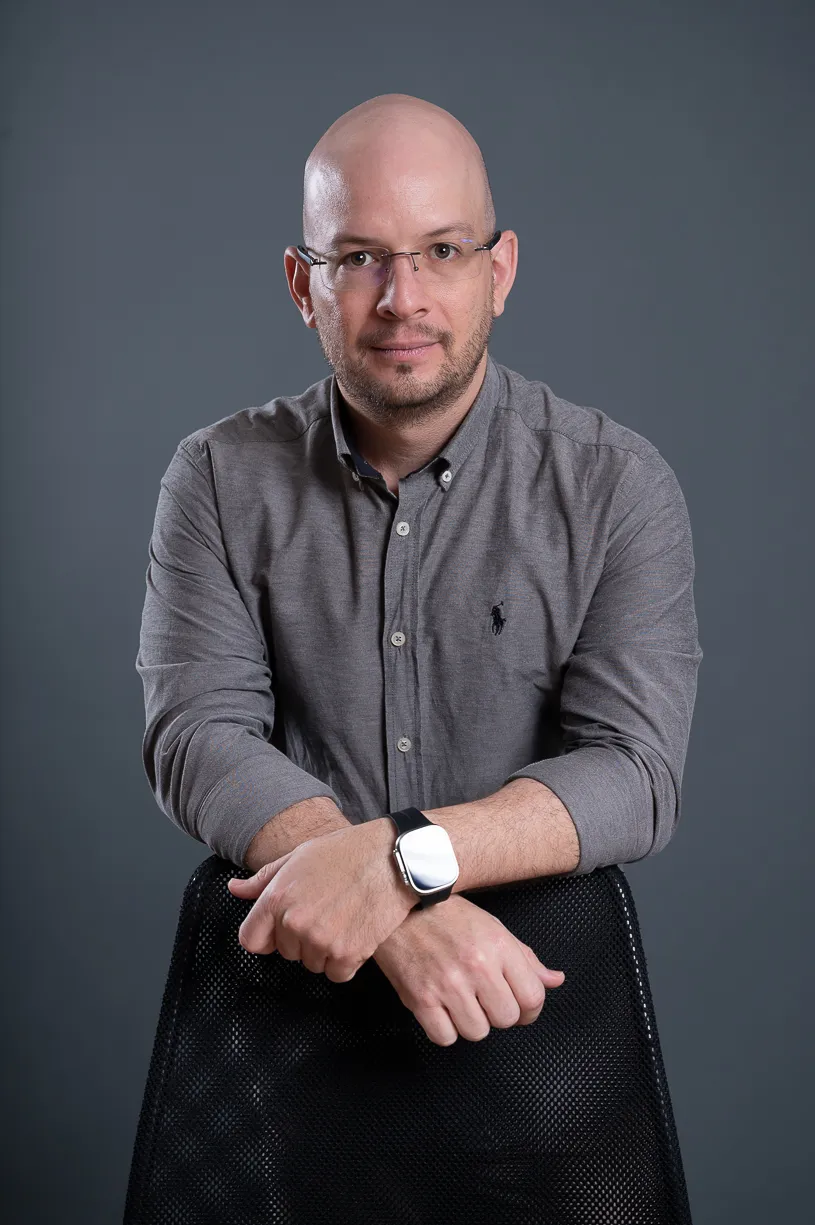
CloudSEK delivers fast, collaborative support and highly responsive service. XVigil centralizes critical threat intelligence, providing a clear, actionable view of external risks that strengthens both decision-making and our overall security posture.
"By becoming a Cloudsek Managed Service Provider, we have been able to handle high-impact incidents. Their threat intelligence platform has allowed us to stay ahead of threat actors in responding to incidents, adding value for our customers"
Collaborating with CloudSEK means accessing scalable cyber threat intelligence with proven impact across critical sectors. We are proud to align with a partner that enables organizations to stay ahead of evolving cyber threats.
CloudSEK delivers fast, collaborative support and highly responsive service. XVigil centralizes critical threat intelligence, providing a clear, actionable view of external risks that strengthens both decision-making and our overall security posture.
.webp)
A leading data backup company

The Private Office of Sheikh Saeed bin Ahmed Al Maktoum

Connecticut Innovations






Integrate CloudSEK’s IAV intelligence via APIs and automate threat resolution across 50+ applications in your security ecosystem.
Integrate CloudSEK’s IAV intelligence via APIs and automate threat resolution across 50+ applications in your security ecosystem.
What evaluation teams ask most often when comparing CloudSEK and Recorded Future.
Recorded Future is a cyber threat intelligence platform that delivers intelligence feeds. CloudSEK is an AI-native predictive cyber intelligence platform that correlates digital risk, threat intelligence, the external attack surface, the AI attack surface, and third-party risk into validated attack paths through Nexus AI. The categorical difference is intelligence feeds vs attack path prediction.

No. Recorded Future does not offer a dedicated AI attack surface monitoring product covering prompt injection detection, model abuse, training data exposure, or AI infrastructure misconfigurations. CloudSEK's AIVigil is built specifically for this category.
CloudSEK is built for predictive attack path reporting. Nexus AI produces validated attack graphs showing how attackers would chain initial access vectors into an executable attack path, which translates directly into the language boards and regulators use. Recorded Future is better suited for SOC and TI teams that need broad threat intelligence feeds and analyst tooling.
For most enterprises, yes. CloudSEK Threat Intelligence tracks 30,000+ threat actors, exploited CVEs, malware and ransomware activity, and hacktivist campaigns — with AI-curated, industry-tailored reporting. Teams with mature TI workflows that depend on Recorded Future's specific analyst pivot tooling may want to evaluate both in parallel.
Some enterprises run both during evaluation. CloudSEK's broader category coverage — digital risk protection, external attack surface, AI attack surface, third-party risk, and attack path intelligence in one platform — typically replaces several adjacent tools when consolidation is the goal.


A live walkthrough of XVigil, Threat Intelligence, BeVigil, AIVigil, SVigil, and Nexus AI — with example attack paths drawn from your industry's actual threat landscape.
Comparison information reflects publicly documented capabilities of each platform as of May 2026. Recorded Future is a registered trademark of Recorded Future, Inc.. This page is independent comparison content published by CloudSEK and is not endorsed by Recorded Future.
.png)

.jpg)
.jpg)