🚀 CloudSEK featured in the 2026 Frost Radar™!
Read more
.avif)

Cybercriminals constantly look for ways to profit from compromised systems, and one method that has gained attention is the use of hidden cryptocurrency mining software. Instead of stealing data or locking files, attackers secretly take control of computing resources and convert that power into digital currency. This approach allows them to generate continuous revenue while the victim’s device continues to operate normally.
The scale of this activity has grown rapidly as attackers automate mining across thousands of devices. According to the Cisco Talos threat intelligence report, cryptomining malware once accounted for more than 90% of all malware detected in cloud environments, highlighting how widely attackers exploit computing resources for cryptocurrency mining. Understanding how crypto malware operates is essential for recognizing suspicious behavior, protecting devices, and preventing unauthorized mining activity.
Crypto malware is malicious software that secretly uses a victim’s computer or server to mine cryptocurrency for an attacker. Instead of stealing files or locking systems, this malware abuses processing power, such as the CPU or GPU, to generate digital coins like Bitcoin or Monero.
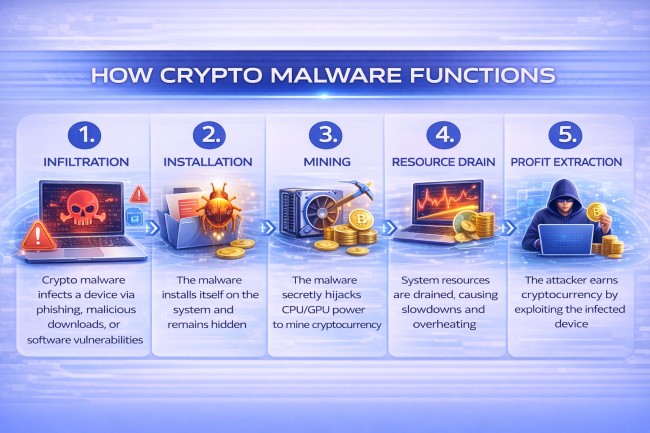
Crypto malware works by secretly installing mining software on a victim’s device and using its processing power to generate cryptocurrency. Attackers first gain access to a system through methods such as malicious downloads, infected email attachments, or compromised websites. Once the malware enters the system, it installs a mining component without the user’s knowledge.
After installation, the malware begins using the device’s CPU or GPU to solve complex cryptographic calculations required for cryptocurrency mining. These calculations are performed continuously in the background while the device remains in use. The infected system connects to a remote mining pool controlled by the attacker, which coordinates the mining activity across multiple compromised devices.
As the device contributes computing power to the mining pool, any cryptocurrency generated is transferred to the attacker’s digital wallet. The victim receives no benefit but experiences slower performance, higher energy consumption, and potential hardware strain caused by the constant workload.
Crypto malware takes several forms depending on how it enters a system and how it uses device resources for mining. Each type uses a different technique to exploit computing resources to generate cryptocurrency for the attacker.
Here are the main types of crypto malware:
Cryptojacking malware installs a mining program on a device without the owner’s authorization. Once active, it uses the system’s processing power to mine cryptocurrency continuously. The attacker collects the mined coins while the victim experiences reduced performance and higher energy use.
File-based crypto malware operates as a traditional malicious program installed on a system. It usually arrives through infected downloads, email attachments, or compromised software installers. After execution, the malware installs a mining component that runs in the background.
Fileless crypto malware runs in system memory instead of installing files on the hard drive. It often uses legitimate system tools such as PowerShell or scripting environments. Because it leaves fewer traces on the device, it can be harder for traditional security tools to detect.
Browser-based crypto mining malware uses scripts embedded in websites to start mining cryptocurrency when a user visits the page. The mining process runs through the web browser and stops once the user leaves the site. These scripts abuse the visitor’s device resources while the page is open.
Botnet-based crypto malware infects large numbers of devices and connects them to a command-and-control network. Attackers remotely control the infected machines and combine their computing power to mine cryptocurrency at scale. This approach allows criminals to generate continuous mining revenue from thousands of compromised systems.
Crypto malware and ransomware are both forms of malicious software, but they generate profit in different ways. Crypto malware secretly uses a victim’s computing resources to mine cryptocurrency for the attacker, while ransomware encrypts files and demands payment to restore access.
Crypto malware usually operates silently in the background, allowing attackers to earn money over time without alerting the victim. Ransomware, on the other hand, openly disrupts systems and forces the victim to pay a ransom to recover their data.
Crypto malware is dangerous because it silently consumes computing resources without the owner’s permission. Infected systems use their CPU or GPU continuously to mine cryptocurrency for attackers. This constant workload reduces system performance and slows down everyday operations.
Over time, the heavy resource usage can cause hardware strain. Devices may overheat, and internal components such as processors and cooling systems may wear out faster. In large environments like data centers or corporate networks, this activity can increase electricity costs and reduce system reliability.
Crypto malware can also create security risks beyond resource abuse. Once attackers gain access to a system, they may install additional malware or use the compromised device to spread infections across the network. This makes crypto malware not only a performance issue but also a potential gateway for larger cyberattacks.
In 2017, a large cryptomining campaign known as Smominru spread across the internet by exploiting a Windows vulnerability called EternalBlue. The operation infected more than 500,000 computers worldwide and secretly installed cryptocurrency mining software. The attackers used the infected machines to mine Monero cryptocurrency while victims experienced slower systems and higher resource usage. Security researchers estimated that the attackers generated millions of dollars in cryptocurrency before the botnet was disrupted.
Between 2017 and 2019, attackers widely abused a browser-based mining script called Coinhive. The script was originally designed for website owners to mine Monero using visitor CPU resources, but many attackers secretly embedded it into compromised websites. When users visited those pages, their browsers began mining cryptocurrency without their knowledge. Millions of internet users were affected before browsers and security tools started blocking the script.
In 2020, the LemonDuck malware campaign targeted organizations and individual systems by spreading through phishing emails and vulnerable servers. Once installed, the malware used infected machines to mine cryptocurrency and spread to other systems on the network. The campaign affected thousands of computers worldwide and significantly reduced system performance in compromised environments. Security researchers later reported that the attackers continuously updated the malware to evade detection and maintain control over infected devices.

When a device is infected with crypto malware, it typically shows signs such as:
Security teams detect crypto malware by observing unusual system activity, resource usage, and network behavior that indicate unauthorized cryptocurrency mining. Detection focuses on identifying patterns that differ from normal device operations.
Security teams monitor CPU and GPU utilization across systems. Crypto malware often runs continuously and causes abnormal processor usage even when the device is idle. Persistent high resource consumption can signal unauthorized mining activity.
Endpoint security platforms track activity on computers and servers. These tools monitor running processes, software changes, and abnormal system behavior. Suspicious programs using large amounts of processing power may indicate mining malware.
Behavioral analysis tools compare current activity with normal usage patterns. When a device suddenly shows constant processor spikes or unusual application behavior, the system flags it for investigation. This method helps identify hidden mining operations.
Crypto malware typically connects to cryptocurrency mining pools or command servers. Security teams analyze network traffic to detect communication with suspicious domains or mining infrastructure. Unexpected outbound connections can reveal active infections.
Threat intelligence platforms provide information about known mining campaigns, malicious domains, and attacker infrastructure. Security teams compare internal network activity with this intelligence to identify potential crypto malware infections.
You can prevent crypto malware by securing devices, controlling software execution, and monitoring network activity. Strong preventive practices reduce the chances of attackers installing unauthorized mining software.
Here are the best practices to prevent crypto malware:
Install reliable endpoint protection and antivirus tools on all systems. These solutions detect and block malicious files, mining software, and suspicious processes. Regular updates ensure protection against new cryptomining threats.
Use browser security settings and extensions that block unauthorized scripts. Many browser-based cryptomining attacks rely on hidden scripts embedded in websites. Script blockers and secure browser configurations help prevent these attacks.
Keep operating systems, applications, and plugins updated with the latest security patches. Many cryptomining infections exploit outdated software vulnerabilities. Regular updates close these security gaps.
Limit the ability to run unknown programs or scripts on systems. Application control policies allow only approved software to execute. This prevents hidden mining programs from starting.
Monitor network traffic and block connections to known cryptocurrency mining pools or suspicious domains. Security gateways and firewalls can stop infected devices from communicating with the attacker's infrastructure.
Educate users about the risks of downloading unknown software, clicking suspicious links, or opening unexpected email attachments. Many crypto malware infections begin through unsafe downloads or phishing attempts.
Yes, crypto malware is illegal. It secretly uses someone else’s computer or server to mine cryptocurrency without permission.
Crypto malware uses system resources to mine cryptocurrency in the background. Ransomware encrypts files and demands payment to restore access.
Yes, crypto malware can infect smartphones and tablets. Malicious apps or infected websites can install hidden mining software on mobile devices.
Yes, modern antivirus and endpoint security tools can detect many cryptomining threats. They identify suspicious processes, mining scripts, and unusual resource usage.
