🚀 أصبحت CloudSek أول شركة للأمن السيبراني من أصل هندي تتلقى استثمارات منها
اقرأ المزيد
.avif)

تمثل Hacktivism نقطة تقاطع التكنولوجيا والنشاط، حيث يتم استخدام التقنيات السيبرانية لتعزيز القضايا السياسية أو الاجتماعية أو الأيديولوجية.
نظرًا لأن المنصات الرقمية أصبحت مركزية للحوكمة والتجارة والخطاب العام، فقد ظهرت القرصنة كقوة مرئية ومدمرة في مشهد الأمن السيبراني. تمتد هذه الأنشطة إلى ما وراء الجرائم الإلكترونية التقليدية، مع التركيز على الاحتجاج والتعرض والاضطراب بدلاً من المكاسب المالية.
تشرح هذه المقالة ماهية القرصنة الإلكترونية، وكيف تعمل، والدوافع والتقنيات الكامنة وراءها، والأمثلة البارزة في العالم الحقيقي، وآثارها القانونية والأخلاقية والأمنية في البيئات الرقمية الحديثة.
Hacktivism هو الاستخدام المتعمد للإجراءات الرقمية غير المصرح بها لتعزيز الأجندات السياسية أو الاجتماعية أو الدينية أو البيئية.
تجمع Hacktivism بين تقنيات القرصنة وأهداف الناشطين وتعمل بدون حوافز مالية. يستهدف نشطاء القرصنة الأنظمة للتعبير عن المعارضة أو فضح الظلم أو الضغط على المؤسسات.
تشمل السمات الرئيسية للهاكتيفية ما يلي:
تزيد Hacktivism من المخاطر الإلكترونية من خلال إدخال جهات التهديد ذات الدوافع الأيديولوجية في البيئات الرقمية.
يتطلب فهم القرصنة الإلكترونية دراسة كيفية تنفيذ هذه الأنشطة، والأهداف الكامنة وراءها، والأساليب المستخدمة، والآثار المترتبة على المنظمات العاملة في بيئات رقمية مرئية للغاية.
تعمل Hacktivism من خلال تحديد الأصول الرقمية المكشوفة واستغلال نقاط الضعف التقنية أو البشرية لتعطيل العمليات أو توصيل رسائل أيديولوجية. يتبع النشاط عملية منظمة قابلة للتكرار بدلاً من العمل التلقائي.
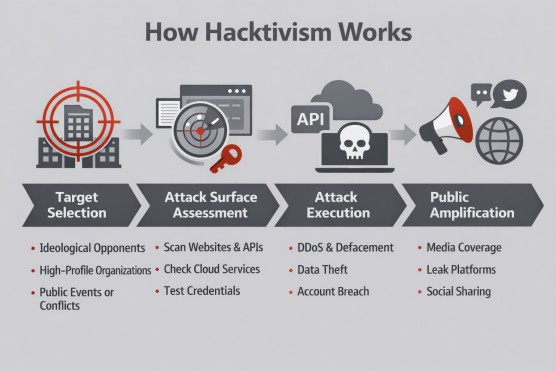
عادةً ما تتقدم عمليات Hacktivist من خلال المراحل التالية:
تعتمد Hacktivism على التقنيات الرقمية المنسقة بدلاً من الاحتجاج المادي. تتضمن نواقل الهجوم الشائعة خوادم الويب وواجهات التطبيقات وأنظمة البريد الإلكتروني وبيانات الاعتماد غير الآمنة أو المسربة.
بالنسبة للحكومات والشركات والمؤسسات ذات البنية التحتية العامة، تزيد القرصنة الإلكترونية من المخاطر التشغيلية ومخاطر السمعة، لا سيما أثناء الأحداث السياسية أو الحركات الاجتماعية أو التوترات الجيوسياسية.
تركز أهداف القرصنة على التأثير على الرأي والضغط على المؤسسات وتحدي السلطة من خلال الإجراءات الرقمية غير المصرح بها. إن حملات Hacktivist مدفوعة أيديولوجيًا وتعطي الأولوية للرؤية والتأثير بدلاً من المكاسب المالية.
نما نشاط Hacktivist من حيث الحجم والتعقيد في السنوات الأخيرة. وفقًا لـ ENISA، شكلت الهجمات التي تحركها الأيديولوجية تقريبًا 80% من جميع الحوادث المبلغ عنها من منتصف 2024 إلى منتصف 2025، مع هجمات الحرمان من الخدمة الموزعة (DDoS)، وهي طريقة شائعة في مجال القرصنة، تشمل 77 في المائة من تلك الحالات.
يستهدف الاضطراب توفر مواقع الويب والمنصات عبر الإنترنت لمقاطعة العمليات أو تقليل الرؤية العامة. تعكس هجمات DDoS ضد البوابات الحكومية أثناء الانتخابات هذا الهدف.
يتضمن التعرض تسريب البيانات الداخلية أو رسائل البريد الإلكتروني أو السجلات للكشف عن سوء السلوك المزعوم أو الفساد أو الإساءة. يتم استخدام الكشف عن البيانات للإضرار بالمصداقية وفرض المساءلة.
يعتمد الاحتجاج على الإجراءات المرئية مثل تشويه موقع الويب أو التلاعب بالمحتوى للتعبير عن المعارضة والتأثير على الروايات دون الإضرار بالنظام على المدى الطويل.
يستجيب الانتقام للرقابة أو التشريعات أو النشاط العسكري أو قرارات الشركات من خلال مهاجمة البنية التحتية الرقمية ذات الصلة.
تهدف الهجمات القائمة على الوعي إلى جذب انتباه وسائل الإعلام وتوسيع نطاق الوصول من خلال الحوادث الإلكترونية البارزة والمنصات الاجتماعية.
تشكل هذه الأهداف اختيار الهدف وتوقيت الهجوم والتقنيات، مما يجعل القرصنة تهديدًا إلكترونيًا يحركه الرؤية ويستجيب للأحداث.
تصف الأنواع الشائعة من القرصنة الطرق الأساسية التي تقوم بها الجهات الفاعلة ذات الدوافع الأيديولوجية بنشاط إلكتروني غير مصرح به لتعطيل العمليات أو كشف المعلومات أو ممارسة الضغط العام. تعطي هذه الأساليب الأولوية للرؤية والتأثير بدلاً من المكاسب المالية.
يتم توجيه كميات كبيرة من حركة المرور إلى الخوادم أو الشبكات لجعل مواقع الويب أو التطبيقات غير متاحة.
مثال: تعطيل البوابات الحكومية أثناء الاحتجاجات السياسية.
يتم تعديل محتوى موقع الويب لعرض الرسائل السياسية أو الشعارات أو صور الاحتجاج.
مثال: استبدال الصفحة الرئيسية للشركة برسائل مكافحة الرقابة.
يتم استخدام الوصول غير المصرح به لسرقة رسائل البريد الإلكتروني السرية أو قواعد البيانات أو المستندات الداخلية ونشرها علنًا.
مثال: نشر الاتصالات الداخلية لفضح الفساد المزعوم.
يتم الكشف علنًا عن المعلومات الشخصية للأفراد المرتبطين بمنظمة ما لأهداف التخويف أو الضغط.
مثال: نشر أسماء وعناوين المسؤولين الحكوميين أو التنفيذيين.
تُستخدم رسائل البريد الإلكتروني الخادعة أو مواقع الويب المزيفة لسرقة بيانات الاعتماد أو تسليم حمولات ضارة.
مثال: إرسال رسائل بريد إلكتروني مزيفة للوصول إلى الأنظمة الداخلية.
يتم استخدام البرامج الضارة مثل برامج التجسس أو برامج الفدية أو برامج تسجيل المفاتيح لمراقبة البنية التحتية أو تعطيلها أو إتلافها.
مثال: نشر برامج ضارة مخصصة لتصفية البيانات المؤسسية الحساسة.
يتم استغلال الثقة والسلوك البشري لتجاوز الضوابط الأمنية دون تدخل تقني متقدم.
مثال: انتحال شخصية موظفي تكنولوجيا المعلومات للحصول على الوصول إلى الشبكة.
غالبًا ما تجمع حملات Hacktivist بين تقنيات متعددة لزيادة الاضطراب والتعرض والضغط النفسي على المنظمات المستهدفة.
معظم مجموعات الهاكتيفيست المعترف بها هي مجموعات لامركزية أو كيانات مسماة تستخدم الهجمات الإلكترونية لدعم الأجندات الأيديولوجية أو السياسية أو الاجتماعية.
تعمل هذه المجموعات عبر الحدود، غالبًا بدون قيادة رسمية، وتستخدم إخفاء الهوية والتنسيق والرمزية لتضخيم أفعالها.
تختلف مجموعات الهاكتيفيست هذه في الهيكل والأدوات والدوافع ولكن لديهم استراتيجية مشتركة: استخدام الاضطرابات السيبرانية لتحدي السلطة والتأثير على الرأي العام.
تُظهر الأمثلة المعروفة عن القرصنة الإلكترونية كيف يتم استخدام النشاط السيبراني ذي الدوافع الأيديولوجية لتعطيل العمليات أو كشف المعلومات أو ممارسة الضغط السياسي أثناء الأحداث العالمية الكبرى. تتبع هذه الحوادث نمطًا ثابتًا: الاستهداف الرمزي والرؤية العامة والاضطراب الرقمي غير المصرح به.
تُظهر هذه الأمثلة أن القرصنة تتصاعد باستمرار أثناء الصراع السياسي والأزمات الدولية. من منظور الأمن السيبراني، يمثل نشاط الهاكتيفيست تهديدًا مدفوعًا بالرؤية يعطي الأولوية للتعطيل والتعرض للبيانات والتأثير على السمعة على المكاسب المالية.
تتميز Hacktivism بأنها تدمج النشاط مع النشاط السيبراني غير المصرح به، مدفوعًا بالإيديولوجيا بدلاً من الربح المالي أو التدمير المادي.
تعتبر القرصنة الإلكترونية غير قانونية بموجب قوانين الأمن السيبراني الوطنية والدولية، بغض النظر عن النية.
تصنف الأنظمة القانونية أعمال القرصنة على أنها جرائم إلكترونية، حتى لو كانت تخدم أسبابًا سياسية أو اجتماعية. تحدد الطريقة - وليس الرسالة - العواقب القانونية.
لا تزال القرصنة إجرامية بغض النظر عن الغرض، والمنظمات التي يستهدفها نشطاء القرصنة محمية قانونًا بموجب أطر الأمن السيبراني وقانون الخصوصية.
تؤثر Hacktivism على مخاطر الأمن السيبراني من خلال تقديم مهاجمين بدوافع أيديولوجية يستهدفون الأنظمة التي تواجه الجمهور من أجل الرؤية والتعطيل. يمتد التأثير إلى ما وراء الضرر الفني ويؤثر بشكل مباشر على العمليات والسمعة واستراتيجية الأمان.
يخلق نشاط Hacktivist العديد من التأثيرات القابلة للقياس على برامج الأمن السيبراني:
تجبر Hacktivism فرق الأمن السيبراني على حساب التهديدات التي تحركها الأيديولوجية بدلاً من الربح. يتطلب الدفاع الفعال فهم دوافع المهاجم، وتوقع المخاطر التي تحركها الأحداث، والاستعداد للطفرات المفاجئة في النشاط.
يتطلب منع هجمات القراصنة ضوابط فنية قوية ومراقبة مستمرة والاستعداد التشغيلي. نظرًا لأن نشاط الهاكتيفيست يستهدف الرؤية والتأثير العام، يجب على المنظمات إعطاء الأولوية لحماية الأنظمة التي تواجه الجمهور وقدرات الاستجابة السريعة.
يعتمد منع هجمات قراصنة الإنترنت على الدفاع الاستباقي والاستعداد في الوقت الفعلي، خاصة خلال فترات الحساسية السياسية أو الاجتماعية أو المتعلقة بالسمعة.
يتضمن مستقبل القرصنة الشبكات اللامركزية والتكتيكات المعززة بالذكاء الاصطناعي والمشاركة العميقة في النزاعات الجيوسياسية.
تتطور الهاكتيفية إلى ما وراء الاضطراب الأساسي، والتكيف مع التقنيات المتقدمة والحرب الأيديولوجية.
أصبحت Hacktivism أكثر استراتيجية ومجهولة وتقدمًا من الناحية التكنولوجية، مما يجعله مصدر قلق متزايد في المشهد العالمي للأمن السيبراني.
لا يزال Hacktivism يمثل تهديدًا إلكترونيًا نشطًا ومتطورًا تشكله الأحداث السياسية والحركات الاجتماعية والصراع العالمي. في حين أن فهم أساليبها واستراتيجيات الوقاية أمر ضروري، يجب على المنظمات تجاوز الوعي نحو التقييم القائم على المخاطر.
الخطوة التالية هي تقييم كيفية تأثير القرصنة على العمليات التجارية والثقة العامة والمرونة الرقمية. ويشمل ذلك تحديد الأصول المكشوفة، ومراقبة فترات النشاط الأيديولوجي المتزايد، ودمج سيناريوهات القرصنة في نماذج تهديدات المؤسسة.
إن الفحص المركّز لمخاطر القرصنة الإلكترونية يمكّن فرق الأمن من توقع النشاط وتحديد أولويات الدفاعات ومواءمة استراتيجية الأمن السيبراني مع الاعتبارات الجيوسياسية الأوسع نطاقًا والاعتبارات المتعلقة بالسمعة.
