🚀 أصبحت CloudSek أول شركة للأمن السيبراني من أصل هندي تتلقى استثمارات منها
اقرأ المزيد
.avif)

برنامج Crypto ransomware، المعروف أيضًا باسم برنامج الفدية المشفر، هو برنامج ضار يقوم بتشفير الملفات ويطالب بالدفع مقابل مفتاح فك التشفير. بمجرد اكتمال عملية التشفير، يفقد الضحايا الوصول إلى البيانات المهمة على الرغم من أن نظام التشغيل قد لا يزال يعمل بشكل طبيعي.
يشير مصطلح «التشفير» إلى التشفير، وهو الطريقة المستخدمة لقفل الملفات، وليس العملة المشفرة نفسها. ومع ذلك، عادةً ما يطلب المهاجمون دفع الفدية بالعملات الرقمية نظرًا لصعوبة تتبعها وعكسها.
على عكس الأشكال الأخرى من البرامج الضارة التي تركز على المراقبة أو التعطيل، تستهدف برامج الفدية المشفرة بشكل مباشر توفر البيانات. هذا النهج يجعل التعافي صعبًا وغالبًا ما يجبر الضحايا على التفكير في الدفع على الرغم من عدم وجود أي ضمان لاستعادة الوصول.
تتبع Crypto ransomware سلسلة هجمات يمكن التنبؤ بها تبدأ بإصابة النظام، وتتقدم من خلال تشفير الملفات، وتنتهي بطلب فدية لاستعادة البيانات.
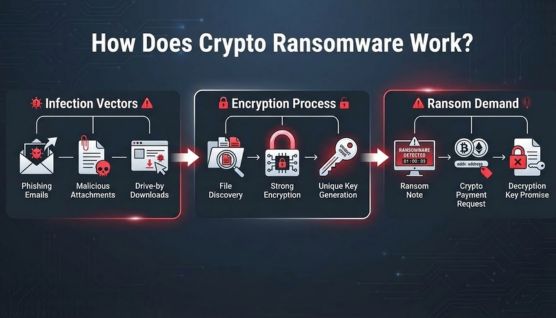
عادةً ما تدخل Crypto ransomware الأنظمة من خلال طرق التسليم الخادعة التي تستغل سلوك المستخدم أو الثغرات الأمنية غير المصححة.
بعد الوصول، يقوم برنامج الفدية بفحص النظام لتحديد الملفات التي ستسبب أقصى قدر من الاضطراب عند تشفيرها.
بمجرد تشفير الملفات، يقوم برنامج الفدية بإبلاغ الضحية ويحدد شروط استعادة البيانات.
العملة المشفرة هي طريقة الدفع الأساسية لهجمات برامج الفدية المشفرة لأنها تتيح المعاملات السريعة عبر الحدود خارج الأنظمة المالية التقليدية.
تسمح العملات الرقمية للمهاجمين بتحصيل المدفوعات دون الاعتماد على البنوك أو الوسطاء الخاضعين للتنظيم. وهذا يمكّن عمليات برامج الفدية من التوسع عالميًا مع الحد الأدنى من احتكاك المعاملات.
من الصعب ربط معاملات العملة المشفرة مباشرة بهويات العالم الحقيقي. يستغل المهاجمون هذه الفجوة لتقليل مخاطر الإسناد وتعقيد التحقيقات.
بمجرد التأكيد، لا يمكن عكس مدفوعات العملة المشفرة. يؤدي ذلك إلى إزالة خيارات الاسترداد بعد إرسال الأموال، بغض النظر عما إذا كانت مفاتيح فك التشفير متوفرة أم لا.
لا تزال عملة البيتكوين هي عملة الفدية الأكثر طلبًا بسبب السيولة والقبول الواسع النطاق. يفضل بعض المهاجمين أيضًا العملات المشفرة التي تركز على الخصوصية لزيادة تقليل رؤية المعاملات.
تشير بيانات FinCEN إلى أن ما يقرب من 97٪ من معاملات برامج الفدية المبلغ عنها تضمنت بيتكوين. لاحظ مكتب التحقيقات الفيدرالي أيضًا ارتفاعًا في طلبات Monero، حيث أضافت بعض المجموعات أقساط دفع بنسبة 10٪ إلى 20٪ لتقليل مخاطر التتبع.
نظرًا لأن ضغط الفدية يعتمد على الاستعجال، يختار المهاجمون بعناية الملفات التي سيتم تشفيرها لزيادة التعطيل إلى أقصى حد.
تستهدف برامج الفدية المشفرة الملفات الضرورية للاستخدام الشخصي أو العمليات التجارية، حيث أن تقييد الوصول يخلق نفوذًا فوريًا. ينصب التركيز على التعطيل بدلاً من الحجم.
يتم تشفير المستندات والصور ومقاطع الفيديو بشكل متكرر لأنها غالبًا ما تحتوي على معلومات شخصية لا يمكن الاستغناء عنها. يؤدي فقدان الوصول إلى ضغط عاطفي حتى عندما يظل النظام قابلاً للاستخدام.
تعد قواعد البيانات والسجلات المالية والمستندات الداخلية أهدافًا عالية القيمة في البيئات التنظيمية. يمكن أن يؤدي تشفير هذه البيانات إلى إيقاف العمليات وتصاعد التأثير المالي بسرعة.
غالبًا ما يتم تشفير ملفات النسخ الاحتياطي لإزالة خيارات الاسترداد قبل أن يتمكن الضحايا من الاستجابة. بدون نسخ احتياطية قابلة للاستخدام، تواجه المؤسسات بدائل أقل بكثير.
يقوم المهاجمون بتحديد أولويات الملفات بناءً على السرعة التي يؤدي بها غيابها إلى تعطيل النشاط العادي.
تختلف برامج الفدية المشفرة وبرامج الفدية المصغّرة في كيفية تقييد الوصول والضغط على الضحايا. بينما يطلب كلاهما الدفع، تؤثر الطريقة المستخدمة لرفض الوصول على خيارات الاسترداد.
من خلال استهداف البيانات بدلاً من الوصول إلى الجهاز، عادةً ما تسبب برامج الفدية المشفرة ضررًا أكثر ديمومة.
تعد برامج الفدية المشفرة خطيرة لأنها تزيل الوصول إلى البيانات الأساسية بينما تظل الأنظمة متصلة بالإنترنت وقابلة للاستخدام. هذا يمنع العمل من الاستمرار دون التسبب في فشل فوري للنظام.
تعمل الملفات المشفرة على إيقاف المهام الشخصية والعمليات التجارية التي تعتمد على المستندات أو قواعد البيانات أو السجلات. غالبًا ما تؤدي فترة التوقف الناتجة إلى خسارة مالية ومشكلات الامتثال والجداول الزمنية الطويلة للاسترداد.
لا يضمن دفع الفدية استعادة البيانات. يجب على الضحايا اتخاذ قرارات تحت الضغط دون ضمان موثوق باستعادة الوصول.
تعتمد استعادة الملفات بعد هجوم برامج الفدية المشفرة بشكل أساسي على الإعداد بدلاً من إجراءات ما بعد الهجوم. بمجرد اكتمال التشفير، تصبح خيارات الاسترداد محدودة وغير مؤكدة.
يتحكم المهاجمون في مفاتيح فك التشفير من لحظة تشفير الملفات. الوصول إلى هذه المفاتيح غير مضمون أبدًا، حتى بعد الدفع.
يحاول بعض الضحايا الدفع لاستعادة الوصول إلى ملفاتهم. تختلف النتائج على نطاق واسع وغالبًا ما تؤدي إلى التعافي الجزئي أو عدم الاستجابة على الإطلاق.
توفر النسخ الاحتياطية في وضع عدم الاتصال المسار الأكثر موثوقية للاسترداد. يمكن استعادة الأنظمة دون التعامل مع المهاجمين عند توفر نسخ احتياطية نظيفة.
توجد برامج فك التشفير العامة لعدد صغير من متغيرات برامج الفدية القديمة. تعتمد برامج الفدية المشفرة الحديثة على التشفير القوي الذي لا يمكن تجاوزه من خلال الأدوات وحدها.
يمكن أن تؤدي محاولات الاسترداد غير الصحيحة إلى إتلاف الملفات المشفرة بشكل دائم. غالبًا ما تقلل القرارات المتسرعة من خيارات الاسترداد بدلاً من تحسينها.
يحدد الإعداد والوقاية نجاح الاسترداد أكثر بكثير من أي إجراء يتم اتخاذه بعد التشفير.
يعتمد منع برامج الفدية المشفرة على تقليل التعرض والحد من أسطح الهجوم والحفاظ على خيارات الاسترداد قبل وقوع الحادث.
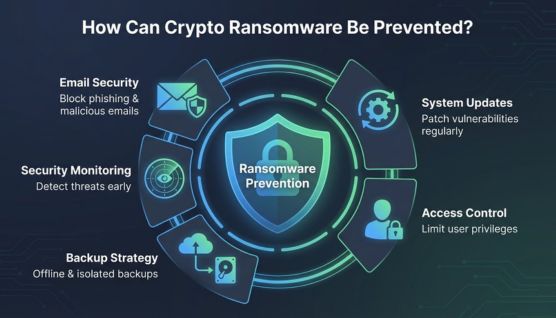
التصيد الاحتيالي لا تزال طريقة التسليم الأساسية لبرامج الفدية المشفرة. تؤدي تصفية رسائل البريد الإلكتروني الضارة وتدريب المستخدمين على التعرف على الرسائل المشبوهة إلى تقليل مخاطر الإصابة الأولية.
توفر البرامج غير المصححة نقاط دخول شائعة لهجمات برامج الفدية. تعمل التحديثات المنتظمة على إغلاق نقاط الضعف المعروفة والحد من فرص الاستغلال.
تعمل النسخ الاحتياطية الموثوقة على حماية البيانات من الفقد الدائم بعد التشفير. تمنع النسخ الاحتياطية غير المتصلة بالإنترنت والمعزولة برامج الفدية من تشفير ملفات الاسترداد.
يؤدي تقييد امتيازات المستخدم إلى الحد من مدى انتشار برامج الفدية داخل النظام. يمنع الوصول المنخفض المهاجمين من تشفير الموارد المشتركة أو الهامة.
يساعد الاكتشاف المبكر على احتواء برامج الفدية قبل حدوث تشفير واسع النطاق. تسمح مراقبة النشاط غير المعتاد بالعزلة والاستجابة بشكل أسرع.
تقلل الوقاية الفعالة من احتمالية الإصابة وتقلل من تأثير الهجمات الناجحة.
تحدد الإجراءات التي يتم اتخاذها فورًا بعد هجوم برامج الفدية المشفرة مدى انتشار الضرر ومقدار البيانات التي يمكن الحفاظ عليها في النهاية.
افصل الأجهزة المصابة من الشبكات بمجرد اكتشاف نشاط برامج الفدية. تمنع العزلة المزيد من التشفير وتحد من الحركة الجانبية عبر الأنظمة المتصلة.
تجنب مسح الأنظمة أو تعديل الملفات قبل تقييم نطاق الهجوم. يدعم الاحتفاظ بالسجلات وملاحظات الفدية والملفات المشفرة قرارات التحقيق والاسترداد.
حدد الأنظمة والملفات والنسخ الاحتياطية المتأثرة. يساعد فهم مدى التشفير في تحديد أولويات جهود الاستجابة والاستعادة.
دفع الفدية لا يضمن استعادة الملفات وقد يشجع على المزيد من الهجمات. يجب أن تستند القرارات إلى خيارات الاسترداد بدلاً من الضغط من المهاجمين.
قم باستعادة البيانات فقط من النسخ الاحتياطية النظيفة التي تم التحقق منها بعد إزالة عدوى برامج الفدية. يمكن أن تؤدي إعادة توصيل الأنظمة في وقت مبكر جدًا إلى الإصابة مرة أخرى أو فقدان بيانات إضافية.
قم بتحليل كيفية حدوث الهجوم ومعالجة الثغرات في عناصر التحكم في الأمان. إن تعزيز الدفاعات يقلل من احتمالية وقوع حوادث مستقبلية.
الاستجابة المنهجية تحد من الضرر وتدعم التعافي، في حين أن الإجراءات المتسرعة غالبًا ما تزيد من الخسارة على المدى الطويل.
يدعم CloudSek منع برامج الفدية المشفرة من خلال تحديد إشارات المخاطر الخارجية قبل أن تصل الهجمات إلى مرحلة التشفير. وينصب تركيزها على الاكتشاف المبكر لنية المهاجم والأصول المكشوفة وإساءة استخدام البنية التحتية بدلاً من الاستجابة بعد الحادث.
باستخدام منصة xviGil الخاصة بها، تراقب CloudSek نشاط الويب السطحي والعميق والمظلم بحثًا عن مؤشرات مثل بيانات الاعتماد المسربة ومناقشات مجموعة برامج الفدية والبنية التحتية للتصيد الاحتيالي. تساعد هذه الرؤية المؤسسات على اكتشاف أنماط الاستهداف وإعداد الحملة قبل اختراق الأنظمة.
يساعد CloudSek أيضًا على تقليل نقاط دخول الهجوم من خلال تحديد الخدمات المكشوفة والتكوينات الخاطئة التي يتم استغلالها بشكل شائع للوصول الأولي. ومن خلال تقديم تنبيهات تستند إلى السياق، فإنها تمكن فرق الأمان من التصرف مبكرًا والحد من الظروف التي تسمح لهجمات برامج الفدية المشفرة بالنجاح.
