🚀 أصبحت CloudSek أول شركة للأمن السيبراني من أصل هندي تتلقى استثمارات منها
اقرأ المزيد
.avif)

موجز معلومات التهديدات عبارة عن تدفق مستمر من بيانات التهديدات الإلكترونية المنظمة المستخدمة لتحديد الأنشطة الضارة ومنعها. وفي إطار المعلومات المتعلقة بالتهديدات السيبرانية (CTI)، تدعم هذه الخلاصات الاكتشاف الاستباقي من خلال الكشف المستمر عن المخاطر الناشئة وأنماط الهجوم.
يعتمد اكتشاف هذه المخاطر على مؤشرات الاختراق (IOCs)، بما في ذلك عناوين IP الضارة والنطاقات وعناوين URL وتجزئات الملفات. تسمح الأنماط المستمدة من هذه المؤشرات لأنظمة الأمان بالتعرف على سلوكيات الهجوم المعروفة والاستجابة للنشاط المشبوه في الوقت الفعلي.
تزداد القيمة التشغيلية من خلال التكامل مع أنظمة المعلومات الأمنية وإدارة الأحداث (SIEM) ومنصات استخبارات التهديدات (TiPs). يعمل الارتباط بين ذكاء التهديدات الخارجية ونشاط الشبكة الداخلية على تعزيز دقة الكشف وتقليل وقت الاستجابة بشكل كبير.
تعمل خلاصات معلومات التهديدات خلال دورة حياة مستمرة حيث تعتمد كل مرحلة على المرحلة السابقة لتحسين وتقديم رؤى قابلة للاستخدام.
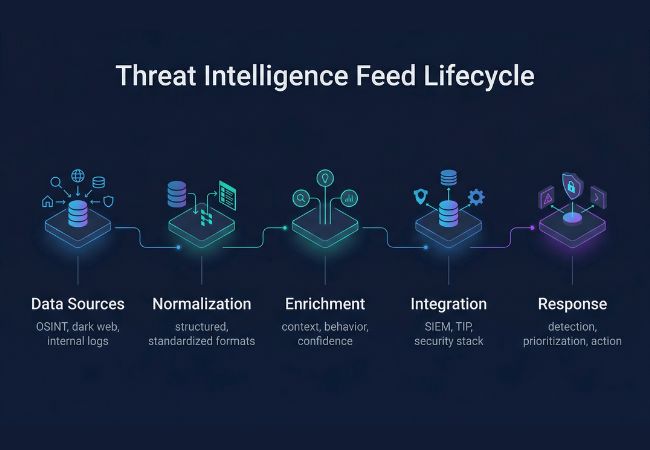
تعتمد منصات معلومات التهديدات على مصادر بيانات متعددة توفر باستمرار مدخلات أولية حول البنية التحتية للمهاجمين والنشاط الضار وحملات التهديدات الناشئة.
تعرض المنصات العامة مثل مدونات الأمان والمنتديات وأسواق الويب المظلمة مؤشرات مبكرة مثل بيانات الاعتماد المسربة والنطاقات الضارة واستغلال المناقشات. تتطلب المعلومات غير المهيكلة من هذه المصادر التحقق من الصحة ولكنها غالبًا ما تكشف التهديدات قبل أن تحددها أنظمة الكشف الرسمية.
يقوم موردو الأمان بجمع بيانات التهديدات من خلال شبكات الاستشعار العالمية وخطوط أنابيب تحليل البرامج الضارة ومراقبة حركة المرور على نطاق واسع. تشمل المخرجات المنسقة المؤشرات التي تم التحقق منها ورسم خرائط البنية التحتية وبيانات الإحالة المرتبطة بحملات التهديد النشطة.
تقوم البيئات التنظيمية بإنشاء سجلات مستمرة من خلال جدران الحماية وأنظمة اكتشاف نقاط النهاية وأدوات مراقبة الشبكة. يؤكد ارتباط هذا القياس عن بُعد بالمؤشرات الخارجية ما إذا كانت التهديدات المحددة تتفاعل بنشاط مع الأصول الداخلية.
تقوم المجموعات الموثوقة والتحالفات الخاصة بالقطاعات بتوزيع المعلومات المتعلقة بالحوادث المستمرة ونشاط الهجوم المنسق. تعمل مجموعات البيانات المشتركة على تحسين الرؤية في أنماط الحملات التي تستهدف الصناعات والبيئات المماثلة.
تلتقط بيئات الخداع وأجهزة الاستشعار الموزعة حركة مرور الهجوم المباشر، بما في ذلك محاولات الاستغلال واتصالات الأوامر والتحكم. يوفر السلوك المرصود رؤية مباشرة لتقنيات المهاجم وأساليب التدخل المتطورة.
يعتمد تصنيف خلاصات المعلومات على كيفية جمع المعلومات والتحقق من صحتها وتطبيقها ضمن عمليات الأمان.

تجمع الخلاصات مفتوحة المصدر المؤشرات من المستودعات المتاحة للجمهور ومجتمعات البحث وقواعد بيانات التهديدات المشتركة. التغطية الواسعة تجعلها مفيدة للوعي العام، لكن التحقق غير المتسق يمكن أن يؤدي إلى نتائج إيجابية كاذبة.
توفر الخلاصات التجارية معلومات دقيقة يتم جمعها من خلال البنية التحتية للمراقبة العالمية وفرق البحث وأنظمة الكشف الخاصة. تعمل المؤشرات التي تم التحقق منها والإثراء السياقي على تحسين الدقة ودعم عمليات الأمان في الوقت الفعلي.
يتم إنشاء الخلاصات التي يحركها المجتمع من خلال مجموعات تبادل المعلومات حيث تتبادل المؤسسات مؤشرات التهديدات وبيانات الحوادث. تعمل المساهمات الجماعية على تحسين الرؤية في الهجمات الخاصة بالقطاعات وحملات التهديد المنسقة.
يتم إنشاء الخلاصات الداخلية داخل المؤسسة باستخدام القياس عن بُعد من نقاط النهاية والشبكات وأدوات الأمان. يزيد الذكاء الخاص بالبيئة من دقة الكشف من خلال التركيز على التهديدات ذات الصلة بالأصول الداخلية.
تجمع الخلاصات الهجينة مصادر ذكاء متعددة في بث واحد لتحسين التغطية وتقليل النقاط العمياء. تعمل المعلومات المجمعة على تعزيز الاتساق من خلال موازنة الرؤية الواسعة مع الرؤى التي تم التحقق منها.
تأتي رؤى الأمان القابلة للتنفيذ من أشكال مختلفة من معلومات التهديدات المنظمة التي تساعد في تحديد الأنشطة الضارة وفهم كيفية تنفيذ الهجمات.
تُستخدم المؤشرات المعروفة مثل عناوين IP الضارة والنطاقات وعناوين URL وتجزئات الملفات على نطاق واسع لاكتشاف التهديدات. تقوم أدوات الأمان بمطابقة هذه المؤشرات مقابل النشاط المباشر لتحديد البنية التحتية المعروفة للهجوم.
تساعد التوقيعات الفريدة المستمدة من تحليل البرامج الضارة في تحديد الملفات الضارة ومتغيراتها. تستخدم محركات الكشف هذه التوقيعات للتعرف على التهديدات التي تمت دراستها وتصنيفها بالفعل.
تعتمد حملات الهجوم على البنية التحتية مثل خوادم الأوامر والتحكم وخدمات الاستضافة والنطاقات التي تم إنشاؤها. يساعد تتبع هذه البنية التحتية في الكشف عن كيفية عمل المهاجمين والحفاظ على الثبات.
تصف الأنماط السلوكية كيفية وصول المهاجمين والتنقل داخل الأنظمة واستخراج البيانات. يؤدي تعيين هذه التقنيات إلى أطر مثل MITRE ATT&CK إلى تحسين فهم سلوك المهاجم.
تسلط المعلومات حول الثغرات الأمنية المستغلة الضوء على نقاط الضعف التي يستهدفها المهاجمون بنشاط. يتيح الوعي بهذه التعرضات لفرق الأمن إعطاء الأولوية للتصحيح وتقليل المخاطر.
غالبًا ما تتضمن معلومات التهديدات نطاقات التصيد الاحتيالي وقوالب البريد الإلكتروني وتقنيات انتحال الشخصية المستخدمة في هجمات الهندسة الاجتماعية. يساعد التعرف على هذه الأنماط في منع سرقة بيانات الاعتماد والهجمات التي تستهدف المستخدم.
يعزز السياق الإضافي مثل مستويات الثقة وتقييمات الخطورة وتفاصيل الإحالة عملية اتخاذ القرار. تتيح المعلومات ذات الأولوية للفرق التركيز على التهديدات عالية التأثير بدلاً من الضوضاء منخفضة المخاطر.
تعتمد عمليات الأمان الحديثة على رؤية التهديدات في الوقت المناسب لاكتشاف الهجمات وتحديد أولوياتها والاستجابة لها قبل تصعيدها.
يسمح الوصول المستمر إلى مؤشرات التهديدات لفرق الأمان بتحديد النشاط الضار في مرحلة مبكرة. يقلل الاكتشاف الأسرع من اضطرار مهاجمي النوافذ إلى استغلال الأنظمة والتحرك أفقيًا.
توفر المعلومات الاستخبارية التي تم جمعها مسبقًا سياقًا فوريًا أثناء الحوادث الأمنية. يمكن لفرق الاستجابة التصرف بسرعة دون قضاء الوقت في التحقيق الأولي وتحديد التهديدات.
تعمل المعلومات التي تم التحقق منها على تقليل الضوضاء عن طريق تصفية التنبيهات غير ذات الصلة أو التنبيهات منخفضة الثقة. تساعد الدقة العالية فرق الأمن على التركيز على التهديدات الحقيقية بدلاً من مطاردة الإيجابيات الكاذبة.
إن الوعي بالتهديدات الناشئة يمكّن المؤسسات من إعداد الدفاعات قبل وقوع الهجمات. تعمل الإجراءات الوقائية مثل حظر البنية التحتية الضارة وتصحيح الثغرات الأمنية على تقليل التعرض.
تساعد البيانات السياقية مثل الخطورة ودرجات الثقة وأنماط الهجوم في تصنيف التهديدات بناءً على المخاطر. يضمن تحديد الأولويات معالجة التهديدات الحرجة قبل التهديدات الأقل تأثيرًا.
يتيح التكامل مع أدوات الأمان عمليات سير عمل الاكتشاف والاستجابة التلقائية. تعمل الأتمتة على تقليل الجهد اليدوي وتسمح بمعالجة أسرع لنشاط التهديدات ذات الحجم الكبير.
يعمل الذكاء المستمر على تحسين الرؤية الشاملة عبر الشبكات ونقاط النهاية والتطبيقات. تؤدي الرؤية الأفضل إلى اتخاذ قرارات أكثر استنارة واستراتيجيات أمنية أقوى على المدى الطويل.
تشمل تطبيقات العالم الحقيقي وظائف أمنية متعددة حيث يؤثر الوعي بالتهديدات بشكل مباشر على القرارات التشغيلية وتخفيف المخاطر.
تعتمد فرق الأمان المركزية على الذكاء الخارجي لإعطاء معنى للتنبيهات التي يتم إنشاؤها عبر البيئات المعقدة. يساعد السياق حول البنية التحتية للمهاجمين والحملات المعروفة على فصل التهديدات الحقيقية عن الضوضاء الروتينية.
غالبًا ما تشير محاولات المصادقة المتكررة من نطاقات IP المرتبطة بنشاط التسلل السابق إلى هجمات منسقة. يسمح الارتباط السريع للمحللين بتصعيد الحوادث ومنع الوصول قبل تعميق التسوية.
غالبًا ما تظل التهديدات غير المكتشفة مخفية داخل نشاط الشبكة العادي، مما يتطلب تحقيقًا استباقيًا يسترشد بمدخلات المعلومات. تساعد سلوكيات المهاجمين المعروفة وأنماط البنية التحتية في الكشف عن الحالات الشاذة التي تتجاهلها الأنظمة الآلية.
يمكن أن تشير الاتصالات الصادرة بالنطاقات المرتبطة سابقًا بحملات البرامج الضارة إلى اختراق في مرحلة مبكرة. يؤدي اتباع هذه الإشارات إلى تمكين الفرق من تتبع حركة المهاجم واحتواء التهديدات قبل التصعيد.
تعتمد المنصات المالية على الذكاء لتحديد البنية التحتية المستخدمة في عمليات الاحتيال وعمليات الاستحواذ على الحسابات والمعاملات غير المصرح بها. تسمح رؤية الأصول التي يسيطر عليها المهاجم بالتدخل المبكر قبل نجاح محاولات الاحتيال.
غالبًا ما تؤدي محاولات تسجيل الدخول الناشئة من مناطق مرتبطة بعمليات التصيد المعروفة إلى ضوابط المخاطر في الأنظمة المصرفية. حظر هذا الوصول يمنع المعاملات غير المصرح بها ويحمي حسابات العملاء.
تستخدم أدوات التحكم في المحيط والضمانات الداخلية الذكاء لتقييد الاتصال بالبنية التحتية الضارة. تعمل التحديثات المستمرة على تعزيز الدفاعات ضد أساليب التسلل المتطورة ومحاولات الوصول غير المصرح بها.
غالبًا ما يتم حظر حركة المرور الموجهة نحو خوادم الأوامر والتحكم المرتبطة بالحملات النشطة على مستوى جدار الحماية. يؤدي تعطيل هذا الاتصال إلى منع المهاجمين من الحفاظ على السيطرة على الأنظمة المخترقة.
تعتمد بيئات البريد الإلكتروني على الذكاء لتحديد المرسلين المخادعين والنطاقات الضارة وأنماط انتحال الشخصية. التعرف على هذه العناصر يقلل من التعرض لهجمات الهندسة الاجتماعية.
يمكن تصفية الرسائل الناشئة من المجالات المستخدمة مؤخرًا في حملات انتحال الشخصية قبل الوصول إلى المستخدمين. تعمل التصفية المبكرة على الحد من التفاعل مع المحتوى الضار وتقليل مخاطر اختراق بيانات الاعتماد.
تقوم فرق الأمن بتقييم نقاط الضعف والتهديدات بناءً على اتجاهات الاستغلال في العالم الحقيقي التي تتم ملاحظتها من خلال الذكاء. يتحول التركيز نحو المخاطر المستخدمة بنشاط في الهجمات بدلاً من نقاط الضعف النظرية.
عادةً ما تتلقى الثغرة الأمنية المرتبطة بحملات برامج الفدية المستمرة اهتمامًا فوريًا أثناء دورات التصحيح. تقلل المعالجة ذات الأولوية من احتمالية التعطل التشغيلي وفقدان البيانات.
تظهر الاختلافات بين خلاصات معلومات التهديدات المجانية والمدفوعة بشكل أساسي في جودة البيانات والتوقيت والتغطية والموثوقية التشغيلية.
يعتمد اختيار التغذية الصحيحة لمعلومات التهديدات على مواءمة جودة المعلومات والتوافق والمتطلبات التشغيلية مع استراتيجية أمان المؤسسة.
تؤثر المعلومات الموثوقة بشكل مباشر على مدى فعالية تحديد التهديدات والتعامل معها. غالبًا ما تُحدث المدخلات منخفضة الجودة ضوضاء، مما يجعل من الصعب التمييز بين الهجمات الحقيقية والنشاط غير الضار.
تحدد أدوات الأمان الحالية مدى سلاسة استهلاك الذكاء والتصرف بناءً عليه. عادةً ما يؤدي ضعف التوافق إلى الحلول اليدوية وإبطاء عمليات التحليل والاستجابة.
تتطور المناظر الطبيعية للتهديدات باستمرار، مما يجعل التوقيت عاملاً حاسمًا. غالبًا ما تفشل المعلومات الاستخباراتية التي تصل بعد فوات الأوان في منع الهجمات الجارية بالفعل.
نادرًا ما توفر المؤشرات الأولية وحدها وضوحًا كافيًا أثناء التحقيقات. يساعد السياق الإضافي مثل أنماط السلوك أو مستويات الخطورة الفرق على فهم المخاطر الفعلية وراء كل إشارة.
يجب أن تعكس قرارات الإنفاق مستوى التعرض والنضج التشغيلي للمنظمة. غالبًا ما يؤدي الاستثمار المفرط في الذكاء المعقد دون القدرة على استخدامه بفعالية إلى إهدار الموارد.
تلعب خلاصات معلومات التهديدات دورًا مركزيًا في الأمن السيبراني الحديث من خلال تحويل إشارات التهديد المتناثرة إلى رؤى قابلة للتنفيذ يمكن لفرق الأمن استخدامها بفعالية. تسمح الرؤية المستمرة للبنية التحتية للمهاجمين وأنماط السلوك والمخاطر الناشئة للمؤسسات بالبقاء في صدارة التهديدات المتطورة بدلاً من الاستجابة بعد حدوث الضرر.
لا يعتمد الاستخدام الفعال للذكاء على الوصول إلى الخلاصات عالية الجودة فحسب، بل أيضًا على مدى تكامل هذا الذكاء وتطبيقه في العمليات الأمنية. تحدد المواءمة القوية بين الذكاء والأدوات وعمليات صنع القرار في النهاية مدى قدرة المؤسسة على اكتشاف التهديدات وتحديد أولوياتها والتخفيف من حدتها.
يتضمن المثال الشائع الخلاصات التي توفر قوائم بعناوين IP الضارة والنطاقات وعناوين URL المرتبطة بالهجمات الإلكترونية. تستخدم أنظمة الأمان هذه القوائم لحظر التهديدات المعروفة ومراقبة الأنشطة المشبوهة.
يتم التسليم عادةً من خلال واجهات برمجة التطبيقات أو تنزيلات الملفات أو التنسيقات القياسية مثل STIX/TAXII. يتيح التكامل مع منصات الأمان الاستيعاب التلقائي والاستخدام في الوقت الفعلي.
تعتمد الدقة على المصدر وعملية التحقق وراء الذكاء. توفر الخلاصات التجارية عمومًا موثوقية أعلى، بينما قد تتطلب الخلاصات المفتوحة تصفية إضافية.
يمكن للمؤسسات الصغيرة استخدام موجزات مجانية أو منخفضة التكلفة لتحسين رؤية الأمان الأساسية. يساعد التكامل الصحيح مع الأدوات الحالية على تحقيق أقصى قدر من الفعالية دون استثمارات كبيرة.
تعد التحديثات المتكررة ضرورية لمواكبة التهديدات سريعة التطور والبنية التحتية للمهاجمين. يوفر الذكاء في الوقت الفعلي أو القريب من الوقت الفعلي الحماية الأكثر فعالية.
