🚀 أصبحت CloudSek أول شركة للأمن السيبراني من أصل هندي تتلقى استثمارات منها
اقرأ المزيد
.avif)

اكتشاف التهديدات في الوقت الفعلي هو قدرة أنظمة الأمان على تحديد النشاط الضار والاستجابة له فور حدوثه. تتيح المراقبة المستمرة إمكانية الرؤية الفورية للسلوك المشبوه عبر الشبكات ونقاط النهاية والبيئات السحابية.
تقوم منصات الأمان بتحليل تدفقات البيانات مثل نشاط تسجيل الدخول وأنماط حركة المرور وأحداث النظام لاكتشاف المخالفات. يساعد الاكتشاف السريع على منع التهديدات من التصعيد إلى حوادث أمنية أو خروقات أكبر.
تعتمد بيئات الأمن السيبراني الحديثة على الاكتشاف في الوقت الفعلي للحفاظ على المرونة التشغيلية وتقليل وقت الاستجابة. التعقيد المتزايد للبنية التحتية الرقمية يجعل التعرف الفوري على التهديدات أمرًا ضروريًا للحفاظ على التحكم والرؤية.
تكتشف منصات الأمان التهديدات في الوقت الفعلي من خلال تحليل تدفقات البيانات المستمرة باستخدام طرق اكتشاف متعددة.
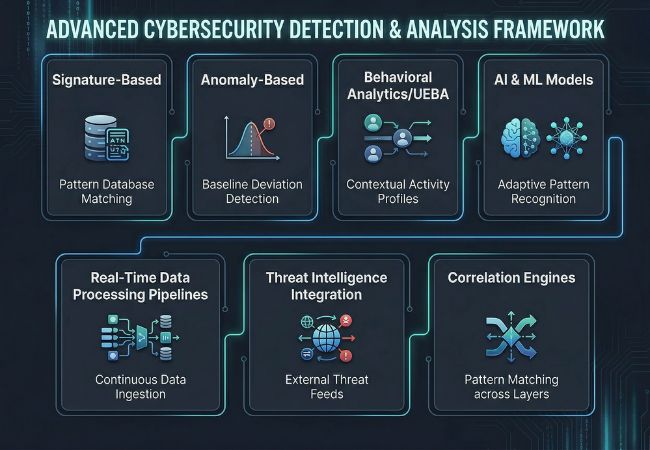
يقوم الاكتشاف المستند إلى التوقيع بمطابقة النشاط مع قاعدة بيانات لأنماط التهديدات المعروفة وتوقيعات البرامج الضارة. الموثوقية العالية تجعلها فعالة لتحديد الهجمات الموثقة مسبقًا بسرعة.
تظهر القيود عندما لا تتطابق التهديدات الجديدة أو المتطورة مع التوقيعات الموجودة. يقلل الاعتماد على الأنماط المعروفة من فعاليتها ضد هجمات يوم الصفر.
يحدد الاكتشاف القائم على الشذوذ الانحرافات عن السلوك الطبيعي الثابت باستخدام النماذج الإحصائية ونماذج التعلم الآلي. القدرة على اكتشاف التهديدات غير المعروفة تجعلها ضرورية لأنظمة الأمان الحديثة.
يتم تحليل السلوك الأساسي باستمرار لتحديد الارتفاعات غير العادية أو أنماط النشاط غير المنتظمة. يعمل اكتشاف الانحرافات الدقيقة على تحسين التحديد المبكر للتهديدات الناشئة.
تراقب التحليلات السلوكية أنشطة المستخدم والكيانات لتحديد الأنماط المشبوهة بمرور الوقت. تقوم أنظمة مثل UEBA بتقييم سلوك تسجيل الدخول وأنماط الوصول والحركة الجانبية عبر الشبكات.
يعمل التحليل المستند إلى السياق على تحسين التمييز بين الإجراءات المشروعة والنوايا الخبيثة. تقلل الرؤية الأعمق الاعتماد على القواعد الثابتة وتعزز دقة الكشف.
تقوم نماذج الذكاء الاصطناعي والتعلم الآلي بتحليل بيانات الأمان واسعة النطاق لاكتشاف الأنماط التي قد تفوتها القواعد التقليدية. يمكّن التعلم التكيفي الأنظمة من تحسين الاكتشاف مع ظهور تهديدات جديدة.
يقلل التحليل الآلي من الجهد اليدوي ويزيد من سرعة الاكتشاف عبر البيئات المعقدة. يساعد التدريب المستمر على النماذج الأنظمة على البقاء متوافقة مع تقنيات الهجوم المتطورة.
تستوعب خطوط أنابيب المعالجة في الوقت الفعلي البيانات وتحللها من مصادر متعددة دون تأخير. تقوم محركات معالجة البث بتقييم الأحداث على الفور لتحديد النشاط المشبوه.
تضمن المعالجة ذات زمن الوصول المنخفض اكتشاف التهديدات عند حدوثها وليس بعد تأخيرات التحليل. تعد خطوط الأنابيب الفعالة ضرورية للحفاظ على الرؤية والاستجابة في الوقت الفعلي.
يعمل تكامل معلومات التهديدات على إثراء أنظمة الكشف بالبيانات الخارجية حول التهديدات المعروفة ومؤشرات الهجوم. توفر خلاصات المعلومات المحدثة رؤى حول حملات الهجوم النشطة والمخاطر الناشئة.
يعمل تكامل بيانات التهديدات العالمية على تحسين الوعي السياقي ودقة الكشف. تضمن التحديثات المستمرة بقاء الأنظمة متوافقة مع مناظر التهديدات المتطورة.
تجمع محركات الارتباط البيانات من مصادر متعددة لتحديد أنماط التهديد ذات المغزى. يساعد التحليل عبر الطبقات على التخلص من الإشارات المعزولة التي قد لا تشير إلى تهديدات حقيقية.
تعمل الرؤى المترابطة على تحسين تحديد التهديدات من خلال توفير السياق الكامل للحدث. هذا يقلل التنبيهات المكررة ويقوي عملية صنع القرار.
تحدث الإيجابيات الكاذبة بسبب الثغرات في السياق وتفسير البيانات وتكوين الكشف داخل أنظمة الأمان.
تعمل أنظمة الأمان على تقليل الإيجابيات الكاذبة في الوقت الفعلي من خلال الجمع بين التحليل السياقي والتعلم التكيفي والتحقق من صحة البيانات متعددة الطبقات.
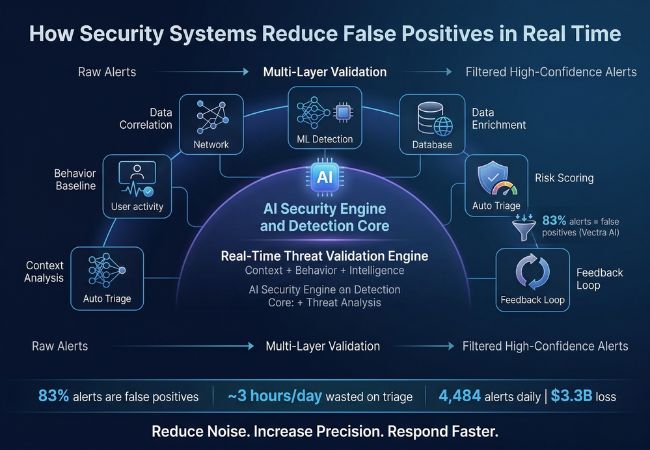
تقوم محركات ارتباط البيانات بتوصيل الإشارات من نقاط النهاية والشبكات والأنظمة السحابية للتحقق من النشاط المشبوه. تساعد الرؤية عبر المصادر على تصفية التنبيهات المعزولة التي غالبًا ما تبدو مضللة.
يبني خط الأساس السلوكي صورة واضحة للمستخدم العادي ونشاط النظام بمرور الوقت. تساعد الأنماط المألوفة الأنظمة على اكتشاف الحالات الشاذة الحقيقية بدلاً من الاستجابة للسلوك الروتيني.
نماذج التعلم الآلي معالجة كميات كبيرة من البيانات التاريخية والبيانات في الوقت الفعلي لتحسين أنماط الكشف. يساعد التحسين المستمر على تقليل التنبيهات الخاطئة المتكررة وتحسين الدقة.
تقوم الأنظمة القائمة على الذكاء الاصطناعي بتحليل العلاقات بين الأحداث والمستخدمين والأنظمة لإضافة سياق أعمق. يسمح السياق الأفضل للمنصات بالتمييز بين النشاط غير الضار والتهديدات الحقيقية بشكل أكثر دقة.
إثراء البيانات في الوقت الفعلي يضيف سياقًا خارجيًا وداخليًا مثل معلومات التهديدات وتفاصيل الأصول إلى التنبيهات. تساعد بيانات Richer الأنظمة على اتخاذ قرارات أكثر استنارة أثناء الاكتشاف.
يقوم تصنيف المخاطر بتعيين مستويات الخطورة للتنبيهات بناءً على التأثير والاحتمالية. يضمن تحديد الأولويات الواضح معالجة التهديدات الخطيرة بينما تتم تصفية التنبيهات منخفضة المخاطر.
تقوم أنظمة الفرز الآلي بتصفية التنبيهات منخفضة الثقة قبل وصولها إلى المحللين. تشير Vectra AI إلى أن محللي SOC يخسرون ما يقرب من ثلاث ساعات يوميًا بسبب الفرز اليدوي لأن 83٪ من التنبيهات هي إيجابيات كاذبة، مما يساهم في 3.3 مليار دولار من الخسائر السنوية وحوالي 4,484 تنبيهًا كل يوم.
تسمح حلقات التغذية الراجعة للمحللين بالتحقق من صحة التنبيهات وتحسين منطق الاكتشاف بمرور الوقت. الضبط المستمر يساعد الأنظمة على التكيف مع التغيير أنماط التهديد مع تقليل الإيجابيات الكاذبة بشكل مطرد.
تعتمد الدقة في اكتشاف التهديدات في الوقت الفعلي على مدى فعالية الأنظمة في إدارة وضوح الإشارة ووقت استجابة المعالجة والتحقق من صحة التنبيه عبر البيئات ذات الحجم الكبير. يجب أن تقوم خطوط أنابيب الكشف بتصفية النشاط غير ذي الصلة مبكرًا لضمان تقدم الأحداث عالية الثقة فقط للتحليل.
يلعب التحكم في الحساسية دورًا مهمًا في الحفاظ على التوازن بين التنبيه المفرط والاكتشافات الفائتة. تساعد العتبات الديناميكية وترجيح الأحداث الأنظمة على التكيف بناءً على مستويات المخاطر، مما يقلل التصعيد غير الضروري للأنشطة منخفضة التأثير.
يعمل الوعي البيئي والمعايرة المستمرة على تحسين نتائج الكشف بمرور الوقت. تحافظ الأنظمة التي تتكيف مع تغييرات البنية التحتية وأنماط الاستخدام المتطورة على قدر أكبر من الاتساق في ملاءمة التنبيه والكفاءة التشغيلية.
تعمل AI و SIEM و XDR على تحسين دقة الكشف من خلال تحسين الرؤية وعمق التحليل وتنسيق الاستجابة عبر بيئات الأمان.
التكنولوجيا
الوظيفة الأساسية
كيف تعمل على تحسين الدقة
الميزة الرئيسية
AI (الذكاء الاصطناعي)
يعالج بيانات الأمان واسعة النطاق ويحدد الأنماط المعقدة
يعزز عملية صنع القرار من خلال اكتشاف الحالات الشاذة الدقيقة وسلوكيات الهجوم المتطورة
يحسّن سرعة الكشف ويقلل التحليل اليدوي
SIEM (معلومات الأمان وإدارة الأحداث)
يقوم بتجميع وتحليل السجلات من أنظمة متعددة في مكان واحد
يوفر رؤية مركزية وارتباط الأحداث للتحقق من التهديدات بشكل أفضل
يساعد على تحديد الأنماط التي قد تفوتها الأنظمة المعزولة
XDR (الكشف الموسع والاستجابة)
يدمج البيانات عبر نقاط النهاية والشبكات والبيئات السحابية
يربط الإشارات متعددة الطبقات لتقليل التنبيهات المجزأة وتحسين السياق
يتيح الكشف الموحد عن التهديدات وإجراءات الاستجابة السريعة
تتضمن أنظمة اكتشاف التهديدات في الوقت الفعلي موازنة عوامل الأداء المتعددة التي تؤثر بشكل مباشر على الدقة والسرعة والكفاءة التشغيلية.
يتيح الاكتشاف الأسرع الاستجابة الفورية للتهديدات المحتملة عبر البيئات النشطة. يعمل التحليل الأعمق على تحسين دقة التحقق ولكنه يؤدي إلى تأخيرات في المعالجة.
يعمل الفحص التفصيلي للأحداث على تحسين التحقق من التهديدات وتقليل التصنيف الخاطئ. يمكن أن يؤدي العمق المتزايد إلى إبطاء وقت الاستجابة في البيئات ذات الحجم الكبير.
تزيد الحساسية العالية من احتمالية تحديد النشاط المشبوه عبر الأنظمة. تؤدي الحساسية المفرطة أيضًا إلى رفع مستوى التنبيه وإحداث ضوضاء.
ضوضاء التنبيه العالية تجعل من الصعب تحديد التهديدات ذات المغزى ضمن مجموعات البيانات الكبيرة. تعمل الضوضاء المنخفضة على تحسين التركيز ولكنها قد تخفي إشارات التهديد الدقيقة.
تعالج الأنظمة الآلية البيانات واسعة النطاق بسرعة وباستمرار. قد يؤدي الاعتماد الكبير على الأتمتة إلى التغاضي عن التهديدات الدقيقة أو التي يحركها السياق.
يضيف التحليل البشري الحكم الواعي للسياق والتحقق من نتائج الاكتشاف. تعمل المراجعة اليدوية على تحسين جودة القرار من خلال تحديد الفروق الدقيقة التي قد تغفلها الأنظمة الآلية.
تتعامل الأنظمة القابلة للتطوير مع كميات كبيرة من البيانات عبر البيئات الموزعة. يمكن أن يؤدي الحجم المتزايد إلى تقليل دقة الكشف إذا أصبح المنطق معممًا.
آليات الكشف المتقدمة تتطلب الطاقة الحاسوبية وموارد البنية التحتية. يمكن أن تقيد الموارد المحدودة أداء النظام وقدرة الكشف.
يتطلب اختيار النظام الأساسي المناسب للكشف عن التهديدات تقييم مدى توازنه بين الدقة والكفاءة وقابلية الاستخدام التشغيلي في بيئات العالم الحقيقي.
يجب أن تولد المنصات تنبيهات عالية الثقة دون إرباك الفرق بالضوضاء. تضمن الدقة المتسقة إمكانية اعتماد فرق الأمان على نتائج الاكتشاف.
تعد المراقبة المستمرة عبر نقاط النهاية والشبكات والبيئات السحابية ضرورية للاكتشاف الفعال. تتيح الرؤية القوية التعرف على الأنشطة المشبوهة والاستجابة لها بشكل أسرع.
يجب أن تقوم الأنظمة بتقييم الأحداث ذات السياق البيئي والسلوكي الكامل. يعمل السياق الأفضل على تحسين ملاءمة التنبيه وتقليل التصعيد غير الضروري.
يعمل التكامل السلس مع أدوات الأمان الحالية على تحسين تدفق البيانات والكفاءة التشغيلية. توفر الأنظمة المتصلة رؤية أكثر اكتمالاً للتهديدات المحتملة.
يجب أن تتعامل المنصات مع أحجام البيانات المتزايدة دون تدهور الأداء. تحافظ الأنظمة القابلة للتطوير على الاتساق حتى في البيئات المعقدة.
تعمل التصفية الآلية والفرز والاستجابة على تقليل عبء العمل اليدوي لفرق الأمان. تعمل الأتمتة الفعالة على تحسين سرعة الاستجابة مع الحفاظ على التحكم.
تعمل المنصات مثل CloudSek على تحسين دقة اكتشاف التهديدات من خلال توسيع المراقبة خارج الأنظمة الداخلية إلى الويب السطحي والعميق والمظلم. يتيح التتبع المستمر لمنتديات القراصنة والبيانات المسربة والأصول المكشوفة التعرف المبكر على المخاطر التي غالبًا ما تفوتها طرق الكشف التقليدية.
يساعد التحليل السياقي القائم على الذكاء الاصطناعي في تحديد أولويات التهديدات من خلال تعيين الإشارات لأصول تجارية محددة وتعيين درجات المخاطر بناءً على التأثير الحقيقي. تعمل نماذج التعلم الآلي على تصفية تدفقات البيانات الضخمة إلى رؤى قابلة للتنفيذ، مما يقلل الضوضاء ويسمح للمحللين بالتركيز على التنبيهات عالية الثقة.
يعمل الذكاء الاستباقي للتهديدات وتكامل النظام البيئي على تعزيز فعالية الكشف عبر البيئات. تتيح المراقبة التنبؤية وحماية المخاطر الرقمية والتكامل السلس مع أنظمة SIEM و SOAR استجابة أسرع مع تقليل الإيجابيات الكاذبة.
تحدث النتيجة الإيجابية الكاذبة عندما يقوم نظام الأمان بوضع علامة على نشاط عادي أو غير ضار كتهديد. يمكن للتنبيهات الخاطئة المتكررة أن تقلل الكفاءة وتجعل من الصعب على الفرق تحديد المخاطر الحقيقية.
غالبًا ما تنتج الإيجابيات الكاذبة عن السياق المحدود أو البيانات الصاخبة أو قواعد الكشف شديدة الحساسية. تزيد أحجام التنبيه العالية والبيانات غير المرتبطة من فرص التصنيف الخاطئ.
يمكن تقليل الإيجابيات الكاذبة من خلال التحليل السياقي وربط البيانات ونماذج التعلم التكيفي. تساعد التغذية الراجعة المستمرة والضبط الأنظمة على تحسين الدقة بمرور الوقت.
يساعد الذكاء الاصطناعي في تحليل كميات كبيرة من البيانات وتحديد الأنماط التي قد تفوتها الطرق التقليدية. يعمل على تحسين دقة الكشف عن طريق تصفية الضوضاء والتكيف مع التهديدات المتطورة.
تركز دقة الكشف على تحديد التهديدات الحقيقية مع الحد الأدنى من التنبيهات الخاطئة. تشير سرعة الاكتشاف إلى مدى سرعة النظام في التعرف على النشاط المشبوه والاستجابة له.
