🚀 أصبحت CloudSek أول شركة للأمن السيبراني من أصل هندي تتلقى استثمارات منها
اقرأ المزيد
.avif)

لا تؤدي الهجمات الإلكترونية دائمًا إلى حدوث اضطراب مرئي. ينفذ المهاجمون هجومًا خلفيًا من خلال تضمين الوصول المخفي داخل الأنظمة، مما يتيح التحكم المستمر وغير المصرح به دون اكتشاف. تزداد وتيرة هذه الطريقة مع قيام المؤسسات بتوسيع البنية التحتية الرقمية ودمج برامج الجهات الخارجية وتمكين بيئات الوصول عن بُعد.
أصبح حجم هذا التهديد واضحًا خلال حادثة ASUS ShadowHammer. أكدت Kaspersky أن أكثر من مليون جهاز تلقى تحديثًا مخترقًا للبرامج من خلال آلية التحديث الرسمية لشركة ASUS. أظهر الهجوم كيف ينتشر الوصول المخفي من خلال قنوات التوزيع الموثوقة ويظل غير مكتشف لفترات طويلة.
إن فهم ماهية هجمات الأبواب الخلفية، وكيفية عملها، ولماذا تخلق مخاطر تشغيلية، وكيفية منعها يقلل من التعرض لخطر اختراق النظام المستمر والسري.
هجوم الباب الخلفي هو هجوم إلكتروني يقوم فيه المهاجم بإنشاء أو استخدام نقطة وصول مخفية للدخول إلى نظام بدون مصادقة عادية. يتجاوز هذا الوصول المخفي ضوابط الأمان، مما يسمح للمهاجمين بدخول الأنظمة دون اكتشاف.
في مجال الأمن السيبراني، يُقصد بالباب الخلفي طريقة وصول مخفية موجودة خارج طرق الدخول المعتمدة. يتجنب الوصول المخفي عمليات التحقق من تسجيل الدخول والمراقبة الأمنية ووعي المستخدم.
تركز هجمات الباب الخلفي على الوصول طويل المدى بدلاً من الضرر الفوري. يسمح هذا الوصول الدائم للمهاجمين بالعودة بشكل متكرر أو التحكم في الأنظمة أو سرقة البيانات أو إعداد الهجمات المستقبلية دون الحاجة إلى الاختراق مرة أخرى.
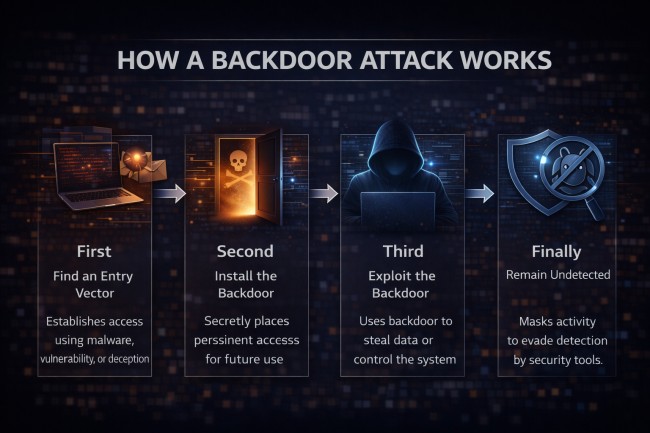
يعمل هجوم الباب الخلفي عن طريق وضع وصول مخفي سراً داخل النظام واستخدامه بشكل متكرر بمرور الوقت. تبدأ العملية عندما يحصل المهاجم على دخول أولي من خلال البرامج الضارة أو عيوب البرامج أو بيانات الاعتماد المسروقة أو التحديثات المخترقة.
بعد الحصول على حق الدخول، يقوم المهاجم بإنشاء أو تثبيت باب خلفي. قد يكون هذا الباب الخلفي عبارة عن حساب مستخدم مخفي أو خدمة ضارة أو برنامج معدل أو واجهة أوامر مخفية تتجنب عمليات التحقق الأمنية العادية.
بمجرد التثبيت، يظل الباب الخلفي مخفيًا ومستمرًا. يمكن للمهاجم إعادة الاتصال في أي وقت دون تسجيل الدخول بشكل طبيعي، مما يسمح بالوصول المستمر لسرقة البيانات أو التحكم في النظام أو الاستعداد للهجمات المستقبلية.
يتميز هجوم الباب الخلفي بخصائص واضحة تفسر سبب صعوبة اكتشافه وخطورته بمرور الوقت.
يقوم الباب الخلفي بإنشاء وصول سري غير مرئي لمسؤولي النظام. يعمل هذا الوصول بصمت في الخلفية ولا يظهر في سجلات أنشطة المستخدم القياسية.
تتحايل الأبواب الخلفية على آليات المصادقة القياسية. يحصل المهاجمون على حق الدخول بدون بيانات اعتماد صالحة أو مصادقة متعددة العوامل أو موافقات وصول رسمية.
تم تصميم الباب الخلفي للبقاء على قيد الحياة بعد عمليات إعادة التشغيل والتحديثات وإعادة تعيين كلمة المرور. يتيح هذا الثبات للمهاجمين الحفاظ على الوصول طويل المدى دون إعادة نشر البرامج الضارة.
تتيح الأبواب الخلفية للمهاجمين إعادة الاتصال من الشبكات الخارجية في أي وقت. يسمح هذا الوصول عن بُعد بالتحكم المتكرر في النظام دون التواجد المادي أو تفاعل المستخدم.
تم تصميم الأبواب الخلفية لتجنب اكتشافها بواسطة أدوات الأمان. قد تخفي العمليات أو تشوش حركة المرور أو تحاكي سلوك النظام الشرعي لتظل غير مكتشفة.
توفر الأبواب الخلفية تحكمًا مستمرًا على مستوى النظام. يدعم هذا الوصول المطول عملية استخراج البيانات ومعالجة النظام والحركة الجانبية والاستعداد للهجمات المتقدمة.
هذه هي نقاط الدخول الشائعة التي تعرض الأنظمة لفترة كافية للمهاجمين لتثبيت الأبواب الخلفية الدائمة.
غالبًا ما يتم تقديم الوصول الخلفي من خلال البرامج الضارة التي يتم تسليمها عبر التنزيلات الضارة أو مرفقات البريد الإلكتروني الضارة. بمجرد تنفيذ البرنامج الضار، يقوم بتثبيت آليات الوصول المخفية التي يستخدمها المهاجمون لاحقًا لاستعادة الدخول.
يمكن تضمين الأبواب الخلفية في برنامج موثوق به تابع لجهة خارجية. عندما تقوم المؤسسات بنشر تحديثات أو تطبيقات مخترقة، يتم تثبيت التعليمات البرمجية الضارة بصمت، مما يتيح الوصول غير المصرح به دون شك فوري.
توفر الثغرات الأمنية للبرامج غير المصححة أو التي تم تكوينها بشكل خاطئ نقاط دخول أولية. بعد الاستغلال، يقوم المهاجمون بنشر الأبواب الخلفية للاحتفاظ بالوصول حتى بعد معالجة الخلل الأصلي.
يمكن أن تسمح تطبيقات الويب وواجهات برمجة التطبيقات المكشوفة أو غير الآمنة للمهاجمين بتحميل أغلفة الويب أو البرامج النصية المخفية. تعمل هذه المكونات كأبواب خلفية ثابتة داخل بيئة الخادم.
تزيد خدمات الوصول عن بُعد المكشوفة، مثل RDP أو SSH، من خطر الاختراق. بمجرد أن يتمكن المهاجمون من الوصول - غالبًا من خلال المصادقة الضعيفة - يقومون بتثبيت الأبواب الخلفية لضمان التحكم المستمر.
تمكّن بيانات الاعتماد المخترقة المهاجمين من تسجيل الدخول بشكل شرعي. بعد الوصول، يقومون بإنشاء أبواب خلفية للحفاظ على الثبات دون الاعتماد على أوراق الاعتماد المسروقة.
يمكن أن تؤدي الأذونات المفرطة أو الإعدادات الافتراضية أو المنافذ المفتوحة أو سوء الاستخدام الداخلي إلى إنشاء مسارات وصول غير مقصودة. تسمح نقاط الضعف هذه للمهاجمين بنشر الأبواب الخلفية بأقل قدر من المقاومة.
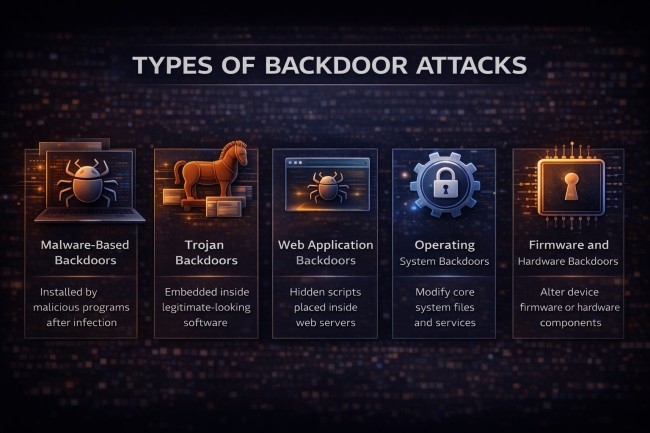
يتم تصنيف هجمات الباب الخلفي حسب مكان وضع الوصول المخفي ومدة استمراره داخل النظام. فيما يلي الأنواع الرئيسية لهجمات الباب الخلفي:
يتم نشر الأبواب الخلفية المستندة إلى البرامج الضارة بعد الإصابة الناجحة. يقوم البرنامج الضار بإنشاء قناة اتصال سرية تمكن المهاجمين من إصدار الأوامر أو استخراج البيانات أو التحكم في النظام عن بُعد. غالبًا ما تتضمن هذه الأبواب الخلفية آليات الثبات التي تنجو من عمليات إعادة تشغيل النظام.
يتم تضمين الأبواب الخلفية لـ Trojan داخل البرنامج الذي يبدو شرعيًا. بمجرد التثبيت، يقوم التطبيق سراً بإنشاء مسارات وصول مخفية، مما يسمح للمهاجمين بالاتصال دون تشغيل تنبيهات الأمان القياسية.
يتم زرع الأبواب الخلفية لتطبيقات الويب داخل مواقع الويب أو خوادم الويب. يقوم المهاجمون بتحميل أغلفة الويب أو البرامج النصية المخفية التي تتيح تنفيذ الأوامر عن بُعد من خلال HTTP أو الوصول المستند إلى المتصفح. تظل هذه الأبواب الخلفية نشطة طالما استمرت الملفات الضارة على الخادم.
تعمل الأبواب الخلفية لنظام التشغيل على تغيير مكونات النظام الأساسية مثل الخدمات أو ملفات النظام أو حسابات المستخدمين المميزة. يوفر هذا التعديل العميق وصولاً مستدامًا ومميزًا في كثير من الأحيان يمكنه البقاء على قيد الحياة مع التصحيحات والتحديثات الروتينية.
تعمل الأبواب الخلفية للبرامج الثابتة والأجهزة أسفل طبقة نظام التشغيل. من خلال تعديل البرامج الثابتة للجهاز أو مكونات الأجهزة، يقوم المهاجمون بإنشاء وصول يستمر حتى بعد إعادة تثبيت النظام. تعد هذه الأبواب الخلفية من بين أكثر الأبواب صعوبة في اكتشافها ومعالجتها.
غالبًا ما يتم الخلط بين هجمات الباب الخلفي والتهديدات الإلكترونية الأخرى؛ ومع ذلك، تختلف هجمات الباب الخلفي عن التهديدات الإلكترونية الأخرى لأن هدفها الأساسي هو الوصول الخفي المستمر، وليس التنفيذ الفوري أو الضرر.
يصبح هذا التمييز واضحًا عند مقارنة الغرض والمثابرة والتحكم.
تركز الإصابة بالبرامج الضارة على تشغيل التعليمات البرمجية الضارة لسرقة البيانات أو تعطيل الأنظمة أو الانتشار بشكل أكبر. يركز هجوم الباب الخلفي على إنشاء مسار وصول سري يظل قابلاً للاستخدام بمرور الوقت. يمكن أن توجد البرامج الضارة دون استمرار، بينما تم تصميم الباب الخلفي لإعادة الدخول المتكرر.
يوفر حصان طروادة الذي يمكن الوصول إليه عن بُعد تحكمًا مباشرًا مستمرًا في النظام بمجرد تثبيته. يوفر الباب الخلفي طريقة مخفية لدخول النظام عند الحاجة. تعمل أجهزة RAT كأدوات نشطة، بينما تعمل الأبواب الخلفية كنقاط دخول صامتة.
يخفي برنامج rootkit النشاط الضار عن طريق إخفاء الملفات أو العمليات أو تغييرات النظام. يضمن الباب الخلفي الوصول عن طريق تجاوز المصادقة. تركز Rootkits على التخفي، بينما تركز الأبواب الخلفية على الدخول المضمون. غالبًا ما يتم استخدام كلاهما معًا ولكنهما يخدمان أدوارًا مختلفة.
تُظهر هجمات الباب الخلفي هذه في العالم الحقيقي كيف يمكن أن يظل الوصول المخفي نشطًا لفترات طويلة ويسبب ضررًا واسع النطاق.
في عام 2017، قام مهاجمون مرتبطون بمجموعة ترعاها الدولة باختراق نظام تحديث البرامج الخاص بـ CCleaner. من خلال إدخال باب خلفي في تحديث شرعي، وصل المهاجمون إلى أكثر من 2.2 مليون مستخدم حول العالم. تم استهداف شركات التكنولوجيا الكبيرة بشكل انتقائي، مما سمح للمهاجمين بالحفاظ على الوصول الصامت داخل شبكات الشركات لعدة أشهر قبل الاكتشاف.
في عام 2020، تم الكشف عن هجوم خلفي متطور للغاية في منصة SolarWinds Orion. قام المهاجمون، المنسوبون إلى مجموعة من الدول القومية، بتعديل تحديثات البرامج لتشمل بابًا خلفيًا مخفيًا. تأثرت الوكالات الحكومية والشركات الكبرى، مما أدى إلى مخاطر التجسس على المدى الطويل والإصلاحات الأمنية واسعة النطاق.
في عام 2014، قام المهاجمون باختراق Sony Pictures Entertainment من خلال زرع أبواب خلفية داخل الأنظمة الداخلية. استخدم المهاجمون هذا الوصول لسرقة البيانات السرية وحذف الملفات وتعطيل العمليات. تسبب الحادث في فترات توقف طويلة وأضرار بالسمعة وخسائر مالية كبيرة.
في عام 2021، استغل المهاجمون نقاط الضعف في خوادم Microsoft Exchange وقاموا بتثبيت الأبواب الخلفية لقشرة الويب. تأثرت المنظمات في جميع أنحاء العالم، بما في ذلك الشركات والهيئات الحكومية. أتاحت الأبواب الخلفية الوصول المتكرر وسرقة البيانات المستمرة وهجمات المتابعة لفترة طويلة بعد الاستغلال الأولي.
تعتبر هجمات الباب الخلفي خطيرة لأنها تخلق وصولاً مستمرًا وغير مصرح به إلى الأنظمة. يتيح الوصول المستمر الإدخال المتكرر، مما يزيد من مخاطر سرقة البيانات والتلاعب وتعطيل التشغيل بمرور الوقت.
إنه يتجنب الاكتشاف عن طريق تجاوز ضوابط المصادقة والاندماج في العمليات الشرعية. يدعم الوصول المستدام الحركة الجانبية وتصاعد الامتيازات، مما يؤدي إلى توسيع نطاق التسوية عبر الشبكات وتعقيد المعالجة الكاملة.
يتم اكتشاف هجمات الباب الخلفي من خلال البحث بعناية عن الوصول المخفي الذي يظل نشطًا حتى عندما تبدو الأنظمة طبيعية. نظرًا لأن الأبواب الخلفية مصممة للبقاء دون أن يلاحظها أحد، فإن الاكتشاف يركز على التغييرات طويلة المدى والسلوك المتكرر والأنماط التي لا تتطابق مع الاستخدام العادي للنظام.
يتم العثور على هجمات الباب الخلفي من خلال مراقبة ما لا ينبغي أن يكون موجودًا، وما يستمر في العودة، وما يتجنب الانتباه بهدوء، بدلاً من البحث عن الضرر الواضح.
يتم منع هجمات الباب الخلفي من خلال إيقاف إنشاء الوصول المخفي والتأكد من عدم وجود وصول سري داخل الأنظمة. تعمل الوقاية بشكل أفضل عندما يتم اتباع خطوات الأمان باستمرار، وليس مرة واحدة فقط. فيما يلي أفضل التكتيكات:
التثبيت الآمن للبرامج يعني تنزيل البرامج وتثبيتها فقط من مصادر موثوقة ورسمية. غالبًا ما يخفي المهاجمون الأبواب الخلفية داخل البرامج المزيفة أو المعدلة. عندما يتم التحقق من البرنامج قبل التثبيت، يتم حظر الوصول المخفي قبل أن يتمكن من دخول النظام.
يعمل التصحيح على الحفاظ على أمان الأنظمة من خلال إصلاح نقاط الضعف الأمنية المعروفة. يبحث المهاجمون عن الأنظمة القديمة لأنه يسهل اختراقها. عندما يتم تطبيق التحديثات في الوقت المحدد، يفقد المهاجمون الطرق الشائعة للدخول إلى الأبواب الخلفية وتثبيتها.
تحمي المصادقة القوية من يمكنه دخول الأنظمة. إن استخدام أكثر من مجرد كلمة مرور، مثل رمز أو تأكيد الجهاز، يجعل من الصعب جدًا على المهاجمين تسجيل الدخول. يقلل الوصول المحدود من فرصة المهاجمين لإنشاء نقاط دخول مخفية.
الوصول الأقل امتيازًا يعني حصول المستخدمين والبرامج على الوصول الذي يحتاجون إليه فقط. في حالة اختراق الحساب، تمنع الأذونات المحدودة المهاجمين من تثبيت الأبواب الخلفية أو الاحتفاظ بها في النظام.
تراقب أنظمة المراقبة المستمرة طوال الوقت، وليس فقط أثناء عمليات الفحص. عند ظهور نشاط غير عادي، مثل تغييرات الملفات غير المتوقعة أو الاتصالات المخفية، يمكن للفرق التصرف بسرعة قبل أن يصبح الباب الخلفي دائمًا.
تضمن هذه الحماية عدم تغيير ملفات النظام والإعدادات المهمة دون موافقة. غالبًا ما تختبئ الأبواب الخلفية في ملفات بدء التشغيل أو الخدمات. تساعد مراقبة هذه المناطق على اكتشاف الوصول المخفي مبكرًا.
تسمح خدمات الوصول عن بُعد بالتحكم في الأنظمة من مسافة بعيدة. في حالة تركها مفتوحة أو محمية بشكل ضعيف، يمكن للمهاجمين استخدامها لتثبيت الأبواب الخلفية. إن تأمين هذه الخدمات أو الحد منها يقلل من هذه المخاطر.
تتضمن عمليات تدقيق الأمان فحص الأنظمة بانتظام بحثًا عن حسابات غير معروفة أو ملفات مخفية أو برامج مشبوهة. حتى بعد إصلاح الهجوم، تضمن عمليات التدقيق عدم ترك أي أبواب خلفية.
يقلل وعي المستخدم من الأخطاء التي يستغلها المهاجمون. عندما يتعرف المستخدمون على رسائل البريد الإلكتروني المخادعة والتنزيلات غير الآمنة، يفقد المهاجمون طرقًا سهلة للوصول وتثبيت الأبواب الخلفية.
