🚀 أصبحت CloudSek أول شركة للأمن السيبراني من أصل هندي تتلقى استثمارات منها
اقرأ المزيد
.avif)

أخطر 9 تهديدات للبرامج الضارة في عام 2026 هي LockBit و BlackCat (ALPHV) و CL0p و Agent Tesla و Mirai و Raspberry Robin و PlugX و Formbook و Asyncrat و Dridex و Lumma و Bumblebee. تعتبر عائلات البرامج الضارة هذه مسؤولة عن معظم حوادث برامج الفدية وحالات سرقة البيانات الكبيرة وعمليات الاختراق طويلة المدى التي تم الإبلاغ عنها عبر المؤسسات هذا العام.
يستمر المهاجمون في الاعتماد على مسارات الوصول البسيطة بدلاً من التقنيات المعقدة. تعد اختراق البريد الإلكتروني وبيانات الاعتماد المسروقة والخدمات المكشوفة وأدوات النظام المضمنة كافية لتحويل خطأ واحد إلى حادث واسع النطاق.
تركز هذه المراجعة على التهديدات التي تظهر باستمرار في الحملات النشطة وتلعب دورًا مباشرًا في سلاسل الهجوم الحديثة التي شوهدت طوال عام 2026. تساعد المنصات مثل CloudSek المؤسسات على تتبع هذه التهديدات مبكرًا من خلال تحديد الأصول المكشوفة وسلوك المهاجم والمخاطر الناشئة قبل أن تتصاعد إلى حوادث كاملة.
في عام 2026، كانت أخطر البرامج الضارة هي النوع الذي يتحكم بسرعة ويصعب التخلص منه. تميل الهجمات التي تقفل الأنظمة أو تسرب البيانات الحساسة أو تظل مخفية لأسابيع إلى التسبب في مشاكل لا تنتهي بعملية تنظيف بسيطة.
يأتي جزء من المخاطر من مدى طبيعية هذه الهجمات في البداية. غالبًا ما تكون رسائل البريد الإلكتروني الروتينية وكلمات المرور المعاد استخدامها وأدوات النظام المألوفة كافية للسماح للبرامج الضارة بالتسلل دون إثارة الشكوك.
يزداد الوضع سوءًا بمجرد عدم اكتشاف الوصول الأول في الوقت المناسب. ومن هناك، يمكن للمهاجمين التنقل عبر الشبكات أو نشر برامج الفدية أو استخراج البيانات على نطاق واسع، وتحويل الفاصل الزمني الصغير إلى عملية استرداد طويلة ومكلفة.
تتطور تهديدات البرامج الضارة بطرق تجعل إطلاق الهجمات أسهل ويصعب ملاحظتها حتى يصبح التأثير خطيرًا بالفعل.
لم تعد البرامج الضارة الحديثة بحاجة إلى نقاط ضعف واضحة للدخول إلى النظام. غالبًا ما توفر رسائل البريد الإلكتروني المخادعة وكلمات المرور المعاد استخدامها والخدمات التي يتم تجاهلها نقطة دخول هادئة تبدو غير ضارة في البداية.
بدلاً من جلب أدوات ضارة بشكل واضح، يعتمد المهاجمون بشكل متزايد على البرامج والميزات الموثوقة بالفعل. من خلال الاندماج مع النشاط الإداري العادي، يمكن أن تعمل البرامج الضارة لفترات طويلة دون لفت الانتباه.
لم يعد يتم تسليم العديد من سلالات البرامج الضارة كحمولة واحدة ثابتة. يقوم المهاجمون بإضافة المكونات أو تغييرها مع تقدم الهجوم، مما يسمح لهم بالتكيف دون البدء من الصفر.
بمجرد إنشاء الوصول، تميل الأشياء إلى التحرك بسرعة. يمكن أن يؤدي حساب أو جهاز واحد مخترق إلى حركة جانبية أو سرقة البيانات أو نشر برامج الفدية قبل أن يدرك أي شخص ما يحدث.
قمنا بمراجعة تهديدات البرامج الضارة هذه من خلال فحص مدى تكرار ظهورها في حوادث العالم الحقيقي ومدى ارتباطها المستمر بالنتائج الخطيرة. بقي التركيز على التهديدات التي تتعامل معها الفرق الأمنية فعليًا، وليس تلك التي تظهر فقط في التقارير المعزولة.
تم تقييم كل تهديد بناءً على كيفية دخوله إلى الأنظمة، والغرض الذي يُستخدم فيه عادةً، ومدى انتشار الضرر عادةً. وبحثنا أيضًا ما إذا كانت البرامج الضارة تعمل غالبًا كنقطة انطلاق لهجمات أكبر، مثل نشر برامج الفدية أو سرقة البيانات على نطاق واسع.
يعكس الاختيار النهائي النشاط الحالي والأهمية بدلاً من السمعة السابقة وحدها. يستمر كل تهديد في هذه القائمة في الظهور في الحملات النشطة ويظل مصدر قلق عملي للمنظمات في عام 2026.
تعمل LockBit كخدمة رانسوم وير عالية السرعة محسّنة لعمليات التسلل المتكررة والتشفير السريع والابتزاز الشديد في مواقع التسرب. يبدأ الوصول الأولي عادةً ببيانات اعتماد VPN أو RDP المسروقة أو استغلال الأجهزة المتطورة، تليها حركة جانبية لتحقيق التحكم على مستوى المجال وسرقة البيانات.
تركز الحملات الأخيرة على الأتمتة والتشفير الانتقائي والتسلل السريع لتقليل نوافذ الاحتواء. غالبًا ما يعاني الضحايا من انقطاع تشغيلي متزامن والتعرض التنظيمي والاحتيال الثانوي بسبب أوراق الاعتماد المحصودة.
سجل المركز الوطني للأمن السيبراني في سويسرا 57 تقريرًا عن برامج الفدية في النصف الأول من عام 2025، مما يشير إلى الضغط المستمر على المنظمات في جميع أنحاء زيورخ وبيرن. يتماشى حجم الحوادث هذا بشكل وثيق مع أساليب الابتزاز المميزة للعمليات على غرار Lockbit التي تمت ملاحظتها في جميع أنحاء أوروبا.
BlackCat عبارة عن عملية رانسوم وير متعددة المنصات مصممة لتعمل عبر أنظمة التشغيل Windows و Linux وبيئات المؤسسات الافتراضية. يعتمد الوصول الأولي عادةً على سرقة بيانات الاعتماد أو إساءة استخدام خدمات الوصول عن بُعد أو استغلال البنية التحتية المكشوفة، يليه الوصول المستمر الذي يتيح التشفير المنسق وسرقة البيانات.
يعد الانضباط التابع أحد عوامل الخطر المحددة، حيث تغطي المراحل المنظمة تصعيد الامتيازات والاستطلاع والتسلل والتعطيل. يزداد تعقيد الاسترداد بشكل كبير عندما تتأثر مكدسات VMware والخدمات المدعومة من Linux.
أبلغ مركز الأمن السيبراني الأسترالي عن 138 حادثة رانسوم وير في السنة المالية 2024-25، مما يؤكد استمرار ضغط برامج الفدية على المنظمات في سيدني وملبورن. تحافظ هذه البيئة على الخطر الاستراتيجي الذي تشكله الحملات على غرار AlphV ضد الأنظمة عالية التوفر.
يركز CL0p على ابتزاز البيانات على نطاق واسع، وغالبًا ما يعطي الأولوية للسرقة الجماعية على التشفير الكامل لزيادة الرافعة المالية مع السماح باستمرارية الأعمال الجزئية. غالبًا ما تستغل الحملات التعرض لأطراف ثالثة وأنظمة نقل الملفات، وتحول ثغرة أمنية واحدة إلى حل وسط واسع النطاق.
تتركز المخاطر في التداعيات القانونية والتعاقدية والمتعلقة بالسمعة، حيث تؤدي البيانات المسروقة إلى إعداد تقارير متعددة الاختصاصات القضائية والتقاضي المطول. غالبًا ما تكون المعالجة مجزأة بين البائعين والشركات التابعة والشركاء بدلاً من الاقتصار على شبكة واحدة.
تشير تقديرات مسح خروقات الأمن السيبراني في المملكة المتحدة لعام 2025 إلى أن 612 ألف شركة تعرضت لاختراق أو هجوم إلكتروني في العام السابق، حيث أبلغت 3 بالمائة من المؤسسات عن برامج الفدية. ويعكس ذلك المخاطر التشغيلية المستمرة عبر المراكز مثل لندن ومانشستر، حيث تزدهر مجموعات الابتزاز واسعة النطاق وسط توسيع وصول الموردين.
Agent Tesla عبارة عن RAT طويل الأمد لسرقة بيانات الاعتماد يركز على تسجيل المفاتيح والتقاط الحافظة وتجريف الشاشة وتسريب البيانات عبر البروتوكولات الشائعة. تستهدف الحملات بشكل متكرر المؤسسات الصغيرة والمتوسطة الحجم باستخدام رسائل البريد الإلكتروني ذات الطابع الخاص بالفواتير وأوامر الشراء التي تستهدف موظفي الشؤون المالية والعمليات.
تحافظ تقنيات النشر منخفضة الاحتكاك والتسليم المألوفة على معدلات الإصابة الثابتة، لا سيما عندما يتأخر أمان البريد الإلكتروني وعناصر التحكم في نقطة النهاية. يركز تأثير الأعمال على اختراق صناديق البريد وتمكين الاحتيال المالي وإعادة استخدام بيانات الاعتماد عبر بوابات إدارة SaaS.
أبلغت قوة شرطة سنغافورة عن 19665 حالة احتيال في النصف الأول من عام 2025 مع خسائر بلغ مجموعها حوالي 456.4 مليون دولار أمريكي. تدعم بيئة الهندسة الاجتماعية عالية الضغط هذه في جميع أنحاء سنغافورة أدوات سرقة أوراق الاعتماد مثل Agent Tesla.
تعمل Mirai على اختراق أجهزة إنترنت الأشياء المكشوفة من خلال استغلال كلمات المرور الضعيفة وبيانات الاعتماد الافتراضية وواجهات الإدارة التي تواجه الإنترنت. يعمل المشغلون على تحقيق الدخل من النطاق من خلال خدمات DDoS مقابل الاستئجار والإكراه على الانقطاع وتعطيل البنية التحتية الذي يتجاوز الأهداف الفردية.
يتم تضخيم المخاطر من خلال المثابرة، حيث أن الأجهزة المصابة كثيرًا ما تنضم إلى شبكات الروبوت بعد إعادة التشغيل وتظل غير مُدارة لفترات طويلة. يصبح الدفاع تحديًا للنظام البيئي يشمل مزودي خدمة الإنترنت والمصنعين وشبكات المؤسسات.
وثقت التقارير الهولندية عن DigiD أربع هجمات DDoS بين يناير ومارس 2025، مما يسلط الضوء على ضغط التعطيل المستمر عبر البنية التحتية الوطنية المُدارة من لاهاي. هذا يعزز التهديد الاستراتيجي الذي تشكله الروبوتات على غرار Mirai.
يعمل Raspberry Robin كآلية دخول تركز على الانتشار، وغالبًا ما تستفيد من الوسائط القابلة للإزالة والتسليم المرحلي لتمكين الوصول للمتابعة. تكمن قيمتها في وساطة موطئ قدم، حيث يتم تحويل التسوية الأولية إلى عمليات الفدية أو سرقة البيانات.
يمثل الاحتواء تحديًا في البيئات الكبيرة مع أساطيل الأجهزة المختلطة وسير عمل الوسائط المشتركة وإنفاذ نقاط النهاية غير المتسقة. تزداد المخاطر في الأماكن التي تشمل المقاولين ومحطات العمل المشتركة والمكاتب الفرعية الموزعة.
أبلغت KE-CIRT/CC عن أكثر من 2.5 مليار حدث تهديد إلكتروني تم اكتشافه وأصدرت 13.2 مليون تحذير في الربع الأول من عام 2025، مما يعكس التعرض المكثف عبر نيروبي والشبكات الوطنية.
PlugX عبارة عن باب خلفي موجه نحو التخفي مرتبط بعمليات التجسس طويلة الأمد، مع التركيز على المثابرة وتنفيذ الأوامر على مراحل. غالبًا ما تستخدم الحملات التحميل الجانبي لـ DLL وإساءة استخدام الملفات الثنائية الموقعة وحركة مرور الأوامر والتحكم المنخفضة للتهرب من الاكتشاف.
ويتراكم التأثير الاستراتيجي بمرور الوقت عندما يقوم المشغلون بتخطيط الشبكات وجمع البيانات الحساسة والاحتفاظ بإمكانية الوصول من خلال دورات التحديث. تواجه فرق الدفاع قرارات معقدة حول نطاق الصيد وإعادة بناء الثقة وسلامة النظام.
أبلغت وكالة الأمن السيبراني الوطنية الإيطالية عن 1549 حدثًا إلكترونيًا في النصف الأول من عام 2025، بما في ذلك 346 حادثة مؤكدة تؤثر على مناطق مثل روما وميلانو. تزيد الإنتاجية العالية للحوادث من احتمالية استمرار الأبواب الخلفية الخفية دون اكتشافها.
يستهدف Formbook بيانات الاعتماد وبيانات المتصفح وعمليات إرسال النماذج وتغليف المعلومات المسروقة لإعادة بيعها لأغراض إجرامية واسعة النطاق. يعتمد التسليم بشكل كبير على مرفقات البريد الإلكتروني والفواتير المزيفة وقطرات السلع التي تستهدف المستخدمين النهائيين.
وتستمد فعاليتها من الحجم، حيث يمكن لكل تسجيل دخول مخترق تمكين الاستيلاء على صندوق البريد والاحتيال في الرواتب وإساءة استخدام حساب طرف ثالث. تتطلب المعالجة احتواءً واسعًا للهوية عبر المتصفحات ومنصات البريد الإلكتروني وبيئات SSO الخاصة بالمؤسسات.
أبلغ المركز الوطني النيوزيلندي للأمن السيبراني عن 1369 حادثة في الربع الأول من عام 2025، بما في ذلك 440 حالة احتيال وجمع بيانات اعتماد، بزيادة قدرها 15 بالمائة عن الربع السابق. يعكس النشاط المركّز في أوكلاند وويلينغتون سرقة بيانات الاعتماد المستمرة التي تتماشى مع الاستغلال الثانوي على نطاق واسع.
يوفر Asyncrat إمكانات الوصول الكامل عن بُعد، مما يتيح سرقة الملفات والمراقبة وجمع بيانات الاعتماد وتسليم الحمولة من موطئ قدم واحد. عادةً ما يستخدم التوزيع إغراءات البريد الإلكتروني وبرامج التثبيت المزيفة، تليها التوسعة من خلال استعادة كلمة المرور وتصاعد الامتيازات.
تزداد المخاطر في البيئات ذات الاستخدام المختلط للأجهزة الشخصية والتجارية، حيث تسمح التجزئة الضعيفة بنقطة نهاية واحدة بالتحول إلى محركات الأقراص المشتركة ووحدات التحكم الإدارية. تدعم المثابرة الحملات طويلة المدى التي تقوض الثقة في نقطة النهاية.
أشارت تقارير وسائل الإعلام الحكومية في الإمارات العربية المتحدة حول تقرير الأمن السيبراني الوطني 2025 إلى نمو بنسبة 58 في المائة في نشاط مجموعة برامج الفدية، مما يشير إلى تكثيف ظروف التهديد في جميع أنحاء دبي وأبو ظبي. تزيد هذه البيئة من القيمة التشغيلية لأدوات الوصول عن بُعد مثل Asyncrat.
يعود الحد من مخاطر البرامج الضارة في عام 2026 إلى الحد من نقاط الضعف الصغيرة التي يستغلها المهاجمون بشكل متكرر. لا تزال معظم الهجمات الناجحة تبدأ بنقاط وصول بسيطة تمر بهدوء دون أن يلاحظها أحد.
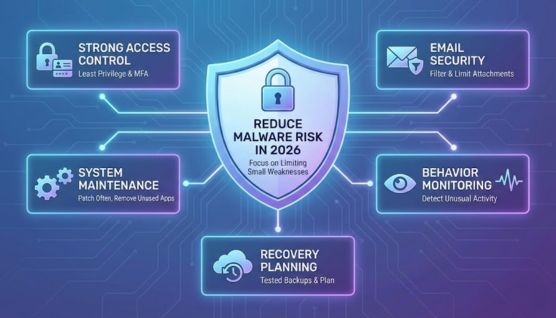
يؤدي التحكم القوي في الوصول إلى إبطاء البرامج الضارة على الفور. عندما يحصل المستخدمون فقط على الأذونات التي يحتاجون إليها فعليًا وتكون عمليات تسجيل الدخول محمية بمصادقة متعددة العوامل، فمن غير المرجح أن يتسبب حساب واحد مخترق في نشر الضرر.
لا يزال البريد الإلكتروني هو نقطة الدخول الأكثر شيوعًا للبرامج الضارة. تؤدي تصفية الرسائل الضارة وتحديد الروابط والمرفقات التي يمكن تنفيذها إلى إزالة العديد من التهديدات قبل أن تصل إلى النظام.
توفر البرامج القديمة والخدمات غير المستخدمة فرصًا سهلة للمهاجمين. يؤدي الحفاظ على تصحيح الأنظمة وإزالة المكونات غير الضرورية إلى تقليل سطح الهجوم الكلي.
غالبًا ما تتجنب البرامج الضارة الحديثة الاكتشاف عن طريق الاندماج مع النشاط العادي. تساعد مراقبة السلوك غير المعتاد بدلاً من الاعتماد فقط على التوقيعات المعروفة في تحديد التهديدات مسبقًا.
لا يوجد دفاع مثالي، وستظل بعض الهجمات ناجحة. تساعد النسخ الاحتياطية المختبرة وخطة الاستجابة الواضحة المؤسسات على التعافي بسرعة وتجنب التعطيل طويل المدى.
تساعد CloudSek المؤسسات على البقاء في صدارة تهديدات البرامج الضارة من خلال تحديد المخاطر قبل أن تتحول إلى حوادث نشطة. يركز نهجها على تتبع سلوك المهاجم والأصول المكشوفة والعلامات المبكرة للتسوية بدلاً من الرد بعد حدوث الضرر.
من خلال الجمع بين معلومات التهديدات والمراقبة المستمرة، يمنح CloudSek فرق الأمان رؤية أوضح لأماكن تشكل حملات البرامج الضارة وكيف يمكن أن تدخل البيئة. هذا يجعل من السهل تحديد أولويات المخاطر الحقيقية، وسد الفجوات مبكرًا، والاستجابة بشكل أسرع عندما تبدأ التهديدات في التحرك.
