🚀 أصبحت CloudSek أول شركة للأمن السيبراني من أصل هندي تتلقى استثمارات منها
اقرأ المزيد
.avif)

يلعب الذكاء الاصطناعي دورًا رئيسيًا في اكتشاف التهديدات من خلال تمكين الأنظمة من تحديد النشاط الضار بناءً على السلوك والأنماط بدلاً من الاعتماد فقط على القواعد أو الأنماط المعروفة. يسمح هذا باكتشاف التهديدات حتى عندما تكون جديدة أو غير معروفة أو مصممة للتهرب من أدوات الأمان التقليدية.
يساعد اكتشاف التهديدات بالذكاء الاصطناعي فرق الأمن على التعامل مع كميات كبيرة من النشاط من خلال الإبلاغ تلقائيًا عن السلوك غير المعتاد وإعطاء الأولوية للإشارات ذات المخاطر العالية. ونتيجة لذلك، يصبح الاكتشاف أسرع وأكثر قابلية للتطوير وأقل اعتمادًا على المراجعة اليدوية المستمرة.
في الاستخدام العملي، يدعم اكتشاف التهديدات بالذكاء الاصطناعي أيضًا الرؤية خارج الأنظمة الداخلية. تساعد المنصات مثل CloudSek المؤسسات على تطبيق اكتشاف التهديدات بالذكاء الاصطناعي من خلال تتبع التعرض الخارجي وتسليط الضوء على المخاطر التي تحتاج إلى اهتمام فوري.
اكتشاف التهديدات بالذكاء الاصطناعي هو استخدام الذكاء الاصطناعي والتعلم الآلي لتحديد النشاط الضار داخل الأنظمة الرقمية من خلال تحليل البيانات المتعلقة بالأمان. وهي تحدد ما إذا كان النشاط طبيعيًا أم مريبًا دون الاعتماد كليًا على القواعد المحددة مسبقًا أو توقيعات الهجوم المعروفة.
على عكس أدوات الأمان التقليدية القائمة على القواعد، يركز اكتشاف التهديدات بالذكاء الاصطناعي على السلوك والسياق عبر المستخدمين والأجهزة والأنظمة. يسمح هذا بتحديد التهديدات حتى في حالة عدم وجود نمط أو توقيع سابق.
ونتيجة لذلك، يمكن اكتشاف المخاطر مثل البرامج الضارة ومحاولات التصيد الاحتيالي وسوء الاستخدام من الداخل في وقت مبكر وبدقة أكبر. يعمل هذا على تحسين الرؤية للتهديدات الناشئة ودعم قرارات الكشف الأسرع.
يعمل اكتشاف التهديدات المستند إلى الذكاء الاصطناعي تلقائيًا من خلال مراقبة بيانات الأمان عبر الأنظمة ومقارنتها بالسلوك المتوقع. يحدث هذا التحليل في الوقت الفعلي ولا يعتمد على قواعد محددة يدويًا.
عند حدوث نشاط، تقوم نماذج التعلم الآلي بتقييم الأنماط مثل وصول المستخدم وإجراءات النظام وحركة البيانات. عندما ينحرف السلوك عن النطاقات العادية، يكتشفه النظام على أنه حالة شاذة ويضع علامة عليه كتهديد محتمل.
ومع مرور الوقت، تتحسن النماذج من خلال التعلم من البيانات والنتائج الجديدة، والحد من التنبيهات غير الضرورية. وهذا يسمح لأنظمة الكشف بالتكيف باستمرار مع تغير البيئات وأساليب الهجوم.
يعد الذكاء الاصطناعي مهمًا في اكتشاف التهديدات الحديثة لأنه يمكّن أنظمة الأمان من تحديد التهديدات التي يصعب اكتشافها باستخدام الطرق التقليدية وتحديد أولوياتها وإبرازها.
يعتمد اكتشاف التهديدات بالذكاء الاصطناعي على مجموعة من المفاهيم الأساسية التي تشرح كيف تحدد الأنظمة الذكية النشاط الضار بما يتجاوز الأساليب التقليدية القائمة على القواعد. تحدد هذه المفاهيم كيفية التعرف على التهديدات وتقييمها وظهورها.
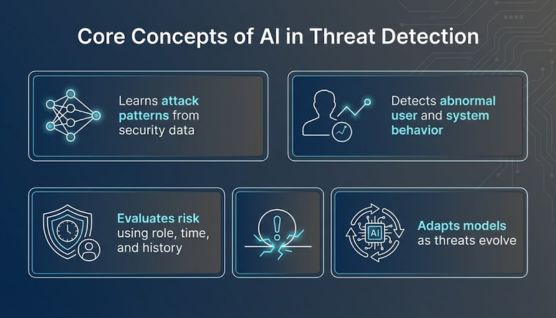
يسمح التعلم الآلي لأنظمة اكتشاف التهديدات بتعلم الأنماط من بيانات الأمان بدلاً من اتباع القواعد المحددة يدويًا. يتيح ذلك تحسين منطق الكشف بمرور الوقت مع ملاحظة النشاط والنتائج الجديدة.
بدلاً من التركيز على توقيعات الهجوم المعروفة، يبحث تحليل السلوك في كيفية عمل المستخدمين والأجهزة والتطبيقات بشكل طبيعي. تساعد الانحرافات عن السلوك المتوقع في الكشف عن النشاط المشبوه أو الضار.
يحدد اكتشاف الحالات الشاذة النشاط الذي يقع خارج الأنماط السلوكية العادية التي يتعلمها النظام. يعد هذا المفهوم أمرًا بالغ الأهمية لاكتشاف التهديدات غير المعروفة وهجمات يوم الصفر التي تفتقر إلى التوقيعات الموجودة.
يضمن الوعي بالسياق تقييم النشاط بناءً على عوامل مثل دور المستخدم ومستوى الوصول والتوقيت والسلوك التاريخي. هذا يقلل من الاكتشافات غير الصحيحة من خلال التمييز بين السلوك المحفوف بالمخاطر والإجراءات المشروعة.
يسمح التعلم المستمر لنماذج الكشف بالتكيف مع تغير البيئات وتقنيات الهجوم. من خلال تحديث فهمها تلقائيًا، تظل أنظمة الذكاء الاصطناعي فعالة بدون ضبط يدوي مستمر.
يتم تطبيق اكتشاف التهديدات المستند إلى الذكاء الاصطناعي بشكل مختلف اعتمادًا على طبيعة التهديد. من خلال التعرف على كيفية تطور النشاط بشكل طبيعي، يصبح من الممكن عرض الهجمات التي تعتمد على تغييرات طفيفة بدلاً من التوقيعات الواضحة.
غالبًا ما تتصرف البرامج الضارة بشكل مختلف بمجرد بدء تشغيلها داخل النظام، مثل محاولة إخفاء العمليات أو تعديل الإعدادات الحرجة. من خلال التعرف على كيفية عمل التطبيقات الشرعية عادةً، يمكن للتحليل القائم على الذكاء الاصطناعي أن يعرض البرامج الضارة حتى عندما لم يسبق رؤيتها من قبل.
يميل نشاط برامج الفدية إلى التميز من خلال سلوك التشفير المفاجئ أو أنماط الوصول غير العادية إلى الملفات أو تغييرات الأذونات السريعة. يساعد التعرف على هذه الإجراءات مبكرًا في مقاطعة الهجمات قبل أن يتم قفل الأنظمة أو البيانات بالكامل.
عادةً ما تكشف الرسائل الخادعة عن نفسها من خلال التناقضات في أنماط الاتصال أو سلوك المرسل أو كيفية تفاعل المستخدمين معهم. يسمح تحليل هذه الإشارات بوضع علامة على محاولات التصيد الاحتيالي حتى عندما تشبه إلى حد كبير الرسائل الشرعية.
تصبح إساءة استخدام الوصول الشرعي ملحوظة عندما يتغير سلوك المستخدم بشكل غير متوقع، مثل الوصول إلى البيانات في أوقات غير عادية أو نقل كميات كبيرة من المعلومات. تساعد مراقبة هذه التحولات بمرور الوقت في كشف الحسابات المخترقة أو التي يساء استخدامها دون الاعتماد على قواعد محددة مسبقًا.
نادرًا ما تتطابق الهجمات غير المعروفة سابقًا مع التوقيعات الثابتة ولكنها غالبًا ما تعطل أنماط النشاط العادية. يسمح اكتشاف هذه السلوكيات غير المنتظمة باكتشاف تهديدات جديدة قبل تحديدها رسميًا.
يتم إنشاء نماذج الذكاء الاصطناعي المستخدمة في اكتشاف التهديدات من خلال عملية تدريب منظمة تعدها للتعرف على السلوك الضار قبل نشرها في بيئات حقيقية. تركز هذه العملية على أهمية التهديد وجودة البيانات والتحسين المستمر بدلاً من بناء نموذج عام.
يبدأ تطوير النموذج بتحديد أنواع التهديدات التي يحتاج النظام إلى اكتشافها، مثل البرامج الضارة أو التصيد الاحتيالي أو النشاط الداخلي. تضمن الأهداف الواضحة أن يتعلم النموذج الأنماط ذات الصلة بمخاطر الأمان الحقيقية بدلاً من سلوك النظام العام.
يعتمد التدريب على كميات كبيرة من البيانات المتعلقة بالأمان التي يتم جمعها من السجلات وحركة مرور الشبكة ونقاط النهاية ونشاط المستخدم. يتم تنظيف هذه البيانات وتنظيمها حتى يتمكن النموذج من التركيز على إشارات ذات مغزى تميز السلوك العادي عن الإجراءات الضارة.
يتم تطبيق تقنيات التعلم الآلي لمساعدة النموذج على التعرف على الأنماط المرتبطة بكل من النشاط الشرعي والتهديدات المعروفة. من خلال التعرض المتكرر لهذه الأنماط، يتعرف النموذج على كيفية اختلاف السلوك الضار عن الاستخدام العادي للنظام.
قبل النشر، يتم تقييم النماذج باستخدام بيانات غير مرئية لقياس دقة الاكتشاف ومعدلات الخطأ. تضمن هذه الخطوة أن النموذج يمكن أن يعمل بشكل موثوق في ظروف العالم الحقيقي دون توليد تنبيهات خاطئة مفرطة.
بعد النشر، يتم تحديث النماذج باستخدام البيانات الجديدة ونتائج التهديدات المؤكدة. تتيح إعادة التدريب المستمرة قدرات الكشف أن تظل فعالة مع تطور تقنيات وبيئات الهجوم.
يقلل الذكاء الاصطناعي من الإيجابيات الكاذبة وإرهاق التنبيه من خلال تحسين كيفية تقييم أنظمة الكشف لإشارات الأمان وتصفيتها وتحديد أولوياتها قبل وصولها إلى المحللين البشريين.
يتم استخدام الذكاء الاصطناعي في نقاط مختلفة داخل أنظمة الكشف عن التهديدات بناءً على مكان إنشاء النشاط ذي الصلة بالأمان ومراقبته. يركز كل موضع على نوع معين من الإشارات بحيث يمكن تحديد السلوك المشبوه بالقرب من مصدره.
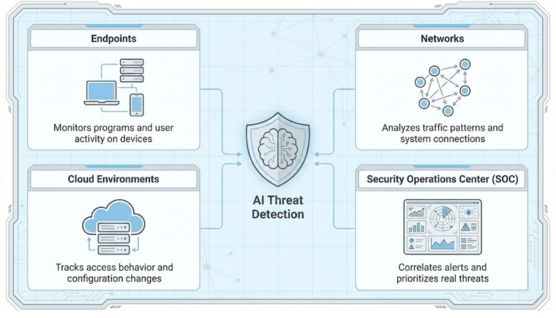
في نقاط النهاية مثل أجهزة الكمبيوتر المحمولة والخوادم والأجهزة المحمولة، يحلل الذكاء الاصطناعي كيفية تشغيل البرامج وكيفية تفاعل المستخدمين مع النظام. يساعد ذلك على عرض الأنشطة الضارة أو سوء الاستخدام أو الإجراءات غير المصرح بها مباشرة على الجهاز الذي تحدث فيه.
داخل الشبكات، يفحص الذكاء الاصطناعي أنماط الاتصال بين الأنظمة ويراقب كيفية انتقال البيانات عبر الاتصالات. يمكن أن تشير الاتصالات غير المتوقعة أو سلوك حركة المرور غير الطبيعي إلى الاختراقات أو الحركة الجانبية أو تسرب البيانات.
في البيئات السحابية، يراقب الذكاء الاصطناعي نشاط التطبيق وسلوك الوصول وتغييرات التكوين عبر البنية التحتية المشتركة. يساعد ذلك في تحديد المخاطر المتعلقة بالوصول غير المصرح به أو الحسابات المخترقة أو تغييرات التكوين غير الآمنة.
على مستوى العمليات، يدعم الذكاء الاصطناعي اكتشاف التهديدات من خلال تنظيم إشارات الأمان وتحديد أولوياتها. من خلال ربط الأنشطة ذات الصلة وتقليل الضوضاء، فإنه يساعد المحللين على التركيز على الحوادث التي من المرجح أن تمثل تهديدات حقيقية.
يعمل اكتشاف التهديدات المستند إلى الذكاء الاصطناعي على تحسين القدرة على تحديد التهديدات الأمنية وإدارتها على نطاق واسع، ولكن له أيضًا قيود عملية. يعد فهم كل من الفوائد والقيود أمرًا ضروريًا لاستخدام الذكاء الاصطناعي بفعالية في اكتشاف التهديدات.
يعمل تطبيق اكتشاف التهديدات المستند إلى الذكاء الاصطناعي بشكل أفضل عندما يتم التعامل معه كقدرة تشغيلية بدلاً من الإعداد لمرة واحدة. يجب أن يكون التركيز على جعل الاكتشاف مفيدًا وجديرًا بالثقة ومتوافقًا مع كيفية عمل فرق الأمان فعليًا.
ابدأ بتحديد التهديدات الأكثر أهمية وأين يفشل الاكتشاف الحالي. هذا يحافظ على تركيز الذكاء الاصطناعي على المخاطر الحقيقية بدلاً من مراقبة كل شيء دون غرض.
تعتمد دقة الكشف على جودة بيانات الأمان التي تغذي النظام. تحد البيانات غير المكتملة أو غير المتسقة مما يمكن للذكاء الاصطناعي تحديده بشكل واقعي.
يجب أن تتدفق نتائج الكشف إلى عمليات المراقبة والاستجابة الحالية. عندما تتناسب التنبيهات بشكل طبيعي مع العمليات اليومية، فمن المرجح أن تتم مراجعتها والعمل عليها.
لا تزال مخرجات الذكاء الاصطناعي بحاجة إلى حكم بشري، خاصة في وقت مبكر. تساعد مراجعة الاكتشافات الفرق على فهم النتائج وضبط الحساسية وبناء الثقة في النظام.
يؤدي تقديم اكتشاف الذكاء الاصطناعي على مراحل إلى تسهيل اكتشاف المشكلات وتصحيحها. يعمل التشغيل التدريجي على تقليل التعطيل ومنع التحميل الزائد المفاجئ للتنبيه.
اكتشاف التهديدات ليس ثابتًا، وكذلك أداء الذكاء الاصطناعي. تعد المراجعة والضبط المنتظمين ضروريين مع تغير البيئات وسلوك التهديد.
يساعد CloudSek في اكتشاف تهديدات الذكاء الاصطناعي من خلال المراقبة المستمرة للبصمة الرقمية الخارجية للمؤسسة عبر الويب السطحي والويب العميق والويب المظلم. يحلل الذكاء الاصطناعي الخاص بها كميات كبيرة من البيانات عبر الإنترنت ويوفر الذكاء السياقي في الوقت الفعلي من خلال منصات مثل xviGil، مما يساعد الفرق على التركيز على المخاطر الأكثر أهمية.
يعمل الذكاء الاصطناعي الخاص بـ CloudSek من خلال جمع البيانات وتنظيمها من العديد من المصادر، مثل وسائل التواصل الاجتماعي والمواقع العامة والمنتديات والقنوات السرية. وباستخدام التعلم الآلي والتحليلات التنبؤية، فإنه يحدد الأنماط المتعلقة بالتهديدات الناشئة ونقاط الضعف وسلوك الفاعل قبل وقوع الهجمات.
تدعم هذه المعلومات مجالات مثل الحماية من المخاطر الرقمية وإدارة سطح الهجوم واكتشاف تسرب البيانات وأمن سلسلة التوريد. من خلال إعطاء الأولوية للمشكلات عالية التأثير مثل انتحال هوية العلامة التجارية والأصول المكشوفة والبيانات المسربة، يقلل CloudSek من إجهاد التنبيه ويتيح اتخاذ إجراءات أسرع لحماية العمليات التجارية والسمعة والإيرادات.
