🚀 أصبحت CloudSek أول شركة للأمن السيبراني من أصل هندي تتلقى استثمارات منها
اقرأ المزيد
.avif)



.png)


على مدى العقد الماضي، يُشار إلى النظام البيئي لمجرمي الإنترنت الناطق باللغة الإنجليزية عادةً باسم «ذا كوم» لقد مرت بتحول عميق. ما بدأ كثقافة فرعية متخصصة تركزت على تداول ما يسمى»أسماء مستخدمي OG (رجل العصابات الأصلي)«لقد تطورت وسائل التواصل الاجتماعي إلى اقتصاد متطور موجه نحو الخدمات يقود بعضًا من أكثر الهجمات الإلكترونية تخريبًا في جميع أنحاء العالم. واليوم، تقود شركة ذا كوم طيفًا واسعًا من أنشطة الجرائم الإلكترونية، بما في ذلك خروقات البيانات على نطاق واسع، وحملات الابتزاز، وهجمات تبادل بطاقات SIM، وحوادث الفدية، واستنزاف العملات المشفرة، وسحب البساط، وغيرها من أشكال الاحتيال المالي التي تستهدف بشكل متكرر الشركات متعددة الجنسيات والكيانات الحكومية والبنية التحتية الحيوية ومستثمري التجزئة على حد سواء.
تم وضع أسس COM في المنتديات المبكرة مثل منتديات الغارة، مما عزز الشعور القوي بالمجتمع والسمعة بين الجهات الفاعلة في مجال التهديد. قدمت هذه المساحات المبكرة أرضًا خصبة لظهور منتديات مثل مستخدمو OG، مما زاد من تضخيم تكتيكات الهندسة الاجتماعية وعمليات الاستحواذ على الحسابات. بعد موجة من عمليات الإزالة من قبل سلطات إنفاذ القانون وتعطيل المنتديات، «تأثير الترحيل» حدث مزج مهارات التلاعب لدى متداولي OG مع الخبرة الفنية للقراصنة الذين يركزون على الاختراق. أدى هذا التقارب إلى إنشاء جيل جديد من مجرمي الإنترنت الرشيقين الذين يحركهم السمعة.
يرسم هذا التقرير تطور COM ويحلل اندماجها مع مجموعات الجهات الفاعلة الرئيسية في مجال التهديد، بما في ذلك لابسوس $، شيني هانترز، العنكبوت المتناثر (UNC3944)، و مجموعة سايلنت رانسوم (SRG). يستكشف الهياكل التنظيمية ونماذج تحقيق الدخل وسلاسل التوريد السرية التي تمكّن عملياتها. بالإضافة إلى ذلك، يفحص التقرير استجابة سلطات إنفاذ القانون ويقدم تقييمًا استشرافيًا للتهديدات التي يشكلها هذا النظام البيئي اللامركزي والتكيفي بشكل متزايد.
لا يمكن فهم المشهد المعاصر لتهديدات المجرمين الإلكترونيين الناطقين باللغة الإنجليزية دون تقدير النسيج التاريخي والثقافي والتقني الذي نشأ منه. ما بدأ كمنتديات متحدية بشكل فضفاض لصائدي أسماء المستخدمين «OG» (العصابات الأصلية) تطور بسرعة بسبب الضرورة وحافز الربح إلى اقتصاد غير مشروع محترف. هذا الجديد»كخدمة» تدعم البيئة مجموعة لا حصر لها من نواقل الهجوم، وتجذب المشاركين على مستوى العالم وتزيل العديد من الحواجز السابقة أمام الدخول.
تم بناء نظام COM البيئي بشكل أساسي على تكتيكات الهندسة الاجتماعية المتمثلة في «المتصلين» من مستخدمي OGusers، وتلاعب Lapsus بموظفي تكنولوجيا المعلومات، واختراق GTA VI الذي تم تنفيذه من غرفة فندق.
الوجبات الجاهزة: يجب على المؤسسات إعطاء الأولوية لحماية موظفي تكنولوجيا المعلومات/مكتب المساعدة كطبقة أمان مهمة.
يمكّن تبديل بطاقة SIM، الرائد لدى مستخدمي OGusers، المهاجمين من استنزاف محافظ العملات المشفرة واختراق حسابات المؤسسة، مما يجعل MFA المستند إلى الرسائل القصيرة ثغرة أساسية.
الوجبات الجاهزة: تعد المصادقة الثنائية المستندة إلى الرسائل القصيرة غير آمنة للغاية للحسابات عالية القيمة.
قامت مجموعات مثل Lapsus $ بتجنيد الموظفين أو إجبارهم بنشاط على الوصول إلى الأدوات الداخلية، كما رأينا في انتهاكات تويتر.
الوجبات الجاهزة: يجب أن تتضمن برامج التهديدات الداخلية سيناريوهات الهندسة الاجتماعية والإكراه.
من لصوص العملات المشفرة ذوي الدوافع المالية إلى مجموعات البحث عن الشهرة مثل Lapsus$ و ShinyHunters، تشمل أهداف المهاجمين الاضطراب والشهرة.
الوجبات الجاهزة: يجب أن تعالج الاستجابة للحوادث الضرر الذي يلحق بالسمعة والاستهزاء العام، وليس سرقة البيانات فقط.
تتسبب عمليات إزالة المنتديات الرئيسية من قِبل جهات إنفاذ القانون (RaidForums و BreachForums) في التجزؤ ولكن ليس الانهيار، مما يؤدي إلى دفع النشاط إلى قنوات Telegram و Discord والقنوات المخصصة للمدعوين فقط.
الوجبات الجاهزة: لا يمكن أن تعتمد معلومات التهديدات فقط على المنتديات التقليدية.
تعود جذور النظام البيئي لسوق المجرمين الإلكترونيين (COM) إلى أوائل ومنتصف عام 2010، وهي الفترة التي بدأ فيها مجرمو الإنترنت الناطقون باللغة الإنجليزية بدافع الربح والسمعة بالتجمع في المنتديات العامة وشبه الخاصة عبر الإنترنت.
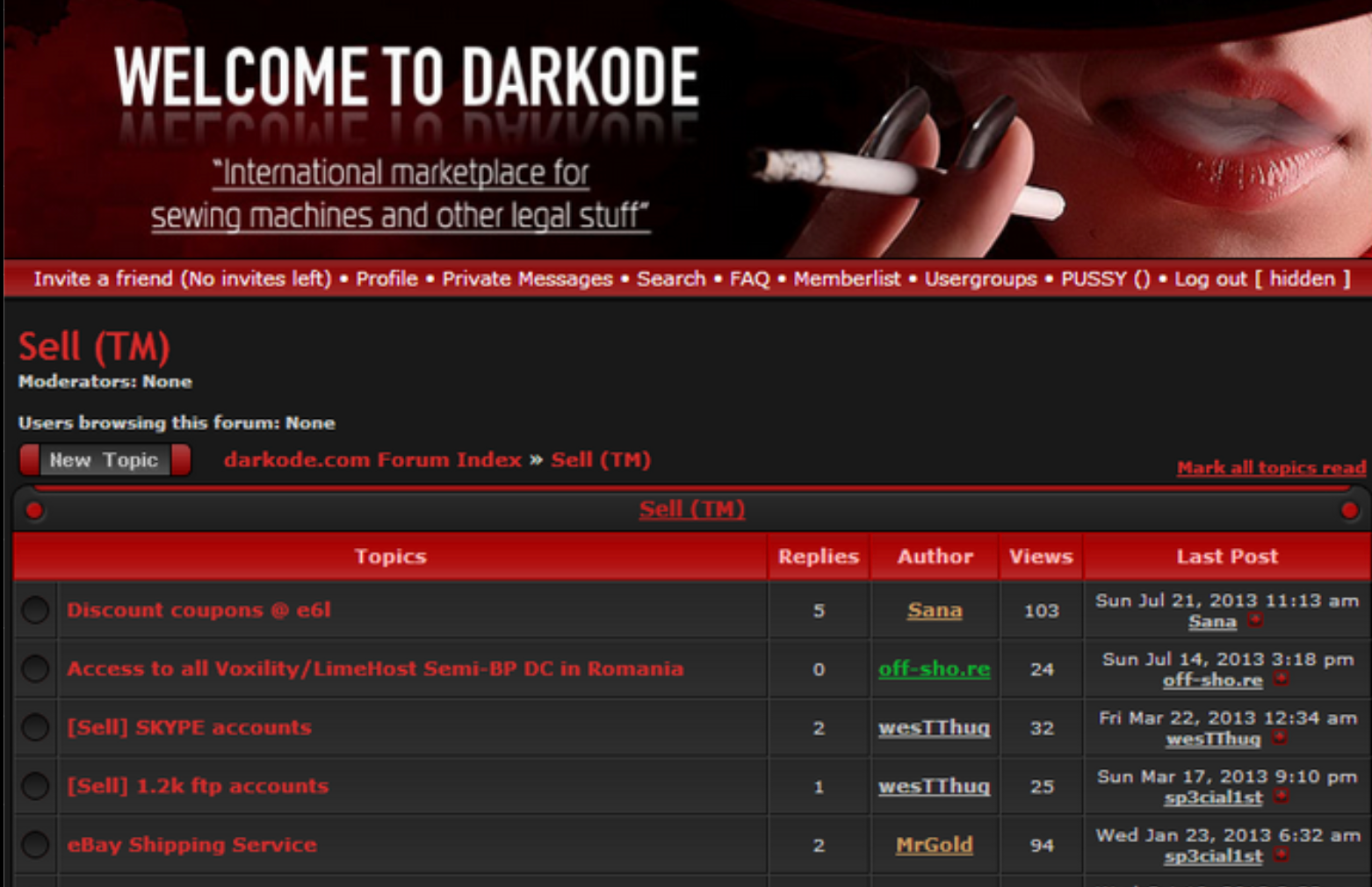
كان Dark0de أحد المراكز الأولى والأكثر تأثيرًا، وهو منتدى قرصنة شهير باللغة الإنجليزية اكتسب شهرة كسوق لتداول البيانات المسروقة وأدوات القرصنة والخدمات غير المشروعة. ومع ذلك، في عام 2015، أجرت وكالات إنفاذ القانون عملية إزالة كبيرة لـ Dark0de، مما أدى إلى تعطيل هذا المجتمع وتشتيت أعضائه عبر عالم الجريمة الإلكترونية السري.
بعد زوال Dark0de، انتقل العديد من المستخدمين الأكثر مهارة من الناحية الفنية إلى منتدى جديد تأسس في نفس العام: منتديات الغارة.
في حين قدمت منتديات مثل Dark0de و RaidForums البنية التحتية والسوق التقنية، شهد منتصف عام 2010 ظهور أول مجموعات تهديد رفيعة المستوى ناطقة باللغة الإنجليزية تتقن فن العرض العام. أشهرها كان فرقة ليزارد، وهي مجموعة عملت بين عامي 2014 و2016. كانت حملات DDoS الفوضوية عالية الوضوح ضد شبكات الألعاب، جنبًا إلى جنب مع ريادتهم في نموذج «DDoS-for-Hire»، بمثابة مقدمة مباشرة للتكتيكات التي سيتم تحسينها لاحقًا من قبل مجموعات مثل Lapsus$. قصة Lizard Squad هي دراسة حالة أساسية في التحول من النشاط القائم على المنتدى إلى الجرائم الإلكترونية ذات العلامات التجارية.

كانت LizardSquad مجموعة قرصنة سيئة السمعة عملت بشكل أساسي بين عامي 2014-2016، وحققت شهرة دولية من خلال هجمات DDoS رفيعة المستوى ضد شبكات الألعاب والشركات الكبرى. اشتهرت المجموعة بتعطيل PlayStation Network و Xbox Live في يوم عيد الميلاد 2014، مما أثر على ملايين اللاعبين حول العالم. بعد عمليات إنفاذ القانون المكثفة، تم اعتقال الأعضاء الرئيسيين ومحاكمتهم، مع حل المجموعة في نهاية المطاف حيث واجهت قيادتها السجن والعواقب القانونية.
ظهرت LizardSquad في سبتمبر 2014، وأعلنت في البداية عن تشكيلها فقط وأعلنت عن حلها بعد فترة وجيزة، قبل أن تعود لإعلان المسؤولية عن العديد من الهجمات البارزة. شاركت المجموعة في منتديات Darkode للقرصنة وشاركت البنية التحتية للاستضافة مع منظمات مجرمي الإنترنت الأخرى. عملت المجموعة كشبكة فضفاضة من المتسللين المراهقين في المقام الأول من مختلف البلدان، بما في ذلك فنلندا والمملكة المتحدة وهولندا والولايات المتحدة.
بالإضافة إلى تأثيرها التقني، كان الإرث الحقيقي لمجموعات مثل Lizard Squad ومعاصريها، مثل HoicSquad، هو تأسيس ثقافة «التسرب والتباهي» كعقيدة أساسية للنظام البيئي. بالنسبة لهؤلاء الممثلين، كان الهجوم نفسه جزءًا فقط من العملية؛ والنصف الآخر كان الأداء. من خلال الإعلان علنًا عن المسؤولية على وسائل التواصل الاجتماعي، والتهكم على ضحاياهم، والتعامل مع وسائل الإعلام، قاموا بتحويل الاضطراب إلى شكل من أشكال الترفيه وأداة لبناء الشهرة. هذا التكتيك المتمثل في الاستفادة من المشهد العام لتضخيم تأثير الهجوم هو سلف ثقافي مباشر لنماذج الابتزاز العامة التي تستخدمها مجموعات COM الحديثة. إن التهكم على Lapsus$ ومقالب البيانات المسرحية لـ ShinyHunters هي تطور مباشر لنفس الدافع: تسليح الشهرة للضغط على الضحايا وبناء سمعة في العمل السري.
The group's most infamous operation occurred on Christmas Day 2014, when LizardSquad launched simultaneous DDoS attacks against both PlayStation Network and Xbox Live. The attack affected approximately 110 million PlayStation Network subscribers and 48 million Xbox Live users, disrupting gaming services during peak holiday hours.
Xbox Live was restored within 24 hours, but PlayStation Network experienced extended outages that prevented both existing and new users from accessing online features. The attacks were reportedly halted after Kim Dotcom negotiated with the group, offering 3,000 premium MegaPrivacy vouchers valued at approximately $300,000 in exchange for ending the attacks.
Monetization Strategy
Following their Christmas attacks, LizardSquad commercialized their operations by launching "Lizard Stresser," a DDoS-for-hire service. The service was marketed as a stress-testing tool but functioned as a cyberattack platform, with packages ranging from $19.99 to $200 for monthly access. The service offered attack durations of 20 to 60 minutes and included additional features such as IP spoofing and DNS/NTP amplification capabilities.
The group's business model represented a shift from attention-seeking attacks to profit-driven cybercrime, with some members later forming additional groups like PoodleCorp to continue similar operations.
Key Members and Leadership
Note : Vinnie is still active on social media and still carries a huge reputation among “THE COM” and allegedly educates people.
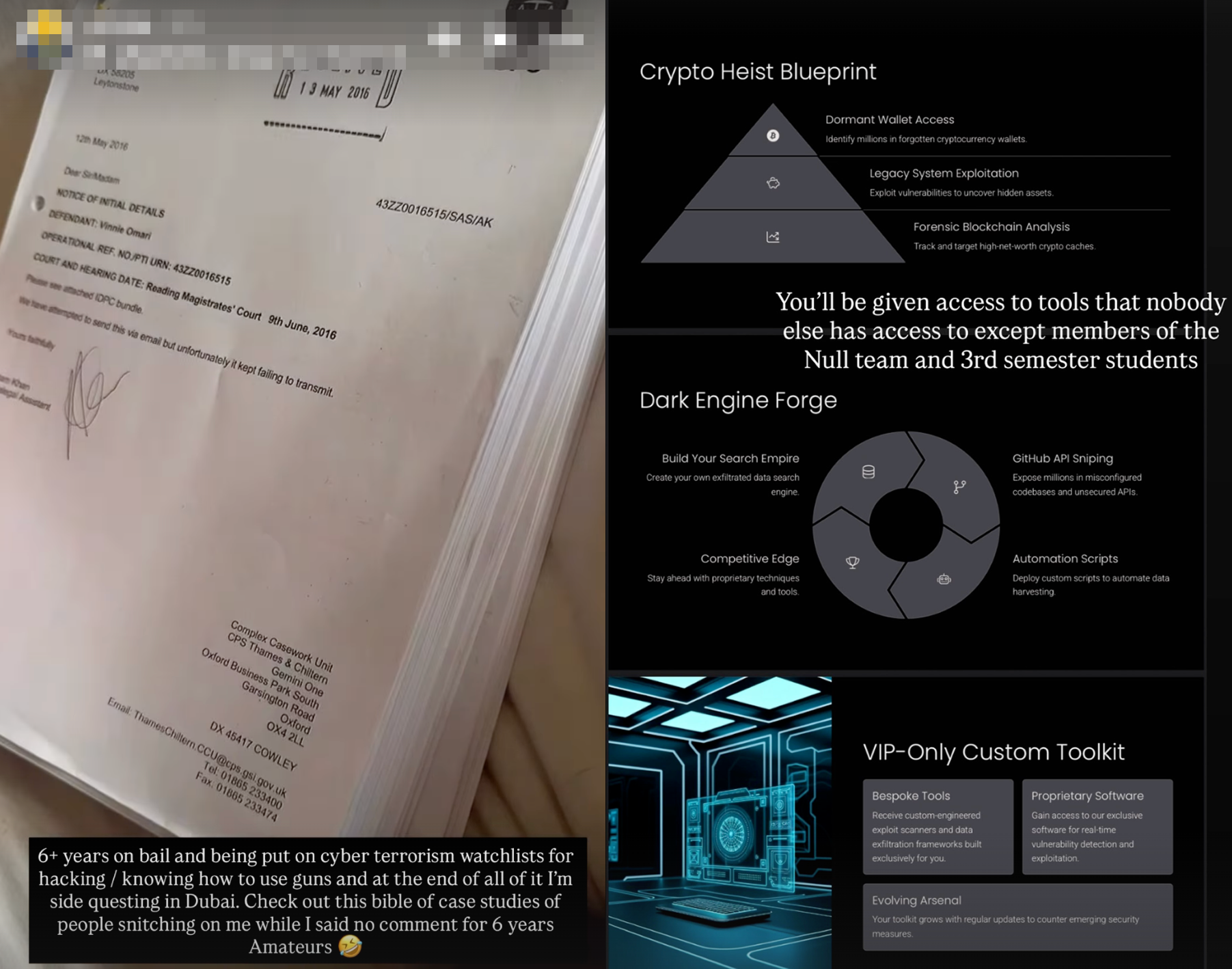
Law Enforcement Response and Arrests
The international nature of LizardSquad's operations triggered coordinated law enforcement responses across multiple jurisdictions. The group's members were systematically identified and arrested through various investigative techniques.
Investigation Techniques
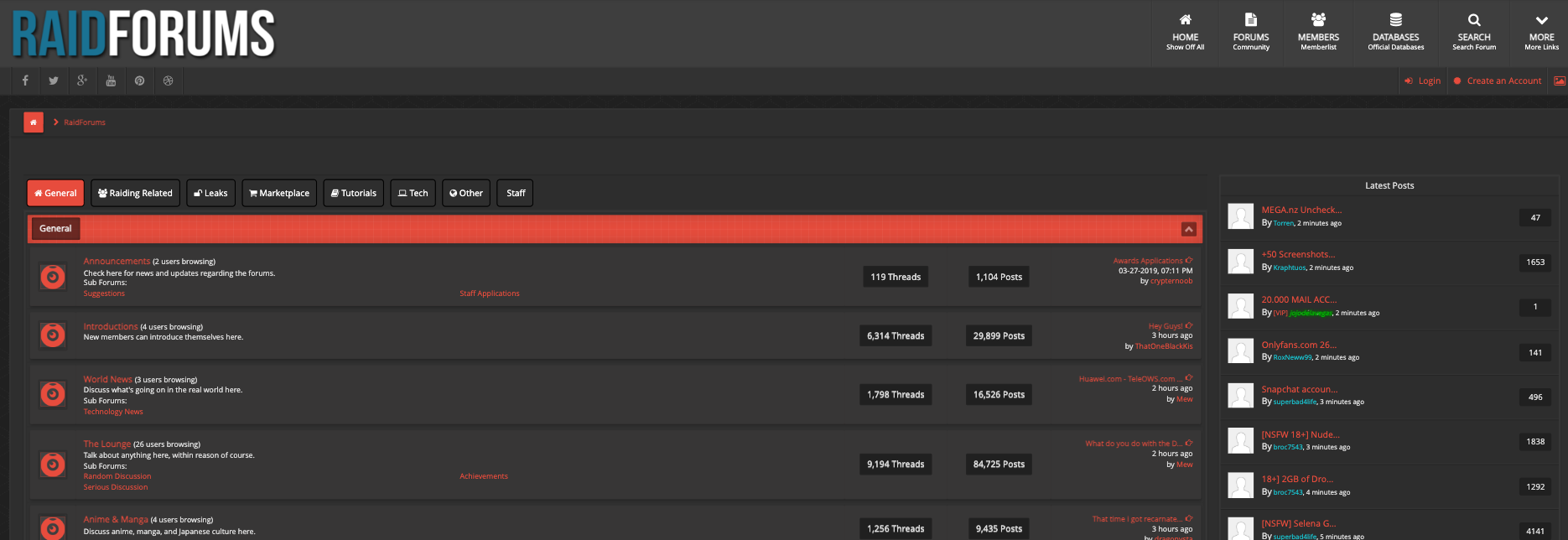
Initially, RaidForums started as a gathering place for “twitch raiders” and internet trolls but quickly evolved into a sophisticated marketplace centered around data breaches, database exploits, credential stuffing, and malware development. The forum became a breeding ground for technical hackers and cybercriminals seeking to trade stolen data and hacking tools, steadily gaining influence in the underground ecosystem. RaidForums was founded by a young Portuguese hacker known by the pseudonym “Omnipotent,” and over time, it grew into one of the most prominent English-language hacking forums, until it was seized and shut down by law enforcement in 2022.
Parallel to the rise of RaidForums, another influential community emerged: OGUsers, founded in 2017. Initially, OGUsers served as a marketplace for trading rare and highly sought-after social media usernames known as “OG” (original gangster) handles on platforms like Twitter, Tiktok, Telegram and Instagram. These short, brandable usernames carried significant value, sometimes selling for thousands of dollars.
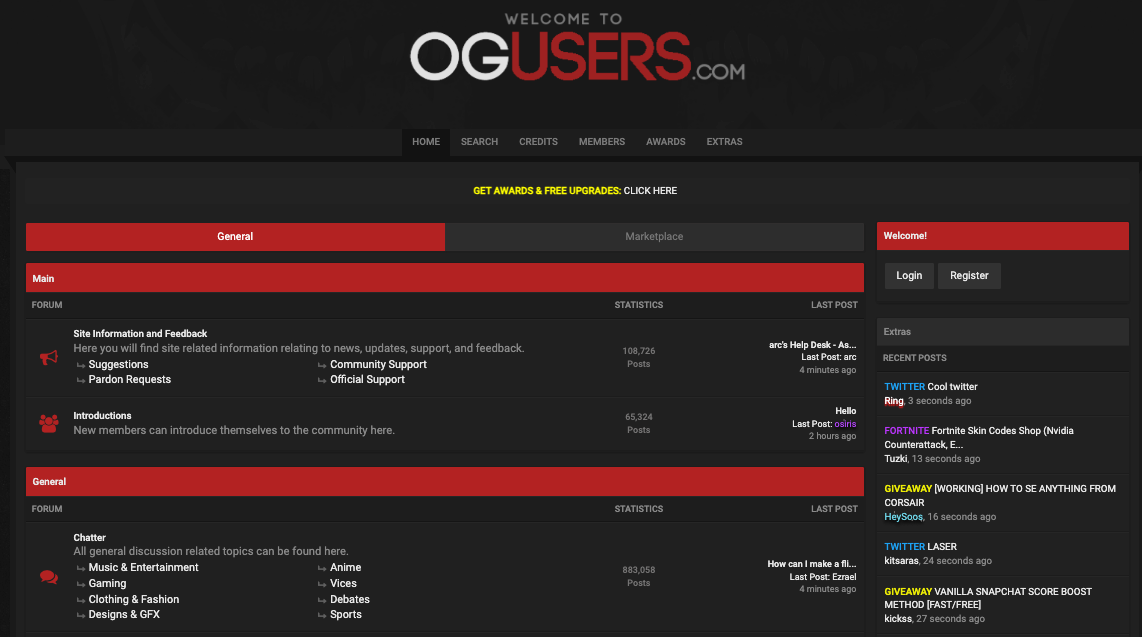
However, the community quickly evolved beyond simple trading. Users began employing social engineering tactics to steal valuable handles, initially targeting individual account holders. Over time, these methods expanded to include the manipulation of employees at social media platforms, gaining unauthorized access to internal tools and admin panels. One such insider-enabled breach led to the now-infamous series of Twitter account hijackings.
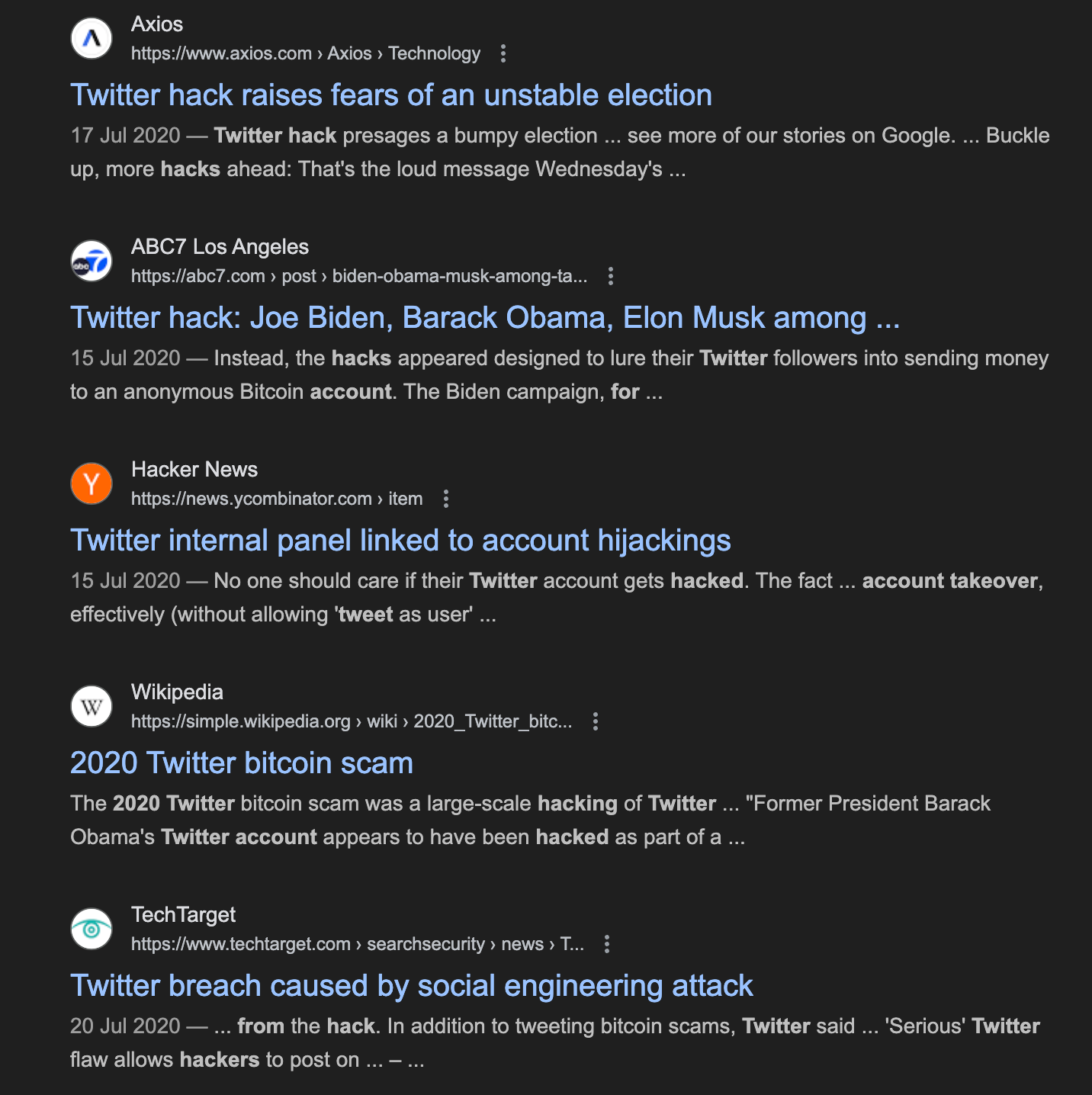
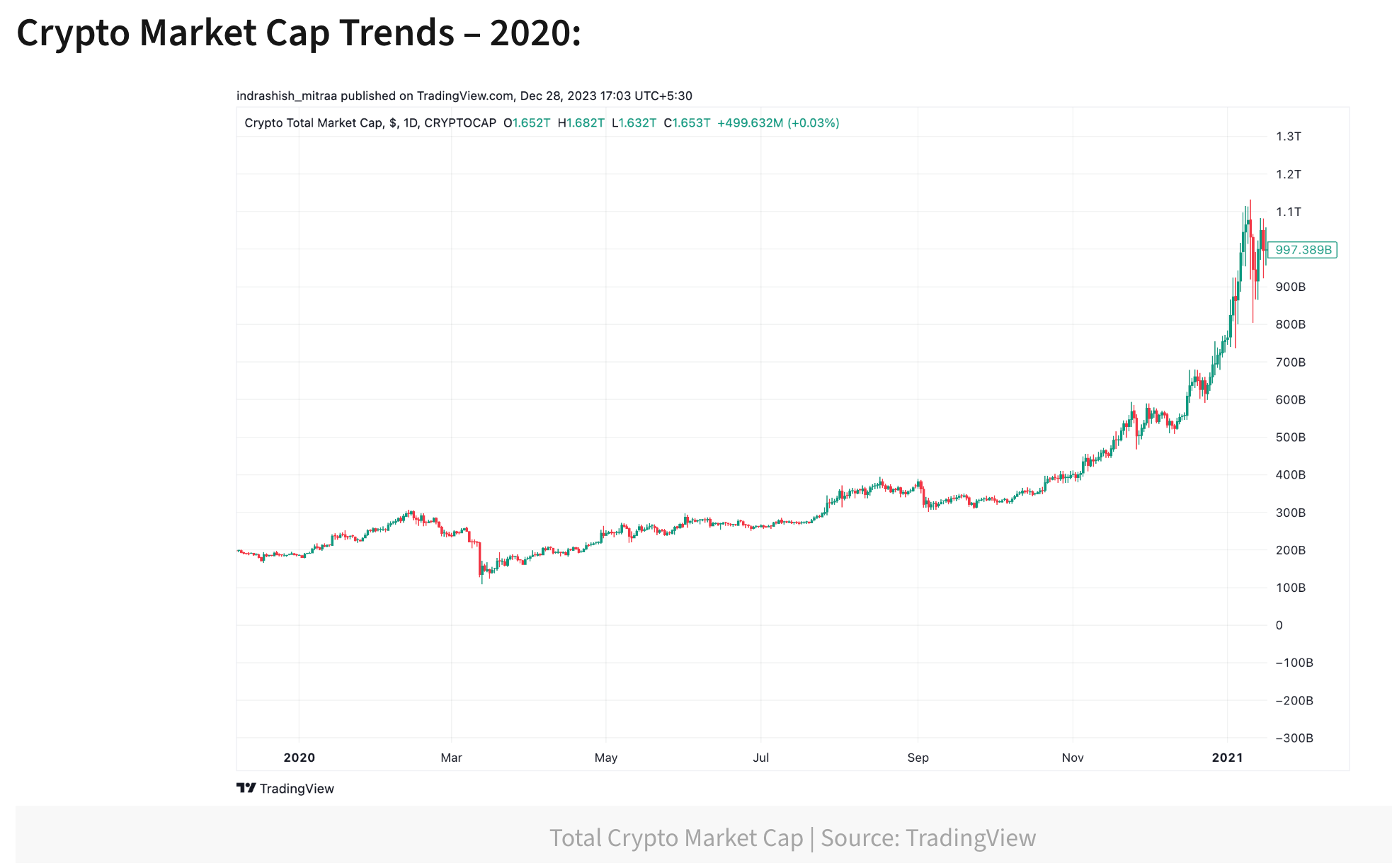
The trajectory of this burgeoning ecosystem was supercharged by the cryptocurrency boom of 2020-2021. This period introduced both a highly lucrative new target class digital currency wallets and a streamlined, pseudo-anonymous mechanism for monetization and laundering. The focus of many actors shifted dramatically; SIM-swapping and account takeover techniques, once perfected for stealing social media handles, were now repurposed to drain cryptocurrency accounts holding millions of dollars. Consequently, the role of OG usernames also transformed. No longer just status symbols, they became instrumental assets for money laundering; stolen crypto was used to purchase valuable handles, which were then resold for clean currency, effectively breaking the chain of illicit transactions. This economic catalyst marked a critical inflection point, professionalizing the community’s motivations and setting the stage for the more audacious, financially-driven operations that would soon follow.
A new class of social engineers, often referred to as “callers/texters,” became central to these operations. Using scripted pretexts and psychological manipulation, callers deceived telecom and platform support staff to execute SIM swaps and account takeovers.
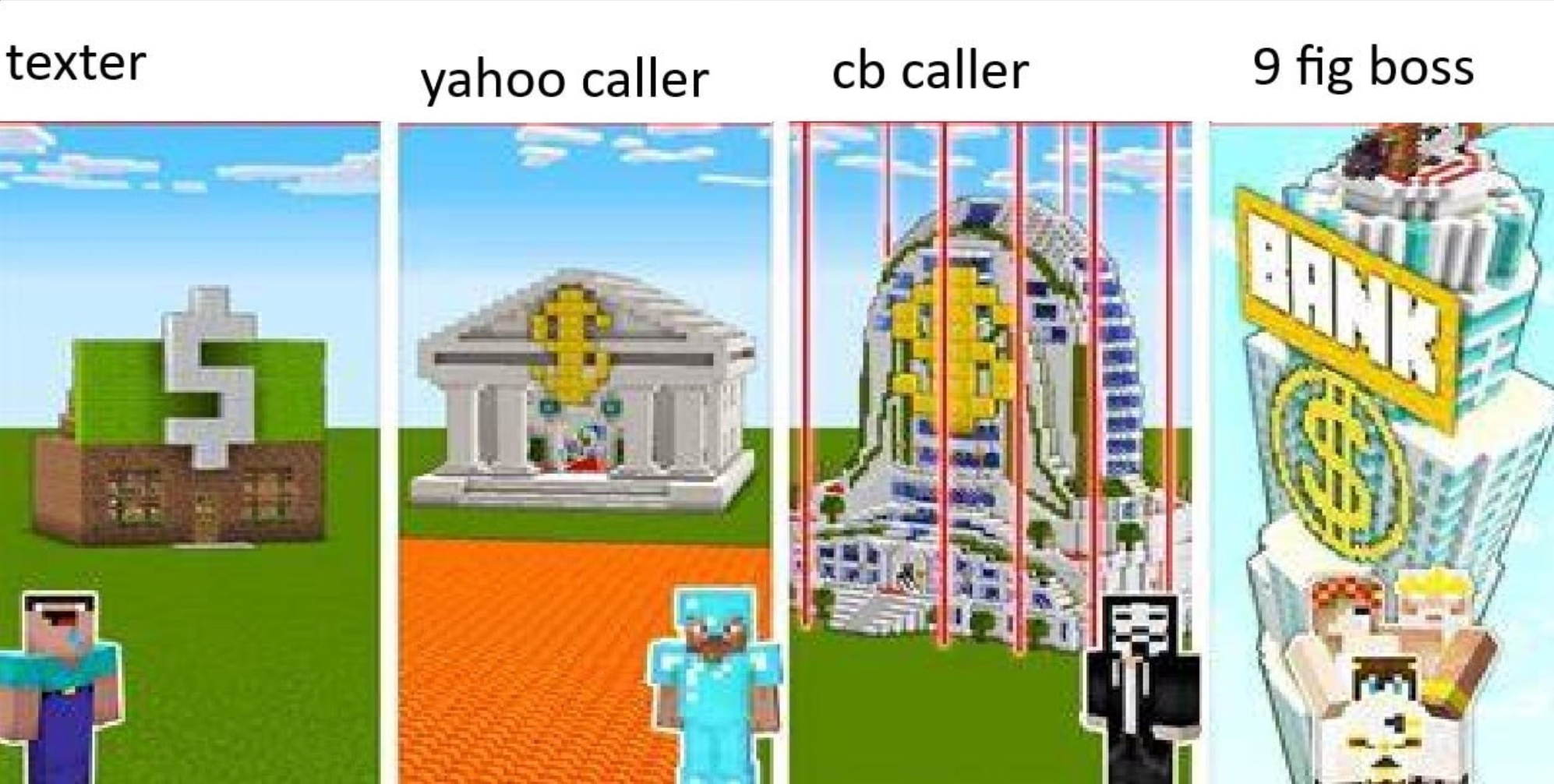
Their targets included high net-worth cryptocurrency holders, influencers, executives, and celebrities. The techniques pioneered during this era would go on to form the backbone of the enterprise-level social engineering attacks seen today.

It is important to note the origins of the COM can be traced back particularly to OGUsers Era. This forum fostered a strong sense of community and belonging among its members, where participants felt part of something larger than just transactions. This shared identity and reputation culture became a defining feature of cybercriminal marketplaces and helped shape the social dynamics that underpin today’s underground economy.

There was considerable overlap between the user bases and tactics employed on both forums, particularly as cybercriminals sought new venues following the takedowns of older carding and hacking forums. RaidForums became known for its technical hacking and data markets, while OGUsers carved out a niche in social engineering and account hijacking. Together, these forums fostered a cybercriminal supply chain by providing platforms to build skills, establish reputation, and trade illicit goods and services, shaping much of the English speaking cybercrime landscape seen today.
As The COM matured into a fragmented yet highly collaborative ecosystem, it gave rise to several specialized subgroups that significantly elevated the scale and visibility of cybercrime operations. Among the most prominent were Lapsus$ and ShinyHunters, each embodying different facets of The COM’s evolution ranging from chaotic public-facing breaches to quiet, methodical data exfiltration campaigns.

تم تشكيلها في منتصف عام 2020 من قبل ممثلين ذوي خبرة من منتديات الغارة مشهد، شيني هانترز تميزوا بسرعة من خلال اعتمادهم لـ منهجيات الهجوم على المستوى الصناعي. من بين المجموعات الأولى التي قامت بتفعيل مزيج من الحقن الآلي لـ SQL وإساءة استخدام واجهة برمجة التطبيقات وعمليات الاستحواذ على Github وجمع بيانات الاعتماد، تجاوزت ShinyHunters التركيز التقليدي على تداول اسم مستخدم OG. توسعت أهدافهم بسرعة لتشمل منصات المستهلكين الكبيرة وموفري SaaS وبيئات المؤسسات.
ساعدت ShinyHunters في تحديد روح «التسرب والتباهي»، وحظيت باهتمام وسائل الإعلام على نطاق واسع من خلال التخلص علنًا من مجموعات البيانات الضخمة من الانتهاكات البارزة بما في ذلك Tokopedia و Microsoft و Nitro PDF وغيرها. لم يتم تصميم هذه التسريبات ذات الحجم الكبير فقط لتحقيق الدخل من البيانات المسروقة ولكن أيضًا لتعزيز سمعة المجموعة عبر المنتديات السرية والمنصات العامة.
بالإضافة إلى الاختراقات المباشرة، لعبت ShinyHunters دورًا رئيسيًا في تسويق الجرائم الإلكترونية من خلال العمل كواحدة من أوائل المراكز التي تتعامل مع المستهلك لوسطاء الوصول الأولي (IABs). لقد عملوا ضمن نظام بيئي أوسع من عروض «كخدمة» التي تستفيد من البنية التحتية المشتركة وأسواق الاعتماد والتعاون مع المجموعات المتخصصة الأخرى. ساعد هذا النهج المعياري القائم على الخدمات في إنشاء نموذج قابل للتكرار لعمليات الجريمة الإلكترونية من المستوى المتوسط إلى العالي، والتي لا يزال الكثير منها يحاكي تكتيكاتها حتى اليوم.
لابسوس $ ظهرت على تيليجرام في أواخر عام 2021، سرعان ما اكتسبت شهرة باعتبارها مجموعة تهديد مدمرة تحركها الدعاية وتتألف إلى حد كبير من الممثلون المراهقون من العالم الناطق باللغة الإنجليزية. على الرغم من هيكلها الفوضوي على ما يبدو واتصالاتها غير الرسمية، أظهرت Lapsus$ درجة عالية من القدرة التقنية والفعالية التشغيلية - مما أدى بنجاح إلى تعريض المنظمات البارزة للخطر بما في ذلك نفيديا وسامسونج ومايكروسوفت، و تويتر.
اشتهرت المجموعة بتكتيكاتها الجريئة: اختراق البث المباشر، تسريبات البيانات العامة، تهديدات الابتزاز، والتهكم المباشر الذي يستهدف الضحايا وإنفاذ القانون. ولكن تحت المشهد كان هناك نهج منضبط تقنيات التدخل المرتكزة على الإنسان. يتم رفع قيمة Lapsus بالدولار بشكل أساسي الهندسة الاجتماعية، تبديل بطاقة SIM، سرقة بيانات الاعتماد، و التلاعب بدعم العملاء وموظفي تكنولوجيا المعلومات للحصول على وصول غير مصرح به إلى الأنظمة ذات الامتيازات. مكنت هذه التقنيات المجموعة من تجنب الضوابط الأمنية التقليدية والتركيز بعمق في الشبكات المستهدفة.
تألف لابسوس $ من أعضاء مهرة لهم جذور في كل من مستخدمي OGusers ومنتديات RaidForums. بدأ العديد منهم كمهندسين اجتماعيين في مستخدمو OG، وبناء السمعة من خلال عمليات الاستحواذ على الحسابات ومخططات تبادل بطاقات SIM. كما تم تكثيف ضغط إنفاذ القانون على مستخدمي OG، هاجر العديد من الممثلين إلى منتديات الغارة، حيث واجهوا نظامًا بيئيًا أكثر تقدمًا من الناحية التقنية يركز على انتهاكات البيانات ومشاركة الاستغلال والوساطة في الوصول. ال دمج خبرات الهندسة الاجتماعية من مستخدمي OG والتكتيكات الموجهة نحو الاختراق من RaidForums وضعت الأساس لـ Lapsus$ - مجموعة تهديدات هجينة تعكس تطور COM القائم على التقارب.
على الرغم من موجة الاعتقالات في مارس 2022، لقد أثرت تقنيات Lapsus $ وروحه العدوانية بالفعل على تحول أوسع في مشهد الجرائم الإلكترونية. ألهم نجاحهم جيلًا من الممثلين المقلدين وخلق مجموعات جديدة تبنت المزيد آمن تشغيليًا، الهياكل اللامركزية، مع الاستمرار في استخدام التكتيكات العدوانية البارزة التي ابتكرها Lapsus$.
بين عامي 2021 و 2023، شهد مجرم الإنترنت الناطق باللغة الإنجليزية تحت الأرض أهم اضطراب له حتى الآن. منسقة عمليات الإزالة من قبل سلطات إنفاذ القانون، جنبا إلى جنب مع اعتقالات رفيعة المستوى من المتسللين المراهقين، أعادوا تشكيل مشهد التهديدات الرقمية بشكل أساسي. سلطت هذه العمليات الضوء على التعاون الدولي غير المسبوق وتعطيل المنصات التي استضافت بشكل جماعي 500,000 مستخدم نشط.
واحدة من أكثر الحالات المحورية خلال هذه الفترة كانت اعتقال أريون كورتاج، فتاة تبلغ من العمر 18 عامًا من أكسفورد بالمملكة المتحدة. معروف على الإنترنت باسم «أبيض»، «قاعدة الاختراق»، «صندوق بريد أبيض»، و «تي بوتبر هاكر»، دبر كورتاج انتهاكات لبعض أبرز شركات التكنولوجيا في العالم، بما في ذلك نفيديا ومايكروسوفت وأوبر، و ألعاب روكستار.
بدأ كورتاج مسيرته المهنية في مجال الجرائم الإلكترونية في عام 2021 بهجمات على مجموعة بي تي و طالع، مطالبة 4 مليون جنيه إسترليني من خلال حملات الهندسة الاجتماعية المتطورة. بعد تشخيص إصابته بالتوحد، اعتُبر أنه غير لائق للمثول أمام المحكمة. وبدلاً من ذلك، ركزت محاكم المملكة المتحدة على ما إذا كان قد ارتكب الأفعال، بدلاً من إثبات النية الإجرامية. تم إثبات قضيته سوابق قانونية مهمة حول مقاضاة الأفراد ذوي الاختلافات العصبية في الجرائم الإلكترونية.
وقع الحادث الأكثر دراماتيكية في سبتمبر 2022، عند كورتاج، تحت حماية الشرطة في فندق ترافيلودج، استخدم hotel TV, Amazon Fire Stick, and a mobile phone to infiltrate Rockstar Games and leak footage of the unreleased Grand Theft Auto VI. This bold act led to his indefinite detention in a secure psychiatric facility.
LAPSUS functioned more as a loosely organized international collective than a traditional cybercrime syndicate. Co-conspirators were arrested in Brazil, the UK, and the US, revealing a wide operational footprint. In Brazil, Operation Dark Cloud exposed LAPSUS$’s infiltration of government systems, including the Ministry of Health.
The group’s operational model relied heavily on social engineering, SIM swapping, and insider recruitment. They also used public Telegram polls to select targets, blending spectacle with effective intrusion tactics.
Despite their youth, LAPSUS$ members demonstrated capabilities rivaling nation-state threat actors. Their attacks disrupted companies with some of the most mature security operations in the world. The group's behavior reflected non-financial motives as well—status, recognition, and peer influence were recurring drivers.

On February 4, 2021, at 1:00 PM PST, a rare coordinated takedown by Instagram, Twitter, TikTok, and other platforms targeted OGUsers, the premier forum for trading stolen social media accounts and coordinating SIM-swapping attacks.
Instagram and Facebook led the charge, disabling hundreds of accounts linked to OGUsers and issuing cease and desist letters. Twitter followed by banning high-follower "OG" handles hijacked during the July 2020 Twitter breach. TikTok recovered dozens of unique usernames, many acquired through fraudulent means.
This joint action marked a paradigm shift from isolated enforcement to industry-wide cybercrime disruption.
OGUsers was the central hub for SIM-swapping attackers and digital identity thieves. The platform’s status economy rewarded those who could hijack rare usernames, high-profile accounts, and cryptocurrency wallets. Its members targeted influencers, executives, and celebrities using advanced vishing, phishing, and insider exploitation.
By revoking access, recovering hijacked accounts, and improving verification protocols, platforms disrupted the illicit value chain that sustained OGUsers' marketplace. Multi-factor authentication, improved support staff training, and better fraud detection significantly reduced the effectiveness of these attacks.
Law enforcement intelligence sharing further amplified the effort, setting a precedent for private-public collaboration in disrupting digital criminal infrastructure.
The seizure of RaidForums was the culmination of a multi-agency operation initiated in 2018, when federal agents detained Diogo Santos Coelho ("Omnipotent") at Hartsfield-Jackson Airport in Atlanta. Forensic analysis of his devices exposed his direct connection to RaidForums, including registration of backup domains like rf.ws and raid.lol.
RaidForums operated with a tiered membership model, complete with a "God" status and escrow services. Coelho personally operated a fee-based “Official Middleman” system that facilitated data sales and credential transfers documented through FBI undercover purchases.

On January 31, 2022, Coelho was arrested in Croydon, UK, followed by a coordinated seizure of all RaidForums infrastructure on February 25, 2022. Operation Tourniquet involved the FBI, NCA, Europol, and law enforcement agencies from Portugal, Romania, and Sweden.
Law enforcement seized all known domains and replaced them with banners displaying criminal charges marking a decisive public message about the risks of cybercrime participation.
Coelho’s extradition has since become a complex legal issue, with both the US and Portugal filing competing requests. In September 2025, the UK High Court ruled that procedural errors had compromised the decision-making process, requiring reconsideration. The case has since set new precedents in multi-jurisdictional cybercrime prosecutions.
By 2021–2022, after multiple high-profile hacks against the forums and law enforcement takedowns, the COM (criminal online marketplace) ecosystem no longer relied on any single platform. While many users initially migrated to RaidForums, core COM activity shifted toward decentralized platforms such as Telegram and Discord. The ecosystem evolved into a mesh of invite-only forums, temporary marketplaces, and encrypted communication channels. This decentralization enhanced user anonymity but reduced coordination efficiency and centralized oversight.
Following RaidForums’ takedown, over 500,000 displaced users sought refuge primarily on Telegram. However, language barriers and geopolitical tensions, especially anti-Russian sentiment due to the Ukraine invasion, limited movement to Russian-speaking forums. The absence of a centralized English-speaking hub created a power vacuum. Temporary platforms, including low-security forums and Discord servers, emerged but failed to replicate RaidForums’ robust infrastructure, reputation systems, or escrow services.
On March 16, 2022, Conor Brian Fitzpatrick, known as “Pompompurin,” launched BreachForums—a near-clone of RaidForums. The platform rapidly grew from 1,500 to over 192,000 users within eight months. Fitzpatrick’s notoriety, particularly from the 2021 FBI email hack, attracted high-value actors and helped bridge OGUsers’ social engineering community with RaidForums’ data breach-focused user base. BreachForums quickly became a defining hub in the modern COM landscape.

The convergence of OGUsers and RaidForums communities, catalyzed by successive takedowns, reshaped the COM ecosystem. Social engineers who specialized in OG account takeovers adapted to a marketplace rich with leaked data and credentials. Techniques like bypassing two-factor authentication, SIM swapping, and manipulating support agents merged with data breach operations. This fostered hybridization of skills and the development of underground reputation systems. COM actors expanded their targets from individual social accounts to enterprises and crypto platforms. Professionalized services such as callers, doxers, and exploit developers became common, with operations coordinated over Telegram, Discord, and private channels.
Despite BreachForums’ rapid growth, not all actors migrated there. A significant portion of the COM, especially those involved in SIM swapping, crypto fraud, and related activities did not join BreachForums. The platform’s strict rules against financial fraud discouraged many from participating publicly. Instead, these actors remained active on Telegram, Discord, and private networks. This was true not only for prominent groups like ShinyHunters but also for many smaller actors and entire fraud circles that chose to operate underground or on alternative platforms. ShinyHunters, for example, maintained control behind the scenes but distanced themselves publicly by delegating BreachForums’ day-to-day administration to IntelBroker, keeping a low profile while holding influence.
This divide meant that while BreachForums served as a central hub for data breach trading and infosec discussions, it never fully replaced the broader fraud forums that had existed previously. Much of the old COM community either fragmented further or remained hidden in private channels.
After Fitzpatrick’s arrest in March 2023, BreachForums cycled through a series of administrators including Baphomet, ShinyHunters, IntelBroker, and Anastasia each making changes under pressure. Domain seizures and internal instability eroded user trust, accelerating the community’s move toward fragmented, semi-private ecosystems. Access to key spaces became increasingly reputation- or referral-based, further compartmentalizing the landscape.
This fragmentation of the underground ecosystem, coupled with the absence of centralized, public-facing forums, has contributed to the rise of numerous UNC-designated threat clusters that often operate below the radar of mainstream infosec reporting.
Without consistent visibility, formal naming conventions, or public TTP sharing, many of these groups function in relative isolation. Their campaigns appear as disjointed, anomalous incidents, making it difficult for researchers to recognize them as part of a larger, coordinated threat model. This creates significant blind spots for defenders, particularly when overlapping infrastructure or techniques are obscured by intermediary service providers (phishing kits, vishing crews, IABs, etc.).
Some notable examples of these loosely or semi-affiliated groups include:

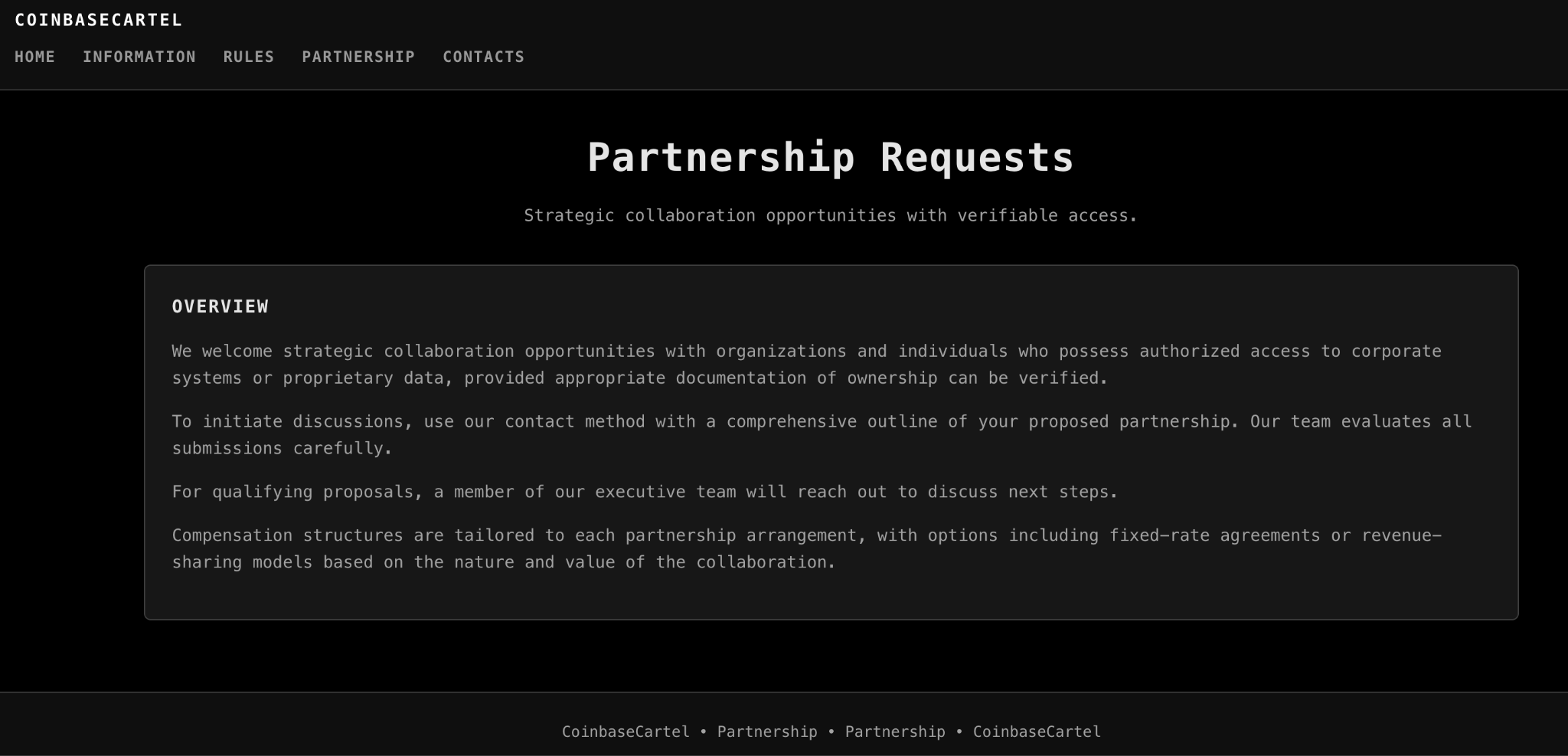
Formed in mid-2025, Scattered Lapsus$ Hunters is a newly emerged cybercrime coalition that represents a strategic consolidation of capabilities from three of the most notorious threat actors within the COM ecosystem: Scattered Spider, Lapsus$, and ShinyHunters. Unlike previous short-term collaborations, this group appears to operate as a more structured alliance. Their public debut occurred via Telegram, where they engaged in high-visibility data leaks, victim extortion, and public taunts directed at both cybersecurity firms and law enforcement echoing Lapsus$’s signature tactics.
Allegedly, the group comprises not only English-speaking members but also individuals fluent in Russian and Chinese, indicating a more globally distributed network. These members are believed to operate in loosely coordinated cells and maintain connections to multiple financially motivated cybercriminal groups. However, the group reportedly takes active measures to obscure these affiliations including efforts to keep internal structures private and the deliberate dissemination of misinformation to conceal ties to Russian and Chinese-speaking actors. The formation of Scattered Lapsus$ Hunters underscores an emerging trend of increased collaboration and professionalization within the cybercrime ecosystem, paired with greater operational security and deception tactics.
Scattered Lapsus$ Hunters is guided by a “log in, not hack in” philosophy, privileging identity‑centric intrusion and bypassing traditional defenses by targeting human trust. Their methodology is a synthesis of the constituent groups’ specialties:
This blend of social engineering, wholesale exfiltration, and performative extortion makes them especially volatile and unpredictable.

Since launching, Scattered Lapsus$ Hunters has claimed responsibility for several major attacks:
In late September 2025, the group’s public-facing channels posted farewell messages, announcing a “going dark” phase. But most analysts and law enforcement view this as a tactic, not a genuine shutdown. The procedure resembles strategies used by ransomware and other threat actors to deflect public scrutiny, regroup, rebrand, or continue operations under the radar. While outward activity has quieted, private extortion against undisclosed victims appears to persist.
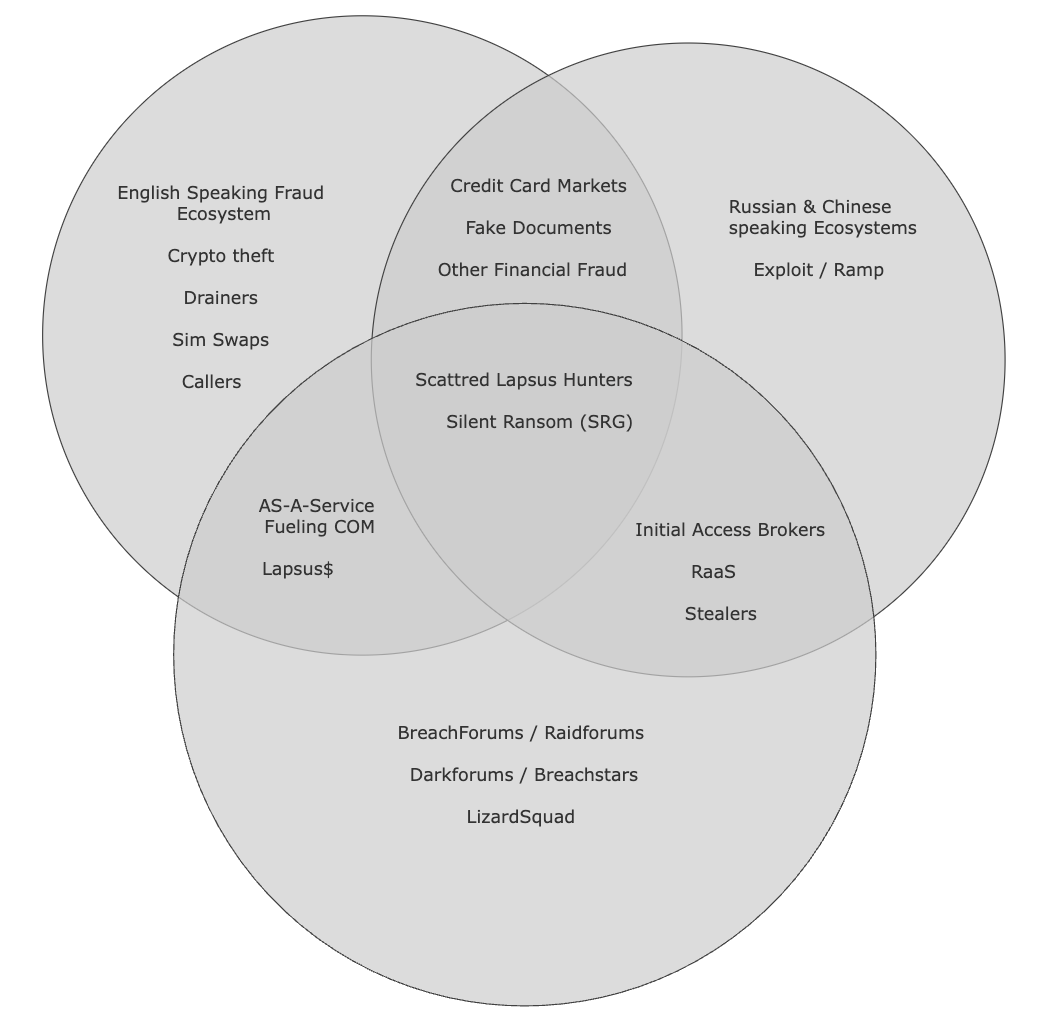
What truly distinguishes The COM from prior cybercriminal eras is its modular specialization and supply-chain integration, mirroring the efficiency and structure of legitimate industries. The ecosystem has matured into a cybercrime-as-a-service (CaaS) model where few actors operate entirely independently.Threat actors form transactional micro-economies, each playing a defined role in a seamless, high-functioning apparatus.
This structure emphasizes the interdependence within the cybercrime economy and reinforces how The COM has evolved beyond disorganized criminality into a professionalized, service-driven industry. These roles are modular and interchangeable, allowing criminal operations to scale quickly, outsource risk, and remain resilient under pressure.
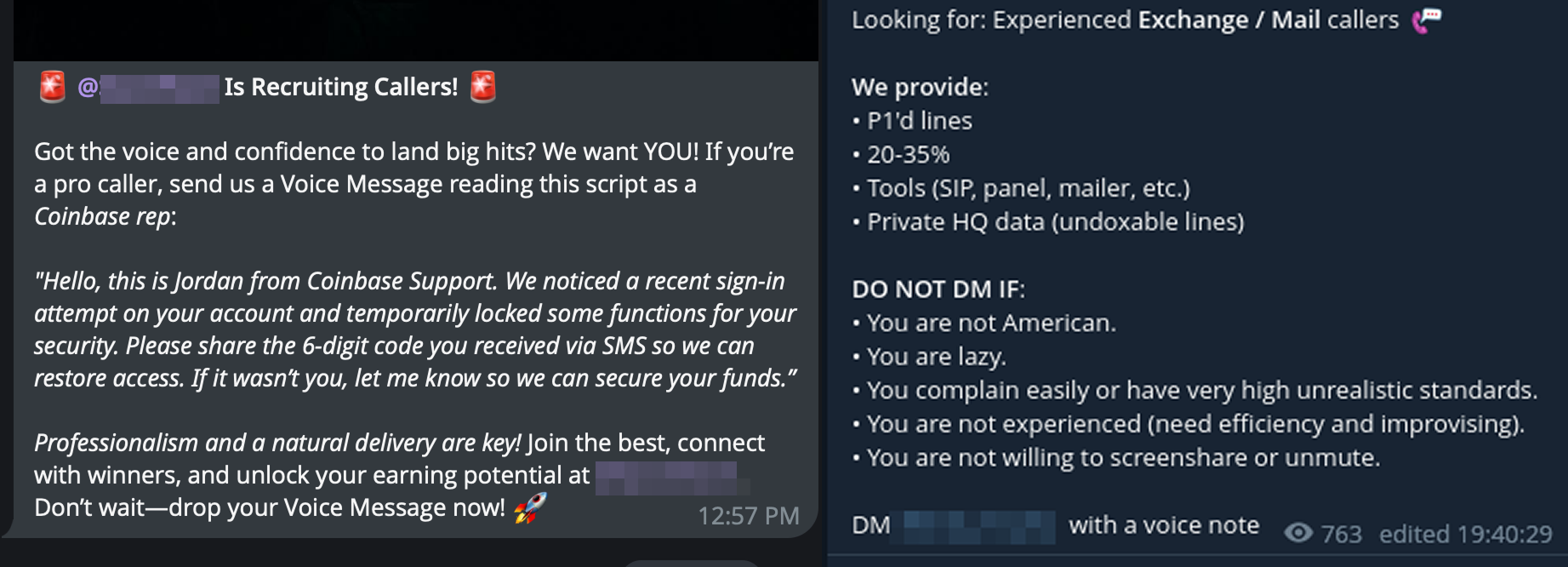
1. Callers
Social engineering specialists who engage in live voice phishing (vishing). These operators impersonate internal IT staff, telecom providers, or corporate help desks to extract credentials, reset passwords, and facilitate SIM swaps. They are instrumental in breaching multi-factor authentication (MFA) barriers.
2. Texters / Spammers
Operators behind high-volume SMS phishing (smishing) and vishing campaigns. Often backed by botnets or bulk SMS APIs, they blast phishing lures to tens of thousands of targets. Their goal: initial credential harvesting or directing victims to phishing sites controlled by downstream actors.

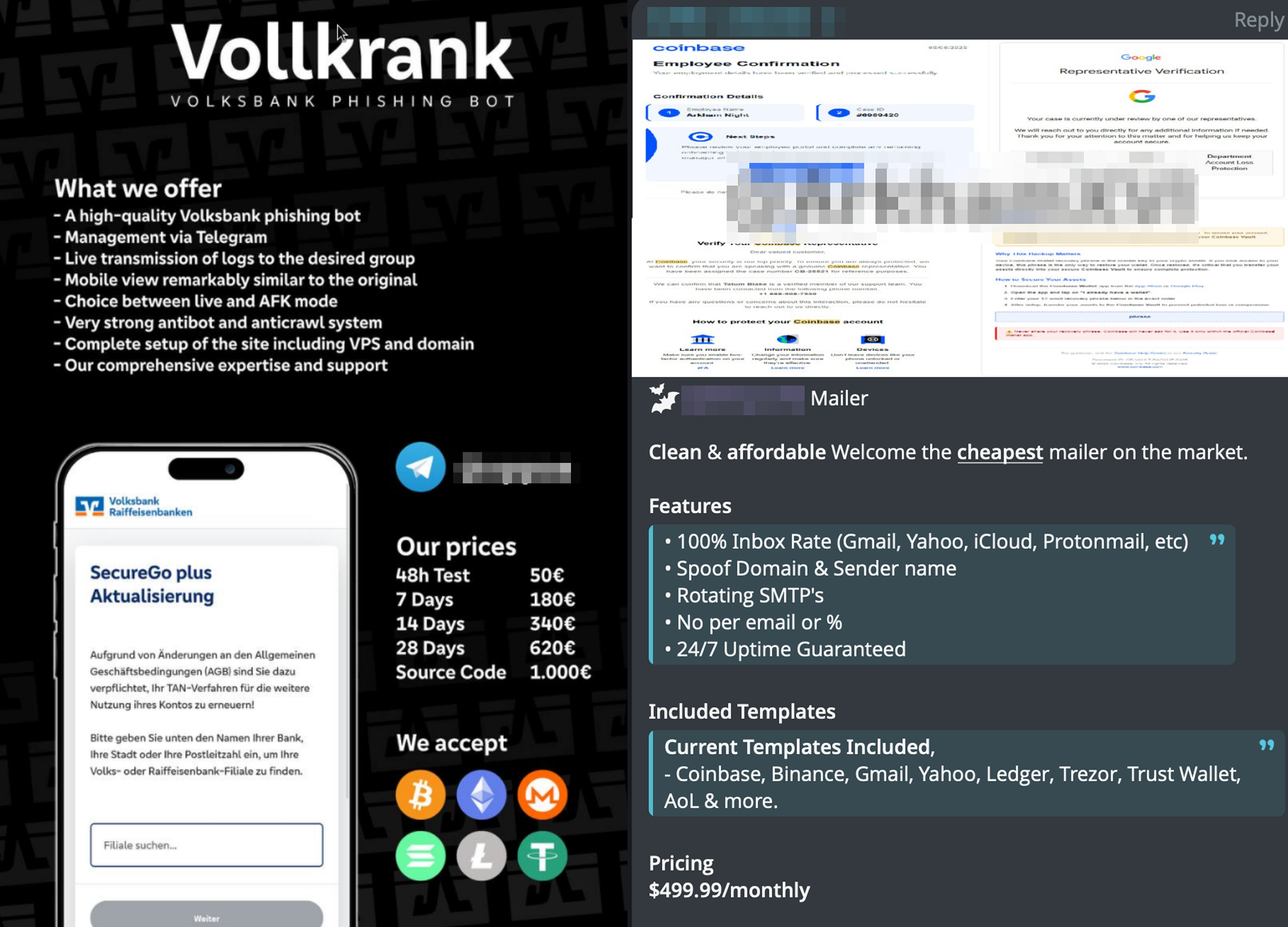
3. Phishing Kit Developers
Technical developers who create turnkey phishing kits, often spoofing login portals for major platforms (Google Workspace, Microsoft 365, banking apps). These kits frequently integrate real-time MFA grabbers or session cookie stealers, enabling attackers to bypass two-factor authentication entirely.
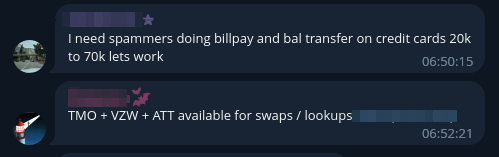
4. SIM Swappers
Actors who hijack phone numbers to intercept password resets, OTPs, or 2FA tokens. They operate through:
5. Initial Access Brokers (IABs)
Specialists who obtain and validate access to corporate environments, including:
They monetize this access by selling to ransomware groups, drainer crews, or data extortionists.

6. Doxers / OSINT Teams
Information brokers who build deep victim profiles using both open-source intelligence (OSINT) and breached data. These profiles inform tailored social engineering campaigns and enhance the success rate of phishing, vishing, and SIM-swapping attacks.

7. Ransomware-as-a-Service (RaaS) Affiliates
Operators who weaponize access sold by IABs. After gaining entry, they deploy ransomware, exfiltrate sensitive data, and launch multi-phase extortion campaigns. Many of these actors are linked to groups like LockBit, Cl0p, or splinter cells from Conti.
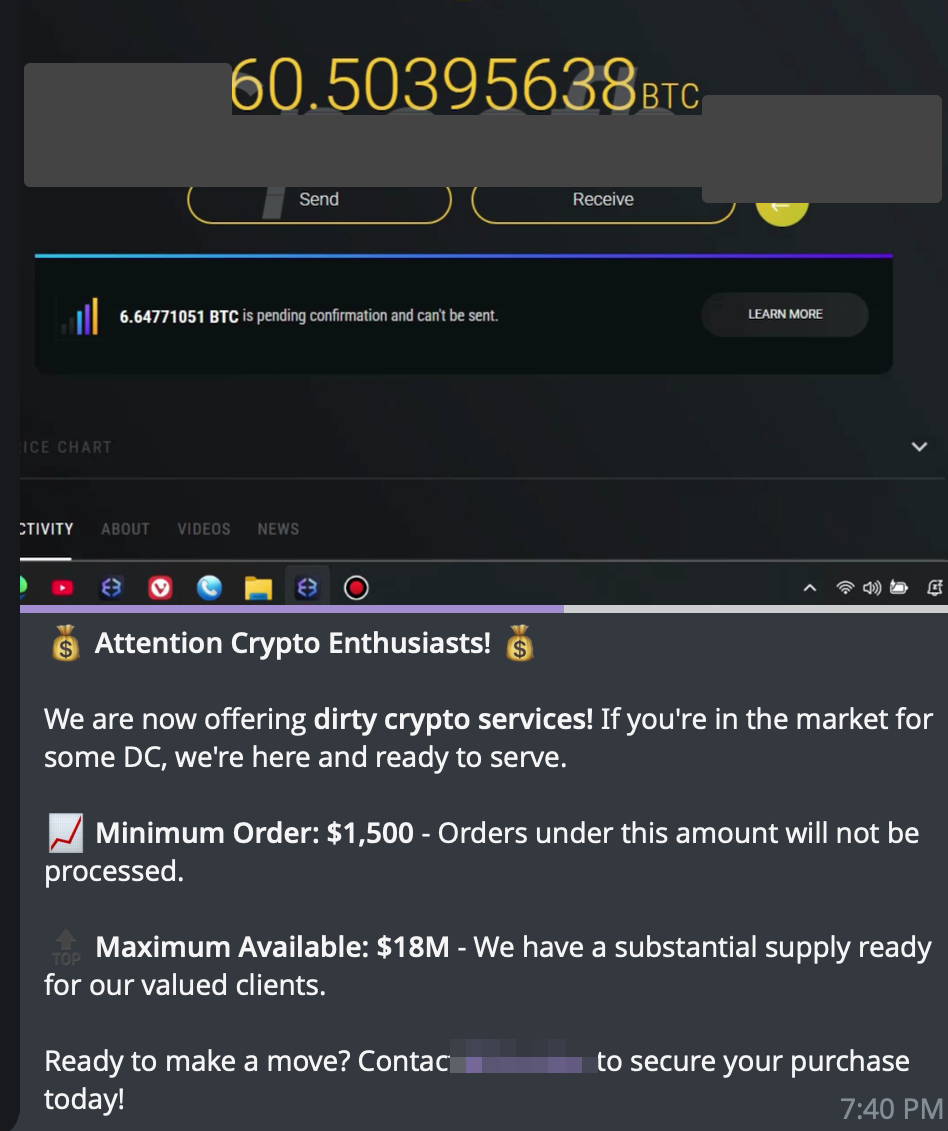
8. Crypto Launderers
Financial enablers who obscure the movement of illicit funds. They offer:
9. Drainers
Technical teams that develop and deploy wallet-draining scripts, often embedded in:
These operations have drained hundreds of millions in digital assets across DeFi ecosystems.
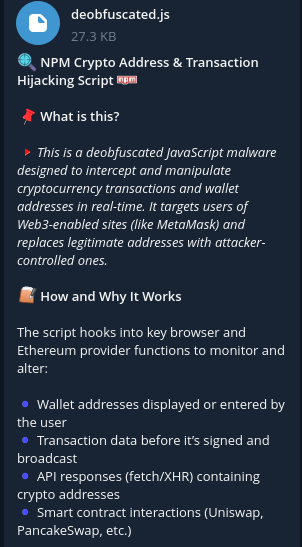
This structure emphasizes the interdependence within the cybercrime economy and reinforces how The COM has evolved beyond disorganized criminality into a professionalized, service-driven industry. These roles are modular and interchangeable, allowing criminal operations to scale quickly, outsource risk, and remain resilient under pressure.
The as-a-service model fueling The COM makes traditional IOC-based detection IP addresses, malware hashes, domain blacklists largely ineffective for the following reasons:
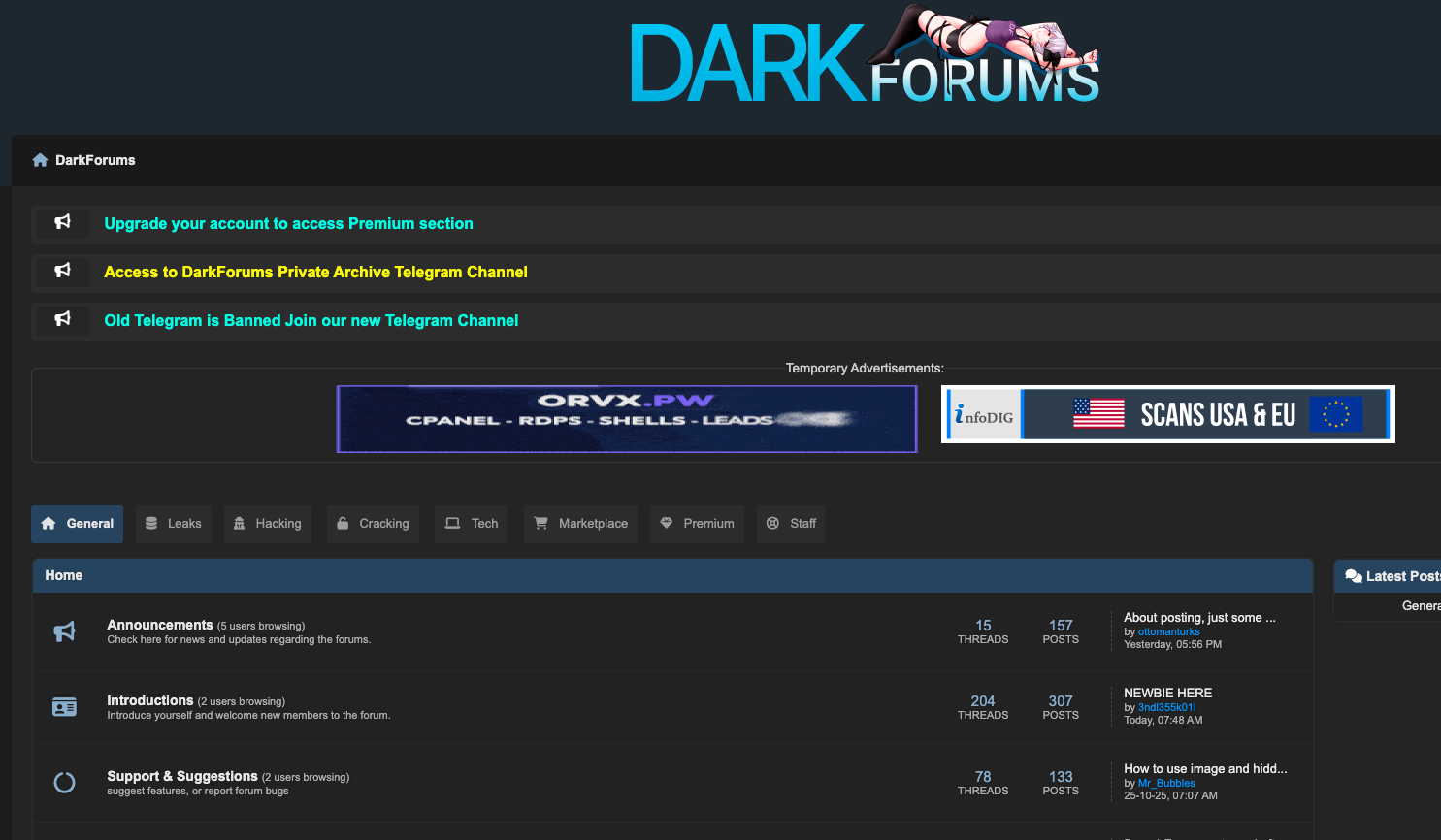
The October 2025 law enforcement seizure of the iteration of BreachForums triggered the latest evolutionary phase of the Cybercrime Operations Market (COM). This disruption did not eliminate the marketplace but instead catalyzed a bifurcation, leading to a new hierarchy within the English-speaking underground and an unprecedented convergence with established Russian-speaking forums.
In the immediate aftermath of the takedown, displaced users scattered across various platforms. However, a clear two-tiered system has since emerged:
This forum has rapidly consolidated its position as the primary, reputation driven successor to BreachForums. Its legitimacy is bolstered by intelligence suggesting the platform is operated by, or with the approval of, actors closely affiliated with the ShinyHunters collective. This connection lends it immediate credibility, attracting experienced threat actors, high-value data brokers, and the core community from the previous forum.

Serving as a secondary marketplace, DarkForums has become the de facto destination for newer or less-established actors. While active, it lacks the robust reputation systems, exclusive databases, and high-level discourse that characterize BreachStars positioning it as a more transactional, lower-tier platform.
Perhaps the most significant strategic development in the post-BreachForums era is the migration of a notable contingent of high-value, English-speaking threat actors to established Russian-language forums particularly Exploit[.]in.
Historically, these ecosystems operated in parallel, separated by significant linguistic and cultural barriers. However, analysis of activity in 2025 indicates a paradigm shift. Exploit[.]in’s administrators and veteran user base are now actively accommodating and integrating key service providers from the COM.
Observed developments include:
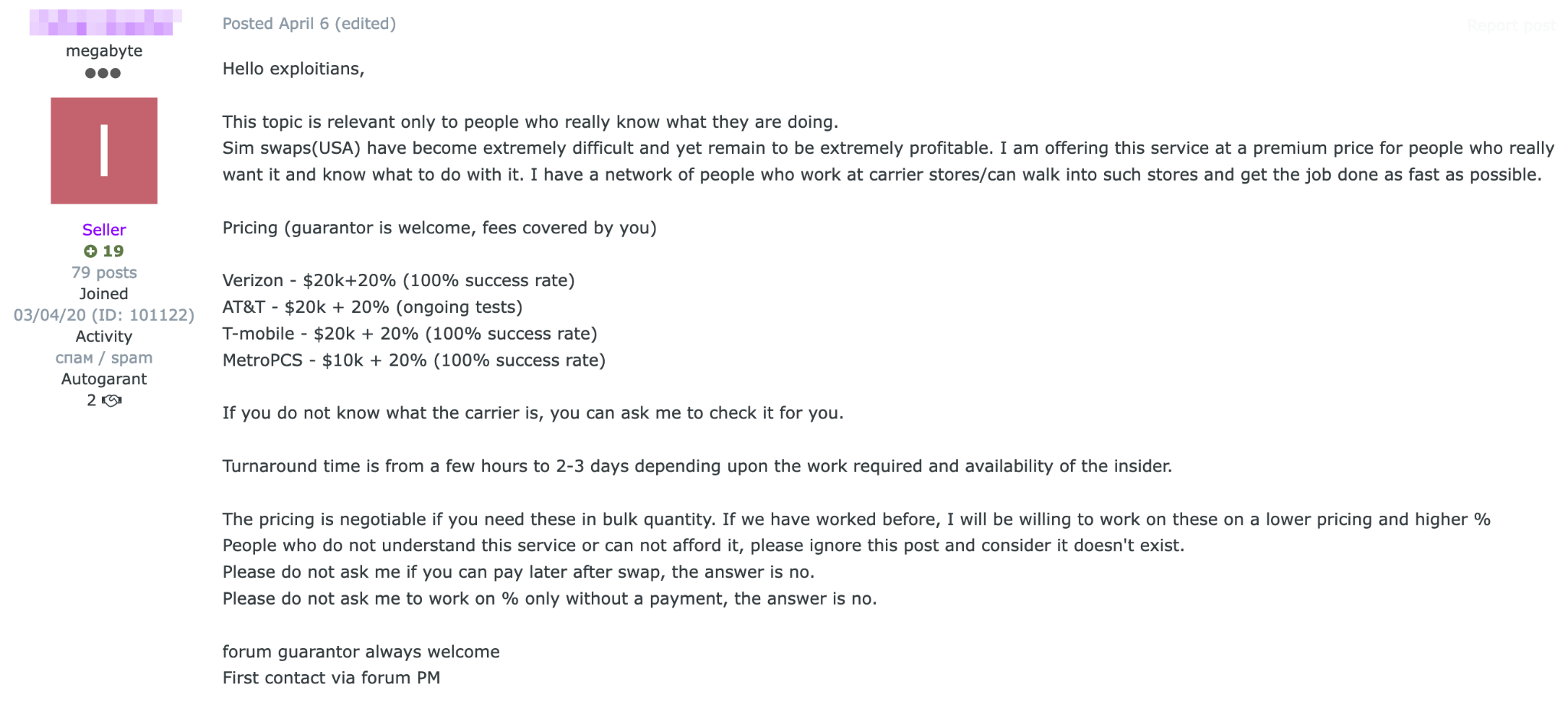
This East–West convergence represents a dangerous maturation of the cybercrime ecosystem. It grants English-speaking actors access to a more operationally secure and technically advanced marketplace, including sophisticated malware, zero-day exploits, and robust money-laundering networks.
For defenders, the implications are clear:
the boundaries between financially motivated threat groups are eroding. The result is a new generation of hybrid adversaries blending linguistic, cultural, and technical capabilities into a more diverse and potent set of offensive tools.
Conclusion: The Human Perimeter Is the New Frontline
The story of the English-speaking cybercriminal ecosystem is one of relentless adaptation. What began as a community for trading social media handles has evolved into a service driven economy powering some of today’s most damaging cyberattacks. From OG Users to the hybrid threat of Scattered Lapsus$ This is not merely a chronicle of forums and actors, it is the story of how social engineering was professionalized and scaled into the single greatest threat to modern enterprises.
The central conclusion is unavoidable: technology-centric security has failed to keep pace. The COM operates on a simple truth. It is easier to compromise a person than a device. Its “as-a-service” ecosystem is designed to exploit this weakness, exposing the limits of architectures that neglect the human element. The era of treating social engineering as a low-level threat is over; it is now the primary vector for enterprise compromise.
The future of this threat lies in the ongoing convergence of Western social engineering specialists with Eastern European syndicates on platforms like Exploit[.]in creating hybrid adversaries with unprecedented reach and sophistication. In this reality, effective security is not about building higher walls, but building resilience from the inside out.
Organizations that fail to pivot from network defense to identity-centric security, from legacy MFA to phishing-resistant controls, and from awareness training to robust protection for high-value personnel will remain prime targets for this ever-evolving ecosystem. The frontline has moved. It’s time our defenses did as well.