How a Single API Flaw Exposed 6.2 TB of Sensitive Data Across 250+ Organisations
A single unsecured API exposed 6.2 TB of sensitive data across 250+ organisations, including banks and insurers. CloudSEK’s research reveals how a third-party vendor vulnerability put employee records and confidential corporate information at risk.
Get the latest industry news, threats and resources.
Arul N V
Arul N V is a security researcher specializing in offensive security across web applications, networks, mobile, and APIs. He conducts independent security research to uncover vulnerabilities before attackers do, and helps organizations turn those findings into clear, actionable steps that reduce real business risk.
No items found.
Executive Summary
A single unauthenticated API request, triggered from JavaScript loaded by a major Indian health insurer's web application, returned a live Microsoft Azure Shared Access Signature (SAS) URL to anyone, with no login, cookie, or API key. That token did not point to the insurer's own storage. It pointed to a single, shared Azure Blob Storage container operated by the insurer's third-party Learning Management System (LMS) vendor. This container stores the e-learning content of every one of that vendor's customers side by side, in one place.
CloudSEK's Supply Chain Monitoring platform, SVigil, identified the exposure. The shared container held roughly 6.2 TB of data across 345,739 files, organised into separate top-level folders for more than 250 organisations, including major banks, insurers, asset managers, brokerages, and public-sector enterprises. Validated in read-only mode, the token was scoped to the entire container with read, write, and delete permissions and no authentication. Because one token reached every tenant, a single anonymous request exposed the training data, including the employee PII contained within it, of all these organisations at once. The underlying endpoint has since been secured and now requires authentication.
Note on attribution: To protect the affected parties, every organisation in this post is anonymised and referred to only by sector. Full, unmasked details were shared privately with the impacted entities.
Key Findings
An unauthenticated API endpoint, referenced in a JavaScript file of the insurer's web application, returned an Azure SAS URL to anyone without requiring a login, cookie, or API key.
The SAS URL pointed to a single shared Azure Blob container run by a third-party LMS vendor that stores many organisations' data together, amounting to approximately 6.2 TB across 345,739 files.
The container held a separate top-level folder for each customer, covering more than 250 organisations across banking, insurance, asset management, and the public sector.
The token was container-scoped with read, add, create, write, delete, and list rights and a validity of about two hours, so one request exposed every tenant's data and also allowed files to be altered or deleted.
Exposed data ranged from full employee HR masters (names, employee IDs, corporate emails, mobile numbers, dates of birth) to certification and assessment records, confidential internal documents, exam answer keys, and, in at least one tenant, live webcam proctoring photographs of named individuals.
How the Exposure Worked
The finding began with an undocumented API endpoint referenced in a JavaScript file served by the insurer's learning portal. The endpoint was meant to let a logged-in user's browser fetch course files, but it required no authentication and returned a Microsoft Azure SAS URL to any caller.
Unauthenticated API endpoint returning a container-wide Azure SAS URL
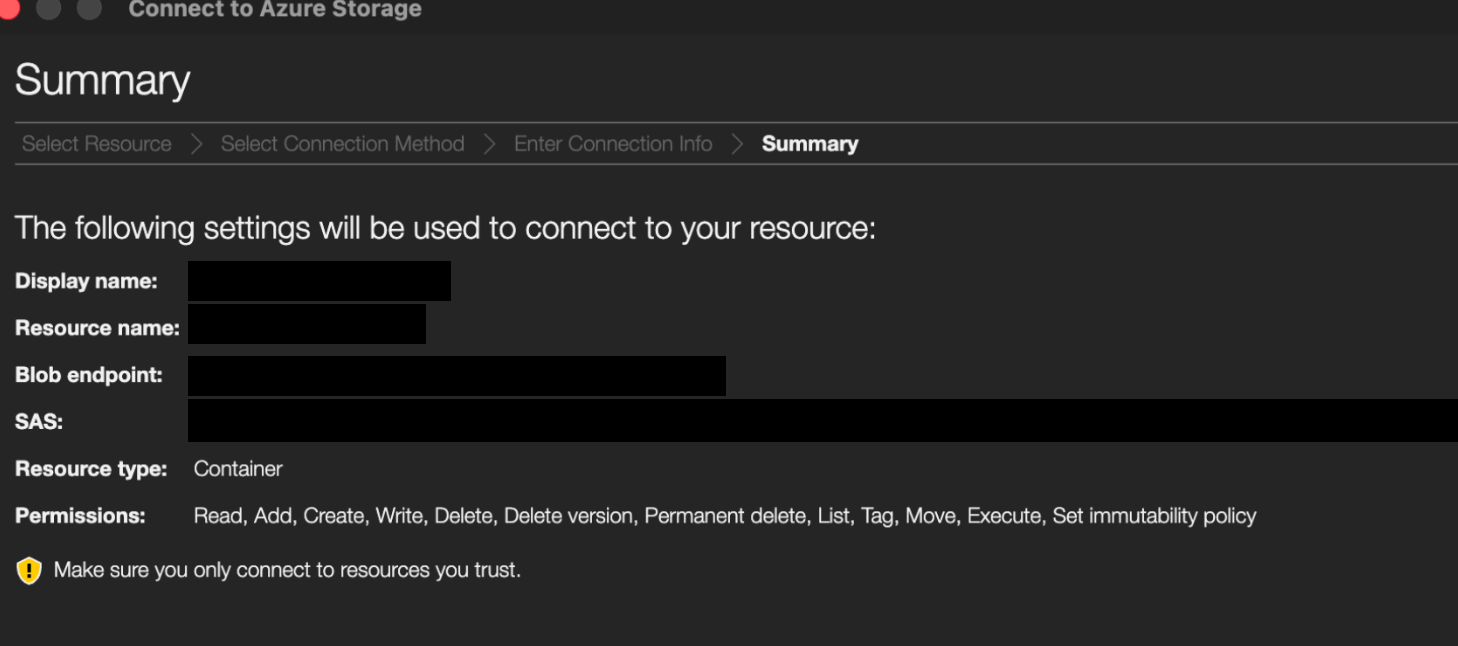
Decoding the returned token showed why this was so serious. It was issued for the resource type container (sr=c) rather than a single file; it carried the permission set read, add, create, write, delete, and list; and it expired roughly two hours after it was requested. In plain terms, an anonymous caller was granted full read, write, and delete control over an entire shared storage container for the life of the token. Loading the SAS URL in a standard storage browser connected straight to the vendor's container and listed its top-level folders without any further credentials — one folder per customer organisation.
Decoded SAS token: the key is scoped to the entire container (Resource type: Container) and grants Read, Add, Create, Write, Delete, List and more. Storage account, container name and signature masked.
Why One Insurer's Bug Exposed 250+ Organisations
The root cause is a multi-tenant design choice. The LMS vendor runs a single Learning Management System for all of its customers and stores every customer's content in one shared Azure container, separated only by top-level folder — with no per-tenant storage isolation. So an unauthenticated request made through just one customer's portal returned a token valid for the whole container, and therefore for every other organisation's data inside it. This is the defining characteristic of a supply-chain exposure: the weakest integration in a shared platform becomes the blast radius for everyone on it.
What Was Exposed
CloudSEK sampled a number of folders in a strictly read-only manner to gauge sensitivity. In most tenants the data was real production content, not test data — large employee HR and user-master lists, certification and attendance records, confidential internal decks, assessment question banks with answer keys, and biometric proctoring media. A representative, anonymised cross-section is shown below.
Organisation (by sector)
Representative exposed data
A large Indian financial-services firm (NBFC)
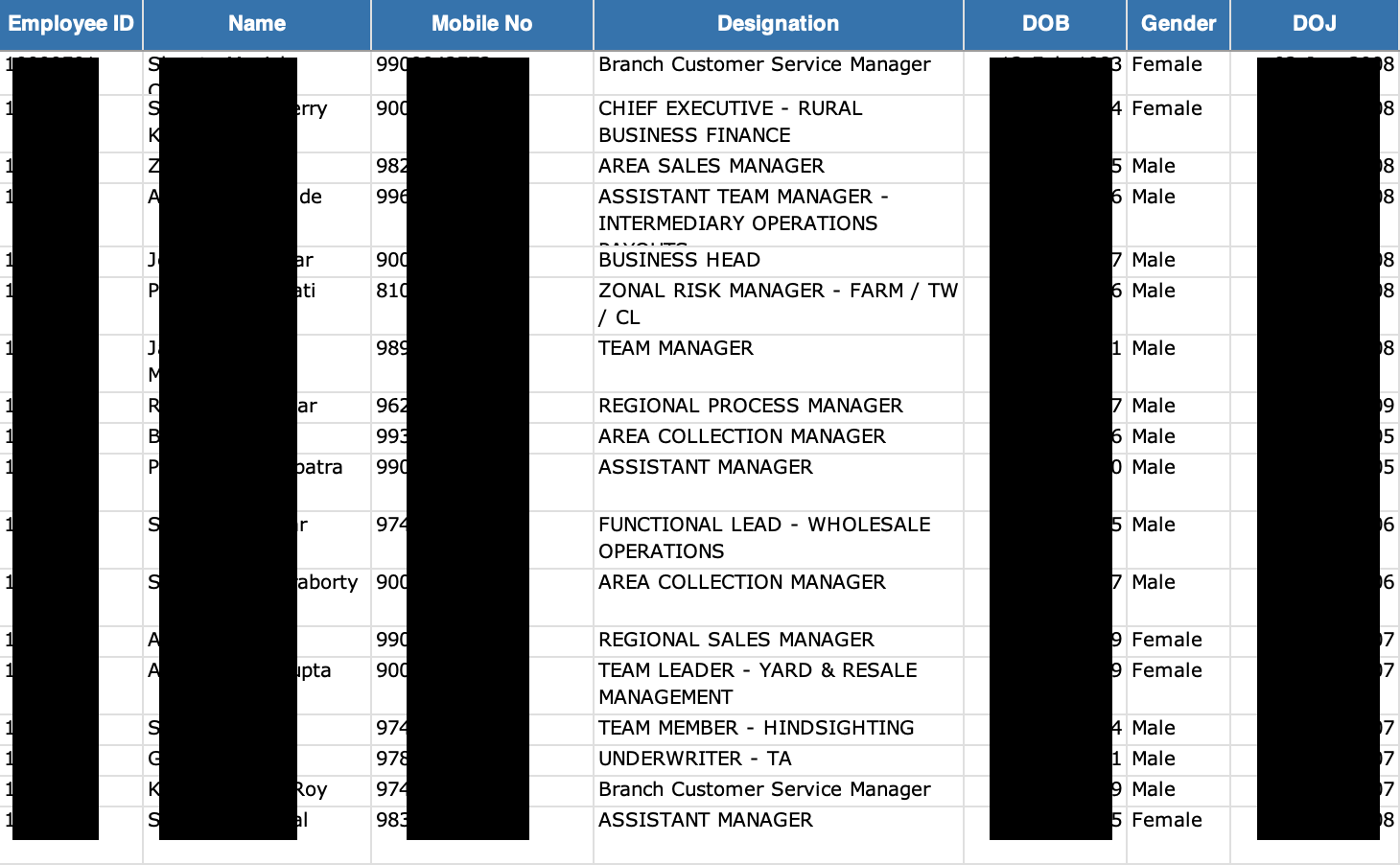
A complete employee HR master of 36,513 staff, every row populated — employee ID, full name, corporate email, mobile number, date of birth, gender, designation, and reporting + skip-level manager — plus training-completion and assessment-result reports.
A leading enterprise HR-technology (HRMS) platform
A user-master of employees and external/partner users (name, email, mobile, department, reporting manager), plus a POSH compliance report and a cybersecurity-training report mapping each named employee to course-completion status.
A major private-sector banking & financial-services group
~1,200 instructor-led-training attendance records (employee codes + modules), employee certification records (names, user IDs, securities-exam results), assessment question banks with correct answers, and internal decks marked “Classification — Internal”.
A public-sector oil & gas enterprise
2,500+ employee training/certification records with employee ID, real names, course title, assessment score and pass/fail, plus assessment question banks with correct answers.
A private-sector bank
Training and feedback records for ~2,432 named employees (63,438 rows) — learner name, course/module, training date, feedback, business unit, and location (distribution/bancassurance staff).
A large life insurer
Real webcam proctoring photographs of identifiable candidates taken during online assessments (facial/biometric data; 51 images), plus screen-capture session recordings.
A retail NBFC
Internal employee induction and policy decks.
A South-East-Asian financial & healthcare group
A staff directory of ~810 employees with corporate email, mobile number, department, and designation (real roles); personal display names were placeholders, but contact and role data were real.
A major media & broadcasting company
A confidential corporate-governance policy (an “Insider Trading Code”) and a recorded insider-trading-prevention training session video showing the presenter and participants.
A global visa-outsourcing & travel-services company
Primarily test and sample datasets in the files reviewed; no bulk real employee or customer records were found, though the platform runs proctored assessments where real captures may exist elsewhere.
Sample of one tenant's exposed employee HR master, a large Indian NBFC: 36,513 staff with employee ID, name, mobile number, designation, date of birth, gender and date of joining. Personal values masked.
Business Impact
Mass, multi-organisation exposure: a single unauthenticated request reached roughly 6.2 TB across 345,739 files belonging to more than 250 organisations — the blast radius spans an entire set of banks, insurers, and enterprises at once.
Employee personal data at scale: names, employee codes, contact numbers, dates of birth, and certification results across many organisations are readable, creating privacy risk under India's DPDP Act.
Biometric and sensitive media: at least one organisation's folder held live webcam proctoring photographs of named individuals — sensitive personal data with lasting misuse potential.
Confidential documents and exam integrity: internal “classified” decks and assessment answer keys were exposed, leaking commercial material and undermining the value of the certifications themselves.
Integrity and availability: because the token also granted write and delete rights, content across all tenants could be modified, planted with malicious files, or destroyed — not merely read.
Regulatory and reputational fallout: a shared-vendor breach of this scale can draw scrutiny from regulators such as the RBI, SEBI, and IRDAI, trigger action under the DPDP Act, and erode trust across every affected brand.
Remediation
For the LMS vendor and the integrating customer:
Authenticate the token endpoint — any API that mints a SAS must require a valid authenticated session and reject anonymous requests (confirmed applied here).
Scope every SAS down — issue short-lived, read-only tokens limited to a single customer's prefix, never container-wide read/write/delete.
Isolate tenants — give each organisation its own container or storage account so one token can never reach another tenant's data.
Rotate and audit — rotate the storage-account keys and review storage access logs across the exposure window for anonymous read, write, or delete activity.
Clean up non-production data — remove real employee records, biometric captures, internal decks, and answer keys from UAT and test environments.
For every organisation that relies on a third-party platform:
Inventory where your data physically lives with each SaaS and vendor, and require evidence of per-tenant isolation.
Treat vendor sub-domains and the JavaScript they serve as part of your own attack surface, and monitor them continuously.
Responsible Disclosure
CloudSEK disclosed the issue to the affected insurer and the LMS vendor. On re-check, the token-minting endpoint returned HTTP 401 and the storage account no longer permitted anonymous access (returning PublicAccessNotPermitted), confirming the exposure was real and has since been remediated. Because the SAS tokens expire in roughly two hours, any token issued during the exposure window has long since expired. Impacted organisations were referred to the affected parties; full, unmasked details remain available to vetted and directly-affected entities on request.
How CloudSEK SVigil Helps
This exposure is a textbook supply-chain risk: the data was safe inside each organisation's own systems, yet a single integration with a third-party platform put it one unauthenticated request away from the public internet. CloudSEK's SVigil continuously maps an organisation's third-party and vendor attack surface — exposed APIs, leaked tokens and SAS URLs, misconfigured cloud storage, and vulnerable JavaScript — and raises the alarm on exactly this class of issue before an attacker finds it.